
Sourcing Sunglasses for Hotel and Travel Retail
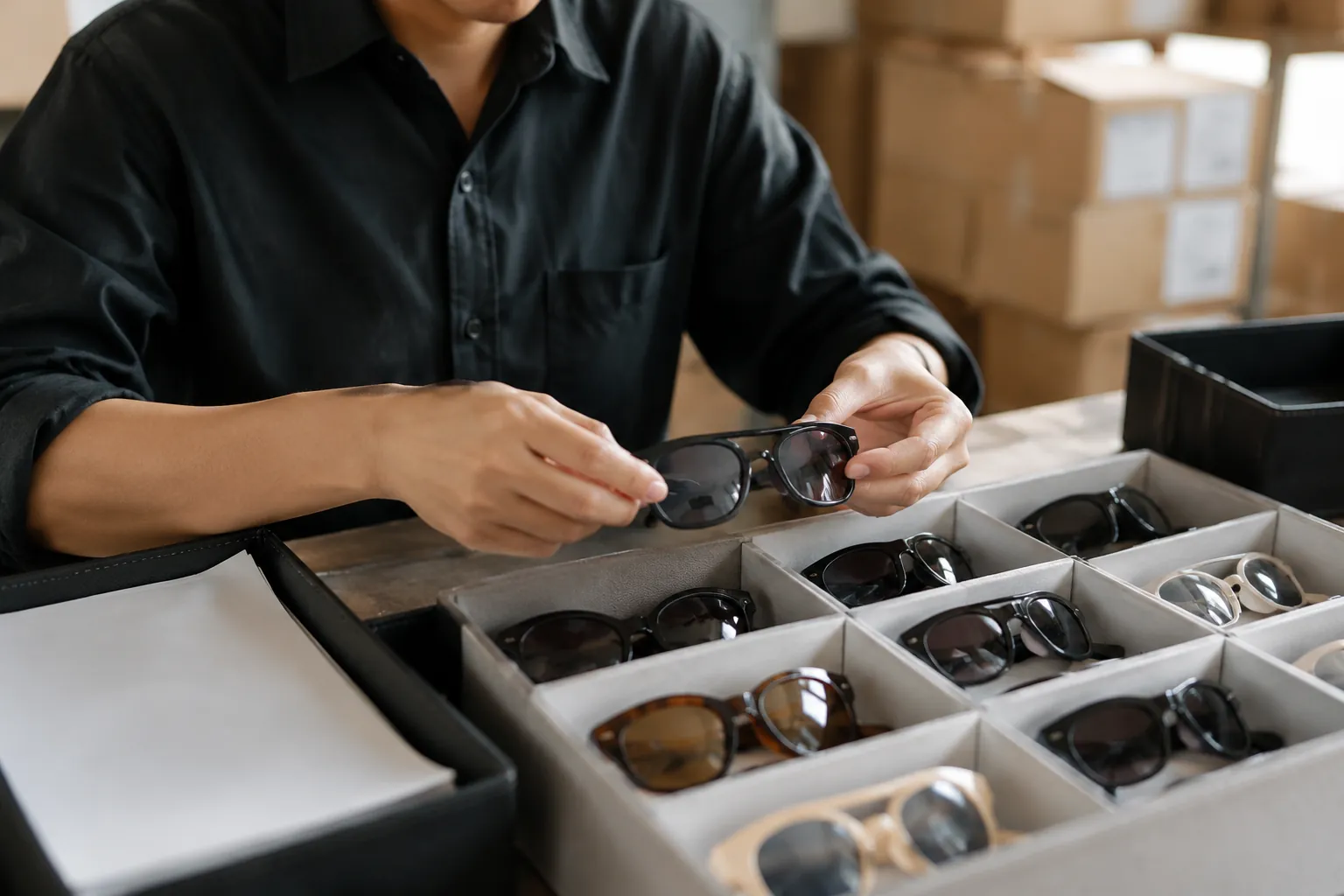
This guide is for buyers sourcing sunglasses for hotels, resorts, cruise shops, airport stores, tour operators, beach clubs, and travel retail distributors. The goal is simple: build an assortment that sells, survives guest handling, meets the rules in the destination market, and can be replenished before peak-season stockouts. It also shows where branding helps, where it slows a project down, and which specifications must be fixed before production starts.
Start With the Sales Channel, Not the Catalog
Hotel and travel retail sunglasses are often bought in a hurry. A guest forgot a pair, broke one, lost one at the pool, or needs sun protection before a tour. This is not boutique fashion buying. Shoppers are not comparing small design details for twenty minutes. The product must look right fast, feel comfortable on first try-on, and sit at a price the guest can accept without much debate.
Define the selling environment before choosing styles. A beach resort needs reliable UV protection, strong sun-lens options, and frames that tolerate sunscreen, sand, heat, and frequent handling. A city hotel shop may need cleaner shapes, darker neutrals, and a more restrained fashion mix. A cruise shop should watch packaging durability because stock is moved, displayed, and handled again and again. Airport retail needs accurate barcodes, clear carton labels, shelf-ready packing, and disciplined replenishment timing.
Most first programs work better with 6 to 12 styles, not a wide assortment. A practical opening mix might include two universal square shapes, one round or panto shape, one sport wrap, one metal style, one premium acetate-look frame, and kids' sizes only if the channel truly sells to families. Too many SKUs create slow movers. They also make store-level reordering harder.
When reviewing a supplier, ask whether they can support both pilot quantities and repeat production under controlled specifications. Clarify MOQ by model, color, logo method, and packaging type. Unit cost usually improves as order size increases because setup, decoration, and packing costs are spread across more units. Still, every quotation should be based on the same fixed specification. Otherwise, the comparison is weak.
Choose Materials for Guest Handling
Hospitality sunglasses take abuse before they are sold. Guests open and close them, drop them on hard floors, leave them in hot vehicles, expose them to saltwater, wipe them with towels, and try them on with sunscreen still on their hands. A frame can photograph well and still fail in store.
| Frame type | Best use | Typical behavior | Buyer watch point |
|---|---|---|---|
| PC injection | Pool, beach, cruise, promo retail | Lightweight, impact resistant, economical, efficient for volume production | Can look low-grade if mold polish, parting lines, or color consistency are poor |
| TR90 | Sport, tour operators, outdoor resorts | Flexible, resilient, comfortable for active use | Usually costs more than basic PC; color matching and shape consistency need control |
| Acetate | Boutique hotels, premium resort shops | Richer color, better hand feel, higher perceived value | Requires tighter control in cutting, polishing, and shape finishing |
| Metal | Airport, city hotel, adult fashion range | Slim profile, mature look, adjustable nose pads | Plating, solder joints, screws, and nose pad arms need close inspection |
For high-turnover resort programs, PC injection and TR90 often make the most practical core range. PC suits entry-price retail and promotional styles. TR90 is stronger where comfort, flexibility, and active use matter. Acetate is better as a premium tier unless the store can support the higher retail price and the longer replenishment cycle.
Ask for hinge details before approving a frame. A metal hinge with proper screw retention is usually safer for high-handling retail than a weak molded flex point on a style that will be tried on all day. For plastic frames, check temple open-close feel, hinge seating, screw bite, and lens fit. The lens should sit securely without stressing the front. For metal frames, inspect plating coverage, solder points, nose pad screw tightness, and bridge symmetry.
Write useful QC tolerances into the order or approved specification sheet. Control logo placement to an agreed tolerance. Approve color against a physical master sample where possible. Treat visible lens gaps and frame twist as defects. Do not leave these points vague. Agree the tolerance by model and decoration method before production starts.
Control UV, Tint, Polarization, and Category
The lens is the promise. Do not treat it as decoration. At minimum, sunglasses should provide UV protection suitable for the market standard and meet the sunglass requirements in the destination market. Buyers should request compliance documents for the actual market of sale and the actual product specification. A generic bundle of certificates is not enough.
For Europe, CE EN ISO 12312-1 is the key sunglass standard. For the United States, ANSI Z80.3 is commonly referenced, and FDA registration may be relevant for importer documentation. For Australia and New Zealand, AS/NZS 1067 is the relevant standard. REACH matters for EU chemical compliance. ISO 9001 and BSCI can support supplier assessment, but they do not replace product testing or market-specific compliance files.
Lens category must be specified and controlled. Category 3 is common for bright sun environments such as beach, pool, and cruise retail. Category 2 can work for fashion tints, city hotels, and mixed indoor-outdoor use, but it should not be sold as a high-glare solution. Category 4 is very dark and is generally not suitable for driving. Use it only after checking labeling and market suitability.
- Gray lenses: neutral color perception, easy to sell, dependable for general assortments.
- Brown lenses: warmer contrast, often preferred for driving, walking, and sightseeing.
- Green lenses: classic appearance, often suitable for metal frames and adult fashion styles.
- Mirror lenses: strong beach and sport appeal, but coating adhesion and abrasion resistance should be checked.
- Polarized lenses: useful near water and in strong glare, but axis alignment, distortion, and lamination quality should be verified before approval.
For polarized programs, check more than the sticker. Ask how the supplier verifies polarization. Inspect left and right lens consistency. Review samples outdoors under real light. Poorly controlled polarized lenses can create uneven viewing, especially on wraps and high-base frames. For repeat orders, keep a signed lens reference sample and record the lens material, category, tint, coating, base curve, and marking requirement.
Use Branding Guests Will Still Wear
Branding should support the hotel, resort, cruise line, tour operator, or travel retail program without making the sunglasses feel disposable. Keep it restrained. A small temple logo, subtle lens mark, branded pouch, printed hang tag, or case insert is often enough. Oversized logos may work for staff issue, event giveaways, or short campaigns. They often reduce wear after the trip.
| Branding method | Typical placement | Best use | Process control |
|---|---|---|---|
| Laser engraving | Temple, metal plate, lens corner | Subtle premium marks | Confirm contrast, depth, and exact artwork size |
| Pad printing | Temple outside, pouch, lens | Low-cost logos and campaign names | Test ink adhesion after rubbing and sunscreen exposure |
| Metal logo plate | Temple insert | Premium resort and boutique retail | Control recess size, attachment method, alignment, and plating color |
| Custom frame color | Full frame or temple | Brand color programs and events | Approve molded color chips and first production samples |
For first orders, keep decoration simple. A pad-printed temple logo plus a branded microfiber pouch is often enough. For proven programs with clear sell-through, higher-setup features may make sense: metal logo plates, custom temple textures, color blocking, or molded brand details.
Specification discipline matters. Provide vector artwork, print color reference, logo width in millimeters, placement distance from the hinge or temple tip, orientation, and approval criteria. "Put our logo on the side" is not a production specification. For pad printing, ask for adhesion testing on the actual frame finish. For laser engraving, approve the real visual effect. Low-contrast engraving can disappear under store lighting.
Before mass production, approve one decorated pre-production sample and keep it as the reference for repeat orders. Link that sample to the purchase order, artwork file, and packaging spec. Ambiguity becomes expensive during replenishment.
Plan MOQ, Price, and Lead Time Early
Hospitality buyers often start too small and reorder too late. A strong weather week, holiday period, or excursion-heavy schedule can clear a sunglasses display faster than expected. Separate testing stock, launch stock, and replenishment stock from the start.
| Order level | Best use | Cost logic | Buyer action |
|---|---|---|---|
| Low pilot quantity | Testing a logo, color, or property-specific style | Higher unit cost because setup is spread over fewer pairs | Use for validation, staff feedback, and limited display testing |
| Mid-size launch order | Small hotel group or seasonal resort launch | Better decoration and packing efficiency | Lock likely best sellers before adding extra colors |
| Program volume order | Distributor, cruise program, or travel retail chain | Stronger production and carton efficiency | Negotiate barcode format, carton mix, and repeat-order terms |
| High-volume core SKU | Year-round or multi-location repeat style | Best leverage on material planning and production scheduling | Consider material reservation, rolling shipments, and formal QC reporting |
Confirm lead time against the actual specification. Existing frames with simple branding may move quickly. Custom colors, metal logos, special packaging, and compliance testing add time. Ask the supplier to break the schedule into stages: sample development, pre-production approval, bulk production, packaging completion, inspection, and shipment readiness.
Price usually moves in four places: frame material, lens specification, decoration, and packaging. TR90 often costs more than basic PC. Polarized lenses cost more than standard non-polarized lenses. Metal logo plates cost more than pad printing. Rigid cases cost more than microfiber pouches or hang cards. Compare the complete retail-ready unit, not just frame-and-lens cost. Landed margin depends on the full pack.
For seasonal businesses, earlier planning is usually the cheapest decision. Sea freight, customs clearance, destination delivery, and store allocation all take time. Build the ordering calendar around the sales season, not only the factory ex-works date.
Control Replenishment by SKU
The first order gets attention. The second order proves whether the program works. If a resort sells through its top black square style early in the season and replenishment arrives after peak demand, margin is lost even if the launch looked good.
Plan replenishment by SKU velocity, not total units. In many travel retail programs, a few styles account for most sales. Keep core colors commercially safe: black, tortoise, matte navy, dark green, smoke, and brown. Bright colors can work for beach clubs, festivals, and youth destinations, but test them in smaller quantities before making them core inventory.
- Launch with 6 to 12 styles across unisex, sport, premium, and kids only if the channel needs them.
- Set a minimum stock level for each top seller by property, ship, or store.
- Separate repeat core SKUs from seasonal colors and event designs.
- Keep approved samples, artwork, lens specs, and packaging files unchanged for repeat orders unless a formal revision is issued.
- Review sell-through after the first 30 days and exit slow colors quickly.
For larger programs, create an item master. Record frame model, material, frame color, lens material, lens category, tint, coating, logo method, logo placement, pouch or case material, barcode, inner pack count, carton quantity, carton dimensions, and outer carton marks. Clear records make repeatability possible. Without them, even a strong first order can be hard to reproduce.
Prepare Compliance Files Before Production
Compliance is not just a customs issue. Airport retailers, hotel groups, cruise operators, and distributors may request product files before listing. Missing, vague, or mismatched documents can delay launch even when production is finished.
For Europe, CE EN ISO 12312-1 is the core sunglass compliance reference. For the United States, buyers commonly review ANSI Z80.3 and may also ask about FDA registration status where relevant to importer requirements. For Australia and New Zealand, AS/NZS 1067 is the standard to request. REACH is important for EU chemical restrictions, especially for plastics, coatings, metal components, and skin-contact materials. ISO 9001 and BSCI can support factory due diligence, but they are not substitutes for product-specific test evidence.
A practical compliance pack should include the applicable test report or declaration, model reference, lens category, manufacturer details, importer details where required, labeling artwork, warning text, and packaging marks. Check that the documents match the exact model and construction being ordered. If the product changes materially, retesting or document review may be needed. Lens material, tint category, coatings, frame material, and component changes are not always cosmetic from a compliance standpoint.
Buyer rule: approve compliance, artwork, barcode, lens category labeling, and packaging before mass production. Correcting the wrong CE mark, warning text, or barcode after packing is slower, more expensive, and more error-prone than fixing it at file stage.
Run QC Checks That Catch Store Complaints
Quality control for hospitality sunglasses should focus on defects guests notice immediately: loose hinges, warped frames, scratches, lens distortion, logo rub-off, wrong tint, sharp edges, uneven temples, and poor fit. These are not abstract factory issues. They become returns, staff complaints, markdowns, and bad guest experience.
Define inspection points clearly and link them to the approved sample and purchase order. If the supplier uses subcontractors for lenses, decoration, or packaging, ask how incoming and final checks are controlled and documented.
- Pre-production: confirm approved sample, frame material, lens category, logo size, packaging, barcode, carton mark, and compliance file.
- In-line inspection: check molded flash, hinge seating, screw tightness, lens fit, temple alignment, and decoration position.
- Final inspection: check scratches, lens color consistency, frame symmetry, opening and closing feel, cleaning quality, packing count, and SKU mix.
- Handling checks: run practical drop, rub, open-close, and pouch-abrasion checks suitable for beach, pool, and cruise retail conditions.
- Carton audit: verify inner quantity, hang tags, labels, barcodes, retail packaging, moisture protection, and outer marks before shipment.
For larger orders, set an AQL plan and define critical, major, and minor defects before inspection starts. For smaller runs, require clear photo records and a final checklist tied to the order. Do not rely on promotional photos of finished sunglasses. Ask for close images of hinges, screws, lens markings, logo placement, labels, barcodes, inner packs, and cartons. Good documentation prevents repeat-order disputes later.
Have a custom sunglasses project in mind?
Send us your styles, target market and quantities and we will return a detailed quote with MOQ, lead time and a sample plan.
Get a QuoteWhy source this from Wenzhou with LumiShades
Wenzhou in Zhejiang Province is widely regarded as China’s eyewear manufacturing capital, producing a large share of the world’s sunglasses. That concentration matters to buyers: a deep local supply chain for acetate sheet, hinges, lens blanks, plating and packaging means shorter component lead times, easier color and material matching, and a workforce with decades of eyewear-specific skill. LumiShades has manufactured in this ecosystem since 2009, and our vertical integration — in-house injection molding, acetate cutting, CNC milling, lens tinting, decoration and quality control — means no part of your order is quietly subcontracted to a workshop you cannot audit.
For international buyers, that vertical control translates into accountability. When a single factory owns every step, defects are traced and fixed at source rather than bounced between vendors, and your specifications survive intact from first sample to bulk. We back this with 15+ years of experience, shipments to 60+ countries, more than 5 million pairs produced per year and a 98.5% on-time delivery rate. Our certifications — CE EN ISO 12312-1, FDA registration, ANSI Z80.3, AS/NZS 1067, REACH, ISO 9001 and BSCI audit — mean the compliance documentation your market requires already exists. Explore our manufacturing capabilities and quality control process to see how this works in practice.
Frequently asked questions
What is a sensible first order for a resort sunglasses program? Start with 6 to 12 styles and build depth only in the most commercial shapes and colors. Ask the supplier for MOQ by style, color, logo method, and packaging. Then split the first buy into pilot stock for validation and launch stock for likely best sellers. If the guest profile, price point, and branding are still untested, keep the order simple: limited styles, limited colors, and one low-risk branding method. Before placing the PO, confirm retail price targets, expected margin, and minimum reorder timing.
How long should we allow from sample request to bulk shipment? Do not rely on one lead-time number. Ask for a stage-by-stage schedule covering sample development, artwork approval, pre-production sample approval, bulk production, packaging completion, inspection, and shipment readiness. Existing frames with simple decoration may move quickly. Custom colors, metal logos, special packaging, and compliance testing add time. For seasonal hotel and travel retail programs, allow time for freight booking, customs clearance, destination warehousing, and store allocation, not just factory completion.
Should hotel sunglasses be polarized? Use polarized lenses where the selling environment supports the higher retail value: beach resorts, pool retail, cruise, marina, fishing, and other water-adjacent channels. For general hotel shops, keep core entry styles non-polarized and offer polarized styles as a step-up tier. Before approving polarized bulk production, check the sample outdoors, confirm left-right lens consistency, and verify that the supplier has a reliable method for checking polarization and optical quality.
Which compliance documents should we request? Request documents based on the destination market. For Europe, ask for CE EN ISO 12312-1 documentation and verify the model reference and lens category. For the United States, review ANSI Z80.3 and confirm any FDA registration information relevant to your import process. For Australia and New Zealand, request AS/NZS 1067 evidence. For EU sales, include REACH-related documentation where applicable. ISO 9001 and BSCI can support supplier due diligence, but they do not replace product-specific compliance files.
What branding method is safest for repeat orders? Laser engraving and well-tested pad printing are usually the safest repeat-order options because they are simpler to control than decorative parts. For premium programs, metal logo plates can work well, but only if the artwork, recess size, attachment method, plating color, and placement tolerance are approved in advance. Whatever method you choose, keep one signed pre-production sample and use it as the standard for future orders.
How do we avoid stockouts during peak travel season? Separate core SKUs from seasonal or event styles, then reorder based on SKU-level sell-through rather than total inventory. Set a minimum stock threshold for each top seller by property, ship, or store. Trigger replenishment before stock drops below expected lead time plus a safety buffer. Keep repeat orders specification-stable: same frame, same lens, same logo, same packaging. That reduces approval time and lowers the risk of replenishment delays.
Ready to start?
Explore our square sunglasses or request a quote — our sales team replies within 12 hours.
Request a Quote