
Source Custom Sunglasses Across Three Price Tiers
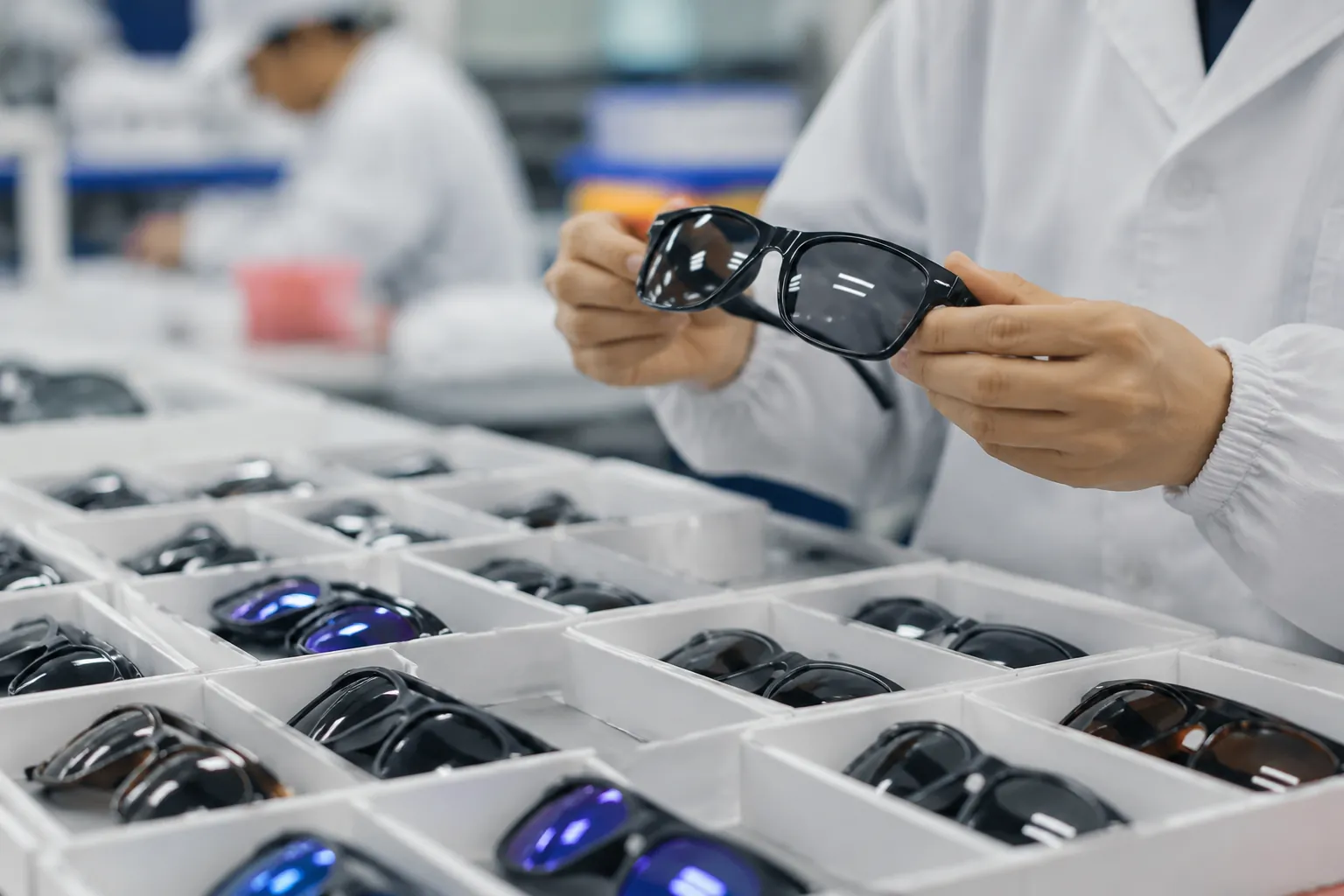
This guide is for buyers who need more than one price point but do not want three separate supply chains. The goal is practical: build entry, mid, and premium custom sunglasses from one factory platform, with shared geometry, controlled material upgrades, one compliance framework, and fewer QC surprises. Plan the architecture well and you can serve discount retail, chain stores, DTC, and higher-margin capsule lines without multiplying molds, hinges, approvals, and packaging formats. The payoff is simple. Broader assortment. Lower complexity. Faster replenishment. Fewer defects in bulk.
Start with a tier map, not three separate collections
The most common sourcing mistake is treating low, mid, and premium sunglasses as unrelated projects. That usually creates different front curves, different hinge specs, different lens thicknesses, different decoration methods, and different packaging sizes. Then every PO gets harder to cost, sample, and inspect.
Use one platform program instead. Define a small frame architecture family first. Then assign material and trim upgrades by price tier. Keep the same front shape, eye size, bridge geometry, and lens outline across multiple SKUs. Change the bill of materials where the customer can actually see or feel the difference.
One wayfarer-style shape can run across three tiers:
- Entry tier: PC or TR90 frame, polycarbonate lens, standard metal hinge, pad-printed logo, PE bag plus basic box.
- Mid tier: same lens geometry, upgraded paint or rubber finish, better hinge plating, laser logo or metal foil on temple, cleaner edge finishing, upgraded carton inserts.
- Premium tier: acetate front or CNC-finished hybrid build, thicker polycarbonate lens, custom metal logo plate, hand-polished edges, microfiber pouch plus rigid gift box.
The rule is blunt: one design language, three cost bands. If the same factory controls molding, acetate cutting, CNC, lens tinting, branding, assembly, and final QC in-house, fit is easier to hold and the tiering stays clean.
You also do not need ten base shapes. Five to eight core shapes is usually enough for a working platform. From there, decide which shapes stay in entry and mid only, and which two or three deserve premium development.
Build around shared parts where customers cannot tell the difference
Stable sunglasses programs share more components than most buyers expect. In many cases, 60% to 80% of functional parts can stay common across entry, mid, and premium tiers. That is where margin protection starts.
Share the parts that affect fit, compliance, replenishment speed, and tooling efficiency. Lens outline is usually the first candidate. If all three tiers use the same lens shape, you reduce tooling variation and simplify spare planning. Temple wire profiles, screw size, nose geometry, and master carton configuration can often stay common too.
Where should variation happen? In the areas the buyer or end customer notices within three seconds: surface feel, transparency, edge polish, branding execution, and packaging weight.
- Lock front curvature and lens outline first.
- Decide which internal parts stay common across all tiers.
- Upgrade only visible materials, trim, and finishing steps.
- Restrict branding methods to two or three approved options.
- Keep one inspection plan, with tighter cosmetic limits only where justified.
As a practical example, buyers can often keep the same 2-barrel or 3-barrel hinge pattern and M1.4 or M1.6 screw spec across a whole family, while changing only plating grade, logo trim, and polishing time by tier. That keeps spare hardware simple and lowers assembly errors.
Fit tolerances should stay consistent too. Temple opening symmetry should be written into the approved spec. Lens seating should be secure, with no visible gap at normal viewing distance. Logo placement deviation should be defined in artwork approval. Agree it with the factory. Write it down. Check it against the approved sample.
Match materials to price bands without creating production chaos
Material choice drives cost and factory complexity. Keep it disciplined. For most B2B programs, the cleanest structure is molded entry tier, upgraded molded or hybrid mid tier, and acetate or more labor-heavy premium tier.
| Tier | Typical materials | Production impact | Cost and lead-time notes |
|---|---|---|---|
| Entry | PC or TR90 frame, polycarbonate lens | Fast injection molding, low hand work, stable repeatability | Best fit for low-risk launch orders and repeat replenishment |
| Mid | TR90 with paint or rubber coating, mixed metal details, upgraded hinge parts | Moderate assembly complexity, more decoration and surface checkpoints | Often the best balance of margin and sell-through for distributors and chain retail |
| Premium | Acetate front, CNC or hand-finished details, metal logo plate, upgraded packaging | Higher labor from cutting, tumbling, polishing, alignment, and matching | Higher unit cost; planning matters more because polishing and logo application can bottleneck |
PC works well for entry programs because it molds fast and supports efficient replenishment. TR90 is useful when weight and resilience matter, though finish and color control can vary depending on surface treatment.
Acetate is where many buyers underestimate labor. Sheet cutting and CNC milling are only the start. The factory still has to tumble, polish, insert hinges, align temples, sort color variation, and inspect edge quality. If a tech pack just says "acetate premium version," it does not describe the real labor content.
A useful compromise is a premium-look hybrid build: molded frame with better paint finish, metal insert branding, deeper polish standards, and tighter cosmetic grading. That can give a visibly better product without committing to full acetate labor.
Decoration method matters too. Pad printing is usually the simplest for volume. Laser marking gives a clean, durable result on suitable surfaces. Hot foil or metal logo plates improve perceived value but add setup, alignment risk, and more manual checks.
Use MOQ and price breaks to decide which tier gets more colorways
MOQ strategy should shape assortment, not just follow it. If a factory offers a low starting MOQ per design, that helps with market testing, but it is rarely where the economics are strongest. Unit cost usually improves as order size rises. The exact break points depend on mold sharing, materials, decoration, and packaging.
That is why entry tier should usually carry the widest color range. Molded parts, standard lenses, and simple decoration handle variation better. Premium should stay narrower unless you already know the winners.
A practical volume model looks like this:
- Launch MOQ: useful for customer-specific pilots or small market tests.
- Mid-volume order: usually where material purchasing and line setup become more efficient.
- Higher-volume order: where shared components and standardized packaging create clearer savings.
- Large repeat order: where a simple program can run with the lowest unit cost for that design.
If your style family target is 1200 pairs, splitting it into twelve SKUs of 100 pairs each usually hurts efficiency. You multiply setup time, carton labels, artwork approvals, and sorting risk for little gain. A better structure might be six colorways in entry, three in mid, and one or two in premium.
Price breaks should be tied to shared parts, not just finished SKU count. Shared lenses, common screws, standard inner boxes, and one master carton size often matter more than adding one more weak-selling color.
Control compliance once, then manage tier upgrades around it
Compliance should be set at platform level before sampling starts. Define destination markets first, then align lens performance, labeling, and material documentation across all tiers. If you delay this step, premium SKUs often get more document attention while entry SKUs drift into avoidable errors.
Use only the standards that apply to your market and channel. Common eyewear requirements include CE EN ISO 12312-1, ANSI Z80.3, and AS/NZS 1067 for product testing, plus REACH-related substance restrictions for the EU market. FDA registration may be relevant for the importer or channel, but it is not a product quality standard in the same way the eyewear test standards are.
For a three-tier program, the shared compliance base often includes:
- UV protection performance appropriate to the claimed category
- Lens category confirmation and transmittance alignment
- Restricted substance controls on frame materials, coatings, and accessories
- Correct warnings, barcode labels, and origin marking
- Approved bulk reference sample linked to test documents
Then tier-specific upgrades can sit on top. Mid and premium may need tighter tint matching, better scratch resistance expectations, or stricter cosmetic standards, but those should not create separate compliance systems.
Keep one master compliance matrix showing SKU family, target market, applicable test standard, required labels, material declarations, sample approval date, and bulk reference code. This matters even more if the same shape is sold into different channels under different packaging.
Document control matters as much as testing. A customs delay caused by the wrong warning label on an entry-tier carton creates the same disruption as a premium product failure.
Set one sampling path and one QC plan for all tiers
Sampling discipline keeps a multi-tier program from turning into three separate developments. If samples take 7 to 10 days and bulk takes 25 to 35 days after final approval, that timeline only works when approvals are structured and fast.
A clean path has four gates: tech pack and target cost review, material and color confirmation, physical sample approval, and sealed sample sign-off for bulk reference. The same path should apply to every tier, even if premium needs one extra branding check.
QC should use one language across the whole family. Cosmetic limits can differ by tier, but function checks should stay standardized.
| Checkpoint | What to verify | Why it matters across tiers |
|---|---|---|
| Incoming materials | Color chips, acetate sheet or resin match, lens batch, logo trim, packaging print | Stops mixed-lot appearance issues before assembly starts |
| In-line production | Hinge setting, print or laser location, lens fit, surface burns, scratches, edge finish | Catches repeated defects early instead of relying on final sorting |
| Final inspection | Temple alignment, cosmetic grading, labeling, carton count, barcode scan | Protects shipment accuracy and reduces destination claims |
| Pre-shipment reference check | Compare random cartons against sealed sample and approved pack-out | Confirms the factory shipped what was actually approved |
Typical control points should include hinge function over repeated open-close testing, lens stability under normal handling, shade consistency within the approved range, and branding placement within tolerance. If pad print can move within one tolerance and metal logo plates need a tighter one, write that down clearly. If premium allows fewer visible polish marks than entry, define it with photos.
One golden sample per tier is good. One golden sample plus a visual defect guide is better. Factories run more consistently when accept/reject language is specific instead of vague.
Plan factory loading so premium work does not delay entry volume
Mixed-tier sourcing usually fails at production planning, not at quotation stage. Buyers focus on one ex-factory date, but the real issue is whether the factory has enough capacity at the constrained processes. In sunglasses, the bottleneck is often not molding. It is polishing, logo application, lens tint matching, or packaging variation.
Even if a factory runs injection molding, acetate cutting, CNC milling, lens tinting, decoration, and QC in-house, you still need to ask where the queue forms. Premium acetate often consumes more polishing hours per piece. Metal logo plates create slower manual alignment. Special gift boxes can require a separate packing line. Those issues can delay a large entry-tier order if routes are not split early.
Ask for a process-level production breakdown, not just a promised ship date. You want to know:
- which SKUs share molds, lens tools, or CNC fixtures
- which decoration methods need separate setup or drying time
- whether tinted lenses will be produced in one lot or multiple lots
- how many packing formats are planned per PO
- when final QC begins relative to assembly completion
A workable buyer model is one factory, one platform family, three defined price tiers, and a short approved menu of materials and trims. Start with five to eight core shapes. Keep all of them in entry and mid if needed, but only upgrade the top sellers into premium. That protects MOQ efficiency and keeps development spend from spreading too thin.
The real discipline is refusing unnecessary variation: too many hinge types, too many custom boxes, too many low-volume colors, too many logo methods. Buyers who control those variables usually get better pricing, cleaner replenishment, and fewer avoidable defects.
One supply chain can cover three price points. But only if the product architecture is simple enough for the factory to repeat accurately and the production plan is clear enough to protect the bottlenecks.
Have a custom sunglasses project in mind?
Send us your styles, target market and quantities and we will return a detailed quote with MOQ, lead time and a sample plan.
Get a QuoteWhy source this from Wenzhou with LumiShades
Wenzhou in Zhejiang Province is widely regarded as China’s eyewear manufacturing capital, producing a large share of the world’s sunglasses. That concentration matters to buyers: a deep local supply chain for acetate sheet, hinges, lens blanks, plating and packaging means shorter component lead times, easier color and material matching, and a workforce with decades of eyewear-specific skill. LumiShades has manufactured in this ecosystem since 2009, and our vertical integration — in-house injection molding, acetate cutting, CNC milling, lens tinting, decoration and quality control — means no part of your order is quietly subcontracted to a workshop you cannot audit.
For international buyers, that vertical control translates into accountability. When a single factory owns every step, defects are traced and fixed at source rather than bounced between vendors, and your specifications survive intact from first sample to bulk. We back this with 15+ years of experience, shipments to 60+ countries, more than 5 million pairs produced per year and a 98.5% on-time delivery rate. Our certifications — CE EN ISO 12312-1, FDA registration, ANSI Z80.3, AS/NZS 1067, REACH, ISO 9001 and BSCI audit — mean the compliance documentation your market requires already exists. Explore our manufacturing capabilities and quality control process to see how this works in practice.
Frequently asked questions
How many price tiers can one factory realistically manage at the same time? Three is usually the practical limit for one coordinated program: entry, mid, and premium. Beyond that, packaging, trim, approval, and QC rules multiply fast, especially when volumes per SKU are modest. Ask the factory to confirm that the same team can handle sampling, production, and final inspection for all three tiers without moving to a separate line or separate approval process.
Should I use different materials for every tier? No. Keep shared geometry and common functional parts wherever possible, then change visible materials and finishing details that justify the price difference. A good platform often shares most functional parts across tiers, while reserving material upgrades for the parts customers see and touch first. Ask the factory to list which parts stay common and which parts change before you approve sampling.
What is a realistic timeline from approval to shipment? For many custom sunglasses programs, samples take about 7 to 10 days after artwork and material confirmation. Bulk production often takes about 25 to 35 days after final sample approval, deposit, and packaging sign-off. Premium acetate or custom gift packaging can extend that if polishing, logo application, or box sourcing becomes the bottleneck. Confirm the critical path with the factory before you commit to a delivery date.
At what volume do price breaks usually become meaningful? The first useful break is often around a mid-size order where material purchasing and line setup become more efficient, then again at larger repeat volumes. The actual saving depends on whether the design shares molds, lenses, hardware, and packaging across the family. Ask for pricing at multiple quantity levels for the same SKU and compare total landed cost, not just ex-factory price.
Which compliance standards should I ask for on custom sunglasses? Ask based on your destination market and channel. Common requirements include CE EN ISO 12312-1, ANSI Z80.3, AS/NZS 1067, and REACH-related material controls. FDA registration may be relevant for the importer or channel, but it does not replace the product test standards. Request the factory's test reports, material declarations, and a compliance matrix for each SKU family before bulk production starts.
Ready to start?
Explore our cat-eye sunglasses or request a quote — our sales team replies within 12 hours.
Request a Quote