
Custom Sunglasses for Hotels and Travel Retail
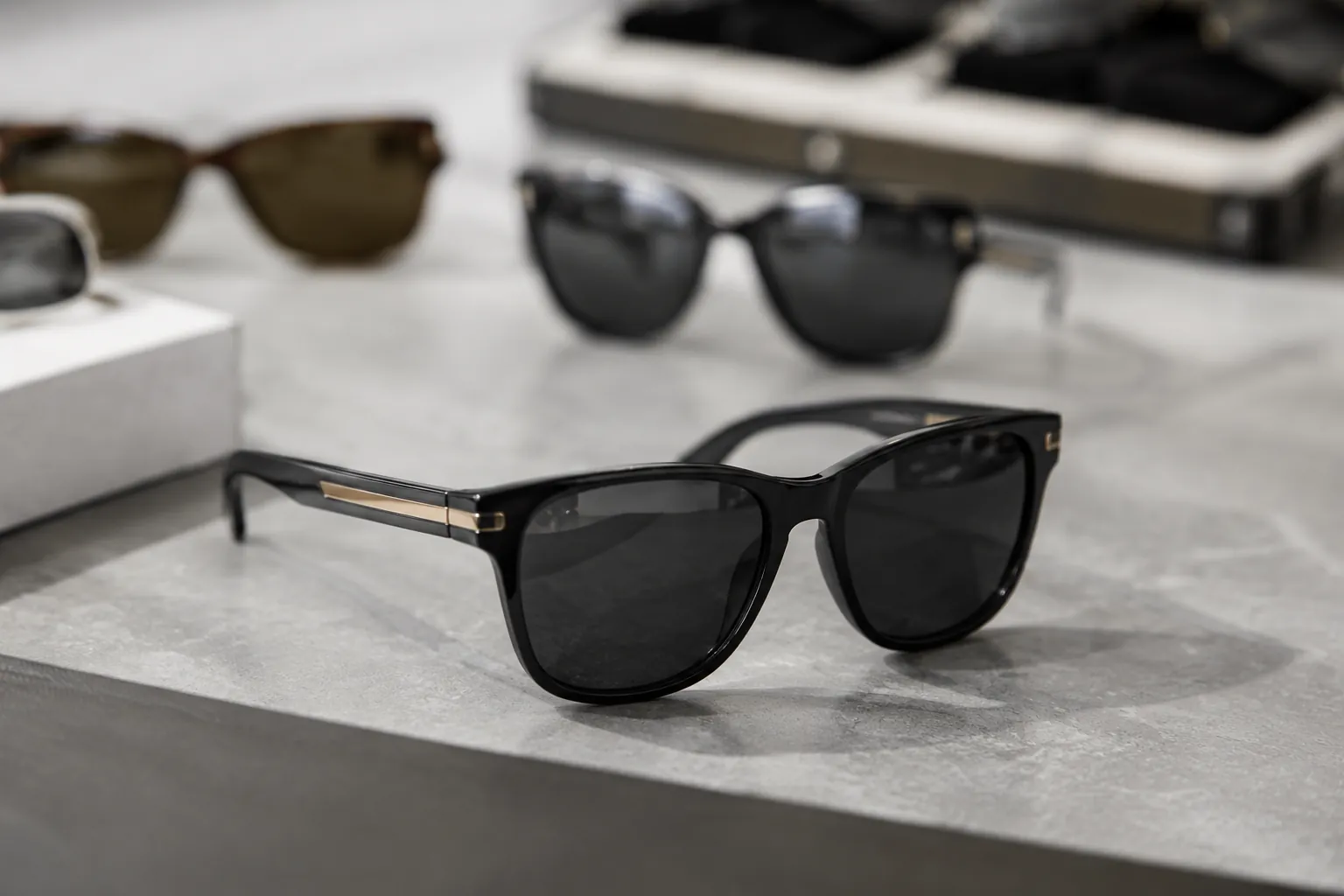
This guide is for hotel groups, resort buyers, airport retail teams, cruise operators, destination shops, and distributors sourcing branded sunglasses in repeatable volume. It shows how to define the selling environment, control MOQ risk, specify materials and lenses, check compliance documents, and plan reorders before shelves run empty. The aim is simple: fewer dead styles, fewer claim or labeling errors, clearer factory quotes, and sunglasses that hold up to sun, salt, handling, freight, and guest use.
Start With the Selling Situation
Do not start with "20 trendy models." Start with where the sunglasses will be sold and how they will be handled. Hotel, resort, and travel retail sunglasses are bought for different reasons than seasonal fashion eyewear. Guests may have forgotten a pair, need glare protection at the pool, want a destination souvenir, or need a quick gift before boarding.
The sourcing brief should define the selling environment, target guest, handling level, display method, price point, and reorder plan. A resort boutique can usually carry brighter colors, bolder temple graphics, and lifestyle-led packaging. A hotel lobby shop often needs quieter branding, unisex sizing, and neutral colors that work for guests who did not plan to shop. Airport and cruise retail need stronger packaging, scannable barcodes, scratch-resistant lens handling, and consistent hinges because stock is touched, moved, displayed, and reallocated often.
- Pool and beach programs: specify UV400 lenses, corrosion-resistant hardware where needed, color stability in sunlight, and frames that clean easily after sunscreen exposure.
- Lobby retail: use black, tortoise, champagne, crystal, navy, or other low-risk colors with medium-fit silhouettes and restrained logo placement.
- Destination souvenir shops: use local colorways, temple printing, printed pouches, hangtags, or lens stickers while keeping the frame wearable.
- Airport and cruise retail: require barcode labels, stronger cartons, hinge checks, lens-scratch inspection, and packaging that survives repeated handling.
For mixed hospitality assortments, LumiShades usually recommends 3 to 6 frame designs and 2 to 4 colorways per design. With MOQ from 50 pairs per design, a pilot can test real sell-through before the buyer commits to deep stock in one unproven style.
Build a Range That Can Reorder
The safest first order is not always the biggest order. It is the order that tells you which SKUs sell and can be repeated without redesign. For one property or a small chain, a practical opening range is often 300 to 1,000 pairs across proven shapes: wayfarer-style, round, aviator-inspired plastic or metal-combo, sport wrap, and one small-fit or children's option if the property serves families.
Keep decoration logic consistent. If every frame uses a different logo method, reorder cost, approval time, and production control get harder. A clear structure might use pad printing for standard plastic frames, laser engraving for acetate models, and a metal logo plate only on premium retail styles. Guests understand the range faster. Purchasing teams reorder it faster too.
| Program Type | Opening Mix | MOQ and Reorder Logic | Best Branding Method |
|---|---|---|---|
| Boutique hotel shop | 3 designs, 2 colors each, 300-600 pairs total | Test 50-100 pairs per SKU, then repeat the best sellers | Pad print or laser engraving on temple |
| Beach resort | 5 designs, 3 colors each, 1,000-2,000 pairs total | Keep core colors deeper and treat bright colors as seasonal tests | Outer temple logo, printed pouch, lens sticker, or hangtag |
| Cruise retail | 4 designs, 2-3 colors each, 1,000+ pairs total | Use fewer SKUs with deeper stock to reduce allocation errors | Durable pad print or metal logo plate plus barcode labeling |
| Airport travel shop | 6 designs, 2 colors each, 2,000+ pairs total | Plan cartons by store allocation, monthly sell-through, and replenishment cycle | Subtle temple logo, hangtag, compliant labeling |
Unit price usually improves as volume rises because setup, decoration, QC, packaging, and admin work are spread over more pairs. At LumiShades, 50 pairs per design suits pilot production. Volumes of 300, 1,000, and 5,000+ pairs are better for repeat or scaled programs. Final pricing should be quoted against confirmed material, lens type, decoration, packaging, inspection requirements, target market, and delivery terms.
Choose Materials for Real Use
Hospitality eyewear gets rough treatment. Guests leave sunglasses on dashboards, drop them on pool decks, pack them with wet towels, and clean lenses with shirts. The material must match that reality, not just the shelf look.
PC injection frames are efficient, rigid, and cost-effective for promotional, amenity, and entry retail programs. TR90-style flexible frames work where bend resistance matters, such as family resorts, sport wraps, and poolside use. Acetate gives richer color, better polish, and a more premium hand feel, but it needs cutting, tumbling, polishing, and tighter heat control. Metal-combo frames can raise perceived value, but they add plating, screws, nose pads, and alignment points. More parts mean more checks.
- PC injection: good for value programs; wide color range; check sink marks, gate trimming, surface scratches, and brittleness after heat exposure.
- TR90-style frames: better flex recovery; useful for sport and family programs; confirm temple opening force, lens retention, and shape recovery.
- Acetate: premium finish and deep color; slower production; check polishing quality, lamination lines, temple alignment, and warping under heat.
- Metal-combo: premium look; inspect plating, screw torque, nose-pad symmetry, bridge alignment, and sharp edges.
LumiShades can support different material routes for different price tiers in one hospitality program. For repeat orders, keep approved color chips, mold or model references, lens tint records, logo position drawings, packaging artwork, and retained physical samples on file. A reorder six months later should be checked against the original approval, not memory.
Specify Lenses Precisely
Many sourcing mistakes start with the lens line on the specification sheet. "UV protection" is too vague. A buyer should define UV400, lens category, tint color, solid or gradient lens, polarized or non-polarized construction, mirror coating if any, and the target compliance market before sampling begins.
For hotels and resorts, non-polarized UV400 lenses are often enough for entry retail and amenity programs. Polarized lenses are useful near water because they reduce reflected glare, but they cost more and can affect visibility on some screens. Guests notice polarization. They also notice distortion, tint mismatch, loose lenses, and scratched coatings. A cheap lens that feels wavy when the wearer turns their head can trigger complaints even if the frame looks good.
- Define UV400 protection and the relevant market standard before sampling.
- Confirm lens category and visible light transmission range for the intended use case.
- Approve tint against a retained physical sample under daylight, retail lighting, and strong sun.
- Check assembled lens fit for gaps, stress marks, edge chips, uneven seating, and rattle.
- Inspect for scratches, coating spots, prism distortion, and left-right tint mismatch during pre-shipment QC.
Align compliance before packaging is printed. Relevant standards and documents may include CE EN ISO 12312-1 for many European buyers, ANSI Z80.3 for the United States, AS/NZS 1067 for Australia and New Zealand, FDA registration for U.S. import handling, and REACH for restricted substances. Do not print claims such as "polarized," "UV400," or a standards mark unless the product file, test report, and supplier declaration support the claim for that SKU or product family.
Match Branding to Wear
Putting a logo on sunglasses is easy. Keeping that logo acceptable after time in a beach bag, on a pool deck, or in a high-touch display is harder. The decoration method should match the frame material, retail price, logo detail, expected wear, and reorder plan.
Pad printing is the most flexible method for many plastic frames and simple one-color marks. It works for inner temple text, resort names, and small outer temple logos, but ink adhesion should be tested against rubbing, sunscreen, heat, and sweat. Laser engraving is cleaner on acetate and metal surfaces, but it is more subtle and may have low contrast on dark materials. Metal logo plates look premium, but they require tooling, assembly control, edge finishing, and bonding or riveting checks. Lens logos need caution. Bad placement distracts the wearer and can make the lens feel cheap.
| Decoration | Best Use | Process Detail | Risk to Check |
|---|---|---|---|
| Pad printing | Plastic frames and simple resort logos | Usually 1-2 colors; position tolerance should be agreed before production | Ink adhesion after tape, rub, heat, sweat, and sunscreen exposure |
| Laser engraving | Acetate temples, metal parts, subtle marks | No ink layer; result depends on surface contrast and engraving depth | Low visibility on dark colors or inconsistent engraving tone |
| Metal logo plate | Premium resort and gift shop styles | Requires plate tooling, placement fixture, and fixing control | Loose plate, sharp edge, plating mismatch, or crooked alignment |
| Printed pouch or box | Retail display, gifting, and destination stories | Artwork should be approved with dieline, barcode, warning text, and carton marks | Color shift, barcode scan failure, crushed packaging, or incorrect language |
LumiShades supports pad printing, laser engraving, and metal logo plate options depending on frame material and order specification. For first production, agree the logo size, position drawing, color reference, acceptable tolerance, adhesion check, and retained approval sample before bulk production starts.
Plan Sampling and Reorders Early
Speed matters for hotel openings, seasonal resort launches, cruise resets, and airport promotions. But rushing the wrong stage creates rework. A practical custom program has three timing layers: sample approval, bulk production, and shipment planning.
LumiShades can usually provide samples in 7-10 days and bulk production in 25-35 days after approval, depending on material, decoration, lens, packaging, order size, and the completeness of the approved specification. If the buyer changes lens tint, logo placement, packaging language, barcode format, compliance text, or carton allocation after sample approval, that component should be reapproved and the schedule may change. Small artwork changes are not always small in production. They can affect fixtures, films, packaging plates, labels, inspection records, or regulatory claims.
A good replenishment plan is built before the first order ships. If purchasing waits until shelves are empty, production time plus freight time will feel slow even when the factory is on schedule.
Set a reorder trigger based on monthly sell-through, factory lead time, freight time, safety stock, and store allocation. If a resort sells 600 pairs per month and the combined production and freight cycle is longer than one month, the reorder point cannot be 100 pairs. Keep best sellers deeper. Move proven SKUs to 300, 1,000, or 5,000+ pair levels when demand supports it. Treat experimental colors as seasonal tests, not core inventory.
Use QC to Stop Store Complaints
Store complaints sound simple: lenses scratched, arms loose, logo crooked, frame color wrong, barcode missing, packaging crushed. Each one usually points to a missed inspection point. Put the checklist into the purchase order and approval file. Do not leave it buried in emails.
Inspection should cover appearance, dimensions, hinge performance, lens quality, decoration, packaging, and compliance labeling. Hinge screws should open smoothly without wobble. Temples should close evenly. Lenses should sit without stress marks. Frames should not rock on a flat surface beyond the agreed tolerance. Nose bridges, temple tips, and lens edges need clean finishing. Sharp plastic flash or rough metal edges become guest complaints fast.
- Check UV performance, lens category, and labeling against the stated standard and market requirement.
- Inspect visible surfaces under consistent light for scratches, bubbles, sink marks, color streaks, coating defects, and plating defects.
- Open and close hinges repeatedly; loose screws, uneven spring action, grinding, or frame twist are warning signs.
- Verify logo position, logo color, print adhesion, engraving visibility, and metal plate fixing against the approved sample.
- Scan barcodes from final packaging, not only from artwork PDFs or pre-production labels.
- Confirm carton markings match SKU, color, quantity, language, destination, and store allocation.
Buyers should provide a written checklist, AQL expectations if required, and retained golden samples for approved SKUs. For multi-country distribution, organize test reports and declarations by SKU or product family. Relevant documents may include CE EN ISO 12312-1, FDA registration, ANSI Z80.3, AS/NZS 1067, REACH, ISO 9001, and BSCI where applicable to the supplier, product, or buyer requirement.
Write RFQs That Factories Can Quote
A factory can quote faster when the RFQ is specific. Vague requests produce vague prices. Vague prices cause disputes later. For custom sunglasses, the RFQ should define the product, decoration, compliance target, packaging, quantity breaks, sample needs, inspection expectation, and delivery address or trade term.
Use quantity breaks that match the buying plan. Ask for 50, 300, 1,000, and 5,000+ pair pricing if you plan to test first and then scale. If you have a target retail price or factory price, state it. If purchasing needs landed cost for duty planning, separate ex-factory price, freight, insurance, duty, tax, and local handling instead of asking the supplier to hide every cost in one number.
- List each frame style, material, color, size, target fit, and any reference sample or drawing.
- State lens requirements: UV400, category, polarized or non-polarized, tint, gradient, mirror coating, and target market.
- Attach vector logo artwork and define decoration method, location, size, color reference, and tolerance.
- Define packaging: pouch, box, hangtag, barcode, warning text, carton marks, language, and retail display needs.
- Name target markets and compliance needs such as CE EN ISO 12312-1, ANSI Z80.3, AS/NZS 1067, FDA registration, or REACH.
- Request sample timing, bulk lead time, payment terms, inspection process, retained sample process, and reorder record retention.
For LumiShades, a useful starting brief is direct: 3 to 6 designs, MOQ from 50 pairs per design for a pilot, sample approval target of 7-10 days, bulk target of 25-35 days after approval, and expected scale volume by season. That gives the factory enough information to recommend a suitable material route, lens process, decoration method, packaging approach, and QC plan without guessing.
Have a custom sunglasses project in mind?
Send us your styles, target market and quantities and we will return a detailed quote with MOQ, lead time and a sample plan.
Get a QuoteWhy source this from Wenzhou with LumiShades
Wenzhou in Zhejiang Province is widely regarded as China’s eyewear manufacturing capital, producing a large share of the world’s sunglasses. That concentration matters to buyers: a deep local supply chain for acetate sheet, hinges, lens blanks, plating and packaging means shorter component lead times, easier color and material matching, and a workforce with decades of eyewear-specific skill. LumiShades has manufactured in this ecosystem since 2009, and our vertical integration — in-house injection molding, acetate cutting, CNC milling, lens tinting, decoration and quality control — means no part of your order is quietly subcontracted to a workshop you cannot audit.
For international buyers, that vertical control translates into accountability. When a single factory owns every step, defects are traced and fixed at source rather than bounced between vendors, and your specifications survive intact from first sample to bulk. For procurement review, buyers can request process records, approved samples, quality checkpoints and project-specific compliance files before placing a bulk order. Required testing and documentation are confirmed against the destination market and product specification rather than assumed from a generic certificate list. Explore our manufacturing capabilities and quality control process to see how this works in practice.
Frequently asked questions
What is a realistic MOQ for a hotel sunglasses pilot program? For LumiShades, MOQ starts at 50 pairs per design. A practical pilot is often 300-600 pairs across several designs and colors, so the buyer can compare real sell-through by SKU. After the pilot, repeat the best sellers at 300, 1,000, or 5,000+ pair levels when demand supports the inventory risk.
How long should we allow for samples and bulk production? Plan for 7-10 days for samples and typically 25-35 days for bulk production after final sample approval. Add time for artwork approval, compliance document review, packaging confirmation, inspection, freight, customs, and store allocation. If lens tint, logo position, barcode, language, or compliance text changes after approval, reapproval may be needed.
Which lens specification should a resort buyer request first? Start with UV400 protection, lens category, tint color, and whether the lens is polarized or non-polarized. Then name the destination market so the supplier can align documentation with CE EN ISO 12312-1, ANSI Z80.3, AS/NZS 1067, FDA registration, or REACH requirements where applicable. Do not print lens claims until the test report and product file support them.
Is polarization necessary for hotel and resort sunglasses? Not always. Polarized lenses reduce reflected glare near water, which is useful for resorts, cruises, marinas, and beach retail, but they cost more and can affect visibility on some screens. Many entry retail and amenity programs use non-polarized UV400 lenses; premium water-focused SKUs are better candidates for polarization.
What branding method is best for repeat resort orders? Pad printing is usually the most flexible and cost-effective option for plastic frames, especially for one-color temple logos. Laser engraving suits subtle marks on acetate or metal, while metal logo plates fit premium retail styles but need stronger QC for fixing, edges, plating, and alignment. Choose one decoration logic per price tier so reorders stay consistent.
How do we avoid running out of stock during peak season? Set a reorder trigger before launch. Calculate it from monthly sell-through, 25-35 days of factory production time, freight time, safety stock, and store allocation. Keep core colors deeper, review sales weekly during peak season, and place replenishment orders before inventory falls below the quantity needed to cover the full production and freight cycle.
Ready to start?
Explore our sport wrap sunglasses or request a quote — our sales team replies within 12 hours.
Request a Quote