
How to Check a Sunglasses Factory's Real Capacity
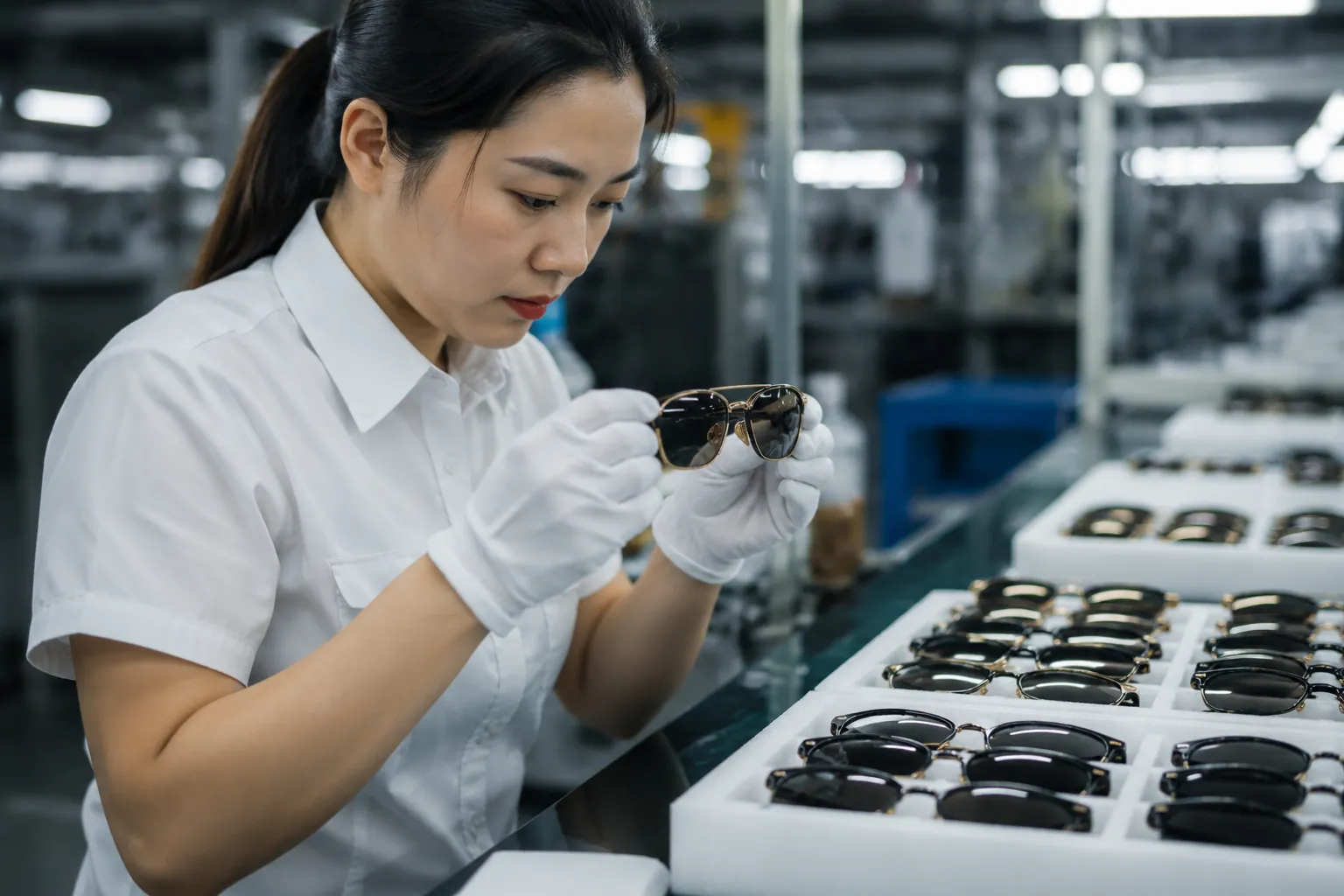
If you buy sunglasses or eyewear in volume, factory capacity matters more than a polished sales deck. A plant can quote a low MOQ and a fast lead time, then miss ship dates once your order reaches the floor. This guide shows brands, importers, distributors, and retailers how to verify real output, staffing, equipment, QC, and bottlenecks before placing a large OEM or ODM order. It is written for buyers who need evidence, not promises.
Start With Output, Not Sales Talk
Ask for monthly output by product type, not one headline number. A factory that says it makes millions of pairs a year still has to show how much is sunglasses, how much is optical frames, and how much matches your construction. A plant that mainly runs injection styles will not behave like one that spends most of its time on acetate cutting and finishing. Capacity is style-specific. The same line that can finish a simple TR90 frame quickly may slow down once you add two-color temples, soft-touch coating, custom hinges, or polarized lenses.
Request three items in writing: average monthly output for the last six months, peak-month output, and on-time shipment rate for the same period. Ask for a breakdown by process family, such as injection, acetate, metal, and mixed-material styles. The factory should connect those figures to the same product family, materials, and finishing steps you need. If the monthly average is 180,000 pairs and the peak month was 220,000, that leaves little surge room. If peak output reached 320,000 pairs and on-time delivery stayed above 95% during that peak, the claim is more believable. Simple test. Hard to fake for long.
Then pressure-test the numbers against your own order. If you need 20,000 pairs in three colors, ask how many molding machines, CNC stations, tinting lines, and packing workers will be assigned. If they cannot translate yearly output into weekly line loading, they are not giving you an operational answer. For planning, ask for takt time, daily line output, and changeover loss. If a line produces 1,200 pairs a day on a simple style but drops to 700 after color changes and logo work, that is the number that matters for your PO.
Good capacity data is specific, dated, and tied to a product family. It should read like a production report, not a brochure.
Check the Factory by Process, Not Floor Space
Square meters do not ship product. Process control does. A sunglasses factory should be able to identify each bottleneck step, its staffing, and its hourly or daily capacity. For custom eyewear, common choke points are lens tinting, decoration, assembly, and final inspection. If one of those is weak, the order slips. In eyewear, the slowest step is often not molding. It is the small work around it: polishing acetate edges, aligning hinges, controlling lens shade consistency, and correcting cosmetic defects before packing.
Ask for machine counts, operator counts, and technical limits for each process. A useful answer sounds like: "We run 12 injection machines at 160T–280T, average cycle time 38–52 seconds depending on style, with two molds per machine in peak shifts." A weak answer sounds like: "We have enough machines." The same standard applies to acetate, CNC, and finishing. Tolerances matter. If a hinge bore drifts on a critical fit, assembly scrap rises. If a lens tint bath varies from one run to the next, the mismatch may show up in carton-to-carton comparison. That is how hidden capacity problems show up.
- Injection molding: check machine tonnage, cavity count, cycle time, mold ownership, and whether preventive maintenance runs on a fixed hour-based interval.
- Acetate cutting: ask about sheet storage, humidity control, cutting accuracy, and scrap rate; acetate is sensitive to heat, dust, and poor tooling.
- CNC milling: confirm spindle count, program control, and whether tolerances are held on bridge fit and temple alignment.
- Lens tinting: ask batch size, temperature control, immersion time, and how the plant tracks shade drift from one run to the next.
- Decoration: review laser engraving, pad printing, hot stamping, and metal logo plate capacity separately; these steps are often slower than basic assembly.
- QC: inspect incoming, inline, and final QC staffing, plus rejection handling and rework rules.
When a factory keeps injection molding, acetate cutting, CNC milling, lens tinting, decoration, and QC in-house, it is easier to trace capacity step by step. That does not prove the plant is strong. It only means the queue is visible. Still useful.
Use a Capacity Table to Compare Claims
Ask the factory to fill in a table like this for your specific product. If it cannot, it does not know its own throughput well enough to plan your order. The exact numbers will vary by style and complexity, but the structure should stay the same. You are not looking for perfect precision. You are looking for a manager who understands where the hours go and where the bottlenecks sit.
| Area | What to Ask | What Good Looks Like | Buyer Warning Sign |
|---|---|---|---|
| Injection molding | Machine count, cycle time, mold ownership, and daily output per model | Clear output by model, active mold maintenance records, and stable scrap at a controlled level | Only a yearly total, no machine list, or no answer on mold ownership |
| Acetate production | Cutting capacity, polishing flow, material aging, and scrap rate | Measured throughput by style, sheet-conditioning control, and a documented scrap target | Vague claims about "enough capacity" or no process owner for polishing |
| Finishing and decoration | Laser, pad print, hot stamp, logo plate, and coating capacity | Named bottleneck step, queue length, and a defined method for defect recovery | Decoration handled "as needed" with no line plan or print alignment control |
| QC and packing | Inspection staffing, AQL target, carton count checks, and packing speed | Inline checks plus final inspection, with carton traceability and recheck rules | QC done only by production workers, or no documented acceptance standard |
Use this table during supplier comparison. Two factories can quote the same MOQ of 50 pairs per design, but one may only handle small custom runs without strain, while the other can scale to 300, 1,000, or 5,000+ pairs with better unit pricing. A factory that truly scales should explain why unit cost changes with volume: less setup time per pair, better resin or acetate purchasing, fewer line changeovers, and higher packing efficiency. If a supplier says pricing improves at 300, 1,000, and 5,000+ pairs, ask exactly which cost elements change. On a straightforward acetate style, unit price should usually decline with volume. The amount depends on decoration, packaging, lens specification, and whether tooling or artwork changes are required. No mystery there.
Follow the Headcount, Not the Headline
Labor tells you whether a factory is built for volume or for quotation. Ask for current headcount by function: mold shop, production, QC, maintenance, warehouse, logistics, and administrative support. Then ask how many operators are on each shift, how many shifts they run, and whether overtime is normal or only seasonal. A factory with enough people on paper can still miss shipments if maintenance is weak, QC is under-resourced, or skilled operators are constantly pulled off the line to solve problems.
Headcount matters most when you compare it to actual throughput. If a plant says 150 workers support 250,000 pairs per month, that may be plausible for a highly automated operation. If the same headcount supports only 40,000 pairs per month of heavily decorated acetate eyewear, the plant may be labor constrained or process-heavy. Ask who owns preventive maintenance and how fast downtime is recovered. A plant that can return a critical machine to service quickly has better real capacity than one that waits until the next day.
- Request a staffing chart with names removed but roles included.
- Ask how many people are trained on each key machine or process.
- Ask who covers absences and peak-season overtime.
- Ask how new workers are trained before touching your order.
- Ask what percentage of staff has at least 12 months of eyewear production experience.
Also ask a blunt question: if one production line loses 20% of its staff for a week, what happens to lead time? A real factory has a backup plan, such as cross-trained operators, weekend recovery shifts, or split-line rebalancing. A weak one gives excuses.
Pressure-Test Lead Time Against Real Steps
Many buyers hear "25-35 days bulk" and stop there. Don't. Break the lead time into steps: material prep, sample approval, mold or tooling confirmation, mass production, finishing, QC, and packing. If a supplier cannot split the schedule, the lead time is only an estimate. In eyewear, each stage has its own failure mode. Material prep can slip if acetate sheets need conditioning. Tooling can stall if molds need polishing or inserts need rework. Production can slow if a special lens color has to be matched to a reference sample. QC can hold the order if packaging artwork or barcode labels are not approved early.
If a supplier gives sample and bulk timing, ask what assumptions those timings depend on. A sample timeline only makes sense if the spec is stable. Changes to lens tint, logo method, temple shape, finish texture, or packaging can extend the schedule. A factory with in-house decoration and QC usually has more control than one that waits on outside vendors. If laser engraving is outsourced, add transport time and queue time. If packing is manual, ask how many cartons one team can finish per hour and whether mixed-SKU orders slow the line.
For custom sunglasses, the usual delays are not raw molding. They are approval cycles, color matching, print alignment, and final inspection hold points. A good supplier can tell you how each change affects timing. A new logo method may require extra setup and approval. Packaging artwork changes may require reproofing if cartons are not already sourced. If a plant says it can run everything in a fixed number of days but cannot explain how it handles corrections, it is overselling.
Ask for Proof the Bottlenecks Are Controlled
Capacity failures usually show up in the same places: lens color variation, logo defects, broken hinges, mixed cartons, and late packing. Ask to see how the factory tracks each one. A serious supplier can show defect logs, rework records, and process control checks. You do not need access to internal software, but you do need evidence that errors are measured and corrected instead of hidden.
- Incoming material checks: confirm resin, acetate sheet, lenses, screws, and hardware are checked before production starts.
- Inline QC: ask how often each line is sampled, what defects are classified as critical, and what happens when a defect rate rises above the limit.
- Final QC: ask whether AQL or another documented standard is used, and who signs off before shipment.
- Rework flow: ask where rejected units go, who rechecks them, and whether rework is counted separately from first-pass yield.
- Packaging control: verify carton counts, barcode or label checks, mixed-style prevention, and seal integrity before palletizing.
If the factory holds certifications such as CE EN ISO 12312-1, ANSI Z80.3, AS/NZS 1067, REACH, ISO 9001, FDA registration, or BSCI, that helps on compliance and system discipline. It does not prove capacity. You still need to inspect how the factory keeps output stable across repeated runs, especially when the order changes materials or decoration methods. A plant that passes one audit but cannot hold the same output on the second and third batch is not ready for scale.
Separate MOQ from Real Scalability
MOQ is not capacity. It is a commercial starting point. A plant can agree to 50 pairs per design and still struggle with a 5,000-pair mixed order if the line is poorly balanced or if decoration is manual and slow. Buyers often confuse willingness to quote with the ability to deliver repeatable output. Real scalability means the factory can increase volume without a disproportionate rise in defects, lead time, or hidden labor.
Use order size as a stress test. At 50 pairs, almost any competent factory can manage the work with close attention. At 300 pairs, the plant must organize flow and material staging. At 1,000 pairs, staffing and QC discipline matter more. At 5,000+ pairs, scheduling, component control, and packing accuracy become critical. That is also where small process weaknesses become expensive. A pad-print station that loses logos on a small run is a nuisance. On a large run, it becomes a cost center. If the supplier says unit pricing drops at higher volume, ask what changed: material mix, decoration complexity, packaging, or margin. Real scale savings usually come from fewer changeovers, better purchasing, shorter setup time, and higher line efficiency.
Scalability is the ability to repeat. One good batch does not matter as much as three consistent batches. If a factory can repeat the same style three times, within the same tolerances, with the same lens tint and logo placement, then you have evidence of true capacity. If every batch needs re-approval, the plant is still learning on your order.
Use a Buyer Checklist Before the PO
Before you approve a large OEM or ODM order, run the factory through this checklist and keep the answers in writing. The goal is not to overwhelm the supplier. The goal is to remove surprises before the first deposit is paid and the production slot is reserved.
- Ask for output by product type, not just annual totals.
- Confirm which steps are in-house and which are outsourced.
- Request staffing by function and shift.
- Break the quoted lead time into production stages.
- Review QC flow, defect handling, and packing controls.
- Match MOQ and volume pricing to your own forecast.
- Verify compliance documents for the target market, especially CE EN ISO 12312-1, ANSI Z80.3, AS/NZS 1067, REACH, ISO 9001, FDA registration, and BSCI.
- Get sample timing in writing, including what happens if you revise artwork, hinge color, or lens tint.
If the supplier answers clearly, it probably understands its own limits. If the answers stay vague, assume the quoted capacity is optimistic. It is cheaper to learn that before the PO than after the ship date. For buyers sourcing custom eyewear, the safest rule is simple: trust the factory that can show its numbers, its bottlenecks, and its recovery plan. Everyone else is selling hope.
Have a custom sunglasses project in mind?
Send us your styles, target market and quantities and we will return a detailed quote with MOQ, lead time and a sample plan.
Get a QuoteWhy source this from Wenzhou with LumiShades
Wenzhou in Zhejiang Province is widely regarded as China’s eyewear manufacturing capital, producing a large share of the world’s sunglasses. That concentration matters to buyers: a deep local supply chain for acetate sheet, hinges, lens blanks, plating and packaging means shorter component lead times, easier color and material matching, and a workforce with decades of eyewear-specific skill. LumiShades has manufactured in this ecosystem since 2009, and our vertical integration — in-house injection molding, acetate cutting, CNC milling, lens tinting, decoration and quality control — means no part of your order is quietly subcontracted to a workshop you cannot audit.
For international buyers, that vertical control translates into accountability. When a single factory owns every step, defects are traced and fixed at source rather than bounced between vendors, and your specifications survive intact from first sample to bulk. For procurement review, buyers can request process records, approved samples, quality checkpoints and project-specific compliance files before placing a bulk order. Required testing and documentation are confirmed against the destination market and product specification rather than assumed from a generic certificate list. Explore our manufacturing capabilities and quality control process to see how this works in practice.
Frequently asked questions
What is the fastest way to tell if a sunglasses factory is exaggerating capacity? Ask for three data points: monthly output by product type for the last six months, staffing by function and shift, and a lead-time breakdown by process step. Then ask for one recent order that is close to your style and volume. If the supplier cannot show a dated output record and a clear process flow, treat the capacity claim as unverified. A serious factory should also be able to name its bottleneck step and explain how it handled the last peak month.
Does in-house mold, cutting, tinting, and QC mean the factory is high capacity? It helps because fewer steps are outsourced, but it does not prove volume. You still need machine counts, shift staffing, maintenance frequency, first-pass yield, and evidence of stable output on similar orders. Ask for the number of operators trained on each critical process and whether the factory can recover downtime without delaying shipment. In-house processes reduce handoff risk. They do not replace capacity data.
How should I compare two factories that both quote 25-35 day bulk lead time? Break the quote into stages and compare each one: material prep, sample approval, tooling, production, finishing, QC, and packing. Ask which steps are internal, which are outsourced, and how many days each step usually takes for an order like yours. Then ask for proof of recent on-time shipment performance on similar styles or volumes. If one supplier can show a stage-by-stage schedule and the other only gives a single promise date, the first answer is more useful.
Is MOQ 50 pairs a sign of flexibility or small scale? It is mainly a commercial sign of flexibility, not proof of scale in either direction. A factory that accepts 50 pairs may still be capable of much larger orders if its line balance, QC, and sourcing are solid. The real test is whether unit pricing, defect rate, and lead time improve predictably at 300, 1,000, and 5,000+ pairs. Ask the supplier to explain what changes at each volume tier, especially setup time, decoration cost, and packing efficiency.
Which certifications matter for export sunglasses? For the markets and standards listed in this article, check CE EN ISO 12312-1, ANSI Z80.3, AS/NZS 1067, REACH, ISO 9001, FDA registration, and BSCI. Ask for the exact certificate or registration number, the issuing body, and the scope and validity dates. If the documents are expired, scoped to a different product, or issued to a different legal entity, do not count them as proof for your order. Certifications help with compliance and process discipline, but they do not prove capacity by themselves.
Ready to start?
Explore our aviator sunglasses or request a quote — our sales team replies within 12 hours.
Request a Quote