
Nose Pads and Temples for All-Day Sunglass Comfort
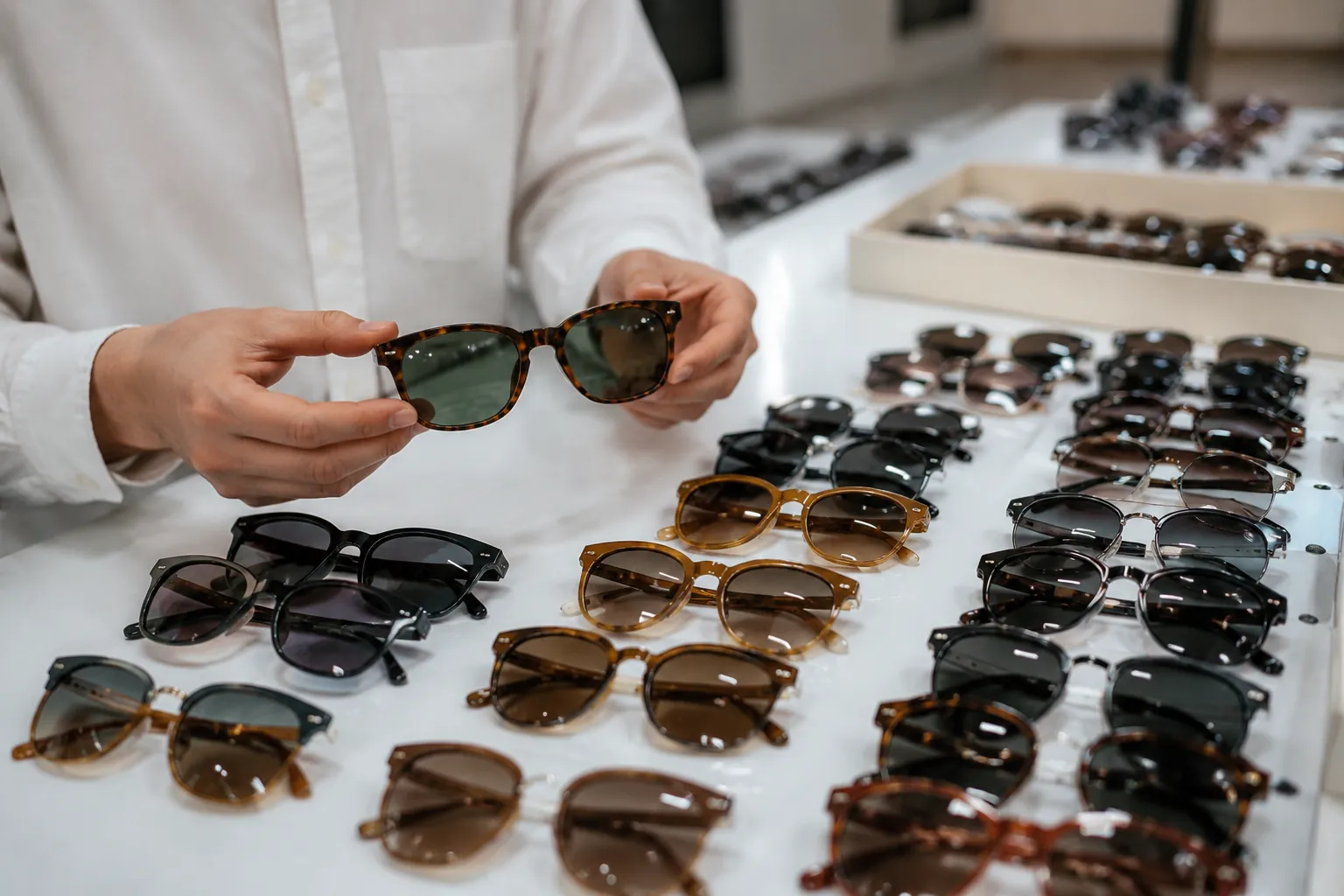
This guide is for brand owners, importers, distributors, and retailers developing custom sunglasses for longer wear. Most comfort complaints trace back to a few contact-point problems: a bridge that is too flat or too narrow, temple tips that depend on excess clamp instead of controlled wrap, and finishes that look fine in a sample box but feel harsh after a few hours. Small errors here can drag down perceived quality and drive returns, even if the styling, lenses, and branding are solid. The fix is usually not complicated. It starts early. If the buyer gives the factory clear, testable direction before tooling is finalized, most of these risks can be reduced. The sections below focus on what can be defined with an OEM partner during development, sampling, pre-production, and bulk QC.
Start with wear use before tooling
Many buyers approve the front shape first and leave comfort for later. That is expensive. Nose and temple geometry are easiest to correct before tooling is cut. Once the mold, polishing path, pad arm position, or temple bend profile is fixed, even small changes can mean new samples, extra handwork, or tooling updates.
Start with a written wear brief. Before the first prototype request, define four inputs:
- Target wear duration: under 2 hours, 2 to 6 hours, or 6+ hours.
- Use condition: dry casual, hot and humid outdoor, driving and travel, or active sport.
- Target fit range: narrow, medium, wide, low-bridge fit, or broad unisex fit.
- Main complaint to avoid: slip, nose red marks, pressure behind ears, headaches from clamp, or hair snagging.
That brief should drive geometry and material choices. A short-wear fashion frame can tolerate firmer bridge contact and a simpler temple tip profile. An all-day resort or travel frame usually needs a broader load-bearing area at the bridge and a longer temple contact zone to reduce pressure over time. A sport frame often needs more grip under sweat, but that grip should come from texture, overmold, or bend control, not just more clamping force.
If the target is 6+ hour wear, ask the factory to review pressure concentration, not just visual fit. In OEM terms, that means checking bridge contact width, nose area angle, temple bend start point, and tip material before decoration approval. Early CAD and hand-sample stages are the right time to fix these points. Later is slower and costs more.
Match the nose system to material and price tier
Frame material limits which comfort solutions make sense. Injection plastic, acetate, and metal-combination constructions do not behave the same in fit adjustment, polish quality, or long-wear pressure control.
| Contact system | Best use case | Main benefit | Main risk |
|---|---|---|---|
| Molded saddle nose area | Injection sunglasses, entry to mid-price retail programs | Low part count, stable assembly, lower unit cost | Limited post-production adjustability if bridge geometry is wrong |
| Textured or soft-touch contact zone | Active or long-wear plastic frames | Better grip in heat and sweat, improved initial comfort | Texture or coating mismatch can affect appearance, consistency, or durability |
| Separate adjustable nose pads | Metal or premium mixed-material frames | Wider fit tuning across different nose shapes and bridge heights | More components, more assembly steps, more alignment and loosening risk |
| Acetate polished nose rest | Premium fashion and lifestyle acetate styles | Clean appearance, solid premium feel, no extra hardware | Requires precise bridge angle because post-sale adjustment is limited |
For molded plastic sunglasses, a common mistake is flattening the bridge too much to avoid pinching. That often creates the opposite problem: slip and constant repositioning. For acetate, the critical variables are bridge angle, contact width, and edge polish. A polished acetate rest can feel very good, but if the inner edge is too sharp or the load sits on a narrow ridge, pressure marks can appear fast.
Separate nose pads help when a style must cover a wider fit range across different markets. They are not automatically the best option. Pad arms add tolerance stack-up: left-right symmetry, arm height, arm spread, and pad angle all need control. A frame can have good lenses and good hinges and still fail because the pads sit unevenly.
Control pressure through width, angle, and hardness
Comfort is mostly pressure management. Pressure rises when the contact area is too small, the angle is off, or the material does not suit the use case. Most complaints are not caused by one big flaw. They come from several small misses that add up during wear.
At the bridge, focus on three variables:
- Contact footprint: For longer wear, a broader footprint usually spreads load better. Too broad, though, can feel unstable on narrower faces. User profile matters.
- Contact angle: The nose contact surface should sit evenly enough to avoid one-edge loading. If the top or bottom edge carries most of the force, marks can show up quickly even when first try-on feels acceptable.
- Material hardness and finish: Softer surfaces can improve first feel. Too soft or too tacky, and they may deform, hold dust, or wear early in high-contact areas.
The same logic applies at the temples. The best temple tip is not the tightest one. It is the one that holds the frame with the least force needed for stable wear. For many retail sunglasses, that means a longer contact zone with gentle curvature near the mastoid area, not a short tip with an aggressive downward bend. For sport frames, extra retention should come from controlled wrap, micro-texture, or overmold grip, not just higher temple spread tension.
Ask the factory to check comfort after 20 to 30 minutes of wear, not only at first try-on. Hot spots take time to show. Extended wear makes it easier to see whether bridge contact stays even, whether the temple tip starts to dig in, and whether wearers keep adjusting frame position during normal movement.
Watch the return triggers
Most comfort-related returns follow a short list of patterns. Treat them as sampling checkpoints, not customer feedback after launch.
- Bridge slip: Often linked to a bridge that is too flat, a contact zone that is too smooth, or pad angle that is too vertical.
- Nose red marks: Often linked to a small contact footprint, asymmetric geometry, or one-edge loading at the bridge or pad.
- Pain behind ears: Often linked to temple bend starting too early, a bend radius that is too tight, or temple tips that narrow too aggressively at the end.
- Headache complaints: Often related to clamp force rather than lens weight alone.
- Hair snagging: Often linked to rough transition lines, poor overmold finishing, exposed logo plate edges, or insufficient polishing near hinge-end decoration.
Customers usually experience these problems as a general sense that the product feels cheap or uncomfortable. They do not care whether the root cause is bridge angle, pad symmetry, or a finishing edge. They just return it.
A simple sample wear test can catch many of these issues early. Use 3 to 5 wearers covering at least two fit profiles. Ask each wearer to use the frame for at least 30 minutes while walking, sitting, and looking down at a phone or reading material. Record slip, visible nose marks, pressure behind the ears, and how often the wearer repositions the frame. Keep the format simple. What matters is consistency.
Write specs the factory can actually check
Comments like "make it more comfortable" are useless in production. A factory needs requirements tied to geometry, finishing, and inspection points. Put comfort into the tech pack in terms that can be checked.
A practical contact-point spec sheet should include:
- Nose system type: molded saddle, acetate rest, textured bridge zone, or separate pad assembly.
- Target fit note: narrow, medium, wide, or low-bridge fit, plus target market if relevant.
- Bridge contact dimensions: target width and length of the contact area, with tolerances where possible.
- Temple tip behavior: bend start position, contact length, and whether the tip should prioritize grip or low pressure.
- Surface requirement: polished, matte micro-texture, soft-touch, rubberized, or anti-slip pattern.
- Wear-test requirement: sample must be checked after extended wear, not only at first try-on.
Review decoration against comfort zones too. A metal logo plate placed too close to the temple contact area can create a hard edge. Pad printing in a high-rub area can wear unevenly and change surface feel over time. Laser engraving has a lower profile, but it can still affect touch on a narrow temple edge. On acetate or injection styles, even a seam line or polishing inconsistency in the bridge area can change perceived comfort more than buyers expect.
For pre-production approval, request one sample in final finish and final assembly condition. Do not judge comfort from raw structure alone. Polishing, painting, rubber coating, logo application, and hinge setting can all change how the frame feels on the face.
Know the cost and timing impact of comfort changes
Comfort upgrades are often cheaper than dealing with returns, but buyers still need to know which changes affect tooling, labor, and lead time. The key question is simple: does the change happen before or after tooling freeze?
| Design choice | Cost effect | Lead-time effect | MOQ impact |
|---|---|---|---|
| Refine molded nose and temple geometry before tooling freeze | Usually lower incremental cost than late-stage changes | Often limited if done during CAD and early sampling | Often no direct MOQ change |
| Add separate pad assembly | Higher component and labor cost | Adds assembly and fit-check time | May be less efficient on very small runs |
| Add texture, rubber paint, or overmold grip zone | Low to moderate depending on process route | May add sampling steps and finish validation | Often manageable within standard production planning |
| Change bridge or temple geometry after sample sign-off | Can be high if tooling revision is required | Often adds a new sample round or production delay | MOQ may stay the same, but efficiency can drop |
The practical lesson is blunt: do comfort work before tooling lock. It is usually faster and cheaper there than after branded samples are approved. Buyers do not need factory-wide averages to act on this. They need to ask early which changes are CAD-only, which are hand-sample adjustments, and which require tooling revision.
During sourcing review, ask the supplier to classify every comfort-related revision in three ways: does it affect tooling, does it add assembly time, and does it create a new finish-control risk? That makes the commercial impact much easier to compare before approval.
Run fit testing alongside compliance and production review
Comfort and compliance are different tracks. A frame can meet documentation and product requirements and still fail in the market because it is uncomfortable. Passing paperwork is not enough.
For multi-market sunglasses programs, the documentation side may include CE EN ISO 12312-1, FDA registration, ANSI Z80.3, AS/NZS 1067, REACH, ISO 9001, and BSCI, depending on the sales channel, supplier setup, and destination market. These matter for market access, chemical control, quality systems, or social compliance. They do not confirm wearer comfort.
During pre-production, review the following in parallel:
- Visual fit and pressure behavior after at least 20 to 30 minutes of wear
- Symmetry of bridge contact and left-right temple bend
- Surface condition in high-contact zones after final finishing
- Compliance paperwork required for the destination market
- QC checkpoints for bridge geometry, pad alignment, temple spread, and finish consistency in bulk
This is where process control matters. When frame making, lens processing, decoration, assembly, and QC follow a controlled sequence, it is easier to hold the approved comfort spec through production. It does not guarantee consistency. It does reduce handoff risk and speed up root-cause correction if something drifts.
Use a simple approval workflow
Repeat programs usually perform best with a straightforward approval sequence. No drama. No guesswork. Just discipline.
- Define the wear scenario. Confirm wear time, climate, movement level, and target user profile before design freeze.
- Specify contact-point requirements. State nose system, fit target, temple-tip behavior, and finish expectations.
- Review first samples for geometry first. Set decoration aside at the start and focus on slip, pressure, and bend profile.
- Review a final-finish sample. Recheck comfort after polishing, tinting, printing, engraving, plating, or logo plate application.
- Approve one pre-production sample. Use it as the master QC reference for bulk.
- Set in-line bulk checkpoints. Inspect bridge shape, pad alignment, temple spread, contact-zone finish, and assembly consistency during production.
Many avoidable returns happen because a frame looks good in a quick first fitting, so the buyer assumes comfort is solved. It is not. If your retail or distributor program depends on long-wear satisfaction, control nose pads and temple contact points as tightly as lens category, color execution, and logo placement. That protects margin by cutting fit complaints, remakes, and avoidable returns.
Have a custom sunglasses project in mind?
Send us your styles, target market and quantities and we will return a detailed quote with MOQ, lead time and a sample plan.
Get a QuoteWhy source this from Wenzhou with LumiShades
Wenzhou in Zhejiang Province is widely regarded as China’s eyewear manufacturing capital, producing a large share of the world’s sunglasses. That concentration matters to buyers: a deep local supply chain for acetate sheet, hinges, lens blanks, plating and packaging means shorter component lead times, easier color and material matching, and a workforce with decades of eyewear-specific skill. LumiShades has manufactured in this ecosystem since 2009, and our vertical integration — in-house injection molding, acetate cutting, CNC milling, lens tinting, decoration and quality control — means no part of your order is quietly subcontracted to a workshop you cannot audit.
For international buyers, that vertical control translates into accountability. When a single factory owns every step, defects are traced and fixed at source rather than bounced between vendors, and your specifications survive intact from first sample to bulk. We back this with 15+ years of experience, shipments to 60+ countries, more than 5 million pairs produced per year and a 98.5% on-time delivery rate. Our certifications — CE EN ISO 12312-1, FDA registration, ANSI Z80.3, AS/NZS 1067, REACH, ISO 9001 and BSCI audit — mean the compliance documentation your market requires already exists. Explore our manufacturing capabilities and quality control process to see how this works in practice.
Frequently asked questions
What is the biggest comfort mistake buyers make on custom sunglasses? They keep contact-point requirements too vague during development and approve styling before fit is properly tested. Start with the wear scenario, then put the bridge type, target fit range, temple-tip behavior, surface finish, and wear-test requirement into the tech pack before tooling is finalized.
Are separate nose pads always better for comfort? No. Separate pads can improve fit range, especially across different bridge heights and nose shapes, but they also add alignment variables and assembly risk. Ask whether your program really needs field adjustability. If not, compare a molded or acetate nose design against a pad system using the same 30-minute wear test, then review symmetry, slip, and visible pressure marks before deciding.
How many wearers should test comfort before bulk production? A practical minimum is 3 to 5 wearers for at least 30 minutes each, with at least two different fit profiles if possible. Use a simple test sheet to record slip, nose marks, pressure behind the ears, headache complaints, and how often the frame is repositioned. If the style targets long wear or multiple markets, expand the wearer group before final approval.
Do comfort upgrades always increase MOQ? Usually no. Geometry refinements made early often do not change MOQ directly. More often, the impact shows up in tooling cost, sampling time, assembly complexity, or finish-control requirements. Ask the supplier to classify each revision as CAD-only, sample-only, or tooling-affecting so you can judge cost and timing before approval.
Can compliance certificates confirm that a frame will be comfortable? No. Certifications and registrations such as CE EN ISO 12312-1, ANSI Z80.3, AS/NZS 1067, REACH, FDA registration, ISO 9001, and BSCI address product, market, quality-system, chemical, or social-compliance requirements. They do not measure wearer comfort. Run a separate fit test and include comfort checkpoints in pre-production and bulk QC.
Ready to start?
Explore our cat-eye sunglasses or request a quote — our sales team replies within 12 hours.
Request a Quote