
One PO for Sunglasses, Cases, and Displays That Works
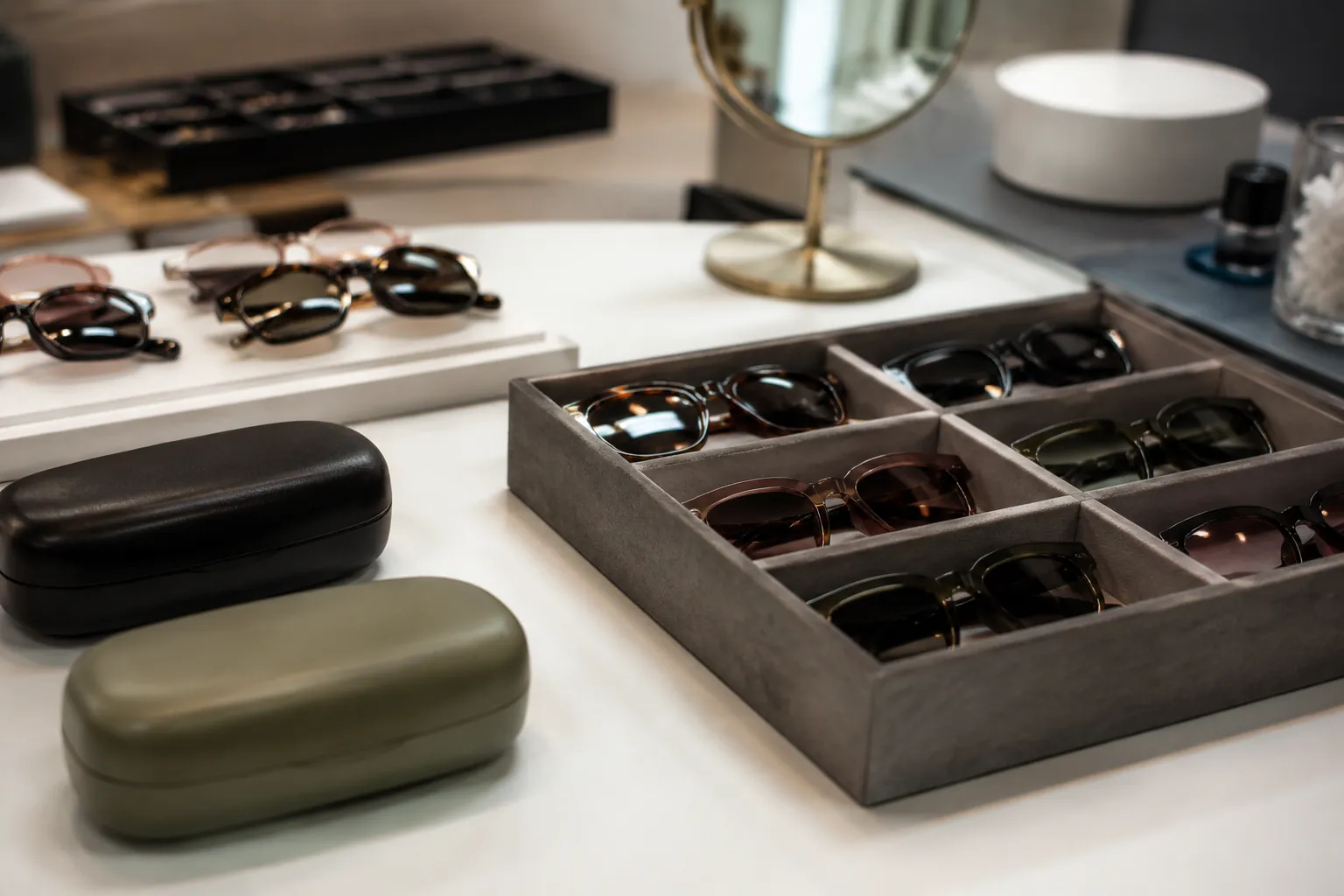
This guide is for brand owners, importers, distributors, and retail buyers who want sunglasses, cases, and display units to arrive together under one purchase order. The upside is practical: fewer handoffs, fewer receiving errors, tighter launch timing, and less inventory stuck in packaging or fixtures that cannot be used yet. But a combined program works only if the supplier runs it as one production path, not as eyewear first and packaging later. That means controlling sample approvals, fit checks, artwork deadlines, compliance inputs, carton specs, barcode placement, and final pack-out before bulk materials are released.
Why one purchase order often fails
Buyers like one PO because it simplifies vendor management and can reduce receiving complexity. The problem is simple: sunglasses, cases, inserts, and displays usually run through different production paths. Eyewear may be made in-house. Cases, printed packaging, and displays often come from outside converters or specialist assembly partners.
Things slip when each track is managed on its own. A sunglass style can be ready for production, but if the countertop display artwork is still moving, the launch still misses its date. The reverse happens too. Displays arrive early, fill warehouse space, and still cannot ship because the glasses are not packed, labeled, or kitted. Either way, the buyer pays in delays, handling cost, or both.
The fix is not more paperwork. It is one program owner, one integrated bill of materials, and separate freeze dates for each component. The eyewear factory may control frame and lens production directly, but that helps only if case sourcing, print approvals, labeling, and display fit testing follow the same critical path. If no one owns every milestone, one PO is just one document hiding several risks.
Short version: one PO works only when one team owns fit, artwork, compliance inputs, packaging coordination, and final pack-out from sample stage to container loading.
Build the BOM before you place the PO
A combined eyewear PO should start with a real bill of materials, not a frame sketch and a logo file. Undefined items create guesswork. Guesswork creates resampling, relabeling, or repacking later. The BOM should cover the sunglass, the protective packaging, the retail packaging, and the transport packaging at SKU level.
- Define the sunglass unit: frame material, lens category, lens color, size, hinge type, logo method, and destination market.
- Define the pack-out: pouch or polybag, leaflet, barcode label format, unit box style, units per inner carton, units per master carton, and carton marks.
- Define the case: microfiber pouch, PU fold case, EVA zip case, or rigid gift box, plus internal dimensions, lining material, and closure type.
- Define the display: countertop tray, spinner, shelf-ready carton, or peg display, with exact unit capacity, loading method, and whether products arrive pre-loaded or field-loaded.
This is where strong programs separate from weak ones. A raised metal logo plate on the temple can rub a lens inside a tight case. A wide frame front can overhang a display slot. A thick acetate front can stop a gift box from closing. Small detail, big consequence.
Ask for one BOM sheet listing every SKU, component code, material, color reference, finish, barcode, packing ratio, and shipping method. For first runs, add fit notes and sample references. Do not rely on generic size rules. Require physical fit approval with production-level samples: the actual frame should be tested inside the approved case, unit box, and display before bulk packaging is released.
Set freeze dates by component, not one blanket approval
One approval date for everything sounds neat. In practice, it drives late changes into the riskiest items. Sunglasses, cases, displays, and cartons all have different lock points. Strong buyers freeze them in the order the factory actually needs.
For sunglasses, the earliest freeze should cover frame geometry, lens category or tint, hinge selection, and decoration placement. Even a small change after decoration tooling, print plates, or fit samples are prepared can trigger resampling or fixture changes. For cases, freeze the internal dimensions, closure type, and logo method once a production-level frame exists. A case approved from an early prototype may no longer fit once hardware, final lens thickness, or temple curvature is confirmed. For displays, freeze structure and artwork early because die-lines, proofs, and assembly planning often sit outside the eyewear factory.
| Component | What must be frozen | Typical risk if late | Practical timing |
|---|---|---|---|
| Sunglasses | Frame size, lens specification, hinge, logo position | Resampling, fixture changes, decoration delay | Before bulk material release |
| Case | Inner dimensions, closure, lining, logo method | Poor fit, lens rubbing, repack cost | After production-level frame approval and before bulk case release |
| Display | Structure, artwork, SKU count, loading method | Ship hold, urgent reprint, assembly mismatch | As early as possible, ideally before final eyewear sign-off |
| Carton pack-out | Units per carton, marks, barcode labels | Warehouse relabeling, chargebacks, shipment delay | Before carton print run |
The goal is not to force speed. It is to lock each item before its own cost curve rises. A carton label change is manageable before print. A display artwork change is disruptive after die-line approval. A frame geometry change is worst of all once packaging fit and tooling already depend on it.
Match lead times to the real factory path
Serious buyers plan around the longest path, not the average one. Sunglasses, cases, unit boxes, master cartons, and displays do not move at the same pace. Outsourced components usually set the real schedule. A supplier that quotes only the eyewear timeline is not quoting the full program.
Lead time also changes by construction. Injection styles, acetate styles, sewn cases, molded EVA cases, acrylic displays, and corrugated displays all follow different approval and production steps. Sampling may move fast for a simple logo revision, then slow down once fit, artwork, or packaging structure is still open. The key question is not the exact number of days. It is whether all dependencies are visible before the PO is released.
| Item | Typical sourcing logic | Lead-time driver | Best cost-control move |
|---|---|---|---|
| Injection sunglasses | Often the most flexible for shared colorways and repeat structures | Color approval, decoration setup, production scheduling | Use one approved frame platform across multiple SKUs |
| Acetate sunglasses | Usually higher handling complexity and more finish variation | Cutting, shaping, polishing, fitting, appearance control | Limit finish changes and hardware variation within the program |
| EVA or PU case | Frequently supplied through specialist packaging partners | Shell development, stitching, logo tooling, fit validation | Standardize one case across several colorways where possible |
| Retail display | Often outsourced to print or fixture vendors | Artwork proofing, structural sampling, assembly planning | Use one structure with market- or campaign-specific graphics |
Run work in parallel only when the dependency is controlled:
- Start case fit validation as soon as a production-level frame sample is available.
- Approve barcode files and carton marks before cartons are ordered.
- Build one display pilot using actual glasses and retail-ready packaging, not substitute mock-ups.
- Schedule final kitting only after fit, drop-test criteria, and barcode scan checks are confirmed.
That is the difference between a coordinated program and paperwork-only consolidation.
Use compliance and labeling as hard schedule gates
Compliance should not be left to final inspection. It affects lens category, warning text, importer details, barcode setup, packaging copy, and the documents the supplier must prepare. If the destination market is unclear at the start, the factory can finish the sunglasses and still be unable to pack them correctly.
For sunglasses, buyers commonly work to CE EN ISO 12312-1 for Europe, ANSI Z80.3 for the US market, and AS/NZS 1067 for Australia and New Zealand. Chemical restrictions may also apply under REACH or under a retailer's own restricted-substances rules. If the product enters the US as imported eyewear, buyers should also confirm whether the responsible company needs FDA registration for the relevant product category and shipment setup. ISO 9001 and BSCI can help screen suppliers, but they do not replace product compliance or market labeling requirements.
Artwork control is where schedule slippage often hides. A warning line added late can force a box reprint. A wrong importer address can make packaging unusable for one market. A barcode that does not scan can trigger receiving failures. Require a pre-production checklist covering the applicable standard, lens category, packaging text, barcode symbology, carton marks, test report references, and exact label placement on product, unit box, inner carton, and master carton.
One rule is worth making blunt: do not release high-volume printed packaging until the approved sell-unit label is signed off for the destination market.
Control pack-out so inbound handling stays low
The point of one PO is not just one invoice. It is lower landed friction. If the goods arrive with weak pack-out logic, the warehouse pays through manual kitting, relabeling, resorting, or damaged displays. That is where supposed savings disappear.
Tell the factory exactly how goods will be received and shipped onward. If the order supports a direct-to-store launch, a pre-kitted retail set may cut field labor. If the program feeds a distributor, flat-packed displays and separate case packs may reduce cube and make palletization easier. The right model depends on where the final assembly step happens and who controls labor and accuracy.
| Pack-out model | Best use | Benefit | Trade-off |
|---|---|---|---|
| Fully assembled retail kit | Direct-to-store launch | Fast deployment, minimal store labor | Higher cube and freight exposure |
| Flat-packed displays, goods separate | Distributor warehouse assembly | Better cube efficiency, easier palletization | More labor after arrival |
| Cases packed with glasses, displays separate | Mixed retail and wholesale programs | Simple receiving by SKU | Display deployment becomes a second task |
| Assorted master-carton packs | Small regional rollouts | Fewer PO lines, easier allocation | Harder single-SKU replenishment |
Be precise about carton count, scan side, label size, assortment map, and whether labels sit on the product bag, unit box, inner carton, or master carton. A basic barcode placement error can still trigger retailer chargebacks or destination relabeling.
Set QC checkpoints where failures are cheapest to fix
Combined programs fail when inspection happens only at final random check. By then, the expensive mistakes are already packed into the wrong case, loaded into the wrong display, or printed on the wrong box. Good quality control starts at component level and moves forward in order.
For sunglasses, inspect frame alignment, lens appearance, hinge function, decoration placement, and case fit before bulk packing. On acetate, watch width consistency after polishing and finish quality at edges and bevels. On injection styles, monitor color consistency and visible molding variation. Decoration needs its own control too. It is highly visible on eyewear and easy to get wrong.
For cases, test closure function, odor, abrasion risk to lenses, and actual insertion and removal using production frames. For displays, test assembly time, balance, slot fit, and repeated product removal. A display can photograph well and still scratch lenses, distort temples, or become unstable when fully loaded.
- In-line QC: catch process drift during molding, polishing, decoration, sewing, or print conversion.
- Pre-pack QC: verify the fit of sunglass, pouch or case, leaflet, and unit box as one retail set.
- Display fit test: use actual bulk goods and retail-ready packaging, not development substitutes.
- Final AQL: confirm count, assortment, barcode scan, carton marks, and shipping method.
Require one combined inspection checklist instead of separate eyewear and packaging reports. That single record protects the value of one PO at receiving stage.
A practical PO structure that keeps dates intact
If you want one PO without avoidable delay, write the order to match production reality. Split it into line groups for sunglasses, cases, displays, printed inserts, and outer packaging. Each line should carry its own specification code, approved sample reference, compliance or labeling note where relevant, and ex-factory milestone, even if there is one final shipment window.
Commercial terms matter more than many buyers expect. If every line waits for one final balance trigger, low-value packaging items can lose priority even when they are critical to launch. A better structure ties release points to approved samples, bulk material authorization, and readiness milestones, with final shipment authorization only after the full assortment passes inspection.
Set exception rules before production starts. If a branded pouch is delayed, can an approved neutral backup be used? If a claim card misses print timing, can it be inserted domestically? If the shelf display slips, does the launch hold, or does the eyewear ship first? Decide early. It is far cheaper at PO stage than at the port.
One PO works when it is managed like one launch program. If sunglasses, cases, and displays are still treated as separate side jobs, consolidation just hides risk until ship date.
Have a custom sunglasses project in mind?
Send us your styles, target market and quantities and we will return a detailed quote with MOQ, lead time and a sample plan.
Get a QuoteWhy source this from Wenzhou with LumiShades
Wenzhou in Zhejiang Province is widely regarded as China’s eyewear manufacturing capital, producing a large share of the world’s sunglasses. That concentration matters to buyers: a deep local supply chain for acetate sheet, hinges, lens blanks, plating and packaging means shorter component lead times, easier color and material matching, and a workforce with decades of eyewear-specific skill. LumiShades has manufactured in this ecosystem since 2009, and our vertical integration — in-house injection molding, acetate cutting, CNC milling, lens tinting, decoration and quality control — means no part of your order is quietly subcontracted to a workshop you cannot audit.
For international buyers, that vertical control translates into accountability. When a single factory owns every step, defects are traced and fixed at source rather than bounced between vendors, and your specifications survive intact from first sample to bulk. For procurement review, buyers can request process records, approved samples, quality checkpoints and project-specific compliance files before placing a bulk order. Required testing and documentation are confirmed against the destination market and product specification rather than assumed from a generic certificate list. Explore our manufacturing capabilities and quality control process to see how this works in practice.
Frequently asked questions
Should I insist that the factory makes the displays too, or can they coordinate outsourced displays under one PO? Either model can work. What matters is control, not ownership of every machine. If the display is outsourced, ask for four things before you place the PO: a named program owner, one integrated timeline showing eyewear and display milestones together, one shared BOM and artwork register, and one physical display pilot loaded with actual approved sunglasses. Also confirm who approves die-lines, who checks barcode placement, and who consolidates the finished goods before shipment.
What is the earliest point I should approve the case size? Approve case size only after you have a production-level frame sample with final temple shape, hinge opening angle, lens thickness, and any applied logo hardware installed. Then ask the supplier to document the fit with photos or video showing insertion, closure, and removal. If the case is EVA or rigid, also ask whether the supplier has tested the final frame after packing pressure and transit simulation. A case approved from an early prototype is a common source of repacking cost.
Can one compliance set cover every market on the same order? Not automatically. Start by listing the destination market for each SKU or packaging version. Then confirm the applicable product standard and packaging requirements: CE EN ISO 12312-1 for Europe, ANSI Z80.3 for the US market, and AS/NZS 1067 for Australia and New Zealand, plus any REACH or retailer-specific restricted-substances requirements. Ask your supplier to build a market-by-market compliance matrix that includes lens category, warning text, importer or responsible-party details, barcode, and leaflet requirements. Do not approve shared packaging until that matrix is complete.
How do I keep MOQs manageable if I want cases and displays with a small sunglass order? Standardize the low-visibility parts first. Keep the style-defining eyewear elements unique, but use one case across several colorways, one display structure with changeable graphics, and one carton format where possible. When you request quotes, ask suppliers to price the program in two versions: fully custom by SKU and standardized components across the range. That comparison usually shows where customization adds cost or creates MOQ pressure without adding much value.
What lead-time buffer should I leave for a first combined program? Do not rely on a generic day count. Build a milestone plan with approval dates for frame sample, case fit, display pilot, barcode artwork, carton print, and final pack-out. Then add contingency around outsourced items, because they are usually harder to recover late than the eyewear itself. As a buying rule, first combined programs need extra time for artwork correction, fit validation, and pack-out checks. If your supplier cannot show those milestones in writing, the quoted lead time is not reliable yet.
What documents should be on my pre-production checklist? At minimum, require: approved sample references for sunglasses, case, and display; the full BOM; packaging specification; artwork files and version-control log; barcode file and placement drawing; carton marks; compliance requirements by market; any available test report references; assortment breakdown; display loading method; inspection checklist; and final packing method for sunglasses, cases, and displays. For higher-risk launches, also add fit photos, drop-test criteria, a backup-component plan, and a responsibility matrix naming who signs off each milestone. If any one of those items is missing, the PO is not ready for bulk release.
Ready to start?
Explore our round sunglasses or request a quote — our sales team replies within 12 hours.
Request a Quote