
Kids' Sunglasses Sourcing: Avoid Fit and Safety Errors
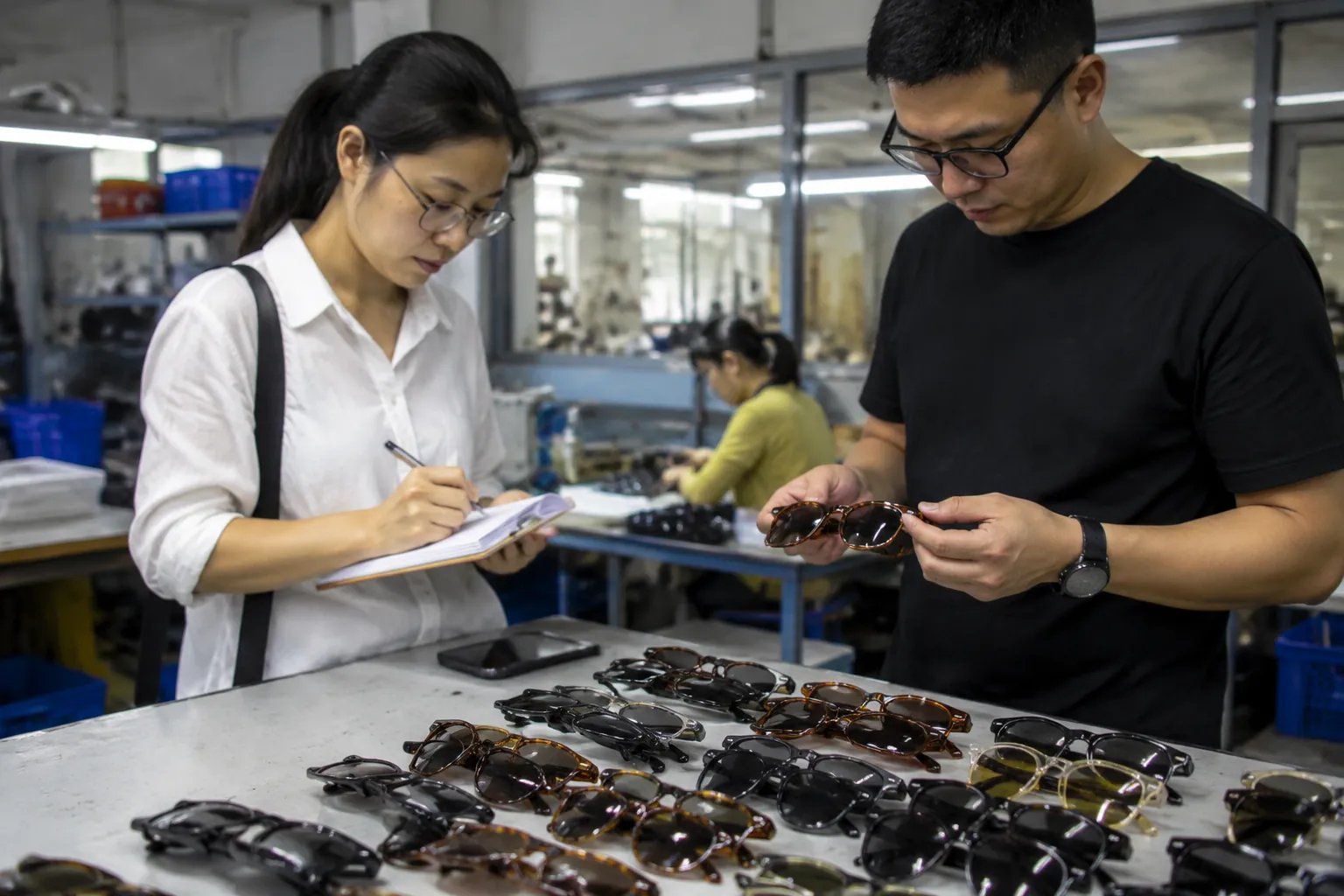
This guide is for buyers building children's sunglasses programs for retail: brands, importers, distributors, and chain retailers. The hard part is not color selection or trend shapes. It is defining fit, hinge construction, lens retention, materials, labeling, and the right compliance path before tooling or bulk production starts. Those calls affect returns, inspection results, and margin. Get the spec sheet right early and sample rounds get shorter, approvals move faster, and the finished product is less likely to come back with loose screws, popped lenses, or market-document problems.
Start with the decisions that create risk
Kids' sunglasses fail for predictable reasons. The frame is too wide for the age on pack. The hinge loosens after repeated opening and closing. Lens retention is weak because the groove and lens edge profile were never fully defined. Tint and labeling may suit one market but not another. Most of these problems start in sampling, not after shipment.
Before approving a pre-production sample, freeze five points in writing:
- Target age band and fit range: 0-2, 3-5, 6-9, or 10-14. Do not write only "kids." Specify the intended wearer range and key dimensions.
- Frame material: TPEE-type soft elastomer, TR90-type nylon blend, polycarbonate, or acetate. Each behaves differently in flex, impact resistance, screw holding, finishing, and decoration.
- Hinge construction: standard barrel hinge, spring hinge, or molded/pinless connection. This affects durability, small-part risk, pinch points, and repairability.
- Lens specification: lens material, base curve, thickness target, filter category, UV performance, and assembly method.
- Compliance path by market: CE EN ISO 12312-1, ANSI Z80.3, AS/NZS 1067, REACH, and administrative documents such as FDA registration where applicable.
If a supplier can sample in 7-10 days and produce bulk in 25-35 days, that speed matters only if the brief is complete. A vague note such as "ages 4-8" usually adds at least one extra sample round. That costs time. In peak season, it can cost a launch window.
Simple rule: if the spec cannot be checked with a caliper, shade card, BOM, or test reference, it is too vague.
Set fit by age band, dimensions, and tolerance
"Kids" is not a usable size category. A 3-year-old and a 10-year-old do not share the same nose profile, temple reach, or head width. For retail programs, fit should be defined as a dimensional range with tolerance, then confirmed on wearers or fit models in the intended age band.
| Age band | Typical lens width | Bridge | Temple length | Front width guide | Fit notes |
|---|---|---|---|---|---|
| 0-2 years | 38-42 mm | 14-16 mm | 95-110 mm | 110-118 mm | Prioritize soft-touch materials, low mass, low nose profile, and minimal metal trim |
| 3-5 years | 42-46 mm | 15-17 mm | 110-120 mm | 118-126 mm | Wrap can improve coverage; watch cheek contact and lash clearance |
| 6-9 years | 46-49 mm | 16-18 mm | 120-130 mm | 126-132 mm | Highest volume band; test on multiple face shapes |
| 10-14 years | 49-52 mm | 16-19 mm | 130-138 mm | 132-138 mm | May overlap small adult sizing, but pressure at temple and bridge still matters |
These figures are starting ranges, not universal rules. Record actual finished dimensions after assembly. A molded front may measure correctly before lensing, then shift slightly once hinges, screws, and lenses are installed. On injected frames, buyers often hold critical dimensions to tight internal tolerances; the exact limits should be agreed in the tech pack and verified against the production-intent sample. Acetate needs the same discipline. CNC cutting is precise, but polishing can remove material and change bevel seating if the front is over-buffed.
During fit approval, check more than appearance:
- Temple opening force: enough grip to hold position, not so tight that the child resists wearing it.
- Eyelash rub: common in shallow-base fashion shapes.
- Cheek lift: the frame should not ride upward when the wearer smiles.
- Bridge stability: especially important on low nose profiles.
- Slip angle: the front should not drop quickly when the wearer looks down.
If the range is broad, split it. Two clear sizes usually perform better than one compromised "fits all kids" size.
Choose materials for abuse resistance and assembly stability
Material choice is not cosmetic. It affects impact behavior, flex, screw anchoring, polishing, decoration, and process control on the line. It also affects cost.
| Material | Best use | Main advantage | Main watch-out |
|---|---|---|---|
| TPEE or similar soft elastomer blends | Toddler and preschool programs | High flexibility, lower break risk, comfortable touch | Decoration options are more limited; printed logos and adhesives should be tested for rub-off |
| TR90-type nylon blends | Active kids and sport shapes | Light weight, good memory, strong comfort story | Color can vary by resin batch; heat control during shaping matters |
| Polycarbonate frame | Value-priced molded programs | Good impact resistance and low part cost | Can stress-whiten or crack around screw bosses if torque or insert quality is poor |
| Acetate | Fashion-focused older kids styles | Better color depth and stronger perceived value | Higher weight; polishing, hinge setting, and lens seating require tighter workmanship |
For younger age groups, flexible injected constructions are often the safer sourcing choice. They get dropped, twisted, sat on, and handled roughly in store. For older kids, acetate can support a more premium position, but it needs cleaner hinge setting and tighter polishing control to keep dimensions within tolerance.
Decoration should match the age band and material. Common methods include:
- Pad printing: cost-effective for logos and simple artwork, but rub testing is important on high-contact areas.
- Laser engraving: more durable on suitable surfaces, especially for internal branding or temple marks.
- Hot foil or heat transfer: can create stronger visual impact, but adhesion and edge lifting must be checked.
- Metal logo plates: better reserved for older-kids fashion programs because they add parts, assembly steps, and failure risk.
Keep the priority straight. Spend first on fit stability, hinge quality, and lens retention. Decoration comes after that.
Review hinges and small parts early
For kids' sunglasses, the hinge deserves early review. A weak hinge leads to loose temples, skewed alignment, lost screws, and pinch complaints. In the worst case, a detached part becomes a safety issue.
Use this sample review checklist every time:
- Screw security: confirm whether a thread-locking adhesive is used and whether assembly torque is controlled.
- Opening and closing feel: compare left and right temples for even resistance.
- Pinch points: fold the temple slowly and inspect barrel and hinge-side gaps.
- Hinge anchoring: on acetate, verify square setting and consistent rivet or screw placement; on injected frames, inspect insert molding and boss strength.
- Cycle stability: manually open and close the sample repeatedly and check for screw walk-out or developing temple skew.
Spring hinges can help with fit tolerance on older kids, but they also add weight, complexity, and one more failure point. In entry-price programs, a well-made standard barrel hinge often gives a better total result than a cheap spring hinge. If FOB is tight, spend on reliable hardware and lens seating before cosmetic trim.
On production-intent samples, check screw length, hinge leaf flushness, and the area around the hinge seat for stress marks. Polycarbonate and some injected materials can show whitening around overstressed screw bosses. Acetate can show slight misalignment after polishing if the hinge is not seated square before final finishing. Treat these as warning signs. Because they are.
Give lens retention its own approval gate
If a child frame loses a lens during use, the program has a serious problem. Lens retention is not only about lens material. It depends on groove geometry, edge shape, front material memory, lens thickness, base curve, and assembly method.
For children's sunglasses, polycarbonate lenses are widely used because they are light, impact resistant, and practical for rough use. TAC can work in some value programs, but buyers should check retention and durability carefully against the frame type and target price. A good tint under office lighting is not enough.
Before PP approval, freeze these points:
- Lens material: define the approved material for the style.
- Lens thickness: match thickness to eye size, curve, and frame groove design.
- Tint category and visible light transmission target: align with use case and the destination market standard.
- UV performance and labeling: must match the compliance file and retail claims.
- Retention verification method: define how the factory checks seating before packing.
Ask the supplier how the lens is edged, inserted, and verified. Useful process detail includes whether the groove is inspected during front QC, whether lens edge dimensions are checked by lot, and whether assembly operators inspect stress around the rim after insertion. A lens that sits unevenly at one corner should fail internal QC before final inspection.
Color control matters too. If the product will sell across chains or multiple countries, use an approved master sample and retain it on both buyer and factory side. One approved gray, brown, or smoke lens is easier to repeat than managing several near-matching shades without a physical standard. Lot-to-lot tint drift can trigger mixed-carton complaints even when the product is technically within spec.
Map compliance and labeling before bulk production
Children's sunglasses are not the place for vague compliance wording. The supplier should state which standard the product is being tested against, and the documents should match the exact market and construction being shipped.
For export programs, buyers most often review:
- CE EN ISO 12312-1: relevant for Europe; check test scope, markings, filter category, and user information.
- ANSI Z80.3: commonly referenced for US non-prescription sunglasses performance.
- AS/NZS 1067: important for Australia and New Zealand.
- REACH: review restricted substances for frame material, coatings, inks, adhesives, and any metal trim.
- FDA registration: may confirm administrative status where applicable, but it does not replace product performance testing.
Do not assume one compliant style automatically covers a modified version. A new lens tint, hinge type, frame resin, decoration ink, or metal logo component can change the compliance picture. Before deposit, ask for the bill of materials, nearest-equivalent test references, labeling copy, and packaging warnings for the exact style or construction family being ordered.
This is also where avoidable delays happen. Packaging artwork moves late, then the buyer finds a missing filter-category statement, the wrong market reference, or a barcode layout covering mandatory labeling. Fixing artwork before print is cheap. Relabeling after arrival is not.
Also check factory quality systems. An ISO 9001 certificate indicates a documented quality management system, but it does not prove product compliance. A BSCI audit may help with social compliance review, but it is not a product safety test. Use each document for what it is.
Use sampling, MOQ strategy, and production gates to cut rework
A disciplined process prevents most avoidable errors. For children's sunglasses, the strongest workflow is simple and specific.
- RFQ with full spec sheet: age band, target FOB, market, material, hinge type, lens color, decoration, package, and compliance target.
- Prototype sample: review shape, size direction, and basic fit only.
- Revised sample: lock dimensions, hinge feel, lens seating, decoration placement, and packaging direction.
- PP sample: built with bulk-intent material, lens, hardware, finish, and packaging.
- Bulk production: monitor incoming resin or acetate lots, lens tint consistency, and assembly checkpoints.
- Final QC: inspect measurements, cosmetics, hinge function, labeling, barcode, carton marks, and packed quantity.
MOQ structure matters because it changes how buyers test risk. A small pilot order can help validate the market, but unit cost is usually higher because setup, decoration, packaging prep, and line balancing are spread over fewer pieces. As quantities rise, costing usually improves because materials and production planning become more efficient. In many cases, the best approach is to test one or two proven sizes at low volume, then concentrate repeat volume into the colors and fits that actually sell.
Lead time should be read the same way. A normal 7-10 day sample cycle is reasonable for standard revisions. Bulk lead time of 25-35 days can work for ordinary programs, but custom packaging, special lens colors, extra decoration, and multiple sample rounds can extend the calendar. Buyers should also account for approval transit time, artwork confirmation, and any third-party testing hold point.
Do not confuse the lowest FOB with the best landed result. Paying a little more for better hinge hardware, cleaner decoration, or a more suitable lens material can reduce returns enough to protect margin. Cheap failures get expensive fast.
Approval checklist before PO release
Before mass production starts, the buyer, QA team, and supplier should all be working from the same approval list. If any line below is unresolved, the order is not ready.
- Size range approved: eye size, bridge, front width, and temple length signed off for the intended age band.
- Material confirmed: frame resin or acetate code, lens material, hardware spec, and decoration method fixed.
- Hinge construction approved: no unresolved issues with screw security, pinch points, temple skew, or opening force.
- Lens retention checked: sample assembled with production-intent lens thickness, edge profile, and curve.
- Compliance path confirmed: destination market, test standard, markings, and packaging language aligned.
- Master color retained: approved frame and lens standards kept by both supplier and buyer.
- QC criteria issued: cosmetic limits, measurement tolerances, and function checks documented.
- Lead time realistic: sample revisions, PP approval, packaging confirmation, and ship cutoff dates all accounted for.
This is not over-management. It is basic control for a category with tighter fit bands and harsher wear conditions than many adult fashion programs. Buyers who build stable repeat business in children's sunglasses usually run this checklist every time, including on reorders. The frame may look simple. The process is not.
Have a custom sunglasses project in mind?
Send us your styles, target market and quantities and we will return a detailed quote with MOQ, lead time and a sample plan.
Get a QuoteWhy source this from Wenzhou with LumiShades
Wenzhou in Zhejiang Province is widely regarded as China’s eyewear manufacturing capital, producing a large share of the world’s sunglasses. That concentration matters to buyers: a deep local supply chain for acetate sheet, hinges, lens blanks, plating and packaging means shorter component lead times, easier color and material matching, and a workforce with decades of eyewear-specific skill. LumiShades has manufactured in this ecosystem since 2009, and our vertical integration — in-house injection molding, acetate cutting, CNC milling, lens tinting, decoration and quality control — means no part of your order is quietly subcontracted to a workshop you cannot audit.
For international buyers, that vertical control translates into accountability. When a single factory owns every step, defects are traced and fixed at source rather than bounced between vendors, and your specifications survive intact from first sample to bulk. We back this with 15+ years of experience, shipments to 60+ countries, more than 5 million pairs produced per year and a 98.5% on-time delivery rate. Our certifications — CE EN ISO 12312-1, FDA registration, ANSI Z80.3, AS/NZS 1067, REACH, ISO 9001 and BSCI audit — mean the compliance documentation your market requires already exists. Explore our manufacturing capabilities and quality control process to see how this works in practice.
Frequently asked questions
What is the safest frame material for younger kids' sunglasses? For toddler and preschool programs, flexible injected materials such as TPEE-type elastomer blends or soft nylon-based constructions are often preferred because they reduce break risk and improve comfort. The safest choice still depends on the full construction: hinge design, lens retention, frame weight, and how well small parts are controlled. Ask the factory for material identification, then verify it against the approved sample and internal QC checklist.
Do I need different compliance documents for the US, EU, and Australia? Usually yes. Align both product testing and paperwork to the destination market. Common references include CE EN ISO 12312-1 for Europe, ANSI Z80.3 for the US, and AS/NZS 1067 for Australia and New Zealand, with REACH review where relevant. FDA registration may apply as an administrative item, but it does not replace product performance testing. Do not reuse a certificate from a different style if the construction changed.
Are spring hinges a good idea for kids' sunglasses? Sometimes, but not automatically. Spring hinges can improve fit tolerance, especially on older kids' frames, yet they also add weight, more metal content, and another failure point. For value programs and younger age bands, a well-made standard barrel hinge is often the more reliable option. Choose the hinge after reviewing opening force, screw security, pinch risk, and repairability.
What MOQ should I expect for a custom kids' sunglasses program? MOQ depends on style complexity, color count, lens type, and packaging. A small pilot order can be useful for testing a new design, but unit cost is usually higher because setup is spread over fewer pieces. As volume increases, cost efficiency typically improves. The practical question is not just MOQ; it is whether the factory can hold the same dimensions, tint, and hinge quality across the whole batch. Ask for a written pilot-to-repeat plan.
How long should samples and bulk production take? For a standard program, a sample round often takes around 7-10 days and bulk production around 25-35 days after PP approval. Add time for revision rounds, custom packaging, special lens colors, and any third-party testing or document review. Build a schedule that includes artwork approval, compliance review, and shipping cutoff, not just factory production time. If the supplier cannot explain the critical path, the lead time is not yet reliable.
Ready to start?
Explore our shield & oversized sunglasses or request a quote — our sales team replies within 12 hours.
Request a Quote