
How to Shortlist Sunglasses Factories for Bulk Orders
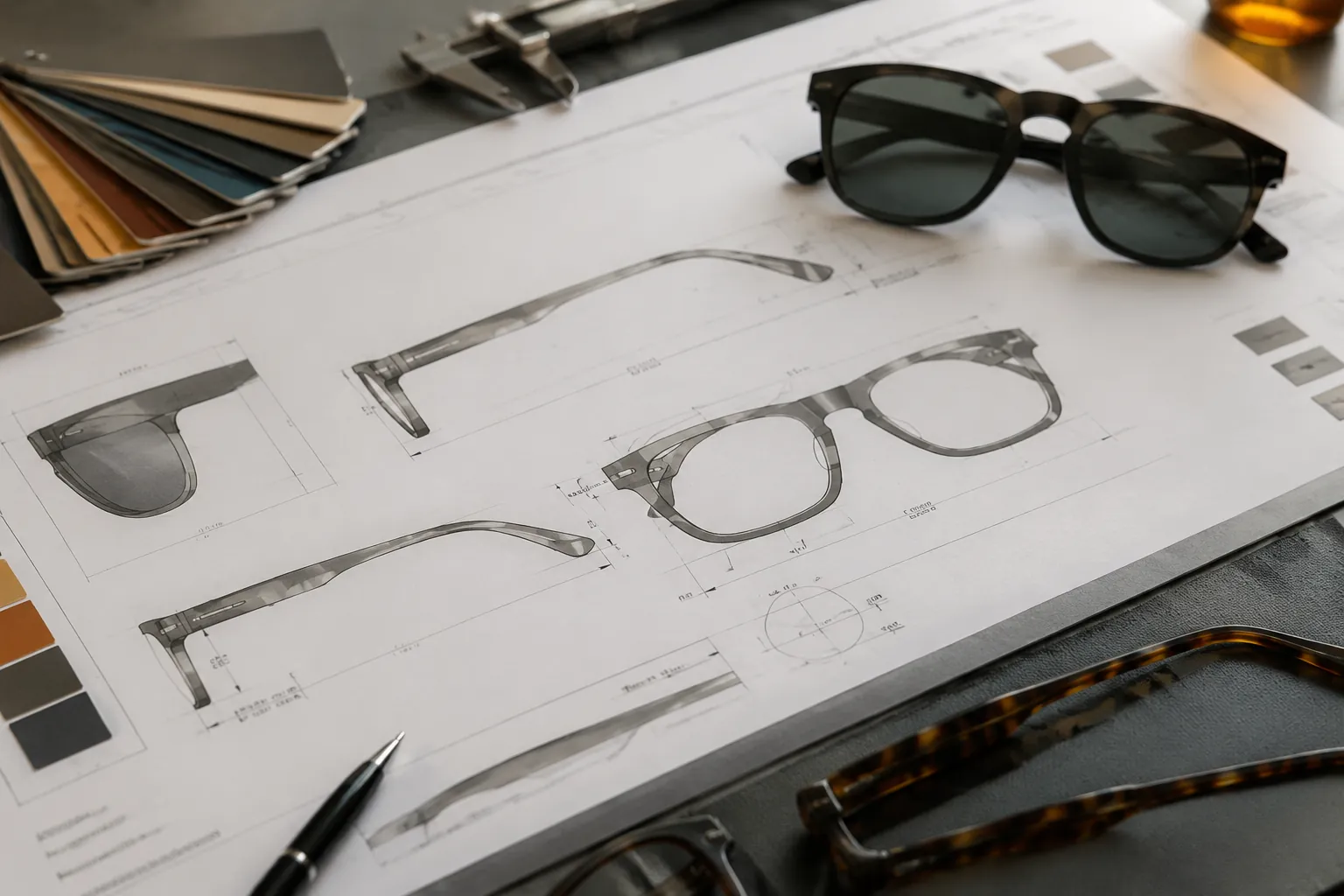
This guide is for distributors, retailers, and brand buyers preparing large seasonal sunglasses tenders. The aim is simple: remove weak factories before RFQs go out. That makes the quote round faster, cleaner, and less exposed to quality or delivery failure. For sunglasses programs, a solid shortlist rests on four checks: real capacity in your shipping window, clear in-house versus outsourced process coverage, compliance readiness for your target markets, and proof that the factory can hold cosmetic quality when production moves from sample stage to bulk. Price matters. But it matters after you know the supplier can execute the job as specified.
Start with program risk, not the first sample
Many buyers still begin with the sample table: the factory that sends the best-looking first sample gets into the RFQ round. For seasonal buys, that is often the wrong filter. A polished counter sample shows a supplier can make one piece look right. It does not prove the factory can repeat the same finish, logo position, lens color, assembly feel, and packing accuracy across a full order under deadline pressure.
Start with the commercial risk of the program. Spell it out. Is this a fashion launch tied to a fixed retail date? A repeat line where color continuity matters across reorders? A promotion where late delivery kills the selling window? Your shortlist criteria should change with that answer. A launch program puts more weight on development speed, correction cycles, and shipment discipline. A repeat line puts more weight on batch consistency, lens category control, and material traceability.
For a large sunglasses buy, the first screen should answer four operational questions. Does the supplier have open capacity in the exact production weeks you need, not just a broad annual output claim? Which processes are done in house and which are subcontracted? What current compliance documents can the supplier provide for your destination markets? How does the supplier define and track on-time shipment performance?
Push for detail. A factory may call itself high-capacity, but that claim is useless if it does not fit your product mix. A supplier focused on basic molded frames may still struggle with an order that includes multiple SKUs, several lens variants, more than one logo method, or split shipments. Shortlist only factories that can explain how your order would move through frame production, lens fitting, decoration, assembly, QC, and packing. If they cannot map that route clearly, cut them early.
Use a four-gate screen before RFQs
Build the shortlist in stages. Do not ask every supplier for a full document pack, detailed pricing, technical review, and production reservation at the same time. Screen wide first. Then narrow fast.
- Gate 1: Commercial fit. Confirm MOQ by style, target ex-works price range, core materials, and whether the factory already makes similar constructions. A supplier willing to support tiny trial quantities may still be a poor fit for a large seasonal buy if the pricing structure, tooling logic, or process flow does not scale well.
- Gate 2: Process fit. Check whether the supplier can produce your frame type and decoration method inside its own facility. Ask directly about injection molding, acetate cutting, CNC machining, polishing, lens processing, pad printing, laser engraving, hot stamping, and metal logo application where relevant. A yes-or-no answer is not enough. Ask which steps are internal, which are outsourced, and the usual handoff time for each outsourced step.
- Gate 3: Compliance fit. Request the exact current document list for your market: CE EN ISO 12312-1, FDA registration, ANSI Z80.3, AS/NZS 1067, REACH, plus ISO 9001 and BSCI if those are part of your supplier onboarding. Do not accept broad claims such as "all international certificates available." Ask for document names, issue dates, scope, and which product families they cover.
- Gate 4: Delivery fit. Validate sample lead time, correction lead time, bulk lead time, and peak-season loading logic. Lead times depend on construction, decoration, packaging, and approval speed. The key point is not a verbal promise. It is whether the supplier states assumptions clearly and can explain where delays are most likely to occur.
By the end of Gate 4, you should have a real shortlist of three to five factories. If you still have ten candidates, your screen is too loose.
Check process ownership because outsourcing adds delay
Outsourcing is one of the biggest hidden risks in sunglasses sourcing. Every external step adds transport time, queue time, communication loss, and another chance for bulk production to drift from the approved sample.
The first process split is usually by frame material. Injection-molded PC or TR constructions are often chosen for larger runs and easier repeatability. Acetate frames can give a more premium finish, but they usually involve cutting, CNC shaping, polishing, and more manual handling. More steps. More variation risk.
Ask for process detail, not sales language. On molded frames, ask whether the supplier controls mold maintenance, injection settings, frame conditioning, and lens fitting in house. On acetate, ask about sheet sourcing, machining tolerance control, polishing sequence, and hinge insertion method. A capable factory should be able to explain its controls in plain terms.
In-house process coverage matters most in the following areas:
- Frame making: injection molding for TR or PC constructions, or acetate cutting and CNC machining for sheet-material frames.
- Lens processing: tint control, polarized lens handling, edge finishing, and fitting without stressing the rim.
- Decoration: pad printing, laser engraving, hot stamping, and metal logo application all require different setups and create different defect risks.
- Assembly: hinge fitting, screw control, temple symmetry, frame alignment, and opening-and-closing feel.
- QC and packing: cosmetic inspection, lens cleanliness, barcode labeling, assortment control, and carton verification before shipment.
If those operations are internal, the correction loop is shorter. When a logo shifts, a lens tint falls outside approval, or a decorated part fails inspection, the factory can usually react faster than a supplier managing several outside vendors. That speed often decides whether the shipment stays on track.
Compare factories on the numbers that matter
Use one comparison sheet for every candidate. The goal is to expose risk, not reward presentation quality. If each factory answers the same operational questions in the same format, weak suppliers stand out faster.
| Screening point | What to ask | Low-risk answer | Red flag |
|---|---|---|---|
| MOQ and price ladder | What is the MOQ by design, and how does ex-works price change at each quantity break in our RFQ? | Clear quantity structure tied to the same specification and packaging assumptions | MOQ shifts between emails or volume discounts are vague |
| Sample timing | How many days for a branded sample with approved artwork, lens color reference, and packaging note? | Lead time stated with assumptions, revision steps, and exclusions clearly defined | Very short promise with no process explanation |
| Bulk lead time | How many days from deposit and sample sign-off to shipment? | Lead time linked to construction, decoration, packaging, and shipment window | One fixed lead time for every style in every season |
| Process coverage | Which processes are internal and which are subcontracted? | Clear breakdown covering frame production, lens work, decoration, assembly, QC, and packing | Vague statement such as "most work done in factory" |
| Compliance pack | Which current documents can you provide now for target markets? | Exact list with dates and scope for CE EN ISO 12312-1, FDA registration, ANSI Z80.3, AS/NZS 1067, REACH, ISO 9001, and BSCI where relevant | Mentions certifications but cannot produce current files |
| Delivery reliability | How do you define and record on-time shipment performance? | Written method tied to confirmed ship date or ex-factory date | No tracking method or only verbal claims |
Score the responses against your real requirements. A low quote should not rescue a supplier that is unclear on process ownership, lead-time assumptions, or compliance readiness. Cheap RFQs often turn into expensive orders once delays, remakes, and claims begin.
Test capacity against your real SKU mix
Annual capacity figures can mislead. A factory may ship high volume overall and still be the wrong choice for your program if its lines are already full in your shipping window or if your order creates too many setup changes.
Discuss capacity in the language of your actual order. Do not ask only for generic monthly output. Describe the program: number of SKUs, frame constructions, lens variants, logo methods, packaging formats, and any split shipments. That gives a much clearer view of real load. A run of one repeated molded style is very different from the same total quantity spread across multiple colors, lens categories, and assortments.
Good factories answer with constraints, not just confidence. They should tell you where the bottleneck sits. On molded programs, it may be mold availability, machine scheduling, decoration queue, or lens supply coordination. On acetate, it may be machining throughput, polishing capacity, hinge fitting, or final assembly. They should also explain whether your order can run in parallel across lines or only in sequence.
Ask practical follow-ups. How many molds can run at the same time? Which process sets final output for this construction? How do mixed assortments affect packing time? How is rework handled if decorated parts fail cosmetic inspection? These details show whether the factory has real production discipline or is simply trying to win the inquiry.
If the answer sounds too smooth, be careful. Real production has limits. Serious suppliers can explain them.
Verify compliance and QC before final quote comparison
Check compliance before final commercial comparison, not after supplier selection. If your destination markets include the EU, US, or Australia and New Zealand, confirm which documents are current and what product-level testing or declarations will still be required for your exact style.
For sunglasses, buyers commonly ask about CE EN ISO 12312-1, FDA registration, ANSI Z80.3, AS/NZS 1067, and REACH. Depending on your supplier approval system, ISO 9001 and BSCI may also be required. But a document list alone is not enough. Lens category, visible light transmission, labeling, warnings, and material declarations still need to match the market and your own specification.
QC questions should be just as direct. Ask how incoming materials are checked, what in-process controls exist after molding or machining, and how final inspection is performed before packing. A serious supplier should be able to describe its control points: frame alignment, hinge security, lens fitting, scratch inspection, logo position, color consistency, temple symmetry, and carton labeling. It should also explain how defects are classified and what happens when a batch falls outside standard.
Watch how the factory talks about QC. If it treats quality control as a final-table activity only, risk is higher. Factories with in-house frame production, lens work, decoration, and QC can usually close feedback loops faster because the source of the defect is closer to the inspection point. That does not replace your own approval process. It does reduce handoff risk.
Build an RFQ pack that forces like-for-like quotes
Weak RFQ packs create weak comparisons. If each supplier receives different assumptions, the prices and lead times are not comparable. You are not comparing factories. You are comparing guesswork.
Your RFQ pack should include the following:
- Style drawings or clear reference images with front width, temple length, bridge size, lens shape, and key cosmetic details.
- Material callouts for frame, lens, hinge, screws, nose pads if used, and logo hardware.
- Color standards for frame and lens, including whether batch variation is acceptable and whether Pantone or physical swatch is the controlling reference.
- Decoration details such as print area, engraving position, logo plate size, attachment method, and approval points.
- Packaging requirements including pouch, case, barcode label, polybag rule, carton marks, and assortment ratio.
- Compliance requirements covering target market, labeling needs, and any testing or declaration expectations.
- Quantity ladder showing the exact volume breaks you want quoted.
If you want serious pricing, state the business case. Tell suppliers whether the first order is a trial, whether repeat potential exists, and what reorder logic may look like if the line performs well. This helps factories quote more accurately and flag where tooling choices, lens options, or decoration methods may change cost or lead time.
If timing allows, run one pilot order through top candidates before awarding the seasonal tender. Keep it controlled: one style, limited colors, fixed packaging, and a realistic approval calendar. Track response speed, sample accuracy, schedule discipline, correction handling, and document quality. A pilot order often tells you more than repeated sales calls because it shows how the supplier performs when detail and deadline start to bite.
The shortlist is not the end of sourcing. It is the filter that keeps weak process ownership, non-comparable pricing, and avoidable delivery risk out of your RFQ round.
Use one pilot order before the full seasonal buy
Before awarding a large program, place one controlled pilot order with your top candidates if timing allows. Keep the pilot close to real operating conditions: branded sample, final lens color direction, real packing instructions, and the same approval sequence you would use for bulk. The objective is not just to inspect the product. It is to test execution under commercial conditions.
During the pilot, track five things closely. First, response speed: how fast does the supplier answer technical questions and return corrected drawings? Second, sample accuracy: does the submission match logo position, lens shade, fit, finish, and packaging notes? Third, schedule discipline: does the factory hit the agreed sample timing and stay in control through revisions? Fourth, problem handling: when you reject a detail, does the supplier identify the cause and propose a correction method, or simply promise improvement? Fifth, documentation quality: are packing lists, carton marks, barcode files, and compliance records complete and usable?
Factories that stay organized on a pilot order are usually easier to manage at larger scale. Factories that miss drawing updates, lose revision control, or send inconsistent paperwork during the pilot usually create the same problems later, only at higher cost. A pilot takes time. For a large seasonal buy, it is often the cheapest supplier check you can run.
Have a custom sunglasses project in mind?
Send us your styles, target market and quantities and we will return a detailed quote with MOQ, lead time and a sample plan.
Get a QuoteWhy source this from Wenzhou with LumiShades
Wenzhou in Zhejiang Province is widely regarded as China’s eyewear manufacturing capital, producing a large share of the world’s sunglasses. That concentration matters to buyers: a deep local supply chain for acetate sheet, hinges, lens blanks, plating and packaging means shorter component lead times, easier color and material matching, and a workforce with decades of eyewear-specific skill. LumiShades has manufactured in this ecosystem since 2009, and our vertical integration — in-house injection molding, acetate cutting, CNC milling, lens tinting, decoration and quality control — means no part of your order is quietly subcontracted to a workshop you cannot audit.
For international buyers, that vertical control translates into accountability. When a single factory owns every step, defects are traced and fixed at source rather than bounced between vendors, and your specifications survive intact from first sample to bulk. We back this with 15+ years of experience, shipments to 60+ countries, more than 5 million pairs produced per year and a 98.5% on-time delivery rate. Our certifications — CE EN ISO 12312-1, FDA registration, ANSI Z80.3, AS/NZS 1067, REACH, ISO 9001 and BSCI audit — mean the compliance documentation your market requires already exists. Explore our manufacturing capabilities and quality control process to see how this works in practice.
Frequently asked questions
How many factories should be on a final tender shortlist for a seasonal sunglasses buy? In most cases, shortlist three to five factories. Fewer than three makes it harder to compare pricing, lead-time assumptions, and backup capacity. More than five usually adds work without improving the decision if your screening gates are strict. To keep the shortlist useful, require every candidate to answer the same RFQ, the same compliance checklist, and the same process-ownership questions.
Is a low MOQ always a good sign for a new supplier? No. A low MOQ can help with development, but it does not prove the factory is competitive or reliable at your target order size. Ask for the MOQ by style, the quantity breaks that change price, and whether tooling, decoration setup, or packaging assumptions change at each level. Then compare those answers against your expected production volume, not just your sample order.
What is the biggest hidden risk before RFQ stage in sunglasses sourcing? Undisclosed outsourced processes are one of the biggest early risks. Lens processing, decoration, metal trim work, or even frame machining handled outside the main factory can add delay, variation, and revision-control problems that may not show up in the first sample. Ask the supplier to list every outsourced step, the subcontracted process owner, and the usual handoff time for each step before you include that factory in final RFQs.
When should I ask for compliance documents? Ask before final quote comparison, not after selecting the supplier. Request the exact current documents relevant to your market, including CE EN ISO 12312-1, FDA registration, ANSI Z80.3, AS/NZS 1067, REACH, ISO 9001, and BSCI where required by your vendor approval system. Also ask which product families the documents cover, the issue dates, and what additional style-specific testing or declarations will still be needed for your order.
How do I compare lead times fairly between factories? Give every supplier the same quoting assumptions in writing: approved sample date, artwork approval date, packaging confirmation date, quantity by SKU, lens type, decoration method, assortment plan, and shipment split. Then ask each factory to state what is included, what is excluded, and which process is most likely to become the bottleneck. Lead-time comparisons are only useful when the scenario is identical across all candidates.
Ready to start?
Explore our wayfarer sunglasses or request a quote — our sales team replies within 12 hours.
Request a Quote