
How to Write a Factory-Ready Sunglasses Style Guide
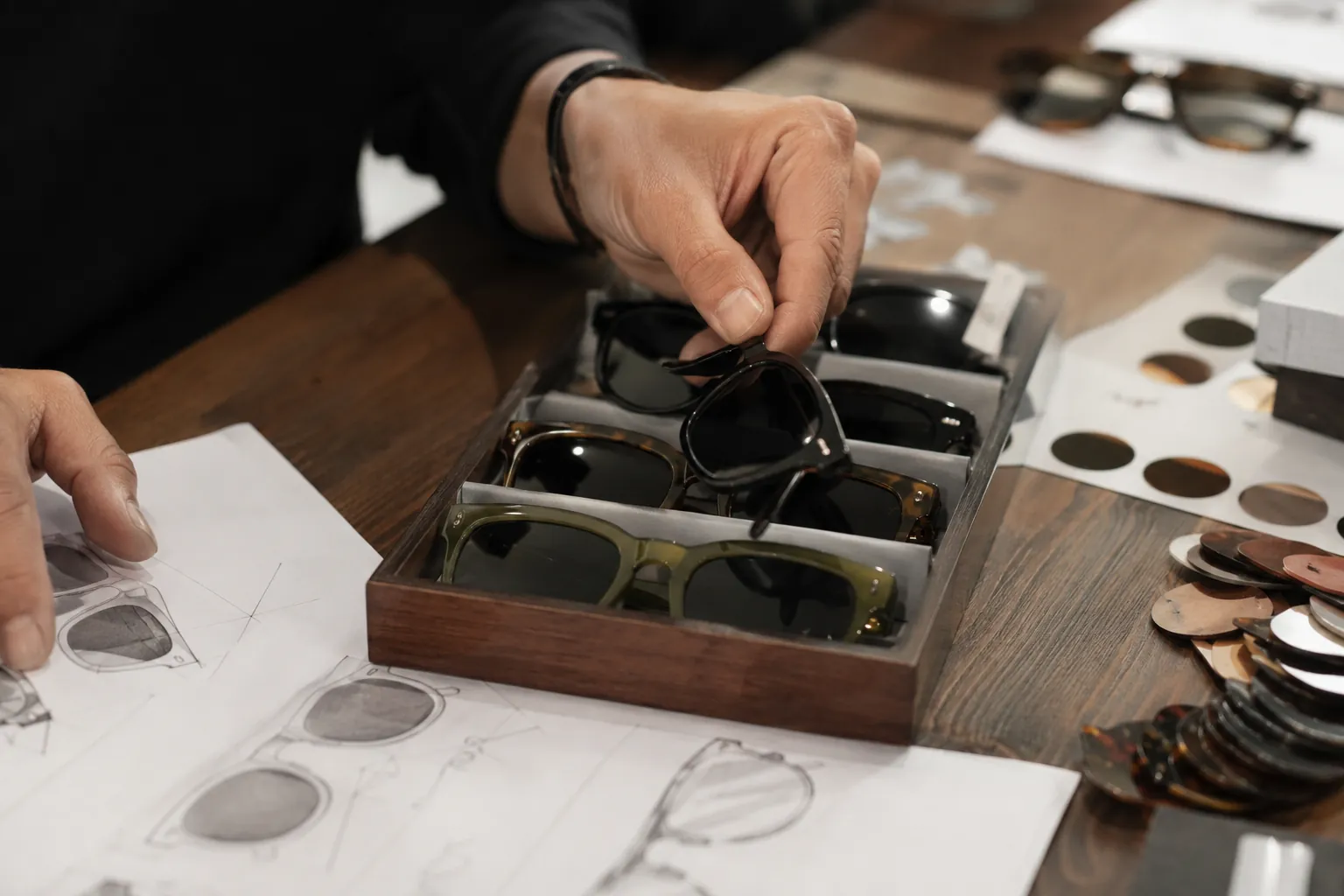
This guide is for brand owners, importers, distributors, and retail buyers who need a sunglasses factory to make the same product the same way across samples and repeat orders. A good style guide is not a mood board. It is a production document with measurable rules for materials, dimensions, color, finish, logo placement, packaging, labeling, and inspection. If a factory can quote from it, sample from it, and inspect against it, it works.
Start with a production document, not a brand deck
Many brand style guides fail in production for one reason: they describe a look, not a build standard. Words like "clean," "premium," or "refined" do not tell a factory what to make. They do not tell QC what to accept either.
Your sunglasses style guide should connect design intent to factory control. Every team should be able to use the same file: engineering, sourcing, decoration, packaging, and quality. If one team has to guess, variation starts there.
Build the guide in five blocks:
- Product identity: style name, SKU, target market, channel, and any market-specific labeling requirements.
- Physical specs: frame material, lens material, dimensions, hinge type, base curve if relevant, weight target, and tolerances.
- Brand application: logo method, artwork version, logo size, placement, approved colors, and restricted areas.
- Packaging rules: unit pack, case or pouch, cleaning cloth, barcode format, warning labels, and shipping marks.
- QC approval standard: inspection points, defect definitions, sample approval stages, and acceptance criteria.
If the factory runs several processes in-house, you can place more detail in one controlled file. That helps only if the document is specific. Verbal explanation is not a spec.
Define frame and lens specs like a purchase order
Start with construction. Use engineering language. Not brand language. A sample room should be able to build from your guide without a second meeting to fill gaps.
- Frame material: specify the actual material family, such as acetate, injected polycarbonate, TR90, metal, or mixed construction. "Plastic" is too vague for production or QC.
- Lens material: identify whether the lens is PC, TAC, nylon, CR-39, or another approved material.
- Core dimensions: record lens width, bridge, temple length, overall front width, lens height, and base curve if required by the design.
- Weight target: state a target range rather than a single number so production and QC know what is acceptable.
- Hardware: define hinge type, screw finish, nose pad construction if any, and any decorative metal trim.
Use tolerances for every measurable feature. Overall width, temple length, and logo placement should each have their own acceptable variation. Without tolerances, the factory cannot judge whether a part should be accepted, reworked, or rejected.
Also flag appearance-critical features. On many fashion sunglasses, lens tint consistency, front symmetry, and logo alignment matter more to the customer than a slight shift in a hidden area. Rank what matters most. That helps the factory focus inspection time where failure risk is highest.
Then tie the SKU to its market standard. For Europe, reference CE EN ISO 12312-1. For the United States, reference ANSI Z80.3 and confirm whether FDA registration applies to your import and market-entry process. For Australia and New Zealand, reference AS/NZS 1067. If your chemical compliance program requires it, note REACH. Keep these requirements attached to the SKU so the wrong lens, label, or packaging language is not used later.
Make color and finish matchable in production
Color causes arguments because color names are subjective. "Tortoise," "champagne," and "smoke" may work in marketing. They do not work as control standards.
For solid frame colors, include a Pantone reference if it helps communicate design direction. But do not rely on printed color alone. Plastics, acetate sheets, coatings, and printed packaging can all read differently from the same reference. Approve a physical chip or retained production sample as the master standard whenever possible.
State finish clearly:
- Gloss: high-polish appearance with no visible swirl marks, drag marks, or uneven reflection under the agreed inspection condition.
- Matte: even low-sheen surface with no shiny patches, patchy sanding, or inconsistent texture.
- Rubberized or soft-touch: use only if you accept the added durability review this finish may require in wear, heat, or humidity conditions.
- Brushed metal effect: specify whether it is a true brushed surface or a visual effect created by coating or plating, and define grain direction if visible.
Lens color needs its own controls. Grey, green, and brown lenses can drift between batches if the approved standard is not retained and checked. Require a retained lens sample. State whether gradient tint is allowed. If it is, define the approved appearance and whether any left-right variation is permitted. For most branded programs, it should not be.
Write visual standards as inspection rules, not opinions. Define the reference sample, light condition, and viewing distance used for approval. Process capability matters. A written spec still matters more.
Choose logo methods that fit the material and risk
Logo decoration should be chosen with factory limits in mind. The best-looking option in artwork may be the wrong option for adhesion, abrasion resistance, or repeatability on the chosen frame material.
| Logo method | Best use | Main limits | Typical buyer note |
|---|---|---|---|
| Pad printing | Temple exterior, lens marks, simple 1-2 color logos | Can wear with abrasion; very fine lines may not reproduce cleanly | Useful for simpler branding and artwork changes |
| Laser engraving | Metal parts, some coated surfaces, subtle branding | Usually tone-on-tone; visibility depends on substrate and finish | Stable placement and low visual variation when material is suitable |
| Metal logo plate | Premium temple branding on acetate or injected frames | Needs approved fixing method, tooling detail, and placement control | Adds cost and assembly complexity but can improve perceived value |
| Hot foil or color fill after engraving | Decorative branding with contrast | Edge cleanliness and color consistency must be checked closely | Approve artwork size and durability expectation before sampling |
Your guide should specify:
- Artwork file version and dimensions in mm.
- Exact placement from a fixed reference point, such as hinge centerline or temple end.
- Orientation rules for left and right temples.
- Minimum line thickness and minimum text height.
- Approved finish, such as polished metal, brushed metal, black fill, or white print.
Do not stop at "logo on temple." State whether the inside temple also needs model code, color code, country of origin, compliance mark, or traceability code. If you sell into multiple markets, put market-specific marking requirements in a separate table by SKU. That reduces packing errors.
Write packaging rules for bulk production
Packaging is part of the delivered product. It often creates variation because parts may come from different suppliers. Treat packaging specs with the same discipline you apply to the frame and lens.
For each SKU or collection, specify:
- Unit pack: polybag or not, tissue wrap or not, pouch, hard case, cleaning cloth, leaflet.
- Print rules: logo size, print color, placement, barcode position, and approved artwork version.
- Material: case material, pouch material, paperboard grade, insert material, and any finish requirements.
- Label content: SKU, color, quantity, country of origin, carton mark, and any required compliance wording.
- Master carton standard: units per carton, weight limit if one applies, and any handling instructions needed for retail packaging.
Approve one complete packaging set before bulk production and retain it as a reference. Include every printed and labeled component, not just the outer box. If the box color can vary slightly but the pouch logo position cannot, say so. Be explicit.
If you require process discipline from suppliers, document it in practical terms. For example, ask whether the factory manages packaging and production under a documented quality system such as ISO 9001, and whether social compliance requirements such as BSCI are part of your supplier approval process. Those certifications do not replace a product spec. They simply support more consistent execution.
Set the approval flow before sampling starts
A style guide works only if approvals happen in the right order. If branding, materials, and packaging are approved out of sequence, factories may start bulk production with open questions and fix them later at higher cost.
Use a staged sign-off flow:
- Artwork approval: logos, marks, text, and packaging graphics.
- Material and color approval: frame sample, acetate reference if applicable, lens tint, metal finish, cloth, and case material.
- PPS approval: pre-production sample with all approved details combined.
- Packing approval: one complete sellable set and one approved master carton configuration.
- Golden sample retention: one sealed reference held by the buyer and one held by the factory.
Define what approval means at each stage. Artwork approval is not color approval. A material chip is not finished-product approval. Keep the stages separate. It prevents arguments later.
For new styles, state clearly that no bulk production starts until the PPS is approved in writing. For repeat styles with limited changes, identify exactly what needs re-approval, such as lens tint, packaging graphics, or inside-temple markings. That keeps repeat orders faster without weakening control.
Define QC checkpoints and defect rules early
Inspection works best when the defect standard is written before production begins. If you define quality after goods are made, every problem turns into a negotiation.
Your guide should define the inspection points, method, and severity. At minimum include:
- Appearance: scratches, sink marks, weld lines, color streaks, polishing defects, plating defects, and print smudges.
- Assembly: temple opening balance, hinge function, screw tightness, lens seating, and gap consistency.
- Dimensions: key measurements checked against approved tolerances.
- Branding: logo position, orientation, spelling, color, and adhesion or print durability as applicable.
- Packaging: correct components, barcode, carton mark, and count accuracy.
Be specific about inspection conditions. Define viewing distance, lighting type, whether magnification is allowed, and whether the frame should be rotated to reveal gloss or lens defects. Also define major versus minor. A lens scratch in the viewing area is usually major. A small polishing mark on a concealed inside surface may be minor if it is not visible in normal use and does not affect function.
Keep compliance tied to the approved build. If the style is sold as sunglasses, the final construction should remain consistent with the version assessed to CE EN ISO 12312-1, ANSI Z80.3, or AS/NZS 1067, depending on market. Changes to lens material, tint, geometry, markings, or labeling can trigger compliance review.
Practical rule: if a change affects lens transmission, lens geometry, product marking, or the way the product is labeled for sale, treat it as a compliance review point rather than a minor design update.
Control MOQ, revisions, and change management on one sheet
The last page of your style guide should be a live control sheet. This is where product, sourcing, and quality teams stay aligned on which changes affect tooling, decoration, packaging, compliance review, or sample approval.
| Change type | Typical MOQ impact | Cost effect | Lead-time effect |
|---|---|---|---|
| Frame color change on existing mold | Depends on supplier material setup and color matching process | Low to moderate | Usually limited if material is available |
| New logo print only | Often manageable at lower order volumes | Low | Usually short if artwork is approved |
| Metal logo plate added | May require higher practical volume depending on tooling and assembly | Moderate | Can add sampling and fixing validation time |
| Custom packaging set | Depends on packaging supplier minimums and print setup | Moderate to high | Can extend timing if components are not ready |
| New mold or major structure change | Project-specific | High | Longest impact |
Keep this sheet factual and supplier-specific. Record the actual MOQ, cost trigger, and approval effect given by the factory for that project rather than relying on assumptions from another program. This matters most for packaging parts and decorative components, which often have different minimums from the frame itself.
Maintain strict revision control. Every guide should show a version number, date, document owner, and change log. If sourcing works from one version and packaging artwork comes from another, errors follow. One controlled document should be the production reference. Everyone should confirm they are using that version.
Have a custom sunglasses project in mind?
Send us your styles, target market and quantities and we will return a detailed quote with MOQ, lead time and a sample plan.
Get a QuoteWhy source this from Wenzhou with LumiShades
Wenzhou in Zhejiang Province is widely regarded as China’s eyewear manufacturing capital, producing a large share of the world’s sunglasses. That concentration matters to buyers: a deep local supply chain for acetate sheet, hinges, lens blanks, plating and packaging means shorter component lead times, easier color and material matching, and a workforce with decades of eyewear-specific skill. LumiShades has manufactured in this ecosystem since 2009, and our vertical integration — in-house injection molding, acetate cutting, CNC milling, lens tinting, decoration and quality control — means no part of your order is quietly subcontracted to a workshop you cannot audit.
For international buyers, that vertical control translates into accountability. When a single factory owns every step, defects are traced and fixed at source rather than bounced between vendors, and your specifications survive intact from first sample to bulk. We back this with 15+ years of experience, shipments to 60+ countries, more than 5 million pairs produced per year and a 98.5% on-time delivery rate. Our certifications — CE EN ISO 12312-1, FDA registration, ANSI Z80.3, AS/NZS 1067, REACH, ISO 9001 and BSCI audit — mean the compliance documentation your market requires already exists. Explore our manufacturing capabilities and quality control process to see how this works in practice.
Frequently asked questions
What is the biggest mistake buyers make in a sunglasses style guide? The most common mistake is using visual or marketing language without measurable production rules. A factory needs exact material callouts, dimensions, tolerances, color references, finish definitions, logo placement measurements, labeling requirements, and pass-fail QC criteria. A simple test helps: for each item, ask whether a sample maker can build it, purchasing can source it, and QC can inspect it without asking questions.
Can I use Pantone codes alone for frame colors? No. Pantone can help communicate design intent, but it should not be the only approval reference for sunglasses. Frame materials, acetate sheets, coatings, and printed packaging can all read differently from the same printed standard. The practical approach is to record the Pantone reference in the guide, then approve and retain a physical color sample for the frame and a separate retained sample for the lens tint.
At what quantity does custom packaging start to make sense? There is no universal threshold because minimums depend on the packaging component, print process, and supplier. A rigid box, microfiber pouch, barcode label, and leaflet may all have different MOQs. The right step is to request a packaging breakdown showing MOQ, tooling or print setup cost, unit cost, and lead time for each component, then decide which items are essential for launch and which can wait for a reorder.
How should I approve logo placement? Approve logo placement on a technical drawing or marked production photo with measurements in millimeters from a fixed reference point, such as the hinge centerline, temple end, or lens edge. The document should also state orientation, left-right rules, logo size, artwork version, and tolerance. If the logo is applied by a method with visible variation risk, such as pad printing or color fill, approve both the position and the visual appearance on a real sample.
Do compliance standards matter if I only change the lens color? Yes. A lens color change can alter visible light transmission, lens category, and market compliance outcome. If the product is sold as sunglasses, any lens tint change should be reviewed against the intended market requirement, such as CE EN ISO 12312-1, ANSI Z80.3, or AS/NZS 1067. The safe process is to log the lens change in the style guide, confirm whether labels or markings also change, and ask the supplier or test partner whether the revised build needs additional compliance review.
Ready to start?
Explore our wayfarer sunglasses or request a quote — our sales team replies within 12 hours.
Request a Quote