
Balancing Durability, Weight, and Cost in OEM Sunglasses
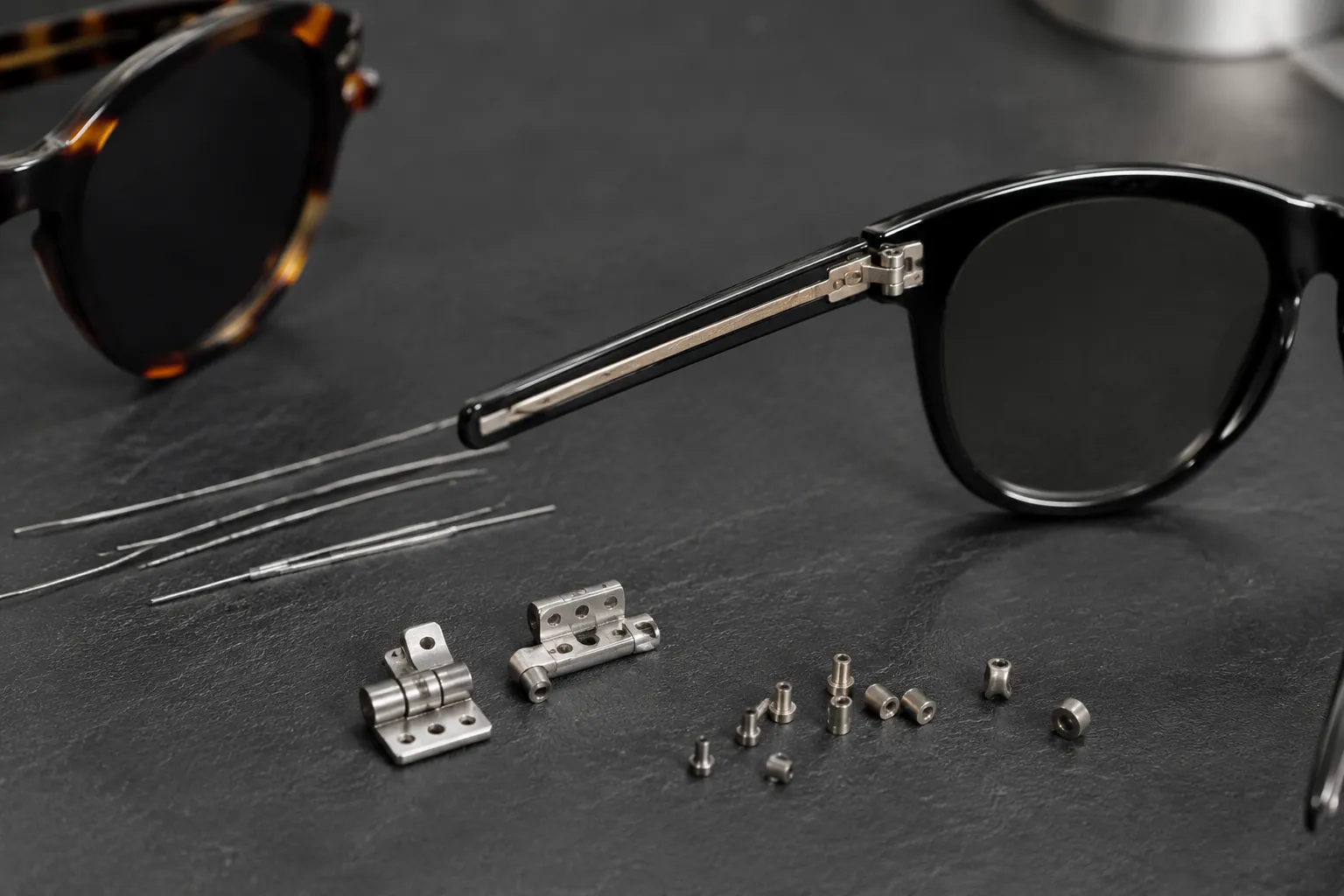
In OEM sunglasses, frame material affects feel, durability, unit cost, and return risk. Pick a frame that is too cheap for the use case, and you may see loose hinges, lens-fit problems, or customer complaints. Pick one that is heavier or more complex than the market needs, and you add unnecessary material, freight, and labor cost. This guide breaks down the real tradeoffs among injected plastic, acetate, and mixed-material frames so buyers can make better decisions on specification, quality control, and sourcing.
Start with the use case, not the material
The right frame is not the one with the strongest sales pitch. It is the one that fits the customer, price band, usage pattern, and quality target. A small trial order and a large retail program do not need the same build. They should not.
Fashion sunglasses made for short seasonal use can often use a simpler structure. Travel, outdoor, and repeat-purchase programs need tighter control on hinge stability, lens retention, and frame alignment. Small faults become expensive fast.
Before choosing acetate, injected plastic, or a mixed-material build, answer three questions:
- How will the sunglasses be used? Daily wear, occasional fashion use, outdoor travel, or sport-adjacent casual wear?
- What is the landed-cost ceiling? Material choice affects ex-factory cost, labor input, freight weight, and scrap or rework risk.
- What does "premium" mean for this buyer? In some markets it means acetate. In others it means clean finishing, stable hinge action, and no obvious defects.
A useful sourcing rule: if the price target is tight, prioritize execution over material prestige. A well-made injected frame with good polishing, stable hinge torque, and proper lens fit will usually outperform a poorly finished frame sold as premium.
Also separate visual approval from production suitability. A sample can look good in photos and still be a weak production choice if the wall thickness is too thin, the hardware is inconsistent, or the decoration method will not hold up in the channel.
How the main frame materials differ
Most OEM sunglass programs fall into three practical categories: injection-molded plastic, acetate, and mixed-material construction. They are not interchangeable. Each has a different process, defect profile, and cost structure. Each also reacts differently to heat, polishing, drilling, and assembly pressure.
| Material | Typical buyer use | Durability profile | Weight feel | Cost behavior |
|---|---|---|---|---|
| Injected plastic / TR90-type builds | Volume fashion lines, promotional programs, price-sensitive retail | Generally good flexibility and impact tolerance; hinge areas and very thin sections need close control | Usually light | Lower unit cost at scale; tooling cost is a key factor |
| Acetate | Premium fashion, optical-style sunglasses, higher perceived value programs | Strong surface finish and solid hand feel; poor cutting, drilling, or polishing can lead to chipping, stress marks, or inconsistent fit | Usually medium to heavier | Higher material and labor cost; finishing is more labor-intensive |
| Mixed-material / acetate with metal parts | Higher-end retail, logo-driven collections, detail-focused fashion lines | Can perform well if inserts, screws, rivets, and plating are controlled; more assembly points create more QC risk | Usually medium | Higher BOM and assembly cost; inspection needs are greater |
Injection molding often gives the best cost efficiency once tooling is approved and the design is stable. Repeatability can be strong, and labor per unit is usually lower than for acetate. The tradeoff is simple: perceived luxury depends more on design, finishing, color execution, and hardware quality, because basic injected frames can feel light and plain if the build is underspecified.
Acetate is often chosen for its polished look, color depth, and heavier hand feel. It can support a more premium presentation, but it also adds more process steps: cutting, milling, tumbling, polishing, drilling, and assembly. Each step creates variation risk. A frame can look premium and still perform badly if groove cutting, hinge installation, or polishing control is weak.
Mixed-material frames can increase perceived value when metal elements are structural or brand-relevant rather than just decorative. They also increase complexity. Common risk points include screw loosening, rivet instability, plating wear, adhesive failure, and fit variation between different parts. If the supplier lacks strong assembly control, a mixed-material frame can increase returns instead of improving value.
Temperature response matters too. Some injected materials may soften or deform more under heat than thicker acetate builds. Acetate can show stress around drilled or milled areas if processing is poor. Match the material to the expected wear and transport conditions. Do not choose from the showroom sample alone.
Where durability actually comes from
Frame durability is not determined by the base material alone. It depends on the whole build: front thickness, temple geometry, hinge choice, lens groove quality, assembly accuracy, and process control. Common failure points include cracks near the hinge, lens pop-out, loose hinge action, and visible stress marks around bends or drilled areas.
In production, durability usually comes from dimensional consistency and repeatable assembly. If the hinge bore is inconsistent, screw holding can vary. If the lens groove is cut unevenly, one pair may hold the lens securely while another may not. If the temples are thinned too much near the hinge, the frame may look refined but lose strength.
- Front thickness: Too thin and the frame can twist, warp, or lose lens retention. Too thick and weight rises with little benefit.
- Temple length and taper: Over-thinned temples can feel lighter, but they also increase break risk near the hinge and bend areas.
- Hinge selection: Standard barrel hinges are simple and widely used. Spring hinges can improve comfort and perceived quality, but they add parts, assembly steps, and more variation risk.
- Lens groove and fit: A loose groove can lead to rattle or lens movement. An overly tight groove can stress the lens during assembly or under heat.
- Alignment and torque: Cosmetic approval is not enough. Uneven temple set or inconsistent hinge resistance changes wear feel and quality perception.
For OEM orders, ask the factory to define its internal control points before bulk production. That does not require fake precision claims. It does require a clear explanation of how the supplier checks lens seating, hinge action, frame alignment, and cosmetic finish across a batch. If a supplier cannot explain the process, control is likely inconsistent.
If the product is intended for a regulated market, ask for the actual compliance path for the finished model. Depending on destination, buyers may need testing or documentation aligned with CE EN ISO 12312-1, ANSI Z80.3, or AS/NZS 1067. Chemical compliance requests may also involve REACH. For U.S. programs, distinguish between product standard requirements and FDA registration obligations where applicable. The frame, lens, labeling, and final assembly all need to match the intended market requirements.
Weight: the comfort factor buyers underestimate
Customers notice weight immediately. But lighter is not always better. A very light frame can feel fine in the hand and still sit badly on the face if the front is unstable, the temples are too flexible, or the balance is off. On the other hand, unnecessary thickness can make a frame feel heavy without improving durability in a meaningful way.
Weight control is a specification issue, not just a material choice. Total weight is influenced by lens size, front thickness, temple dimensions, hinge type, and metal trim, not only by whether the frame is acetate or injected plastic. Two frames made from the same material can feel very different if one has a thicker front or heavier hardware.
For most private-label programs, the goal is not the lightest possible frame. It is a frame that feels comfortable in normal wear while still feeling stable and finished. In practice, that usually means:
- Keep adequate structure around the bridge, lens groove, and hinge areas.
- Reduce bulk in non-critical areas before thinning structural ones.
- Control wall thickness consistently instead of creating isolated thin spots.
- Review fit on more than one wearer before approving the build.
Buyers should ask for the weight of the finished sample pair, not only the material description. Material names do not tell you enough. Final frame weight depends on the complete build, including the lens and hardware.
Weight distribution matters as much as total weight. A frame with a heavy front and very light temples can feel nose-heavy even if the scale reading seems fine. That is why sample evaluation should include real wear testing, repeated opening and closing, and basic comfort checks, not just a quick visual review.
Cost drivers that actually move landed price
Ex-factory unit price is only one part of total cost. Frame specification also affects labor content, freight weight, decoration time, QC effort, and rejection risk. Buyers who focus only on material cost often miss the larger margin picture.
Volume matters because setup, tooling recovery, and inspection effort are spread differently across small and large orders. A low-MOQ trial run has a different cost structure from a repeat production order with stable specifications. That is normal in eyewear manufacturing.
| Cost driver | Why it matters | Typical impact |
|---|---|---|
| Tooling complexity | Complex fronts, temples, textures, or logos can raise mold and setup cost | Higher upfront investment; cost efficiency depends on real production volume |
| Material waste | Acetate processing creates offcut and polishing waste; injected parts may involve molding waste depending on process | More visible on smaller runs and style-heavy collections |
| Decoration method | Pad printing, laser engraving, foil stamping, and metal logo plates each add labor and inspection steps | Usually modest per piece, but meaningful across a full order |
| Assembly tolerance | Tighter fit and finish expectations require more process control and may increase rework | Can affect yield, lead time, and final consistency |
| Freight weight | Heavier acetate or metal-rich builds increase shipping weight | Especially relevant for air freight or urgent replenishment |
For small trial orders, keep the structure simple: one frame material, one hinge type, one logo method, and one lens tint. That reduces variables and helps the buyer learn whether the silhouette and quality level fit the market before adding more customization.
Decoration should be judged on durability, not only appearance. Pad printing is common and cost-efficient, but its wear resistance depends on surface preparation, ink system, and curing. Laser engraving can be durable and clean when the substrate suits it. Metal logo plates can create a stronger premium signal, but they also add assembly steps and another QC point. If the budget is limited, it is usually better to spend on core structure and finish than on complex branding details.
A practical spec ladder by price point
Overspecification is a common sourcing mistake. Match the frame build to the role of the product in the line. Decide what the program is meant to do first, then choose the structure that supports that goal.
A simple three-band framework helps:
| Target program | Recommended frame choice | What to control tightly |
|---|---|---|
| Entry / promo | Injected plastic frame, standard hinge, simple logo | Fit, alignment, lens retention, and basic cosmetic consistency |
| Mid-market retail | Higher-quality injected build or lighter acetate-style program | Temple comfort, polish quality, color consistency, hinge feel |
| Premium fashion | Acetate or mixed-material frame | Surface finish, hinge action, fit balance, logo execution, and packing protection |
If you want a frame to feel more expensive without adding unnecessary cost, focus on details customers notice immediately:
- Clean edge polishing and no sharp transitions
- Stable hinge action with consistent opening feel
- Even color appearance across the batch
- Logo placement that is clean and correctly positioned
- Lens tint consistency across the order
Customers rarely reward hidden mass. They do notice rough finishing, crooked temples, poor plating, and lens inconsistency. When tradeoffs are necessary, prioritize fit and finish first, decorative extras second, and unnecessary weight last.
A practical control method is to approve a physical reference sample and use it as the standard for bulk comparison. That helps both buyer and supplier align on finish, color, fit, and hinge feel in a way that written notes often do not.
How to run a custom frame order with fewer surprises
A disciplined OEM process reduces preventable errors. The supplier should not only quote a style reference but also confirm the build logic, critical materials, hardware, lens specification, decoration method, and target market requirements before bulk production starts.
- Design review: Confirm frame material, hinge style, logo method, lens material, target market, and intended price band.
- Sampling: Use the sample stage to evaluate fit, finish, weight balance, lens fit, hinge feel, and decoration quality, not just appearance in photos.
- Tooling and process confirmation: For new developments, confirm wall thickness, mold or cutting method, polishing route, hardware choice, and any known risk points.
- Bulk production: Before release, align on approval standard, labeling, packaging, and any compliance documentation needed for the destination market.
- Quality control before shipment: Check alignment, hinge function, lens seating, cosmetic defects, decoration accuracy, and packing integrity.
Be careful with samples that feel acceptable but have no documented control standard behind them. The biggest avoidable problem in eyewear sourcing is sample approval without clarity on how the supplier will reproduce the same feel and fit in production.
On first orders, request basic production evidence such as process photos, QC photos, or a short inspection summary. Seeing how the factory checks alignment, hinge function, and cosmetic finish is more useful than a vague statement that the goods were inspected.
Supplier credentials should also be read correctly. ISO 9001 can indicate a formal quality-management system. BSCI relates to social compliance auditing. Neither replaces product testing or model-specific quality control, but both can matter in supplier assessment. For market access, always match the exact sunglass model to the required product standard or compliance documentation.
Buyer checklist: what to lock before PO issue
Before issuing the purchase order, define the details that affect durability, weight, cost, and compliance. If these points are vague, the supplier will make assumptions. Those assumptions may not match your market.
- Target frame material and the reason for choosing it
- Desired weight range or intended hand-feel target
- Hinge type and whether spring hinges are required
- Lens material, tint category, and fit expectation
- Decoration method: laser engraving, pad printing, foil stamping, or metal logo plate
- Critical dimensions and any required tolerances or fit standards
- Target compliance market: CE EN ISO 12312-1, ANSI Z80.3, AS/NZS 1067, REACH, FDA registration, or other applicable requirements
- Packaging requirements and transit protection expectations
- Sample-to-bulk approval standard and what variation is acceptable
Also ask the supplier to confirm in writing whether the bulk build will match the approved sample in material, hardware, finish, and decoration method. If the sample was heavily hand-corrected but the production process cannot reproduce it, the approval is not reliable.
For most buyers, the best commercial result comes from choosing the simplest construction that still meets the required quality level for the channel. Control material choice, build logic, finish, and compliance early, and the product is easier to price, ship, and support after launch.
Have a custom sunglasses project in mind?
Send us your styles, target market and quantities and we will return a detailed quote with MOQ, lead time and a sample plan.
Get a QuoteWhy source this from Wenzhou with LumiShades
Wenzhou in Zhejiang Province is widely regarded as China’s eyewear manufacturing capital, producing a large share of the world’s sunglasses. That concentration matters to buyers: a deep local supply chain for acetate sheet, hinges, lens blanks, plating and packaging means shorter component lead times, easier color and material matching, and a workforce with decades of eyewear-specific skill. LumiShades has manufactured in this ecosystem since 2009, and our vertical integration — in-house injection molding, acetate cutting, CNC milling, lens tinting, decoration and quality control — means no part of your order is quietly subcontracted to a workshop you cannot audit.
For international buyers, that vertical control translates into accountability. When a single factory owns every step, defects are traced and fixed at source rather than bounced between vendors, and your specifications survive intact from first sample to bulk. We back this with 15+ years of experience, shipments to 60+ countries, more than 5 million pairs produced per year and a 98.5% on-time delivery rate. Our certifications — CE EN ISO 12312-1, FDA registration, ANSI Z80.3, AS/NZS 1067, REACH, ISO 9001 and BSCI audit — mean the compliance documentation your market requires already exists. Explore our manufacturing capabilities and quality control process to see how this works in practice.
Frequently asked questions
Which frame material is the safest choice for a first OEM sunglass order? For many first orders, an injected plastic frame is the lowest-risk starting point if the target market is price-sensitive or mid-market. It usually has fewer finishing variables than acetate and is easier to reproduce consistently once the tooling and process are stable. Keep the design simple, avoid mixed materials, specify one hinge type and one decoration method, and ask the supplier how it checks hinge function, lens retention, and alignment before shipment.
Is acetate always more durable than injected plastic? No. Acetate often gives a more premium feel and can be very durable when the frame is designed and processed well, but durability depends on construction and workmanship as much as material type. An injected frame with good hinge installation, stable wall thickness, and proper lens fit may outperform an acetate frame with poor drilling, weak hinge mounting, or inconsistent groove cutting. Compare the same silhouette in both materials if possible.
How can I reduce frame weight without making the sunglasses feel cheap or fragile? Reduce weight first in non-critical areas, not in the bridge, hinge zone, or lens groove. Ask the supplier to review temple thickness, hardware weight, decorative metal parts, and lens size before removing structure from load-bearing areas. During sampling, check whether the front stays stable when opening the temples, whether the frame feels balanced on the face, and whether the hinge area shows stress after repeated opening and closing. Request the finished sample weight in grams.
What should I prioritize if my target retail price is tight? Prioritize the features that affect customer perception and return risk most directly: frame alignment, hinge consistency, lens retention, surface finish, and clean decoration. Cut cost first from hidden complexity, such as unnecessary metal trim, multiple logo applications, or oversized packaging. For a tight-price program, a clean, well-executed injected frame with stable quality is usually a better bet than a more complex build the budget cannot support properly.
What compliance documents or certifications should I ask for when buying OEM sunglasses? Ask for documents that match the market where the product will be sold, not a generic list. For the EU and many international programs, confirm whether the finished model is tested or documented to CE EN ISO 12312-1. For the U.S., review the relevance of ANSI Z80.3 and any FDA registration considerations. For Australia and New Zealand, ask about AS/NZS 1067. If chemical compliance matters, request REACH-related information where applicable. Also distinguish supplier-level credentials such as ISO 9001 or BSCI from product-level compliance. Confirm that the exact model, lens specification, labeling, and packaging match the intended compliance path before bulk shipment.
Ready to start?
Explore our aviator sunglasses or request a quote — our sales team replies within 12 hours.
Request a Quote