
How to Specify Frame Flex for Sunglasses
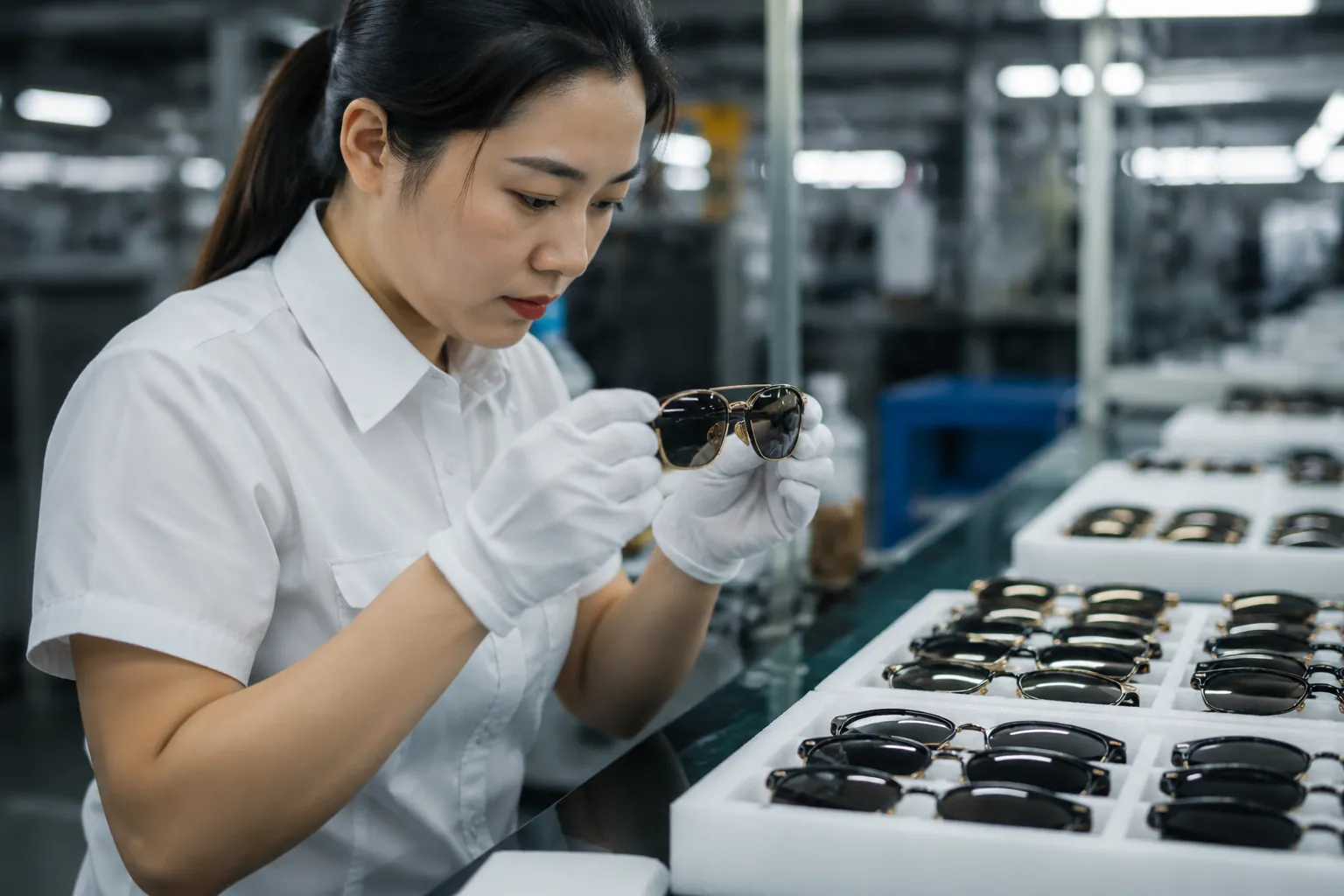
If you buy sunglasses for retail, distribution, or private label, frame comfort is not a soft issue. It affects try-on conversion, review scores, returns, and repeat orders. A frame that feels cheap, loose, or pinchy will get noticed fast. This guide shows how to specify frame flex, spring hinges, and temple tension for sampling, production, and QC.
1) Start with the problem you are actually solving
Frame flex is not one thing. Buyers use it to describe three different behaviors: how much the front can spread, how the temples recover after opening, and how much side pressure the frame places on the head. Those behaviors are related. They should still be specified separately.
For sunglasses programs, the business goal is usually simple: the frame must survive handling, fit a range of head widths, and feel comfortable in the first 30 seconds of wear. For fashion and premium programs, perceived quality matters too. Too much flex and the frame feels soft or flimsy. Too little and the wearer feels pressure points, misalignment, or a stiff, uncomfortable fit.
Break the spec into three questions:
- Front flex: Can the front open slightly at the hinge area during handling without whitening, cracking, lens pop-out, or permanent deformation?
- Temple return: After repeated open-close cycles, does each temple return to its set position with consistent resistance?
- Temple pressure: Does the frame hold the head securely without creating a squeeze point at the hinge or behind the ear?
A useful frame is not the most flexible or the stiffest option. It is the one that gives the consumer no reason to complain during first wear and no reason to return it later. Many sourcing specs stop at "make it comfortable" or "use stronger hinges." That is not enough for production control.
If your supplier handles multiple steps in-house, such as molding, cutting, milling, decoration, assembly, and QC, that can help reduce variation. But the approved sample still needs to match the production method exactly. Flex can change with wall thickness, hinge fit, temple milling depth, polish quality, and final assembly.
2) Match flex to the frame material first
Material choice determines what kind of flex is realistic. A supplier can tune comfort with geometry and hardware, but it cannot make one material behave like another. Do not ask for high-flex behavior from a structure that cannot support it.
In sourcing terms, material and geometry drive most of the comfort outcome. A short guide:
| Material | Typical flex behavior | Useful buyer targets | Main risks |
|---|---|---|---|
| Injection plastic (for example PC, TR, or other molded blends) | Moderate flex if wall thickness is consistent; feel depends on resin and rib design | Front and temple thickness should be defined at stress points in the tech pack; hinge area should be reinforced | Whitening at bend points, stress cracking around the hinge block, and inconsistent feel if cooling or gate position varies |
| Acetate | Generally stiffer and more controlled in hand feel; comfort depends heavily on milling, bridge shape, and temple taper | Temple thickness, before final finishing, should be defined in the spec; comfort depends on edge finishing and temple shaping | Pressure points if the temples are too flat or edges are poorly finished; hinge pull-out if hardware is underspecified |
| Metal / mixed material | Highly dependent on wire gauge, forming, and solder points; can feel springy or rigid | Temple wire geometry, bend accuracy, and hinge alignment should be controlled tightly | Inconsistent temple tension, twist after assembly, visible asymmetry, and poor recovery after repeated wear |
For injection frames, the main variables are resin selection, wall uniformity, gate position, and cooling control. For acetate, flex comes from milling depth, temple taper, polish, and how the hinge is seated into the front. In metal programs, wire gauge and forming accuracy matter more than many buyers expect. Even a small change in wire size or bend angle can change the feel on the face.
Ask suppliers for a material recommendation together with the intended flex behavior. Instead of requesting "stronger hinges," request something like: "injection front with moderate give, firm temple recovery, suitable for a 54–18 fashion sun style, no visible whitening during normal handling spread." That language is useful in sampling and QC.
3) Spring hinges: useful, but not a cure-all
Spring hinges exist to improve fit tolerance. They allow the temple to move outward, which can widen the fit window and reduce side pressure. That can help on sunglasses that need to work across different head widths and face shapes.
But spring hinges are not a fix for poor frame design. If the frame is heavy, unbalanced, or built with weak temple geometry, a spring hinge may add movement without improving comfort. The wearer may feel play at the side of the head instead of support.
Think in terms of hinge function, not hinge style. A standard spring hinge usually provides a small amount of outward movement, but the exact movement depends on construction and geometry. More movement is not automatically better. Too little resistance feels loose. Too much makes the frame hard to open and can affect alignment over time.
Common buyer mistakes:
- Over-specifying spring hinges on lightweight frames: The frame moves more, but the wearer may not feel more comfort.
- Ignoring hinge resistance: A spring hinge can still open too easily or too stiffly if it is not matched to temple weight and frame balance.
- Using spring hinges to compensate for bad temple geometry: If the temple angle is wrong, the hinge will not solve the pressure point.
Use the hinge only for the reason you actually need it. "Use spring hinges to broaden fit range and reduce first-wear tightness" is a real product requirement. "Use spring hinges because it sounds premium" is not an instruction a factory can work from.
For cost-sensitive programs, a fixed hinge can be the better choice if the style is lightweight and the fit is already forgiving. For fashion and premium eyewear, a well-specified spring hinge can improve perceived quality, but only if resistance, return, and alignment are controlled.
4) Temple tension is where returns are won or lost
Temple tension is the side pressure the arms place on the head. Consumers feel it immediately. If it is too tight, they may say the frame hurts after a short period of wear. If it is too loose, the frame can slide on the nose or move too easily during normal activity. This is one of the fastest ways to create negative reviews and avoidable returns.
The right pressure depends on frame weight, temple length, lens size, and target wearer. A heavier acetate sun frame may need more holding force than a lightweight injection frame. A children's frame needs secure retention, but the pressure must not be concentrated at the hinge or ear bend. For larger adult styles, especially in wider lens sizes, the fit can change noticeably if the temple angle is slightly off.
Do not specify temple tension only with adjectives. Use testable language. A supplier can work with terms like:
- Open-close cycle target: no visible loosening after 30 cycles and no permanent drift after 100 cycles
- Wear test: comfortable during a short wear trial on more than one head size without pinching or slippage
- Alignment target: both temples sit level within a practical visual tolerance after assembly
- Recovery target: each temple returns fully after being opened to the normal wear angle and released
Simple production checks help. Factories can measure opening force, check hinge symmetry, and run wear tests with fixed head forms. But the buyer still needs a real-world judgment because comfort is partly subjective. Ask for samples on multiple head sizes, not only one fit model and one approval photo.
Regional preference matters too. Some markets tolerate a more secure, held-on feel, especially for outdoor or active use. Other markets are more sensitive to pressure and prefer a softer temple feel. If you sell across regions, localize the fit target instead of assuming one global feel will work everywhere.
5) Build the spec around price tier, MOQ, and lead time
Flex targets should change with price point and order size. At higher volume, you can ask for tighter tolerance, more consistent hinge action, and better finishing. At low MOQ, expect more variation and less process room. That is not always a quality failure. Often it is a function of setup cost and line control.
Use your order size to decide where to spend complexity. A simpler frame with clean hinge action often outperforms an over-engineered frame that cannot be controlled at your MOQ. If your supplier quotes different prices by volume, that usually reflects setup, assembly control, and finishing time.
| Program type | Typical order logic | Recommended flex profile | Hinge choice | Buyer focus |
|---|---|---|---|---|
| Mass market | Higher-volume runs, cost sensitive, broad sell-through needed | Moderate flex, forgiving fit, low break risk | Standard spring hinge or fixed hinge depending on style | Low returns, easy wear, stable unit cost |
| Fashion | Moderate volume, style-led, try-on conversion matters | Controlled stiffness with balanced temple pressure | Spring hinge where fit range improves retail performance | Shelf appeal, hand feel, fewer comfort complaints |
| Premium | Lower volume, higher expectations, tighter QC needed | Tighter tolerance, consistent recovery, clean alignment | Higher-spec spring hinge or refined fixed hinge | Perceived quality, repeat purchase, review quality |
Lead time matters too. If a supplier offers a sample stage followed by bulk production, use that window to test and adjust fit before mass production. If you change hinge style, temple thickness, or decoration after approval, the timeline can extend because assembly or tooling adjustments may be required. More detail does not automatically mean longer lead times. It does reduce surprises.
As a buyer, treat the budget as a tradeoff between complexity and control. If you need premium comfort, pay for it where your sell-through depends on it. Do not force premium behavior out of a budget structure that cannot support it.
6) What to ask your factory for, in plain language
Do not ask a supplier to "make it comfortable." That is not a production instruction. A factory needs to know what to build, what to measure, and what to preserve during assembly.
Use a short request list that a sourcing team, engineer, and QC inspector can all understand:
- Material: injection plastic, acetate, metal, or mixed material
- Temple system: fixed hinge or spring hinge, and the reason for the choice
- Desired fit: soft hold, medium hold, or firm retention
- Target market: mass, fashion, or premium
- Use case: short outdoor wear, all-day retail wear, travel, or active movement
- Decoration limits: pad printing, laser engraving, hot stamping, metal logo plate, or embossing, and whether decoration is allowed near the hinge zone
Decoration matters more than many buyers realize. A heavy logo plate near the temple can change balance and make a frame feel tighter on one side. Thick pad print near the hinge can interfere with movement if it creates buildup. Laser engraving is usually less likely to affect flex than applied plates or raised emblems, but it still needs to be placed where it does not weaken a thin section. Ask for a drawing showing logo position relative to the hinge and temple bend.
Also ask how the factory will inspect the product. A good supplier should verify hinge alignment, temple opening feel, screw security, lens retention, and visual symmetry after assembly. In-house QC is useful because hinge problems often appear only after final assembly, not during raw part production.
For compliance, use the standards that match the target market and request documentation for each claim. Relevant certifications and compliance references for this category include:
- CE EN ISO 12312-1
- ANSI Z80.3
- AS/NZS 1067
- REACH
- FDA registration
- ISO 9001
- BSCI
If a supplier names a certification that is not supported by documentation, treat it as a risk. On sunglasses, compliance problems can delay shipment or create retail issues.
7) Sample, test, then lock the production spec
Sample approval is where comfort issues should be caught. If you skip it and move straight to bulk, you pay later in returns, complaints, and rework.
A practical sampling sequence is:
- Request a first sample with the final material, hinge type, and temple geometry.
- Check opening feel, temple symmetry, and balance on the face.
- Wear test on more than one head size, including a narrower and a wider fit.
- Open and close the temples repeatedly to check initial resistance and whether the feel remains consistent.
- Confirm decoration does not interfere with hinge motion, surface finish, or temple flex.
- Approve color, finish, and packaging only after comfort is acceptable.
For repeat orders, keep the approved sample and its key settings on file: hinge type, temple thickness, front thickness, decoration method, and any tolerance notes from the approved sample. A common source of drift is a quiet change in wall thickness or hardware during a later production run. Even a small change can alter the feel enough to trigger complaints.
Use the sample stage to document what "good" actually means. Note whether the frame should feel secure or relaxed, whether the temples should open firmly or easily, and whether any pressure point appeared after wear. That is more useful than a generic approval based on appearance alone.
Do not approve a frame from photos only. Comfort is not visible in a product shot. It has to be worn.
8) Final buyer checklist before you place the order
If you want better sell-through, start with fit before finishes. Color gets the click. Comfort keeps the review.
- Choose flex behavior based on material and geometry, not preference alone.
- Use spring hinges only when fit range, retention, or first-wear comfort justify them.
- Define temple tension in test terms: repeated cycles, wear time, and alignment.
- Match the spec to your price tier and MOQ so the factory can hold the feel consistently.
- Test samples on real head sizes before bulk approval.
- Lock the hinge type, temple thickness, decoration method, and finish in the purchase order.
- Check that logos, plates, or printing do not alter the flex zone near the hinge.
One practical rule: if a frame feels slightly too tight at sample stage, it often becomes a return later. If it feels slightly too loose, it usually feels worse after repeated wear and repeated opening. The best frames are boring in the right way. They fit, stay on, open and close cleanly, and do not annoy the customer.
That is what sells.
Have a custom sunglasses project in mind?
Send us your styles, target market and quantities and we will return a detailed quote with MOQ, lead time and a sample plan.
Get a QuoteWhy source this from Wenzhou with LumiShades
Wenzhou in Zhejiang Province is widely regarded as China’s eyewear manufacturing capital, producing a large share of the world’s sunglasses. That concentration matters to buyers: a deep local supply chain for acetate sheet, hinges, lens blanks, plating and packaging means shorter component lead times, easier color and material matching, and a workforce with decades of eyewear-specific skill. LumiShades has manufactured in this ecosystem since 2009, and our vertical integration — in-house injection molding, acetate cutting, CNC milling, lens tinting, decoration and quality control — means no part of your order is quietly subcontracted to a workshop you cannot audit.
For international buyers, that vertical control translates into accountability. When a single factory owns every step, defects are traced and fixed at source rather than bounced between vendors, and your specifications survive intact from first sample to bulk. We back this with 15+ years of experience, shipments to 60+ countries, more than 5 million pairs produced per year and a 98.5% on-time delivery rate. Our certifications — CE EN ISO 12312-1, FDA registration, ANSI Z80.3, AS/NZS 1067, REACH, ISO 9001 and BSCI audit — mean the compliance documentation your market requires already exists. Explore our manufacturing capabilities and quality control process to see how this works in practice.
Frequently asked questions
Should I always choose spring hinges for sunglasses? No. Spring hinges are useful when you need a wider fit range, more retention, or a softer first-wear feel. For lightweight or cost-sensitive styles, a fixed hinge can feel cleaner and more stable. The right choice depends on the frame material, temple geometry, total weight, and target customer. Ask the supplier to explain why the hinge type fits the design instead of approving it by default.
What causes a frame to feel too tight even if the size is correct? Usually the issue is not lens width alone. Temple angle, hinge resistance, temple thickness, and the bend behind the ear can all create pressure even when the nominal size is correct. The fastest way to diagnose it is to check where the frame touches the head during wear. If the pressure is at the hinge, the temple geometry or resistance may need adjustment. If it is behind the ear, the temple bend or tip shape may be the issue.
How do I reduce returns on fashion sunglasses? Use balanced temple tension, check alignment after assembly, and approve samples with wear tests on more than one head size. Make sure decoration does not affect balance or hinge motion. Document the approved sample clearly so the production run does not drift from it. Returns often come from comfort issues that were visible in the sample but not tested long enough.
Can a factory control hinge feel at low MOQ? Yes, but variation is usually harder to control at lower quantities because setup and assembly adjustments are less efficient. Give the factory a clear target for fit, then verify it on samples before placing the order. If the design depends on very fine hinge feel, ask for extra sample rounds and lock the approved dimensions and hardware before bulk production.
Which certifications matter for overseas sunglasses buyers? Use the certifications and compliance references that match your market: CE EN ISO 12312-1 for Europe, ANSI Z80.3 for the U.S., AS/NZS 1067 for Australia and New Zealand, REACH for chemical compliance, and FDA registration when applicable for the U.S. market. ISO 9001 and BSCI relate to management systems and social compliance, not product safety performance. Always request current documentation and check that the documents match the exact product and supplier.
Ready to start?
Explore our aviator sunglasses or request a quote — our sales team replies within 12 hours.
Request a Quote