
How Small Metal Parts Shorten Sunglass Life
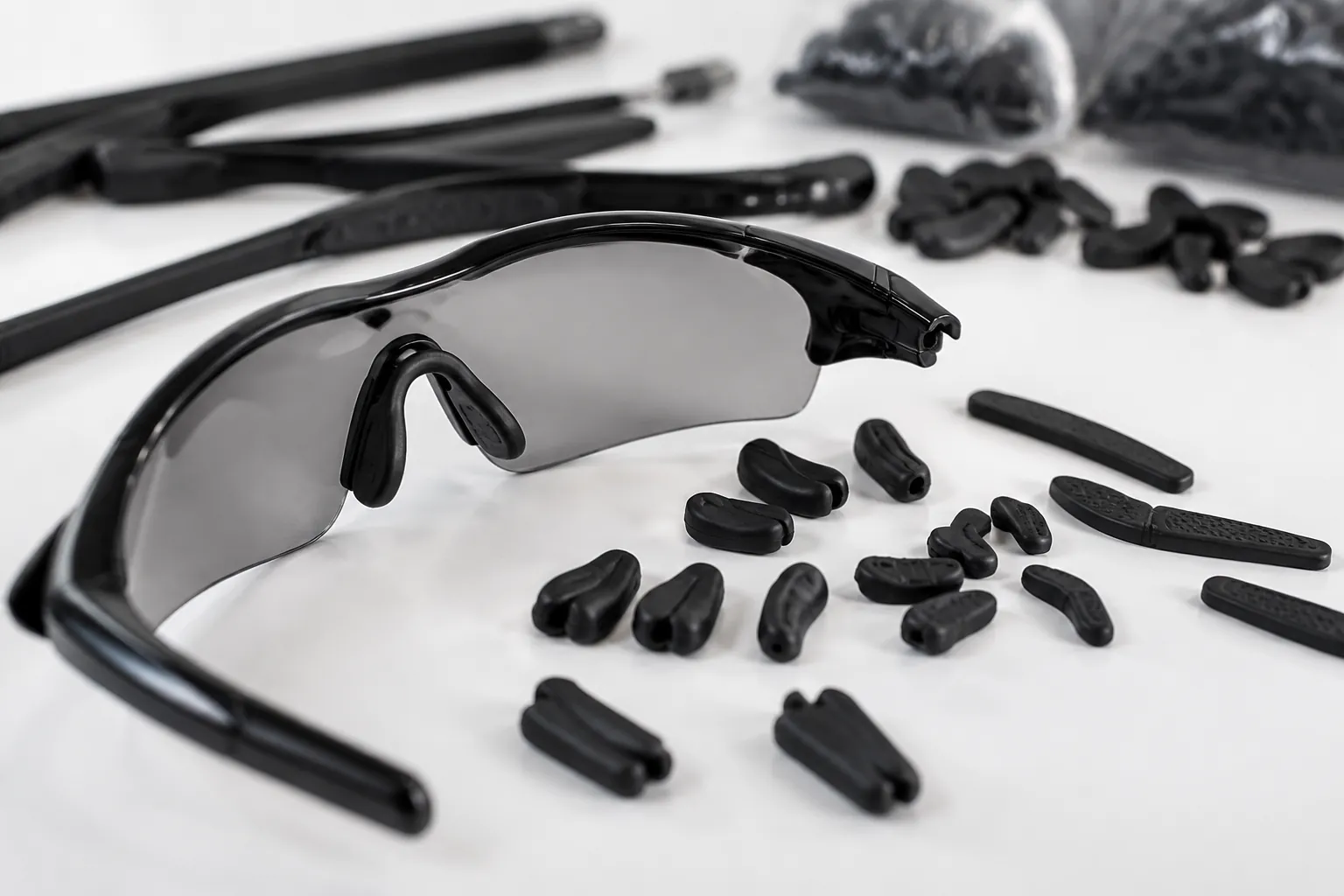
This guide is for brand owners, importers, distributors, and retail buyers sourcing custom sunglasses in volume. The subject is not frame color or lens tint. It is the small metal parts that often decide whether a style holds up in use or starts generating complaints. Define nose pad, screw, and hinge requirements before sampling. Confirm them again during production. That alone can prevent many avoidable quality problems, protect perceived value, and reduce rework after bulk production starts.
Start with the real failure points
Buyers often spend most development time on shape, color, logo placement, and lens appearance. Those choices matter. They help sell the style. But repeat orders depend on what happens after handling and wear. In many sunglass programs, the weak point is not the frame front or the lens. It is the hardware: nose pad arms, screws, hinge barrels, and the way those parts are fitted and finished.
These failures are familiar. Screws loosen after repeated opening and closing. Hinges develop play when barrel alignment is off or thread engagement is weak. Nose pad arms corrode or discolor when the base metal or plating cannot handle sweat, sunscreen, humidity, or salt air. Pad arms also lose symmetry during packing, shipping, or store handling. Customers notice that fast. A frame that sits unevenly or feels unstable immediately looks cheap.
For bulk buyers, the impact is practical:
- Returns and complaints: Loose hinges, missing screws, and crooked fit are obvious to end customers and hard for retailers to excuse.
- Perceived quality: Consumers judge quality by opening feel, fit stability, and whether metal parts keep their appearance.
- Rework risk: Hardware issues found late can force sorting, screw replacement, hinge adjustment, part substitution, or remake.
The main lesson is simple. Lock the hardware requirements early. Once sampling is approved and production planning starts, changing screw type, hinge grade, or pad-arm construction gets slower and more expensive. Treat hardware as a structural decision, not a trim detail.
Frame styling creates first interest. Hardware earns trust over time. If the opening feel is rough, the temples wobble, or the nose pads discolor quickly, the style loses value no matter how good it looks in a product photo.
Nose pads: small contact point, big effect on wear
Nose pads look simple. They are not. They combine arm material, wire thickness, weld or solder quality, finish, pad hardness, and replacement method. Those details affect corrosion resistance, adjustability, comfort, and long-term alignment.
For metal sunglasses, stainless steel nose pad arms are often specified when corrosion resistance matters. Buyers usually prefer them over lower-grade plated base metals because sweat, cosmetics, humidity, and salt exposure can expose weak finishing fast. Still, "stainless" on its own means little. Confirm the actual material grade, finish quality, and attachment method.
The main issues are corrosion, spring-back, and attachment stability. If a pad arm is too soft, it may deform during shipping or store handling. If it is too hard, or badly joined, it may resist adjustment or fail at the joint. There is no universal wire thickness for every style. The right gauge depends on frame weight, bridge design, and the level of adjustability you want. What matters is this: the sample should hold alignment after normal fitting and handling.
Attachment matters as much as material. A welded or soldered joint can be stable, but only if the work is clean and consistent. Poor joints create weak spots, rough edges, visible discoloration, or plating problems around the joint area. If plating is used on surrounding metal parts, ask for the actual finish construction. Do not assume all decorative plating performs the same in wear.
Ask these questions early:
- Is the nose pad arm stainless steel or plated base metal?
- What is the arm thickness or wire diameter?
- Is the arm soldered, welded, or mechanically fixed to the frame?
- What pad shape and hardness are being used, and can they be replaced?
- What assembly standard defines acceptable left-right height difference?
Then check symmetry in plain terms. Put the sample on a flat surface. Look at pad height. Confirm that the frame sits balanced on the face. A small mismatch may still be acceptable within your approved sample standard. But if the asymmetry is obvious without measuring tools, it is probably too large for retail acceptance.
Adjustable nose pads can improve comfort and support a more premium feel. Badly finished or unstable nose pads do the opposite. Judge them as functional hardware. Not decoration.
Screws: cheap part, expensive complaints
A screw costs very little. Screw failures do not. In sunglasses, common issues include loosening, thread stripping, head damage during assembly, poor slot definition, and corrosion around the hinge area.
Most screw problems trace back to three things: screw material, thread fit, and assembly control. Stainless steel screws are commonly specified where corrosion resistance matters, but the screw alone does not decide performance. If the hinge barrel is poorly formed, the thread is weak, the screw length is wrong, or the screw is inserted at the wrong angle, the assembly can still loosen or bind.
Assembly discipline matters. The factory should use the correct driver bit, keep insertion angle consistent, and control tightening so the hinge is secure without damaging the thread. Buyers do not always need a published torque number. They do need a repeatable assembly method and a check for opening feel after insertion.
Ask for a basic retention check on samples. Open and close the temples repeatedly. Inspect whether the screw head position changes. Watch for new side play in the hinge. If a screw starts backing out, or the hinge feel shifts during simple handling, the fastening system needs review before approval.
Decoration can also create avoidable hardware problems. Printing, laser marking, or other finishing steps placed too close to the hinge can block screw access, leave residue in the slot, or make adjustment harder than it should be. Keep the hinge area clear enough for assembly, inspection, and later service.
When reviewing a sample, confirm at least four things: the screw suits the hinge design, the slot is clean enough for service, the hinge opens smoothly without grinding, and the screw stays seated after repeated movement. These are simple checks. Document them anyway.
Hinges: where frame process and metal quality meet
Hinges carry most of the movement stress in sunglasses. Their performance depends on barrel alignment, leaf thickness, rivet or embed strength, thread quality, and the match between hinge construction and frame material. A good hinge can still fail if it is fitted into a poorly prepared temple. So hinge review must include the surrounding frame process.
On acetate styles, hinge slots and embed depth need consistent machining and clean seating. On injected styles, hinge placement in the mold or during post-mold fixing must be controlled so the temples track correctly. If a hinge sits off-angle, the temple may not close evenly. The user will feel drag, looseness, or uneven opening resistance.
It helps to compare hinge options in practical terms:
| Component option | Main advantage | Main risk | Best use case |
|---|---|---|---|
| Standard metal hinge with stainless screw | Serviceable and widely used | Can loosen if thread quality or fitting is poor | Volume programs with controlled assembly and QC |
| Thicker hinge leaf and barrel set | Better stability and reduced side play | Higher hardware cost and possible design limits | Heavier acetate or oversized frames |
| Low-cost plated hinge set | Lower initial hardware cost | Appearance and corrosion performance may be weaker | Price-sensitive programs with clear durability limits |
| Precision-aligned hinge on CNC acetate temple | Smoother opening feel and better symmetry | Requires tighter process control | Mid-range or premium private label lines |
Separate appearance from durability. A polished hinge can look good at final packing and still perform badly over time. Ask how alignment is checked, how hinge fit is verified during assembly, and how the supplier handles rework when a new style shows side play or tracking issues.
Decoration matters here too. Laser marking, pad printing, and other surface treatments should not interfere with the moving joint. The hinge zone is functional first. Appearance comes second.
What to put on the spec sheet before sampling
If hardware is left undefined, the supplier may choose a standard part that fits the target cost. Sometimes that works. Sometimes it creates avoidable variation between sample and bulk production. A clear development sheet or purchase specification reduces ambiguity and makes substitutions easier to spot.
Include these points on your RFQ or development sheet:
- Nose pad arm material: specify stainless steel if corrosion resistance matters.
- Screw material and finish: define the required material and any serviceability requirement.
- Hinge construction: standard, reinforced, or heavier-gauge for larger frames.
- Temple opening feel: define acceptance by approved sample.
- Symmetry standard: left-right temple angle, pad arm alignment, and closed-position match.
- Salt or sweat exposure concern: state if the style is intended for hot, humid, or coastal channels.
- Replacement parts plan: note whether extra screws or nose pads should ship with the order.
- Decoration clearance: keep prints, engraving, or other decoration away from hinge movement and screw slots.
Write tolerances in plain language and tie them to the approved sample. For example, require that the frame close evenly, that left and right nose pads sit at visually matched height, and that the hinge show no obvious binding through normal opening and closing. If your team cannot explain the requirement clearly enough for an inspector to apply it consistently, the spec is still too vague.
This is also where compliance and hardware meet, but they are not the same thing. CE EN ISO 12312-1, ANSI Z80.3, and AS/NZS 1067 cover sunglass product requirements and performance in their markets. REACH covers restricted substances in applicable materials and finishes. FDA registration may appear in U.S. product documentation depending on classification and supplier practice. ISO 9001 and BSCI are system-level indicators, not proof that a specific hinge or screw is durable. None of them replaces a written hardware specification or sample approval standard.
Cost and lead-time trade-offs worth checking
Not every project needs the highest hardware grade. The real question is whether a modest upgrade in screws, hinges, or nose pad construction is justified by the sales channel, frame weight, climate exposure, and likely cost of complaints or replacements.
For trial orders, the priority is usually to spot obvious weaknesses before committing to repeat volume. For repeat programs, consistency matters more than shaving a tiny amount from hardware cost. Once a style proves successful, lock the approved hardware construction so later purchasing decisions do not quietly reduce performance.
Lead time matters too. Hardware changes made after sample approval can affect sourcing, assembly setup, and inspection. If a buyer waits until final inspection to object to hinge feel or screw retention, the options are narrower and usually more expensive. Better sequence: evaluate hardware on the development sample, confirm it again on a pre-production sample if needed, and inspect it during production.
A practical buying rule is to link hardware spend to the channel and frame type:
- For low-volume trial orders: focus on identifying clear hardware weaknesses before scaling.
- For repeat programs: lock the approved hinge and screw spec to reduce substitution risk.
- For heavy or oversized frames: prioritize hinge strength before cosmetic upgrades.
- For warm-weather or coastal sales: prioritize corrosion resistance before decorative extras.
Decorative features do not make up for weak hardware. If the frame is meant to feel premium, the opening action, alignment, and corrosion resistance must support that claim.
A practical QC routine for bulk orders
Good hardware control does not need to be complex. It does need to be consistent. The best approach is to check hardware at multiple stages instead of relying only on final inspection, because many defects are easier to fix before full assembly and packing.
A usable routine looks like this:
- Incoming hardware check: confirm finish, dimensions, and visible burrs, corrosion, or surface defects on screws, hinges, and pad arms.
- First-article assembly: fit hardware to actual frame parts and verify alignment before mass assembly begins.
- In-line opening and closing test: check hinge feel, side play, and screw seating during assembly.
- Symmetry inspection: compare left and right temple angle, pad arm balance, and overall frame sit.
- Final random check: confirm decoration has not interfered with hinge movement, screw access, or visual alignment.
For a new style, buyers can also request a simple sample test protocol. Repeated manual open-close cycling is useful for screening obvious weakness, especially when combined with visual checks for screw movement, hinge play, rough motion, or temple drift. The exact number of cycles can be set by buyer and supplier together, but it should be documented so both sides are judging the sample by the same standard.
QC records should state what was checked and against which approved sample or written standard. "Good" is not enough if nobody has defined what good means. A better report says the hinge tracked evenly, the screw remained seated after cycling, the frame closed symmetrically, and no plating defect or burr was found in the nose pad area.
ISO 9001 and BSCI can support process discipline at factory level. They do not remove the need for product-specific checkpoints. Buyers still need an approved sample, a hardware spec, and inspection criteria tied to actual failure modes.
Match hardware choices to the sales channel
Not every channel stresses sunglasses the same way. Online private label, fashion retail, distributor sales, and promotional programs produce different complaint patterns. Hardware selection should reflect that reality.
For online-first brands, the main risk is immediate customer disappointment. A frame that arrives with a loose temple, visible misalignment, or rough opening action can generate returns and bad reviews fast. In physical retail, repeated try-ons put more stress on hinge feel and temple stability. In hot or coastal climates, corrosion resistance matters more because wear conditions are harsher.
Match the hardware spec to the channel:
- Online DTC or marketplace sellers: prioritize screw retention and alignment consistency on arrival.
- Fashion retail counters: prioritize hinge durability and stable opening feel under repeated handling.
- Hot-climate distributors: prioritize corrosion-resistant screws and nose pad arms.
- Promotional or short-run projects: control cost, but still reject visibly weak, rough, or unstable hardware.
For private label buyers, small process improvements can have a large commercial effect even if they barely move unit cost. Better alignment, cleaner hinge action, and more suitable corrosion resistance can reduce service issues and help maintain retailer confidence.
Also discuss spare parts early. Extra screws or nose pads can help distributors, repair teams, or retailers that perform local adjustments. If that support model matters to your business, include it in the order requirements. Do not treat it as an afterthought.
Hardware is not the most visible part of a sunglass program. It is often one of the most important after the sale. Buyers who review only frame material and appearance can miss the parts most likely to drive complaints.
Have a custom sunglasses project in mind?
Send us your styles, target market and quantities and we will return a detailed quote with MOQ, lead time and a sample plan.
Get a QuoteWhy source this from Wenzhou with LumiShades
Wenzhou in Zhejiang Province is widely regarded as China’s eyewear manufacturing capital, producing a large share of the world’s sunglasses. That concentration matters to buyers: a deep local supply chain for acetate sheet, hinges, lens blanks, plating and packaging means shorter component lead times, easier color and material matching, and a workforce with decades of eyewear-specific skill. LumiShades has manufactured in this ecosystem since 2009, and our vertical integration — in-house injection molding, acetate cutting, CNC milling, lens tinting, decoration and quality control — means no part of your order is quietly subcontracted to a workshop you cannot audit.
For international buyers, that vertical control translates into accountability. When a single factory owns every step, defects are traced and fixed at source rather than bounced between vendors, and your specifications survive intact from first sample to bulk. We back this with 15+ years of experience, shipments to 60+ countries, more than 5 million pairs produced per year and a 98.5% on-time delivery rate. Our certifications — CE EN ISO 12312-1, FDA registration, ANSI Z80.3, AS/NZS 1067, REACH, ISO 9001 and BSCI audit — mean the compliance documentation your market requires already exists. Explore our manufacturing capabilities and quality control process to see how this works in practice.
Frequently asked questions
Should I always specify stainless steel screws for sunglasses? Not always. Specify stainless steel screws when corrosion resistance, service life, or humid-use performance matters to your channel. Then verify the full system, not just the material: confirm hinge thread quality, screw length, slot quality, and assembly method on the sample. In your PO or spec sheet, list the screw material, approved sample reference, and a requirement that no hardware substitution is allowed without written approval.
How can I check hinge quality on samples without lab equipment? Use a simple repeatable routine. Open and close both temples multiple times by hand, then check for rough motion, grinding, squeaking, uneven resistance, new side play, or screws that have shifted position. Close the frame and confirm the temples track evenly and the frame sits symmetrically. Place it on a flat surface, inspect whether one temple or pad area lifts unnaturally, and compare left-right opening feel. Record the result against an approved sample so future inspections use the same benchmark.
Do CE EN ISO 12312-1 or ANSI Z80.3 guarantee durable hinges and screws? No. CE EN ISO 12312-1 and ANSI Z80.3 address sunglass product requirements, but they do not guarantee long-term durability of hinges, screws, or nose pad assemblies in your specific construction. Treat compliance documents and hardware approval as separate tasks. Ask for applicable compliance records, then separately approve the hardware specification, sample performance, and production QC routine.
At what order volume does better hardware make financial sense? There is no single volume threshold that fits every project. Better hardware makes sense when the cost of complaints, replacements, or retailer dissatisfaction is likely to exceed the added unit cost. In practice, the case is usually stronger on repeat programs, heavier frames, warm-climate distribution, and channels where returns are expensive or public reviews matter. To decide, compare the added hardware cost per pair against your estimated cost of one return, replacement, or bulk rework event.
What should I put in my purchase order to prevent hardware substitution? List the exact hinge type or approved hinge sample, screw material, nose pad arm material, any required finish, approved sample date or code, decoration clearance around the hinge zone, and QC checks for alignment and opening feel. Add a clause that no substitution of hardware components is permitted without written buyer approval. If corrosion resistance or spare parts matter, include those points explicitly. If it is not written in the PO, it is much harder to enforce later.
Ready to start?
Explore our square sunglasses or request a quote — our sales team replies within 12 hours.
Request a Quote