
Gradient Lenses: Sell-Through, Returns, Margin
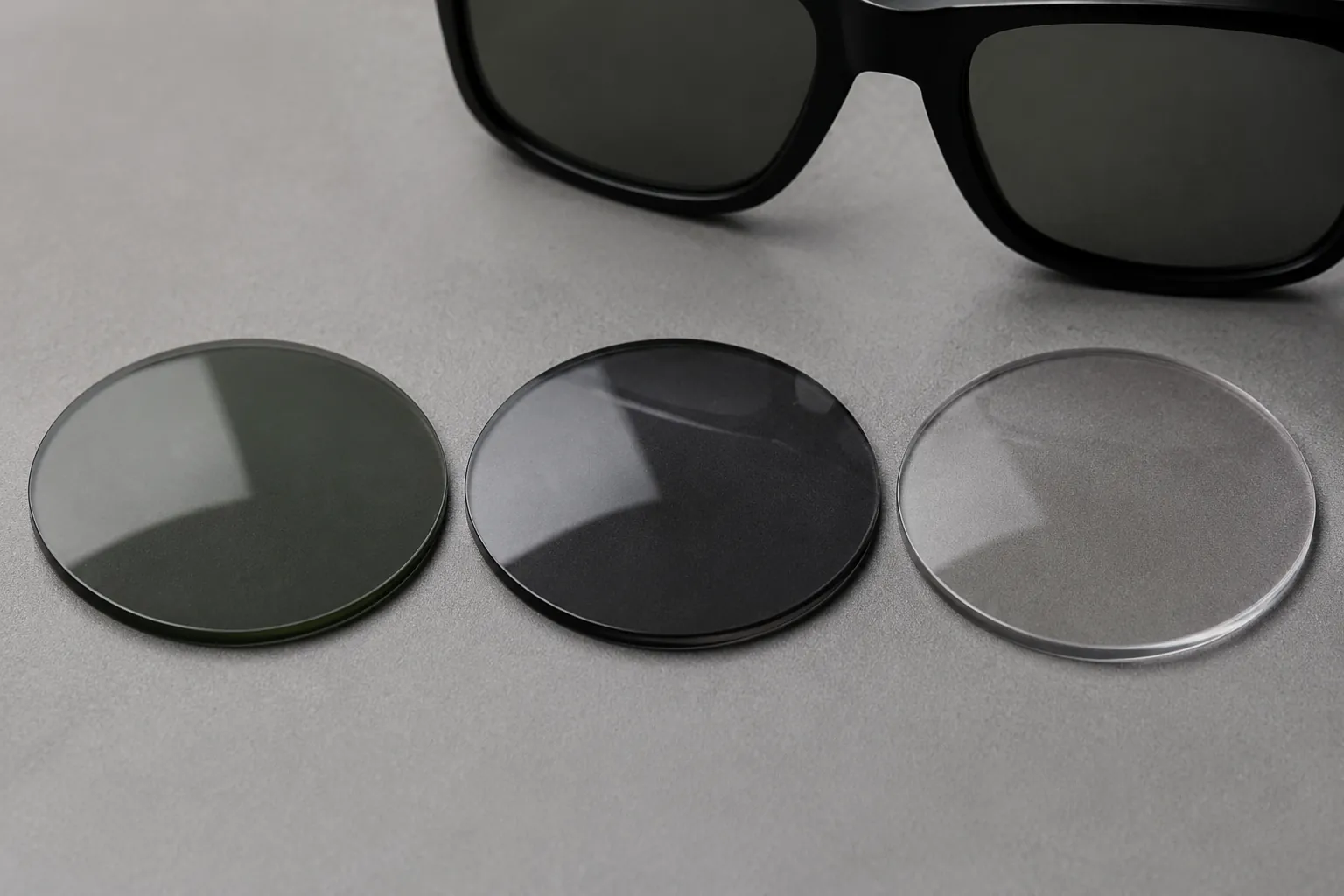
This guide is for brand owners, importers, distributors, and retail buyers deciding whether gradient lenses belong in a volume sunglasses program. The upside is clear: better shelf appeal, stronger perceived value, and sharper fashion positioning. The risks are just as real: left-right mismatch, weaker perceived sun protection, and avoidable returns if you approve the wrong fade, base lens, or test basis. Treat gradient as a commercial and technical decision, not a styling detail.
Start with the commercial question
Gradient lenses often improve first impression. On shelf and online, they can look more refined than a flat solid tint, make the face easier to see, and push a frame toward fashion rather than utility. That can support higher perceived value in women's fashion, resort, gifting, and optical-sun crossover programs.
But appearance is only the start. Sell-through depends on use case. A top-dark to bottom-light fade can help with dashboard viewing, phone use, menus, and general lifestyle wear. That matters if the product promise is everyday fashion sun. It matters less for beach, sport, fishing, cycling, or other high-glare uses where shoppers expect more even darkness across the lens.
Ask the hard question early: what will the customer expect after purchase? If the product is presented as strong sun protection and the lower zone transmits visibly more light than expected, returns can rise even if the lens is fully compliant.
As a rule, gradient works best when three conditions are true:
- The frame shape gives enough lens height for a smooth fade, usually medium to tall lens profiles rather than shallow wraps.
- The channel can explain the lens honestly through product copy, store staff, or accurate imagery.
- The target customer values style and visual lightness at least as much as maximum sun blocking.
Make that call before discussing color names, logo hardware, or packaging. If the product role is clear, the lens category, tint density, and QC plan are easier to define.
Where gradient helps sell-through and where it hurts
| Lens option | Best retail use | Typical visual transmittance | Sell-through upside | Main return risk |
|---|---|---|---|---|
| Dark solid tint | Beach, driving, men's core, sport-inspired | Often Category 3 range, depending on market classification and lens build | Clear sun-protection message, easy to merchandise | Can look basic on simple frames |
| Classic top-down gradient | Fashion, women's, resort, lifestyle | Varies by design; darker upper zone with lighter lower zone | Premium appearance, lighter face feel, strong pickup | Customer feels lower area is too bright outdoors |
| Light fashion gradient | Indoor-outdoor lifestyle, trend capsules | Usually higher transmittance overall than core sun styles | Good for styling, social content, trend drops | Confusion about sun performance |
| Mirror over gradient | Statement pieces, youth trend collections | Varies by base tint and mirror application | High shelf impact and photo appeal | Mirror defects, color mismatch, scratch sensitivity |
In open-sell retail, gradients often get picked up because shoppers can still imagine the face behind the lens. That helps in fashion categories. A lens that feels less closed off can improve trial and early conversion.
But pickup rate is not keep rate. A common return pattern is simple: the customer likes the look indoors, then wears the frame in strong daylight and decides the lower zone is too light. Not defective. Just badly positioned.
For online selling, image honesty matters. A lot. If studio editing makes the gradient look darker, smoother, or more even than reality, complaints follow. Use daylight imagery, side-angle product shots, and at least one on-face image showing real eye visibility through the lower lens area.
The quality risks that decide bulk performance
Gradient lenses usually fail for a short list of repeatable reasons. Most are controllable if the spec and inspection standard are clear.
- Left-right mismatch. This is the most obvious defect. One lens may be darker, the fade line may sit higher, or the hue may shift warmer, greener, or greyer than its mate. Common causes include tint-process variation, immersion-time variation, rack-position differences, or weak post-tint sorting. The fix is practical: pair-match after tinting and coating, not before.
- Harsh transition band. A good gradient should read as continuous, not striped. On a shallow lens height, the fade can compress into a visible line across the wearer's sight path. It looks cheap fast.
- Wrong base lens for the target tint. Smoke, brown, green, blue, and fashion colors do not process the same way. A clear polycarbonate lens and a pre-tinted CR-39 lens will not necessarily produce the same lower-zone appearance after gradient processing. The wrong base can create muddy tone, weak contrast, or an unwanted cast.
- Frame-shape mismatch. Oversized square, butterfly, and aviator frames usually handle gradients better because there is enough vertical distance for a softer fade. Narrow rectangles and wraps are less forgiving. Same recipe, worse result.
On tolerances, ask for more than "match approved sample." Useful controls include fade start position, fade end position, left-right height alignment on the assembled frame, and no obvious hue mismatch under agreed viewing conditions such as daylight-equivalent lighting. Some factories still manage this mainly by eye rather than instrument. Fine. The acceptance language still needs to be written down.
In-house tinting can reduce variation because process control stays under one roof. If lenses move between separate processors, batch inconsistency risk usually rises. Pair sorting, daylight review, and assembled-frame checking are what keep a gradient program out of the returns pile.
Specify the gradient like a technical item
Approving a photo is not a lens specification. Buyers get cleaner production when they define the gradient as a build, not a mood.
- Lens material: polycarbonate or CR-39, with the exact material stated on the sample brief and compliance file.
- Base lens color: clear, smoke, brown, green, or another approved base. This affects final hue and lower-zone cleanliness.
- Top transmittance target: specify the desired darkness range for the upper zone.
- Bottom transmittance target: specify the desired lightness range for the lower zone.
- Fade direction: standard top-down, double gradient, or another defined direction.
- Fade height reference: define the transition against actual mounted lens height, not only a loose-lens drawing.
- Coatings: hard coat, backside anti-reflective coating, mirror, hydrophobic treatment, or other required finish.
- Pair-matching standard: left and right lens must match the approved sample under agreed viewing conditions on the assembled frame.
Material choice matters. Polycarbonate is common in private-label sunglasses because it is impact resistant and commercially practical, but tint appearance can differ from CR-39. CR-39 is often used in fashion programs that prioritize optical clarity and tint richness, but the full lens build still has to fit the intended market and compliance requirement.
For first orders, limit variables: one frame color, one lens recipe, one logo method. Pilot runs can help test demand, but difficult gradients are usually more stable once the recipe is proven and the factory is matching against a fixed approved sample.
Decoration changes expectation too. A simple printed logo can work with a mid-level gradient. Premium hardware such as metal logo plates, embedded badges, foil-stamped packaging, or laser engraving raises the perceived value of the frame. If the gradient then looks weak or uneven, buyers notice. So do consumers.
Compliance is the floor, not the pitch
Gradient does not exempt a sunglass from performance requirements. The lens still needs to meet the standard required for the destination market in the exact configuration being sold.
For export programs, buyers commonly reference CE EN ISO 12312-1 for Europe, ANSI Z80.3 for the US market, and AS/NZS 1067 for Australia and New Zealand. Chemical and materials compliance may also involve REACH, depending on the market and materials used. For the US, buyers may also request confirmation of FDA registration where applicable to the importer's documentation process. Factory management and social compliance requests may include ISO 9001 and BSCI, but those are factory-system credentials, not sunglass product certifications.
The operational point matters more than the acronym list: test the actual SKU build. If you change lens material, tint density, transmittance profile, or coatings, confirm whether the existing test basis still applies. Buyers sometimes assume a report for a solid smoke lens covers a smoke gradient version. That is risky.
Also remember this: compliance is only the minimum threshold. A lens can pass formal requirements and still disappoint the customer if the lower section feels too bright in real use. Passing the lab does not guarantee passing the return counter.
Lead times, MOQ, and why gradients cost more to control
| Order stage | Typical timing | What drives timing | Commercial logic |
|---|---|---|---|
| Sample development | Depends on lens recipe, material availability, and frame readiness | Gradient development, lens-frame fitting, logo confirmation | Moves faster when the lens spec is complete |
| Small MOQ run | Depends on factory setup and capacity | Setup loss, tint calibration, pair sorting time | Useful for market test, usually weaker on margin |
| Bulk production | Depends on coating queue, tint capacity, and packaging complexity | Tinting capacity, QC matching, packaging mix | Better cost stability once the spec is frozen |
| Volume scaling | Improves when volume is concentrated in fewer color splits | Material purchasing, line efficiency, rejection control | Unit price usually improves as output rises and variation is reduced |
Gradient lenses do not always cost much more in raw materials. The added cost usually sits in labor, process control, and rejection. A solid tint can absorb broader visual variation before the customer notices. A gradient usually cannot. If the approved look is narrow, more lenses are rejected during matching, and that loss gets priced in.
That is why fashion-specific gradients are harder to cost well at low volume. You are paying for setup time, recipe stabilization, and manual pair sorting across a short run. At higher volumes, the line runs longer against a fixed target, operators work to a clearer reference, and reject rates may improve.
Final cost still depends on frame material, lens material, coatings, hardware logos, packaging, and testing scope. Compare quotes carefully. Confirm what is included: mirror application, backside anti-reflective coating, case, pouch, barcode labeling, compliance testing, and any inspection requirement.
A practical QC checklist before bulk release
Use this checklist at sample approval, pilot confirmation, and pre-shipment inspection.
- Check under multiple light sources. Review in daylight first, then under indoor lighting. Some hue mismatches show up only in daylight-equivalent conditions.
- Inspect assembled frames, not loose lenses only. Fade height can look acceptable loose and wrong once mounted.
- Pair-match first, batch-match second. The shopper sees the pair; the retailer sees the carton consistency. Both matter.
- Measure fade position on the approved shape. Bulk should be checked against the approved frame and lens geometry, not a generic lens outline.
- Check bottom-zone usability. Put the frame on face outdoors. If the lower field feels too bright in strong daylight, the customer may say the same.
- Review coating quality. Mirror over gradient shows scratches, pinholes, dust, and color unevenness faster than solid lenses do.
- Confirm branding balance. Premium temple hardware with a weak lens finish cuts perceived value.
- Verify documents against the shipped SKU. Frame, lens material, tint, and coating combination should match the compliance file and approved sample.
A signed golden sample is essential. So is a written accept-reject standard. "Match sample" is too vague unless buyer and supplier have already aligned on viewing conditions, tolerance language, and inspection method. If the program matters, add pre-production sample signoff and pull random pairs from different cartons during final inspection rather than judging only top-layer pieces.
How to decide if gradient belongs in your next order
Choose gradient if your range needs more visual lift, your customer buys on style, and your channel can present the lens honestly. Choose solid tint if the promise is straightforward sun protection, the price point is tight, or your return sensitivity is high. Choose both if you are building a ladder: solid tint for core volume, gradient for fashion margin and seasonal drops.
For new programs, keep it simple. One proven frame. One conservative gradient. One clear use case. Validate the sample in daylight, confirm the compliance basis for the exact lens build, run a controlled pilot if needed, then scale only after sell-through and return feedback are clear.
The commercial takeaway is blunt: gradient lenses can improve shelf appeal and brand positioning, but only when the fade is specified properly, matched tightly, and aligned with real wear expectations. Treat gradient as a technical buying decision with fashion value. That is how it performs.
Have a custom sunglasses project in mind?
Send us your styles, target market and quantities and we will return a detailed quote with MOQ, lead time and a sample plan.
Get a QuoteWhy source this from Wenzhou with LumiShades
Wenzhou in Zhejiang Province is widely regarded as China’s eyewear manufacturing capital, producing a large share of the world’s sunglasses. That concentration matters to buyers: a deep local supply chain for acetate sheet, hinges, lens blanks, plating and packaging means shorter component lead times, easier color and material matching, and a workforce with decades of eyewear-specific skill. LumiShades has manufactured in this ecosystem since 2009, and our vertical integration — in-house injection molding, acetate cutting, CNC milling, lens tinting, decoration and quality control — means no part of your order is quietly subcontracted to a workshop you cannot audit.
For international buyers, that vertical control translates into accountability. When a single factory owns every step, defects are traced and fixed at source rather than bounced between vendors, and your specifications survive intact from first sample to bulk. We back this with 15+ years of experience, shipments to 60+ countries, more than 5 million pairs produced per year and a 98.5% on-time delivery rate. Our certifications — CE EN ISO 12312-1, FDA registration, ANSI Z80.3, AS/NZS 1067, REACH, ISO 9001 and BSCI audit — mean the compliance documentation your market requires already exists. Explore our manufacturing capabilities and quality control process to see how this works in practice.
Frequently asked questions
Do gradient lenses usually create more returns than solid tints? They can, especially when the lower lens area is noticeably lighter than the customer expects for outdoor use. The main cause is usually expectation mismatch, not non-compliance. To reduce risk, define the intended use clearly in product copy, avoid an overly light lower zone on core sun styles, approve on-face photography that shows real eye visibility, and test the sample outdoors before confirming bulk.
What is the biggest QC issue with gradient lenses in bulk orders? Left-right mismatch is usually the most visible issue, followed by an abrupt transition band. Buyers should require a signed golden sample, inspect the gradient on assembled frames rather than loose lenses only, define how the factory will pair-match left and right lenses after tinting and coating, and state the viewing condition for approval, such as daylight-equivalent lighting. If the lens recipe is critical, ask the supplier to confirm whether tinting is done in-house or through an external processor.
Are gradient lenses harder to certify for export markets? Not inherently, but the exact lens build being sold must meet the required market standard. Buyers should confirm the applicable basis for CE EN ISO 12312-1, ANSI Z80.3, or AS/NZS 1067 using the real SKU configuration: lens material, tint profile, mirror or anti-reflective coating, and frame assembly. Do not assume a report for one lens version automatically covers another. Keep the compliance file tied to the final approved build, and check whether REACH or FDA registration documentation is also required in your import process.
At what order size do gradient lenses make more commercial sense? There is no universal threshold, because the economics depend on factory process, matching strictness, and lens-build complexity. In practice, small runs are useful for market testing but are usually less efficient because setup, calibration, and pair sorting are spread over fewer units. Buyers should ask the supplier for pricing at at least three quantity breaks, compare expected reject risk at each level, and decide whether the program is a pilot style or a repeatable core item.
What should I include in a gradient lens sample brief? Include lens material, base lens color, target top and bottom transmittance, fade direction, fade height referenced to the mounted lens, any mirror or backside anti-reflective coating, the exact frame shape the lens will be fitted into, and the required compliance market. Also require an assembled approval sample and state the pair-matching standard under agreed lighting. A color name or edited reference photo on its own is not enough to control production.
Ready to start?
Explore our sport wrap sunglasses or request a quote — our sales team replies within 12 hours.
Request a Quote