
Custom Sunglasses for Travel Retail
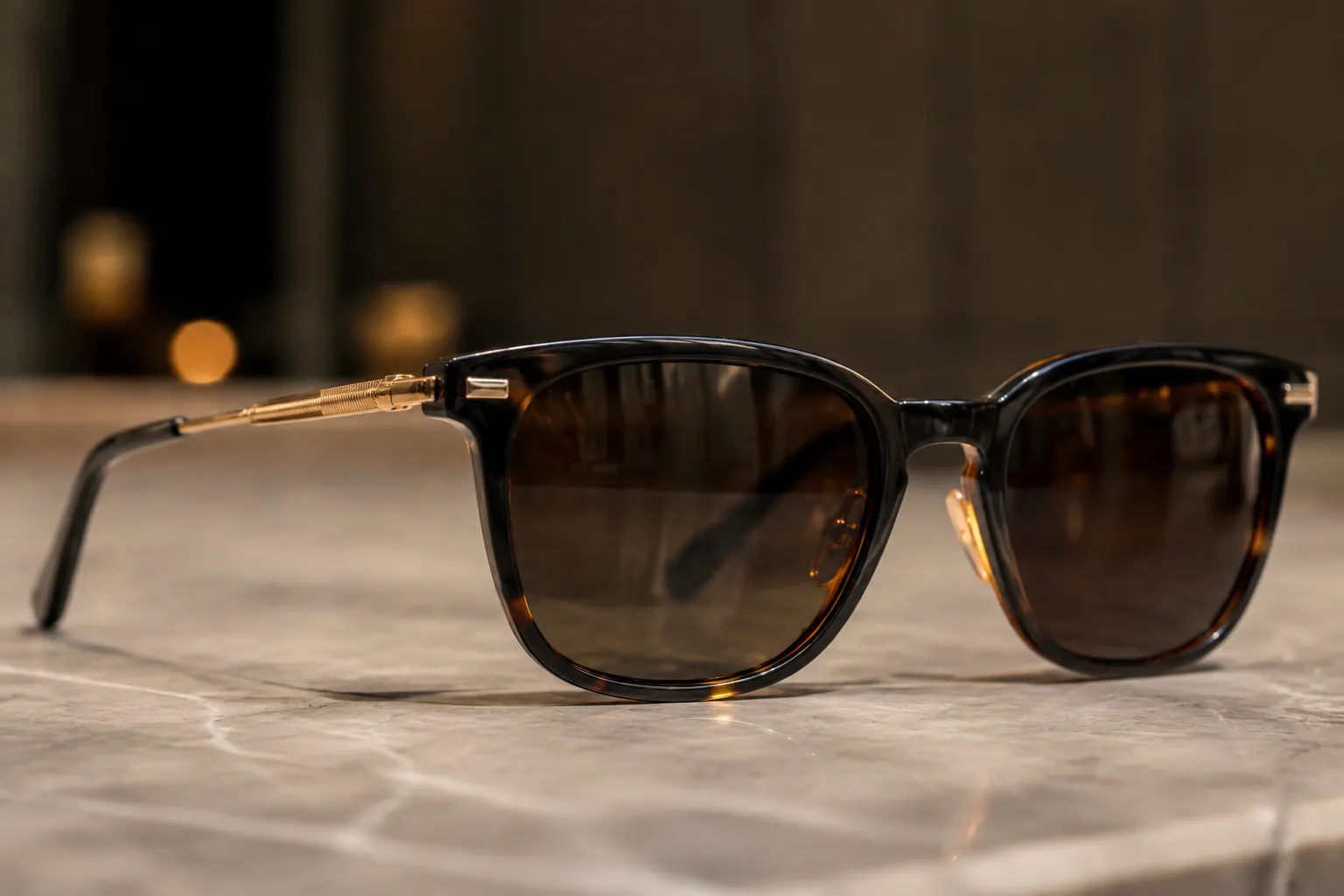
This guide is for resort buyers, cruise retail teams, importers, distributors, and travel retailers sourcing custom sunglasses for seasonal tourist channels. It explains how to build a focused assortment, set UV and impact requirements, choose frame materials by price point, control packaging cost, and plan replenishment without overbuying. The goal is a cleaner purchase order: fewer dead SKUs, fewer compliance gaps, clearer approval points, and sunglasses that hold up in real vacation use.
Build the Assortment Around Real Traveler Behavior
Travel retail is not online fashion eyewear. The customer is often buying fast, outdoors, with sunscreen on their hands, limited luggage space, and a vacation mindset. That changes the range. A resort shop can sell bolder colors than a city optical store. Still, the frame must fit many faces and feel credible within the first 10 seconds of handling.
For resort, cruise, airport, and attraction programs, start with 4 to 8 core designs. Do not open with a long wall of weak options. Use frame families that already work in tourist settings: wayfarer, round, square acetate-look, sport wrap, aviator-inspired metal, and kids styles if the location serves families. Keep the first order tight. Track sell-through by SKU. Replenish winners before peak weeks.
- Beach resorts: polarized options, matte finishes, tortoise, transparent amber, smoke lenses, and small temple logos.
- Cruise retail: lightweight frames, durable hinges, compact packaging, and a few price tiers for gift buying.
- Theme parks and attractions: bright colorways, kids sizes, printed temples, and lower unit cost targets.
- Duty-free and airport shops: cleaner styling, barcode discipline, better packaging, and stronger compliance documentation.
Do not build the range from mood boards alone. Ask the supplier for frame width, lens width, bridge, temple length, lens base curve, hinge type, lens category, and sample weight. A sunglass can look good in a rendering and still feel cheap in hand. Watch for weak temple flex, narrow fronts, lens stress, and sloppy hinge feel.
Match Frame Materials to Price and Abuse Level
Material choice affects cost, MOQ, tooling time, finish, returns, and the retail story. In travel retail, sunglasses get handled hard. Customers try them on all day. Staff move them between display trays, drawers, cabins, and stockrooms. Frames need enough stiffness to hold alignment and enough toughness to survive daily use.
| Material | Best Use | Process Detail | Buyer Notes |
|---|---|---|---|
| PC injection | Promotional resort styles, kids frames, high-volume programs | Injection molded after color approval; stable for repeat colors and fast production | Among the lowest-cost options; good impact resistance, but can feel less premium if the mold polish is poor |
| TR90 | Sport, excursion, cruise, and active travel styles | Injected nylon material with strong flex recovery and low weight | Good for wraps and outdoor use; check lens groove control and temple rebound |
| Acetate | Premium resort boutiques, fashion programs, duty-free capsules | Cut from sheet, tumbled, polished, pinned, and hand assembled | Richer color depth; longer production path and greater lot-to-lot variation than injection materials |
| Metal | Aviator-inspired and adult gift styles | Cut, soldered, plated, fitted with pads, and adjusted by hand | Requires plating control, solder checks, screw torque review, and nose pad inspection |
| Mixed material | Premium private label collections | Combines injected, metal, acetate, or trim parts in one frame | More QC points; use only when retail price supports the extra assembly risk |
For low-cost resort programs, PC can work well if the mold is clean, masterbatch is controlled, and hinge screws are not underspecified. For active travel, TR90 is often safer because it is lighter and more flexible. For premium boutiques, acetate gives a better hand feel. It also needs more inspection for polishing marks, temple alignment, and color consistency.
Ask which operations are handled in-house and which are subcontracted. Fewer handoffs usually mean clearer sampling feedback, faster correction of fit issues, and fewer delays when a change is requested after review.
Specify Lenses Before You Pick Colors
Lens color is not just styling. It affects perceived quality, glare comfort, compliance testing, returns, and customer complaints. For resort and cruise retail, the practical baseline is UV400 lenses with clear category labeling. If your market checks sunglass compliance, vague claims such as UV protection are not enough.
Common lens choices include smoke, brown, green, mirror, gradient, and polarized. Smoke is neutral and easy to sell. Brown improves contrast and pairs well with tortoise frames. Green has a classic look. Mirror lenses sell in beach locations, but scratches show quickly, so coating quality and packing matter. Polarized lenses reduce glare from water, roads, and marina surfaces. They cost more and require correct axis orientation during assembly.
- Confirm target market standards before sampling: CE EN ISO 12312-1 for Europe, ANSI Z80.3 for the United States, and AS/NZS 1067 for Australia and New Zealand.
- Define lens category and visible light transmission range by SKU, not only by collection.
- Request UV test records and keep them linked to the production lot or lens batch.
- Check lens fit after tinting or coating; small warpage can create edge stress and groove marks.
- For polarized lenses, inspect axis consistency and run a glare check during in-process QC.
Typical non-prescription sunglass lenses for outdoor retail are category 2 or category 3, depending on light conditions and local labeling rules. Very dark lenses can create compliance and usability problems if they are not labeled correctly. FDA registration may matter in the U.S. supply chain, but it does not replace product performance testing or market-specific labeling. REACH concerns restricted substances in materials and coatings. Keep these requirements separate in your vendor file.
Use Branding That Survives Handling
Travel retail branding needs restraint. A large logo can work for event merchandise. Many resort customers, though, want sunglasses they can wear after the trip. Put the mark where it supports the sale without making the product look disposable: temple exterior, temple tip, metal trim, pouch, hang tag, or paper box.
Decoration methods have different costs and failure points. Laser engraving is clean on metal parts, coated temples, and some plaques, but contrast depends on the base material. Pad printing is economical for temple logos, yet it can rub off if ink, surface treatment, and curing are not matched. Metal logo plates feel more premium but add recess control, adhesive risk, and alignment checks. Hot stamping on packaging is often better value than forcing a complex logo onto a curved frame surface.
- Laser engraving: good for small marks, serial-style details, and durable decoration on metal or coated parts.
- Pad printing: good for low to mid-cost programs; request tape, rub, or alcohol-resistance checks on finished samples.
- Metal logo plates: good for acetate and premium injected styles; check recess fit and plate alignment during mass production.
- Lens logo printing: use sparingly; placement should not enter the visual field or create buyer complaints.
For private label sunglasses, provide vector artwork, Pantone references, logo size, placement in millimeters, and acceptable variation. A practical tolerance for small temple logo placement is usually plus or minus 0.5 mm to 1.0 mm, depending on the surface shape. Curved temples are less forgiving than flat temples. Approve decoration on real production material, not only on a digital mock-up.
Keep Packaging Practical for Travel Retail
Packaging has to sell and protect the product. It also has to protect margin. A hard case looks better, but it adds cost, carton volume, and freight weight. A microfiber pouch is cheaper and useful after purchase. A paper box improves barcode control and shelf stacking, but it needs suitable board and coating if goods sit near humid beach storage.
For many travel programs, a balanced setup is a microfiber pouch, hang tag, barcode label, and optional compact paper box for higher price tiers. Cruise retail may require smaller master cartons because onboard storage is tight. Resort shops often care more about display readiness: polybag position, hang tag orientation, easy counting at receiving, and cartons that store cleanly behind the counter.
Packaging artwork should include brand name, model code, lens category where required, country of origin marking, barcode, importer details if applicable, and market-specific statements approved by the buyer's compliance team. Do not let the factory invent compliance wording. That is how shipments get delayed.
Ask for packed sample photos before bulk production. For large programs, request one full carton mock-up so your team can check carton marks, inner quantity, mixed-SKU rules, and shelf handling before goods leave the factory.
Use MOQ as a Planning Tool
A low MOQ helps only if the program is structured well. Treat MOQ as a planning tool, not a universal rule. Ask the supplier to quote each tier separately because tooling, decoration, packaging, and testing all shape price breaks.
Do not compare unit prices unless the specification is identical. A PC frame with smoke UV400 lenses and a pouch is not comparable to acetate with polarized lenses, metal trim, printed box, and compliance labeling. Build a costing sheet with frame material, lens type, decoration method, packaging, test requirements, carton quantity, inspection level, and delivery terms.
| Order Level | Best Use | Buyer Risk | Planning Advice |
|---|---|---|---|
| 50 pairs/design | Pilot styles, logo approval, seasonal tests | Higher unit cost and limited scale | Use for fit, decoration, packaging, and sell-through testing |
| 300 pairs/design | Small resort chains and cruise capsules | Moderate stock risk | Limit colorways and repeat the same lens specification |
| 1000 pairs/design | Distributor replenishment and regional retail | Forecast error becomes expensive | Separate core colors from experimental colors |
| 5000+ pairs/design | Large seasonal travel programs | Wrong specification affects the full season | Approve golden samples, carton plan, and inspection method before deposit |
Request samples only after the frame, lens, logo, and packaging direction are clear. Bulk lead time depends on whether the order is a straight repeat or a new specification. Any change to plating, mirror coating, packaging structure, or barcode format during the season slows purchasing, QC, and packing. Small changes are not small once production starts.
Require QC and Compliance Before Production
A serious sunglasses order needs more than a visual check. Set inspection points before production starts. Then the factory can build the order around those controls instead of debating defects after goods are packed.
- Incoming material: resin batch, acetate sheet appearance, metal parts, hinge quality, screw quality, and lens blanks.
- In-process checks: frame dimensions, temple opening, hinge movement, lens fit, decoration position, and color matching.
- Finished product: UV performance, lens category, surface defects, opening and closing feel, drop or flex checks where relevant.
- Packing inspection: barcode scan, hang tag, pouch, carton marks, quantity, and mixed-SKU carton control.
Agree useful tolerances before production. Logo placement may allow plus or minus 0.5 mm to 1.0 mm, while frame width, temple length, and bridge dimensions should match the approved sample within the buyer's accepted range. Call out lens gaps, loose screws, temple twist, sharp edges, color drift, pouch stitching, and scratched mirror coatings in the inspection checklist.
For standards and business controls, ask for documents that match your market and audit requirements: CE EN ISO 12312-1, ANSI Z80.3, AS/NZS 1067, REACH, FDA registration, ISO 9001, and BSCI. Ask for the report name, issue date, tested model or material scope, and whether your final lens and frame combination is covered. If your company uses AQL, state the inspection level and defect definitions in the purchase order. If not, require pre-production samples, mid-line photos, and final random inspection before balance payment.
Plan the Seasonal Timeline Backward
Seasonal eyewear programs fail when buyers decide too late. The factory may be able to produce quickly. Artwork approvals, packaging text, compliance review, inspection booking, and freight planning still take time. Build the schedule backward from the in-store date, not from the day someone remembers to request samples.
- Week 1: confirm target markets, retail price bands, frame families, lens category, logo positions, and packaging type.
- Week 2: receive and review samples; check fit, lens color, decoration, hinge feel, and packed presentation.
- Week 3: approve golden samples, barcode files, carton marks, compliance document list, and inspection criteria.
- Weeks 4 to 8: complete bulk production, in-process QC, final packing, and buyer inspection.
- Final stage: ship by air for urgent launch quantities or by sea for planned replenishment stock.
The fastest replenishment program is not the one with the most styles. It is the one with repeatable frames, stable lens specs, approved packaging, and clean sales data by SKU.
For resorts, cruises, duty-free shops, and tourist retailers, that is the advantage: sunglasses that match the destination, meet the required standards, arrive on time, and can be reordered before the shelf is empty.
Have a custom sunglasses project in mind?
Send us your styles, target market and quantities and we will return a detailed quote with MOQ, lead time and a sample plan.
Get a QuoteWhy source this from Wenzhou with LumiShades
Wenzhou in Zhejiang Province is widely regarded as China’s eyewear manufacturing capital, producing a large share of the world’s sunglasses. That concentration matters to buyers: a deep local supply chain for acetate sheet, hinges, lens blanks, plating and packaging means shorter component lead times, easier color and material matching, and a workforce with decades of eyewear-specific skill. LumiShades has manufactured in this ecosystem since 2009, and our vertical integration — in-house injection molding, acetate cutting, CNC milling, lens tinting, decoration and quality control — means no part of your order is quietly subcontracted to a workshop you cannot audit.
For international buyers, that vertical control translates into accountability. When a single factory owns every step, defects are traced and fixed at source rather than bounced between vendors, and your specifications survive intact from first sample to bulk. For procurement review, buyers can request process records, approved samples, quality checkpoints and project-specific compliance files before placing a bulk order. Required testing and documentation are confirmed against the destination market and product specification rather than assumed from a generic certificate list. Explore our manufacturing capabilities and quality control process to see how this works in practice.
Frequently asked questions
What is the best MOQ for testing a new resort sunglasses program? Use 50 pairs per design when the goal is to test fit, logo placement, packaging, and sell-through. Keep the test narrow: one or two core colors, one lens specification, and one packaging format. If the style sells, move the repeat order to a higher tier such as 300 pairs or more so you can improve unit cost without changing the spec.
How long should we allow from sample request to bulk shipment? Do not use one blanket number unless the supplier puts the full schedule in writing. Ask for sample lead time, revision time, bulk production lead time, inspection booking, and transit time as separate line items. Even with approved artwork, lens specs, and packaging files, the plan should include at least one sample round and one production window before freight booking.
Which compliance documents should we request for sunglasses? Request the documents that match your market and order. For most programs, ask for CE EN ISO 12312-1, ANSI Z80.3, AS/NZS 1067, REACH, FDA registration, ISO 9001, and BSCI where relevant. Also ask for the report issue date, model or material scope, test lab name, and confirmation that the final frame and lens combination matches the tested scope.
Are polarized lenses worth using for cruise and beach retail? Often, yes. They reduce glare from water, marina surfaces, bright pavement, and driving. Use them when the customer will notice the benefit and the retail price can absorb the extra cost. Before bulk approval, confirm lens color, visible light transmission, and polarization axis control so the sample and production lot perform the same way.
What decoration method is safest for a private label logo? Laser engraving is usually the most durable option for metal and some coated parts. For acetate or injection frames, ask the supplier to test pad printing, metal logo plates, or molded branding on the actual production surface and then run rub-resistance checks. The safest option is the one that survives handling on the final material, not the one that looks best in a mock-up.
How can we make replenishment faster during peak season? Freeze the frame, lens, decoration, packaging, and carton specs before the first order ships. Reuse the same barcode structure, carton count, and approved golden sample so the supplier can repeat the build. Avoid mid-season changes to coatings, plating, or box structure unless sell-through data clearly supports a new version.
Ready to start?
Explore our square sunglasses or request a quote — our sales team replies within 12 hours.
Request a Quote