
Custom Fit Parts That Make Sunglasses Feel Better
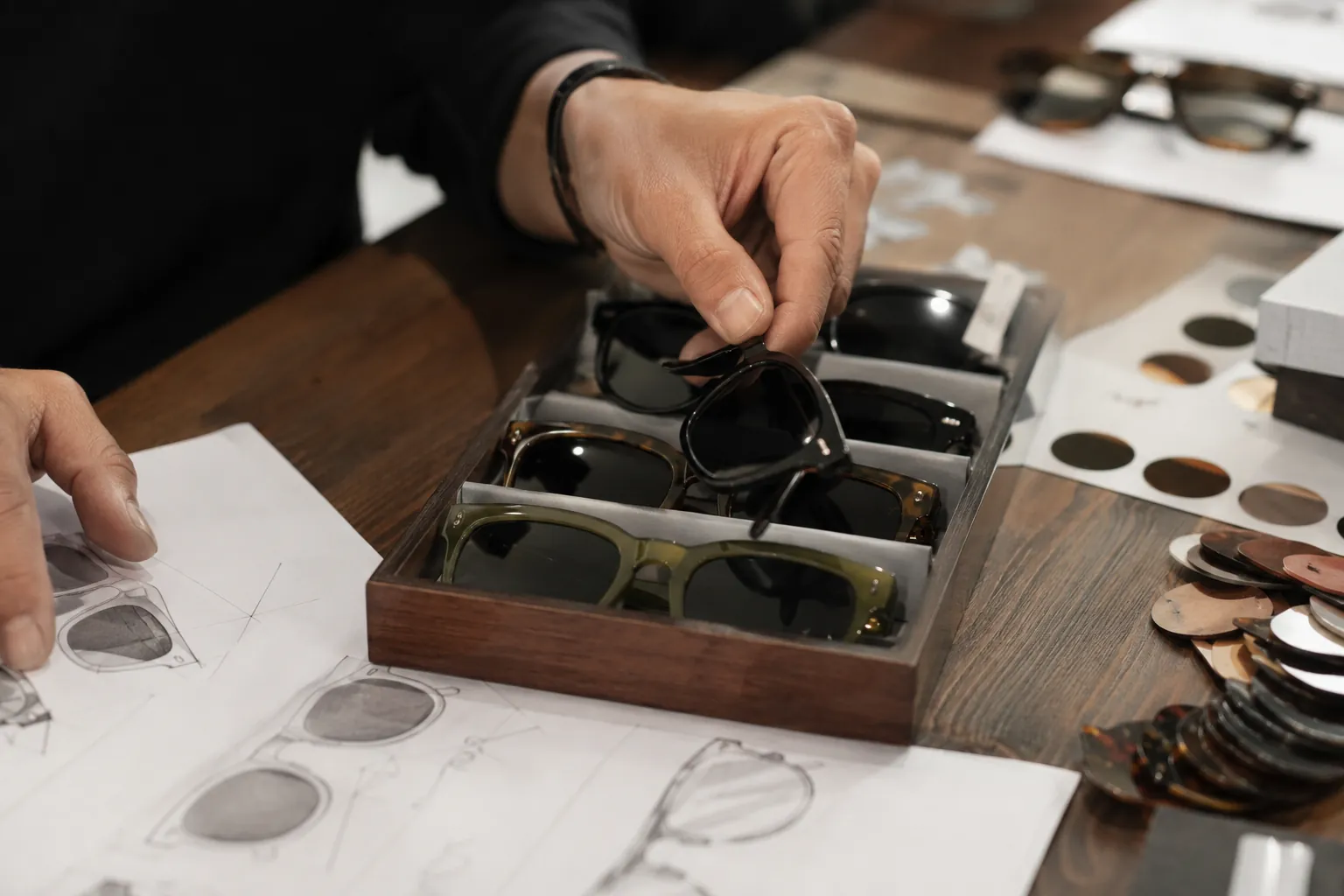
For most sunglasses programs, the quickest way to improve perceived quality is not a new front shape. It is better control of the parts that touch the face. Nose pads, temple tips, wire cores, pad arms, and temple-end details affect grip, pressure distribution, adjustability, and first impression with far less tooling risk than a full frame redevelopment. For eyewear brands, importers, distributors, and retailers, these component-level changes are often the most practical way to reduce fit complaints, sharpen shelf appeal, and raise perceived value. If you already have a proven style, fit-part revisions are usually the safest place to test before committing to new molds and higher minimums.
Start with the contact points buyers feel first
If a frame already sells, changing the whole front is rarely the best first move. A new full-frame mold adds cost, extends sampling, and introduces new fit variables. Fit parts are different. They sit exactly where comfort is judged: on the nose, behind the ear, and at the temple contact area. That is where wear problems show up fast. It is also where customers decide whether a product feels basic or well thought out.
The most practical low-tooling upgrades usually include:
- Nose pads: silicone or PVC, matte or glossy finish, larger or smaller contact area, and push-in or screw-in types for compatible metal frames.
- Temple tips: TPE, rubberized overmold, polished acetate, contrast-color tips, inner texture, or revised hardness to change feel at the ear.
- Wire cores inside temples: revised thickness, profile, or temper to improve bend consistency and adjustment stability in acetate temples.
- Temple-end branding: metal logo plates, laser marks, foil logos, pad print, decorative plugs, or inset contrast pieces.
- Bridge contact tuning: pad-arm angle adjustment on metal frames or finer polishing and edge-radius control on molded bridge areas.
Most of these changes do not require a new front mold. In many cases, the factory only needs to switch to an existing component family, revise CNC data, change a wire-core specification, or make a small insert tool for a temple tip or branded detail. That is why fit-part changes are often the lower-risk test before a larger frame redevelopment.
Match the upgrade to the actual complaint
Do not customize small parts just to fill a specification sheet. Start with one problem, one target, and one variable at a time.
- If frames slide down: start with nose contact and temple-tip grip. On metal styles, pad material, pad shape, and pad-arm setting usually affect hold more directly than temple length. On plastic styles, temple bend, inner-surface texture, or a softer contact material may matter more than changing the front curve.
- If customers feel pressure behind the ear: review tip hardness, temple flare, end thickness, and wire-core bend profile. Small shape changes at the temple end can shift pressure distribution a lot.
- If the style looks generic on shelf: add one controlled visual detail first, such as a contrast temple tip, branded pad, laser logo, or flush metal plate with clean edge finishing.
- If returns are fit-related across different markets: sample two pad sizes or two temple curvatures. Face-shape differences can move contact points enough to change comfort and perceived fit.
- If the goal is better margin: choose a visible, low-tooling upgrade before considering a new silhouette. A branded temple end or upgraded pad specification can raise perceived value with less development risk than a new front mold.
Supplier structure matters too. A factory that handles molding, acetate processing, CNC milling, decoration, and QC in-house can usually compare variants faster because tip geometry, logo cavity, and finishing are not split across multiple vendors. That shortens the loop between sample comments and process correction.
What stays low-tooling, and what turns into redevelopment
| Upgrade | Typical tooling impact | Lead-time effect | Main trade-off |
|---|---|---|---|
| Nose pad material change on existing pad shape | Low or none if the same mount family is used | Usually limited if the part is already qualified by the supplier | Fast comfort gain, limited visible differentiation |
| New nose pad shape for an existing metal frame | Low to medium depending on push-in diameter or screw seat | May add sample time for part matching and fit review | Better fit tuning, but pad-arm geometry must match accurately |
| Temple tip color or texture revision on existing geometry | Low if current tool accepts the same dimensions | Usually minor sample impact | Good branding value, limited fit change unless geometry or hardness also changes |
| New temple tip geometry with same temple body | Medium, often a small component or insert tool | Often extends sampling because wear testing becomes more important | Can improve comfort materially, but requires validation on actual wearers |
| Metal logo plate at temple end | Low to medium depending on cavity and plate shape | Decoration approval adds process steps | Higher perceived value, but alignment and adhesion become QC points |
| New acetate temple contour with wire-core revision | Medium to high compared with other small-part changes | Longer sample cycle because temple behavior must be rechecked | Real fit improvement, but this is close to temple redevelopment |
The most underestimated issue is the mating dimension. A simple pad change can fail if the frame uses a different push-in pin diameter, screw spacing, or pad-arm angle. A temple-tip change can also stop being small if the metal temple width changes or the acetate end profile no longer matches the tip cavity. Before approving samples, ask for a mating-dimension drawing with critical tolerances. Small contact parts leave little room for error.
Material choices: where comfort improves and where failure starts
In fit parts, material quality matters more than decoration. A branded tip or custom pad adds nothing if it yellows, hardens, turns slippery, or falls out in use.
Silicone nose pads are a common upgrade for comfort and grip. They are widely used on metal sunglass frames and optical-sun hybrids with adjustable pad arms. Performance depends on the formulation, surface finish, and how well the pad geometry matches the wearer. When comparing suppliers, ask for the material specification, hardness range, and any available aging or sweat-resistance data.
PVC nose pads still appear on entry-price programs. They can be serviceable, but the hand feel is usually less refined than silicone, and long-term comfort often depends heavily on compound quality and shape design. If comfort is a selling point, evaluate PVC carefully instead of choosing it on cost alone.
TPE or rubberized temple tips are useful on larger frames, active-inspired styles, and shapes that tend to creep forward. Their value comes from the mix of surface friction, geometry, and assembly quality. If the material is too soft, it can mark, drag during put-on, or deform. If it is too hard, the visual upgrade may not translate into better wear.
Acetate temple tips look premium and polish well, especially on fashion-driven styles. They do not provide the same anti-slip effect as softer elastomer tips, but they may be the better choice if the frame already fits well and the brand wants a cleaner luxury finish.
Metal logo plates can add shelf appeal, but only if edge finish, cavity depth, and bonding are controlled. Poorly seated plates, inconsistent plating, or visible adhesive make a frame look cheaper, not better.
For decoration and assembly, ask not only what the visible part is made from, but also what adhesive, coating, plating, or surface treatment is used. That is where failures often start.
Fit, tolerance, and QC details that decide the outcome
Comfort parts usually fail for small reasons. A slight change in nose pad angle can shift contact area enough to create pressure marks. A temple tip that sits unevenly left to right can create obvious imbalance during wear. Nice samples are not enough. The check points must be practical and repeatable.
For metal frames with adjustable pads, review:
- Pad symmetry: left-right height and angle should match and be checked on a fixture, not only by eye.
- Pad-arm solder strength: adjustment should not weaken or crack the solder joint.
- Mount retention: push-in or screw-in pads should remain secure after handling, cleaning, and normal adjustment.
- Bridge contact: use a fitting headform or live wear test to confirm actual contact, not just front-view alignment.
For acetate or injected temples, review:
- Wire-core position: left and right cores should sit consistently so both temples bend and recover similarly.
- Overmold or insert retention: the tip should resist peeling, shifting, or opening at the mating groove.
- Surface finish: rough polishing, mold flash, or sharp edges at the contact area are noticed immediately by the wearer.
- Heat-adjustment behavior: if stores adjust fit in-house, the tip and wire-core assembly must tolerate reheating without distortion or separation.
A useful sample review should include repeated opening and closing, exposure of soft parts to routine contamination such as sweat or lotion, and wear checks on more than one face shape. If a tip slips because the groove is too shallow or the pad rotates because the mount tolerance is loose, the supplier should be able to identify the exact process step that needs correction.
Cost and lead-time logic for a buyer trial
For a proven frame, the smartest sourcing path is usually a controlled trial, not a full redesign. Low-tooling component changes often sample faster than a new frame program, but timing still depends on whether the change uses an existing supplier part or requires new tooling, new decoration approval, or added wear testing.
MOQ is similar. Very small quantities may be possible for internal evaluation, sales samples, or a limited market test. Commercially, buyers should still confirm the supplier's actual minimum by component and decoration method. Fit-part changes can affect setup efficiency, scrap rate, and QC workload even when the frame itself stays unchanged.
What affects cost most is not only the part itself but the number of revision rounds. "Softer nose pad" is not a usable specification. Better input would include:
- Material type: silicone, PVC, TPE, acetate
- Hardness target or acceptable range if relevant
- Mounting style: push-in, screw-in, overmold, glued insert
- Color reference: Pantone or physical chip
- Priority: grip, skin softness, visual contrast, or premium appearance
Keep the first trial simple. One frame, two fit-part variants, and one decoration detail are usually enough. More than that creates too many variables and muddies the result.
Compliance checks after a small part change
Small changes still need document control. If sunglasses are sold into regulated markets, a material or decorative update should trigger at least a bill-of-material review and a check that the finished configuration still aligns with target-market requirements.
For sunglasses programs, buyers commonly maintain testing alignment with CE EN ISO 12312-1, ANSI Z80.3, and AS/NZS 1067 where relevant to the market and product specification. Many supplier files also include FDA registration information for US-facing vendor documentation, along with quality or social compliance records such as ISO 9001 and BSCI.
In practice, the key controls are straightforward:
- If you change soft materials, confirm the updated BOM still aligns with REACH expectations.
- If you add decoration, review coatings, inks, adhesives, and plating, not only the base frame material.
- If nose pad geometry changes on a metal frame, verify the final fit still supports intended lens position and coverage.
- Keep a golden sample with the exact approved pad, tip, logo plate, adhesive system, and finish used for mass production.
- Add inline QC checkpoints specifically for the changed part, such as tip adhesion, pad symmetry, logo alignment, or cavity flushness.
A previously approved frame may be able to support a component update without a full retest program, but do not assume that. Verify it against your target-market requirements and internal risk standard.
A simple sourcing process that avoids expensive mistakes
- Choose an existing frame that already sells. Start from a known commercial winner, not a weak style.
- Define the problem in measurable terms. Examples: reduce slippage, reduce ear pressure, improve adjustability, or add visible premium detail.
- Select only one or two fit-part changes. Nose pads plus temple tips is enough for the first round.
- Issue a clear tech pack. Include mount type, dimensions, color references, hardness target if required, decoration method, and any retailer adjustment requirement.
- Approve by wear test, not photo only. Test on multiple people and record where contact, movement, or pressure changes.
- Lock the sample and BOM. That includes pad shape, tip material, wire-core specification, logo plate finish, and adhesive method if used.
- Run bulk with part-specific QC. Ask for records or photos covering symmetry, retention, flushness, and surface finish on the revised components.
This process keeps tooling lower and learning clearer. For many eyewear brands, a well-specified fit-part upgrade is a better use of budget than rushing into a completely new front shape. Customers may not be able to name the exact part that changed. They still notice when a frame feels more stable, more comfortable, and more deliberate.
Have a custom sunglasses project in mind?
Send us your styles, target market and quantities and we will return a detailed quote with MOQ, lead time and a sample plan.
Get a QuoteWhy source this from Wenzhou with LumiShades
Wenzhou in Zhejiang Province is widely regarded as China’s eyewear manufacturing capital, producing a large share of the world’s sunglasses. That concentration matters to buyers: a deep local supply chain for acetate sheet, hinges, lens blanks, plating and packaging means shorter component lead times, easier color and material matching, and a workforce with decades of eyewear-specific skill. LumiShades has manufactured in this ecosystem since 2009, and our vertical integration — in-house injection molding, acetate cutting, CNC milling, lens tinting, decoration and quality control — means no part of your order is quietly subcontracted to a workshop you cannot audit.
For international buyers, that vertical control translates into accountability. When a single factory owns every step, defects are traced and fixed at source rather than bounced between vendors, and your specifications survive intact from first sample to bulk. We back this with 15+ years of experience, shipments to 60+ countries, more than 5 million pairs produced per year and a 98.5% on-time delivery rate. Our certifications — CE EN ISO 12312-1, FDA registration, ANSI Z80.3, AS/NZS 1067, REACH, ISO 9001 and BSCI audit — mean the compliance documentation your market requires already exists. Explore our manufacturing capabilities and quality control process to see how this works in practice.
Frequently asked questions
Can we customize nose pads and temple tips without ordering a new frame mold? Often yes, but only if the new part stays compatible with the existing mounting and mating dimensions. Material, color, texture, and some geometry changes can be made within current component families or with a small insert tool. Before sampling, ask the supplier to confirm the mount type, pin or screw dimensions, temple-end profile, and any tolerance limits that could affect retention.
What is the lowest practical MOQ for testing fit-part upgrades? There is no universal MOQ because it depends on the frame construction, the changed component, decoration method, and the supplier's setup burden. Some factories will support small sample or trial quantities for evaluation, but commercial production usually becomes more practical once setup, decoration, and QC can be spread across a larger run. The useful step is to ask for two numbers: the minimum sample or pilot quantity, and the minimum repeatable bulk quantity for the exact part change you want.
How much extra lead time should we expect for a new temple tip or pad detail? If the change uses an existing approved component family, lead-time impact may be small. If it requires a new pad shape, insert tool, new cavity, or extra decoration approval, sampling will usually take longer because the supplier must confirm both fit and durability. The best way to control timing is to provide complete input at the start: part drawings, mounting details, material callout, color reference, branding artwork, and approval criteria for wear testing.
Which upgrade usually improves comfort fastest: nose pads or temple tips? On metal frames with adjustable pad arms, nose pads usually have the most immediate effect because they directly control bridge contact and grip. On plastic frames that slide or create ear pressure, temple-tip material, bend profile, or wire-core setting may matter more. To decide correctly, inspect where the frame is losing control: nose, side head, or behind the ear. Then change the contact part closest to that problem first.
Do small part changes require new compliance review? They should always trigger at least a BOM and document review. If soft materials, coatings, adhesives, inks, or decorative parts change, confirm continued alignment with REACH and check whether your existing technical file for the finished sunglasses still supports the product as sold into the target market. For regulated programs, keep documentation aligned with the applicable standard, such as CE EN ISO 12312-1, ANSI Z80.3, or AS/NZS 1067, and retain an approved golden sample for production reference.
Ready to start?
Explore our aviator sunglasses or request a quote — our sales team replies within 12 hours.
Request a Quote