
Hinge reinforcement for high-volume sunglasses
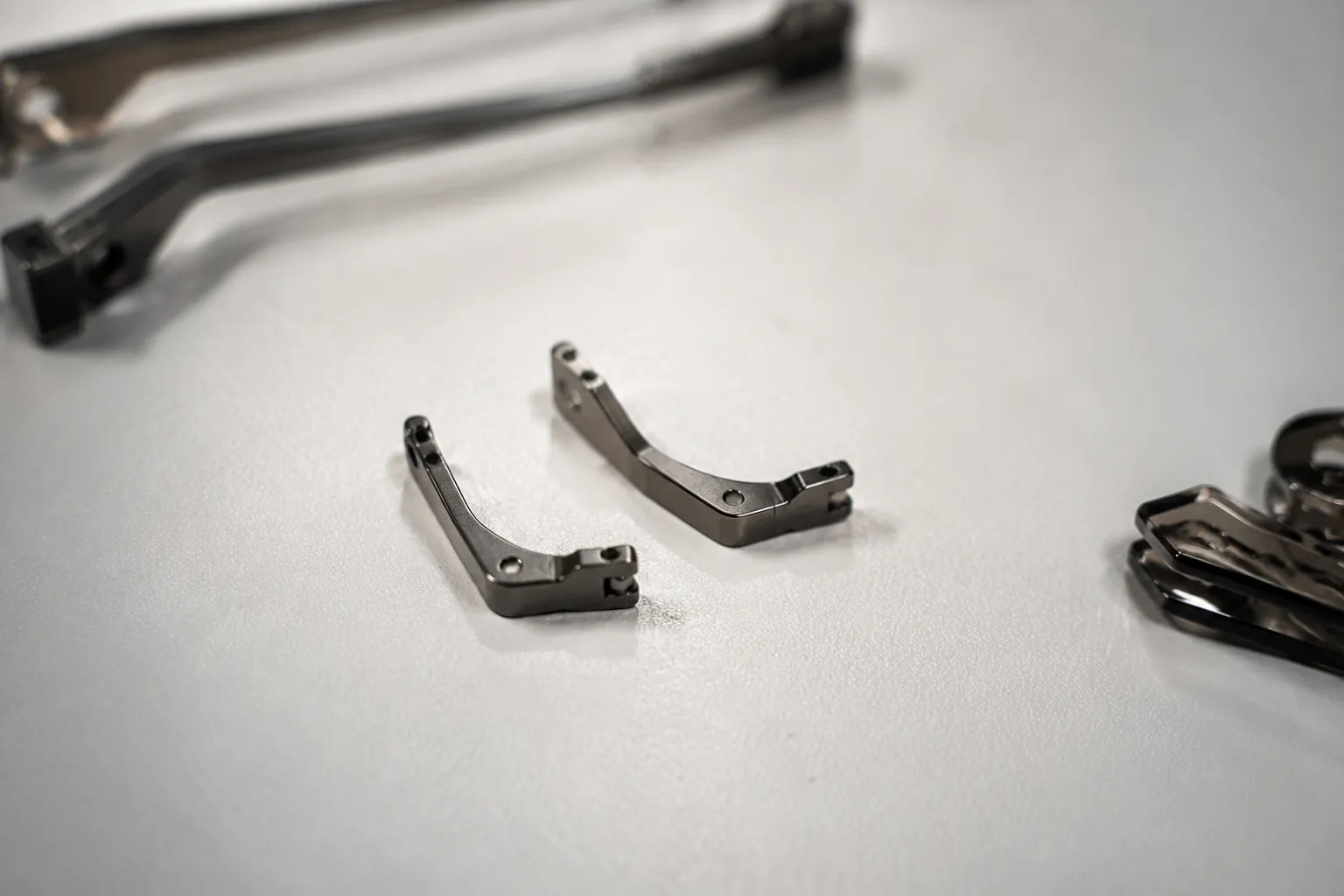
If you buy sunglasses in volume, hinge choice is not a minor detail. It affects field failures, retailer complaints, return rates, customer perception, and your price target. This guide is for brand owners, importers, distributors, and retailers balancing durability with cost across acetate, injection, and metal frames. The right hinge spec is not the strongest one on paper. It is the one that survives real use, stays aligned in production, and fits the landed-cost target.
Why hinge reinforcement matters in volume programs
A hinge is small. The cost is not. When it fails, the damage spreads fast. A loose hinge, a pulled-out barrel, or a cracked front usually reads as a bad product, not a bad component.
Volume programs need hinge specs tied to price, channel, and handling. A fashion style sold at entry price does not need the same build as a higher-priced acetate frame in specialty or optical channels. But even low-cost programs need enough durability for repeated opening and closing, bag abrasion, shipping vibration, and rough handling.
The usual failure points are predictable:
- Temple screw loosening from repeated cycles and vibration
- Hinge barrel pull-out in thin acetate fronts
- Stress cracking around the hinge boss on injection frames
- Corrosion, plating wear, or discoloration on metal hinges in humid or coastal markets
- Misalignment that makes one temple sit higher and drives complaints
Hinge reinforcement is a durability choice. It is also a pricing choice. Stronger construction usually raises material and assembly cost, but it can reduce returns, protect retailer confidence, and support a higher shelf price. A small increase often costs less than rework, replacements, or chargebacks.
Ask for more than an open-close check. Get the supplier's internal method for opening feel, alignment, screw retention, and side-load resistance. If the factory cannot explain how the hinge is verified before mass production, the program is not ready.
The main hinge structures buyers should compare
Most high-volume sunglasses programs use a few common hinge structures. Frame material decides what is worth paying for.
| Frame type | Common hinge structure | Typical build detail | Durability note | Typical cost impact |
|---|---|---|---|---|
| Acetate | 5-barrel or 7-barrel metal hinge | Often paired with a temple wire core; barrel length is selected to match frame size and temple thickness | Good if the pocket milling is clean and the material around the hinge is thick enough | Low to medium |
| Injection | Standard metal hinge pinned into molded bosses | Insert position, cooling, and boss wall thickness drive performance more than hinge appearance | Depends heavily on resin choice and boss geometry | Low |
| Metal | Standard hinge or spring hinge welded or screwed into the temple | Often uses welded hinge mounts; plating and solder control matter as much as hardware | Strong when welds, torque, and plating are controlled | Medium to high |
| Premium acetate / heavy-use program | Longer-barrel hinge, tighter reinforcement around front and temple, sometimes upgraded screw spec | Better resistance to pull-out and side-load failure | Better endurance under repeated handling and transport stress | Medium to high |
Barrel count matters. It is not a guarantee. A 7-barrel hinge can still fail if the acetate around it is too thin or the screw channel is inconsistent. A 5-barrel hinge can perform well if the front is milled precisely, the temple is aligned, and screw retention stays stable.
Injection frames are different. The hinge is often limited by the plastic body, not the metal part. A more elaborate hinge does not automatically improve durability unless the surrounding geometry is improved too.
At sample stage, compare three things: hinge opening torque, hinge alignment after closing, and resistance to side load. If the supplier cannot state how these are checked, ask before approving the design for bulk production.
Acetate frames: where reinforcement actually helps
Acetate gives buyers more room around the hinge, but only if the factory machines it correctly. The front temple area needs enough material behind the hinge pocket. If milling is too aggressive, the hinge works against weakened material.
Good acetate reinforcement usually includes:
- A metal hinge with enough barrel length for the frame size and temple load
- Clean pocket milling with no burn marks, chatter, or excess material at the seat
- A temple wire core that extends far enough past the hinge zone to stabilize the arm
- Correct screw length and thread engagement, with secure bite in the mating part
Higher-volume acetate programs need enough wall thickness around the hinge zone to keep the pocket stable after repeated use. Thicker, heavier, or oversized styles usually need more reinforcement than slim fashion frames. If the design is narrow, a longer barrel hinge may look bulky. Buyers have to choose. Appearance or durability. Sometimes both are possible, often not.
In-house acetate cutting helps with consistency. If the factory controls cutting internally, it can better control hinge pocket depth, symmetry, and barrel seat consistency from batch to batch. Small variations change how the hinge sits, especially on narrow temples or tight wrap angles.
For sampling, ask for a hinge pull test and a side-load check. A practical approval step is repeated open-close cycling, then a check that the hinge still sits properly and the temple closes flush. If the frame is meant to feel stronger at retail, a 7-barrel hinge often makes sense. If the style is light, fast-moving, and price-led, a well-made 5-barrel unit may be the better call.
Decoration can also create problems. Heavy foil stamping, laser marking, or thick paint near the hinge pocket can cause tolerance issues if applied after cutting. If the design needs logos near the temple end, keep those processes away from the hinge zone so they do not block screw access or core alignment.
Do not overbuild a frame sold on price alone. Extra hinge metal adds cost. It can also make the front look heavy when the silhouette should stay thin and clean. Match the reinforcement to the design and the expected use.
Injection frames: the hinge is only as good as the boss design
Injection frames fail differently. The metal hinge is often not the weak point. The plastic around it is.
The key is boss geometry. The molded area around the hinge must spread load into the temple and front without creating a stress point. If the boss is too short, too thin, or too close to a sharp corner, screw tension and repeated opening can crack it. In use, that shows up as a loose temple, a white stress line, or a boss that tears after limited wear.
Ask these questions:
- What resin is being used: standard TR90, nylon blend, or another impact-resistant material?
- Is the hinge insert placed during molding or installed after?
- How much wall thickness remains around the hinge boss at the thinnest point?
- Are screws tightened to a controlled torque, or only hand-tightened?
- Has the mold been tuned for cooling uniformity near the hinge zone?
Material behavior matters. TR90 and similar impact polymers usually tolerate flex better than brittle low-cost plastics, but they still fail if the boss is shallow. Ask for a boss design that visibly reinforces the hinge area, not a flush decorative look that gives up strength.
If a hinge insert is installed after molding, assembly accuracy becomes critical. If the factory is drilling and press-fitting hinge components, ask how hole diameter and insertion force are controlled. A small deviation can make the fit too loose or too tight. Either one raises crack risk.
A supplier saying the mold is already approved does not mean the hinge zone is right. The mold defines the load path. If the boss geometry is weak, final inspection will not fix the structural risk.
For lower-cost injection sunglasses, a standard hinge can be enough if the style is simple and the customer does not expect long service life. For a higher-volume retail program with more handling, it is usually worth paying for stronger boss geometry and better screw control. That is often cheaper than returns or retailer credits.
Metal frames: spring hinges are not always the right answer
Metal frames are often treated as automatically stronger. They are not. A metal front with poor weld control or sloppy assembly can still be weak.
On metal programs, the choice is usually between a standard hinge and a spring hinge. Spring hinges add flex and can improve comfort, especially when customers pull the frame open too far or wear it repeatedly through the day. They also add parts, assembly steps, and failure points. On some price points, that extra complexity is not justified.
Use spring hinges when the market expects a more substantial feel, or when the frame sits in a mid- to upper-price band where buyers expect added flexibility. Use standard hinges when the style is slim, lightweight, or highly price-sensitive. In many commodity metal programs, a well-made standard hinge beats a low-quality spring hinge because the quality control is simpler.
Control points that matter on metal frames:
- Weld quality at the hinge mount, including consistency of solder flow or laser weld integrity
- Plating quality and corrosion resistance, especially in humid or coastal regions
- Alignment after welding or assembly, checked before packing
- Opening torque consistency across the batch
- Spring return force on spring-hinge models, so the temples feel even
If a metal frame goes into humid markets, plating quality matters almost as much as mechanical performance. A hinge can work fine and still look bad if the surface degrades. That hurts perceived quality fast. Ask whether the surface finish is checked for corrosion resistance that matches the market and the material system.
Decoration changes the risk profile too. Pad printing near the hinge or temple joint can chip if the finish is unstable. Laser marking is often cleaner for metal programs because it does not add coating thickness, though results depend on the finish. If your brand uses polished or mirror-like surfaces, finalize mark placement before hinge assembly so the working area stays clean.
How hinge choice affects returns, QC, and price tiers
Buyers often treat hinge type as a styling decision. It is also a cost-control decision.
| Program tier | Recommended hinge approach | QC focus | Commercial effect |
|---|---|---|---|
| Entry price, fast volume | Standard hinge with controlled assembly | Screw torque, hinge alignment, basic cycle check, cosmetic review | Lowest unit cost, but higher risk if abused |
| Mid-price retail | Reinforced hinge or stronger boss design | Pull-out resistance, opening feel, side-load, finish consistency | Better return control with a modest cost lift |
| Premium volume | 7-barrel or spring hinge depending on frame | Cycle durability, plating wear, opening torque, alignment after packing | Higher cost, supports stronger positioning and lower complaint risk |
For volume buyers, a small unit-cost increase can pay back if it cuts complaints. A better hinge often costs less than a replacement shipment, a chargeback, or a retailer penalty fee.
Do not over-specify. If the frame is a promo item or private-label commodity, the extra cost of a spring hinge may not return value. Use a hinge structure that fits the channel and the expected use.
Set hinge requirements before tooling is frozen. Once the mold is cut or the metal tooling is approved, changing reinforcement adds time and cost. Ask for the hinge spec at sample stage, not after first article approval. If possible, request an exploded drawing showing barrel count, screw length, and reinforcement points so bulk production has no room for guesswork.
Lead times and pricing depend on the program, but hinge changes are usually easier before tooling is final. The earlier the spec is locked, the easier it is for the factory to control parts, assembly, and inspection.
What to ask a factory before you approve samples
Good sourcing teams do not ask only, "Can you make this?" They ask how the hinge will be built, tested, and held stable in mass production.
- What hinge type is used on the sample, and is it the same as bulk production?
- What is the screw size, and what torque range do you recommend for this frame?
- How many open-close cycles are used in internal testing, and at what point is loosening treated as failure?
- What happens if the hinge pulls out or the boss cracks during QC?
- Can you show the hinge structure in a section drawing or exploded view?
- Are decoration steps like logo printing, laser marking, or hot stamping done before or after hinge assembly?
For compliance, ask only for the standards relevant to your market and product. Common examples include CE EN ISO 12312-1, ANSI Z80.3, AS/NZS 1067, REACH, FDA registration where applicable, ISO 9001, and BSCI. Compliance and hinge strength are different checks. One covers market access and management systems. The other covers mechanical performance.
If your program includes cases, microfiber cloths, or retail tags, confirm that packaging does not press on the temples during transit. Carton compression can make a good hinge look misaligned before the customer opens the box.
Ask for pre-shipment photos or inspection records showing alignment, screw retention, and packing orientation. If the factory cannot explain how those are controlled, the program still needs work before launch.
A simple decision guide for acetate, injection, and metal programs
If you need a quick decision, use this:
- Acetate: choose stronger hinge reinforcement when the frame is thicker, heavier, or sold above entry price. Make sure the milling is clean, the wire core extends properly, and the hinge pocket has enough wall thickness.
- Injection: focus on boss design first, then hinge hardware. If the mold geometry is weak, the hinge choice will not save the product. Ask for resin type, cooling control, and torque specifications.
- Metal: use spring hinges only when the market and price point justify them. Otherwise, a well-built standard hinge is simpler and often the better commercial choice.
The best hinge is not the strongest one on a parts list. It is the one that survives how your customers actually use the frame while staying inside your target landed cost. If you sell to discount chains, speed and consistency matter most. If you sell through optical or lifestyle channels, feel, durability, and finish carry more weight. Different channels. Different answer.
Lock the hinge spec, test it before mass production, and make sure the factory builds bulk to the same structure shown in samples. Many problems start with a sample that looks right and a bulk order that quietly changes. That is not a design win. It is a return later.
Have a custom sunglasses project in mind?
Send us your styles, target market and quantities and we will return a detailed quote with MOQ, lead time and a sample plan.
Get a QuoteWhy source this from Wenzhou with LumiShades
Wenzhou in Zhejiang Province is widely regarded as China’s eyewear manufacturing capital, producing a large share of the world’s sunglasses. That concentration matters to buyers: a deep local supply chain for acetate sheet, hinges, lens blanks, plating and packaging means shorter component lead times, easier color and material matching, and a workforce with decades of eyewear-specific skill. LumiShades has manufactured in this ecosystem since 2009, and our vertical integration — in-house injection molding, acetate cutting, CNC milling, lens tinting, decoration and quality control — means no part of your order is quietly subcontracted to a workshop you cannot audit.
For international buyers, that vertical control translates into accountability. When a single factory owns every step, defects are traced and fixed at source rather than bounced between vendors, and your specifications survive intact from first sample to bulk. For procurement review, buyers can request process records, approved samples, quality checkpoints and project-specific compliance files before placing a bulk order. Required testing and documentation are confirmed against the destination market and product specification rather than assumed from a generic certificate list. Explore our manufacturing capabilities and quality control process to see how this works in practice.
Frequently asked questions
Is a 7-barrel hinge always better than a 5-barrel hinge? No. A 7-barrel hinge can give more contact area and better load distribution, but only if the frame material, pocket milling, and screw fit are right. A 5-barrel hinge can outperform a poorly matched 7-barrel design. Judge the whole hinge system, not barrel count alone.
What is the biggest hinge failure in injection sunglasses? Cracking or loosening around the molded boss area is one of the most common failures. The metal hinge may still be intact, but the surrounding plastic is the weak point. Boss geometry, resin choice, and insertion method matter more than hinge appearance.
Do spring hinges reduce returns enough to justify the cost? Sometimes. They make sense when the target market expects added flex, comfort, and a more substantial feel, usually in mid- to higher-price metal programs. In entry-price programs, they can add cost without enough benefit. Decide based on channel, price point, and expected handling.
What should I ask for in QC on hinge strength? Ask for controlled screw torque, alignment checks, a defined open-close cycle test, and side-load or pull-out checks for higher-risk programs. Also confirm that decoration near the hinge does not interfere with assembly or screw access. The test method should be written into the spec.
How much lead time should I expect for hinge changes after sampling? It depends on whether tooling is already fixed. If the mold or metal tooling must change, the change can add time and cost. If only hardware or assembly steps change, it is usually faster. Finalize hinge requirements before bulk production whenever possible.
Can a factory change the hinge structure between samples and bulk production? Yes, but that should be avoided unless it is explicitly approved. A sample can look correct while bulk production uses a different screw, pocket depth, or insert setup. Require written confirmation that the bulk structure matches the approved sample, including drawings or photos if needed.
Ready to start?
Explore our shield & oversized sunglasses or request a quote — our sales team replies within 12 hours.
Request a Quote