
Stronger Temple Arms for Wholesale Sunglasses
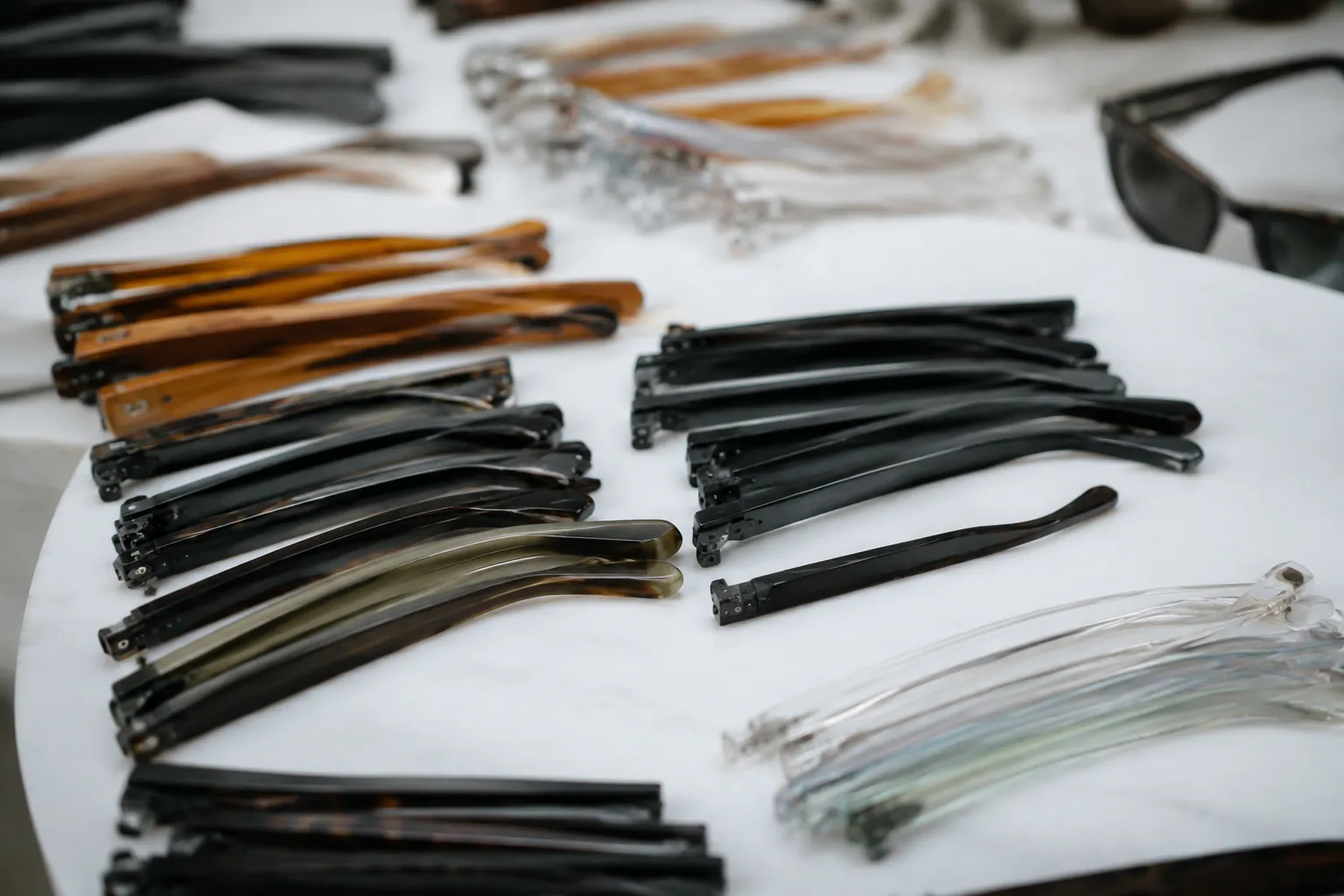
This guide is for brands, importers, distributors, promotional buyers, and retail teams that need sunglasses to survive repeated try-ons, carton shipping, travel displays, warm storage, and daily handling. Temple arms fail often because they take opening force, outward flex, twisting, hinge screw pressure, and storage stress. The goal is simple: choose the right reinforcement before tooling or sampling, define durability checks clearly, and reduce temple breakage, loose hinges, decoration defects, and redesign costs.
Why Temple Arms Fail First
Many sunglass durability problems start at the temple, not the lens. The main stress points are the hinge seat, the first 20-35 mm behind the hinge, the screw boss, and the bend near the ear. These areas take force every time a customer opens the frame. They also take torsion when one temple is twisted while the front is held, when sunglasses are pushed onto the head, or when frames are packed tightly in a pouch or carton.
For low-cost promotional sunglasses, failure is often gradual. A temple may be opened past its natural stop again and again on a retail rack. The hinge screw loosens. The plastic around the hinge boss turns white or shows stress marks. Then a crack starts near the screw hole. After that, the arm breaks.
For retail private label, travel retail, and distributor programs, even a small repeat defect matters. Returns, replacements, complaints, and repacking labor all cost money.
Reinforcement is not one part. It can mean an internal steel wire, a nickel-silver or stainless-steel metal core, a thicker hinge seat, a spring hinge, a larger screw boss, glass-fiber-reinforced material, or geometry that moves stress away from the screw hole. The right choice depends on material, target price, order quantity, lens type, logo method, packaging, and the amount of handling expected in the sales channel.
Main Reinforcement Options Compared
Buyers usually compare three practical constructions: internal wire in an injected temple, full metal-core acetate temples, and reinforced plastic geometry without a separate insert. A fourth option, a logo plate or local metal insert, can add local stiffness or perceived value. But do not treat it as a full reinforcement system unless it is engineered into the structure and tested on the finished frame.
| Option | Typical Materials | Process Detail | Strength Benefit | Cost and MOQ Logic | Best Fit |
|---|---|---|---|---|---|
| Internal wire in injection temple | PC, PP, TPE blends, TR90-style injected materials | Wire is molded in or inserted into a channel; wire diameter is selected according to temple thickness and material flow | Improves bend control and can reduce clean snapping in thin temples when placement is correct | Adds material handling and QC; practical when durability risk justifies the extra step | Promo, travel retail, mid-volume private label |
| Metal-core acetate temple | Cellulose acetate sheet | Core is embedded or laminated, then the temple is cut, tumbled, polished, hinged, and adjusted | Adds stiffness, adjustability, premium hand feel, and better fitting control | Higher cost due to sheet processing, polishing, and labor; best for higher-value retail lines | Fashion retail, optical-style sunglasses, premium acetate collections |
| Reinforced plastic geometry | Injected PC, TR90-style, nylon blends, sports-frame materials | Strength comes from wall thickness, hinge boss size, radii, ribs, and transition design before mold cutting | Spreads stress without extra metal handling | Lowest cost when designed before tooling; changes are harder after mold steel is cut | Large price-sensitive programs and durable economy frames |
| Metal logo plate with insert zone | Injected or acetate temples | Plate recess is molded, milled, glued, pinned, or heat-set depending on design | Can improve local stiffness and brand perception, but may weaken the cutout area if poorly placed | Adds plate making, recess control, assembly, and alignment inspection | Retail launches needing visible branding |
Review temple reinforcement during sample engineering. Do not wait for mass production. Once an injection mold is opened, adding wall thickness, moving a hinge boss, or changing the stop angle can mean steel modification, extra sampling, and schedule delays. For acetate, late changes may require new cutting paths, a different core length, or tighter polishing control.
Internal Wire: Strong Value When Placed Well
Internal wire is common in injected temples because it gives the arm more controlled flex. It is useful when the temple is narrow, the frame will face repeated try-ons, or the product needs a firmer feel without moving to acetate construction. The wire can be molded into the temple or inserted into a channel after molding, depending on the production method and material.
Placement matters more than the product photo shows. If the wire stops too far from the hinge, it may miss the highest-stress area. If it sits too close to the surface, it can cause sink marks, shadowing, warping, or exposure after finishing. Ask for facts, not guesses.
The supplier should confirm where the wire starts, where it ends, how much plastic cover remains, and whether the temple tip still allows the required adjustment or bend.
- Confirm wire length: ask how many millimeters the wire runs from the hinge toward the temple tip.
- Check plastic cover: thin cover over metal can create shadows, sink marks, or exposure after finishing.
- Test both flex directions: open the temple outward and twist it lightly; hinge stress and torsion are different failure modes.
- Specify corrosion resistance: clear, translucent, or light-color temples need suitable plated or stainless wire to reduce staining risk.
- Review weight balance: wire can improve strength, but too much metal in a thin frame can make the temple feel unbalanced.
Internal wire can work for smaller custom runs if an existing reinforced style is available. For new development, confirm whether the wire needs special tooling, manual insertion, added inspection, or a longer sample cycle. For higher-volume programs, approve a cut sample, production drawing, or other clear placement evidence when available. A finished temple photo is not enough.
Metal-Core Temples for Acetate Lines
Metal-core construction is the standard choice for acetate sunglasses and optical-style frames. The temple is cut from acetate sheet. The core is embedded or laminated into the temple structure. The part then goes through shaping, tumbling, polishing, hinge fitting, logo decoration, and final adjustment. Common core materials include nickel-silver, stainless steel, and plated alloys chosen for stiffness, corrosion resistance, and adjustability.
This construction is not only about breakage. A metal core changes fit. It allows controlled temple curve, pantoscopic angle adjustment, and pressure tuning behind the ear. For premium sunglasses, that improves fit stability and perceived quality. For a simple giveaway frame, it is usually too labor-intensive and too expensive.
The main risks are poor centering, thin acetate cover, and weak drilling positions. If the core is off-center, polishing can expose metal along the edge. If hinge rivet holes are drilled too close to the acetate edge, the temple can crack during assembly or later heat adjustment.
Buyers should check temple cross-section thickness, core centering, hinge rivet position, and edge polish on pre-production samples. For visible hardware and logos, agree on an alignment tolerance in writing before bulk production.
Every added feature needs space. A narrow 5-6 mm temple may not safely carry a thick core, hinge fasteners, and a recessed logo plate without more cracking or exposure risk. For premium designs, review temple width, thickness, logo location, hinge hardware, and finishing method before approving artwork or tooling.
Reinforced Plastic Without Metal Inserts
Not every durable temple needs metal inside. For many injection molded sunglasses, better geometry can perform more reliably than a poorly placed insert. Strength can come from thicker wall sections, a wider hinge boss, smoother radii, internal ribs, better screw support, and a temple profile that avoids sudden thickness changes.
Start with the hinge seat. A thin temple with a hard step near the hinge creates a stress concentration. Cracking often starts at that step or around the screw boss after repeated opening force. A stronger design uses radius transitions instead of sharp corners, enough plastic around the hinge barrel, and a hinge stop that limits outward travel.
More plastic is not always better. Local wall thickness changes should be reviewed with the material supplier and mold engineer because thicker sections can create sink marks, warpage, or longer cooling time.
- Review the 3D drawing before tooling and mark the hinge stress zone.
- Set minimum wall thickness based on material, color, temple length, and moldability.
- Add radius transitions near the hinge instead of sharp steps.
- Keep logo recesses away from the highest-stress area where possible.
- Confirm hinge cycling, outward flex, and torsion on physical samples before bulk approval.
Material behavior matters. PC can be economical and impact-resistant, but thin PC temples may show whitening under repeated stress. TR90-style materials and nylon blends can offer good flex memory and lower cracking risk in suitable designs, but they may need different surface treatment for printing. Recycled or filled materials need tighter QC because flow marks, brittleness, and color variation can affect the temple.
For large orders, compare total landed risk, not only unit price. Material, lens, decoration, packaging, inspection level, and expected handling all affect the right reinforcement choice.
Plan Decoration and Reinforcement Together
Temple decoration is often decided by the brand team. Reinforcement is often decided by engineering. In production, both decisions compete for the same narrow strip of plastic or acetate.
Laser engraving, pad printing, hot stamping, silk printing, and metal logo plates all need a stable surface. If that surface also carries hinge stress or hides a wire insert, the process window gets tighter.
Pad printing works well on many injected temples, but the surface must be flat, clean, and properly treated. If a reinforced area has sink marks from an internal wire, the logo can look wavy or uneven. Laser engraving gives a permanent mark on suitable materials, but it can create unexpected contrast, burn marks, or roughness if the material is not tested first.
Metal plates look premium, but they need a molded or milled recess, adhesive or mechanical fixing, and alignment inspection. Agree on visible logo alignment tolerance before production, especially for retail packaging where temples are displayed open.
For travel retail and rack programs, avoid placing a large metal plate too close to the hinge unless the temple is thick enough and the design has passed testing. The plate may look strong. The recess may do the opposite. It can remove plastic from the exact area that needs support.
A complete sampling request should specify logo size, logo distance from hinge, decoration method, Pantone or material color target, temple material, hinge type, and whether the temple includes internal wire or metal core. Late decoration changes can require new print pads, polishing fixtures, plate molds, or temple tooling changes. Review artwork and reinforcement in the same sample round.
Durability Tests Before Bulk Approval
Compliance documents support market access and quality control. CE EN ISO 12312-1, ANSI Z80.3, and AS/NZS 1067 relate to sunglass performance requirements in relevant markets. REACH addresses chemical restrictions. FDA registration may apply to suppliers or importers involved with eyewear sold in the United States. ISO 9001 relates to quality management systems, and BSCI relates to social compliance auditing.
None of these replaces product-specific durability checks on the actual frame design.
Before approving bulk, request practical tests that match the selling environment. Retail racks need repeated open-close cycling. Promotional sunglasses shipped in large cartons need packing, drop, and compression checks. Travel retail programs should consider warm storage because containers, warehouse shelves, and car interiors can reveal warping, lens movement, or screw loosening.
- Hinge cycling: repeat opening and closing, then check screw loosening, hinge seat whitening, and cracking.
- Temple overextension: flex the temple outward beyond normal wear position under controlled force.
- Torsion check: hold the front and twist one temple to expose weak transition zones.
- Heat exposure: check temple shape, lens fit, and hinge stability after warm storage.
- Decoration adhesion: use tape, rub, or abrasion checks on printed, engraved, plated, or hot-stamped logos.
- Carton simulation: inspect temples after bulk-style packing, vibration, and drop handling.
For higher-risk projects, define AQL level, critical defect list, golden sample retention, and reject criteria before production starts. Broken temples, exposed wire, sharp metal edges, loose hinge screws, cracked hinge bosses, warped temples, and peeling logos should be listed as clear defects. The best inspection standard names the defect, states how it is checked, and defines when the shipment is rejected or reworked.
Buying Guidance by Channel, MOQ, and Lead Time
The right reinforcement choice depends on what the sunglasses must survive and how much margin the product can carry. A fashion retailer selling at a higher price may justify acetate metal-core temples. A festival or beverage promotion may need reinforced injection temples, simple printing, and efficient carton packing. A distributor serving mixed accounts may choose one stronger base frame and vary lens color, logo, and packaging.
| Program Type | Recommended Temple Choice | Why It Fits | Sampling Focus |
|---|---|---|---|
| 50-pair brand test | Existing reinforced injection frame or existing acetate style | Controls tooling cost and keeps sampling faster | Logo position, hinge feel, lens compliance |
| Promo giveaway | Reinforced plastic geometry | Protects price while reducing obvious temple breakage risk | Carton packing, hinge screw retention, print adhesion |
| Retail private label | Internal wire or metal-core acetate | Improves hand feel and lowers rack damage risk when tested properly | Temple flex, logo durability, polishing quality |
| Travel retail | Internal wire with stronger hinge zone | Supports repeated try-ons, transport handling, and warm storage conditions | Heat exposure, overextension, hinge cycling |
| Premium acetate line | Full metal-core temple | Supports adjustment, balance, and heavier frame fronts | Core centering, rivet placement, final fitting |
Lead time should guide the decision too. Internal wire adds insert control. Metal plates add assembly and alignment checks. Acetate metal-core temples add cutting, tumbling, polishing, and fitting time. If launch timing is tight, choose a proven reinforced construction instead of a new narrow temple shape with untested hardware.
For larger orders, approve a golden sample and keep one sealed at the factory and one at the buyer's office. This prevents disputes later. If production parts drift from the approved temple stiffness, logo placement, hinge feel, lens tint, packaging, or polish quality, both sides have a physical reference.
Have a custom sunglasses project in mind?
Send us your styles, target market and quantities and we will return a detailed quote with MOQ, lead time and a sample plan.
Get a QuoteWhy source this from Wenzhou with LumiShades
Wenzhou in Zhejiang Province is widely regarded as China’s eyewear manufacturing capital, producing a large share of the world’s sunglasses. That concentration matters to buyers: a deep local supply chain for acetate sheet, hinges, lens blanks, plating and packaging means shorter component lead times, easier color and material matching, and a workforce with decades of eyewear-specific skill. LumiShades has manufactured in this ecosystem since 2009, and our vertical integration — in-house injection molding, acetate cutting, CNC milling, lens tinting, decoration and quality control — means no part of your order is quietly subcontracted to a workshop you cannot audit.
For international buyers, that vertical control translates into accountability. When a single factory owns every step, defects are traced and fixed at source rather than bounced between vendors, and your specifications survive intact from first sample to bulk. For procurement review, buyers can request process records, approved samples, quality checkpoints and project-specific compliance files before placing a bulk order. Required testing and documentation are confirmed against the destination market and product specification rather than assumed from a generic certificate list. Explore our manufacturing capabilities and quality control process to see how this works in practice.
Frequently asked questions
Is internal wire always better than a thicker plastic temple? No. A well-designed hinge zone with enough wall thickness, smooth radii, a strong screw boss, and a controlled hinge stop can outperform a poorly placed wire. Ask the supplier to show the wire start point, end point, plastic cover, and sample test results before paying extra for internal wire.
Which reinforcement option is best for a 50-pair test order? Use an existing reinforced injection frame or an existing acetate style with proven temple construction. At 50 pairs, new tooling is usually hard to justify unless the project needs a unique shape and the buyer accepts added development cost, extra sampling, and a longer approval path.
Can reinforced temples still meet CE EN ISO 12312-1 and ANSI Z80.3? Yes. Reinforcement does not normally prevent compliance. The finished sunglasses still need the correct lenses, markings, and test results for the target market, such as CE EN ISO 12312-1, ANSI Z80.3, AS/NZS 1067, REACH, or FDA registration requirements where applicable.
Will a metal logo plate make the temple stronger? Not by itself. A plate can add local stiffness, but the recess may remove plastic and weaken the temple if it is too close to the hinge. Treat the plate as decoration unless the supplier confirms the insert design, fixing method, hinge geometry, and durability test results.
What should buyers approve before bulk production? Approve the golden sample, hinge feel, temple flex, logo position, lens tint, packaging, inspection standard, AQL level, and reject criteria. List broken temples, exposed wire, sharp metal edges, loose screws, cracked hinge bosses, warped temples, and peeling logos as specific defects before production starts.
Can temple reinforcement be adjusted after sampling? Sometimes. The impact depends on the change. Wire length, hinge hardware, and logo position may be adjusted if the structure allows it. Wall thickness, hinge geometry, stop angle, or mold changes after tooling can add cost, require another sample round, and delay production.
Ready to start?
Explore our rimless sunglasses or request a quote — our sales team replies within 12 hours.
Request a Quote