
Why Injection Frames Win Big Sunglass Orders
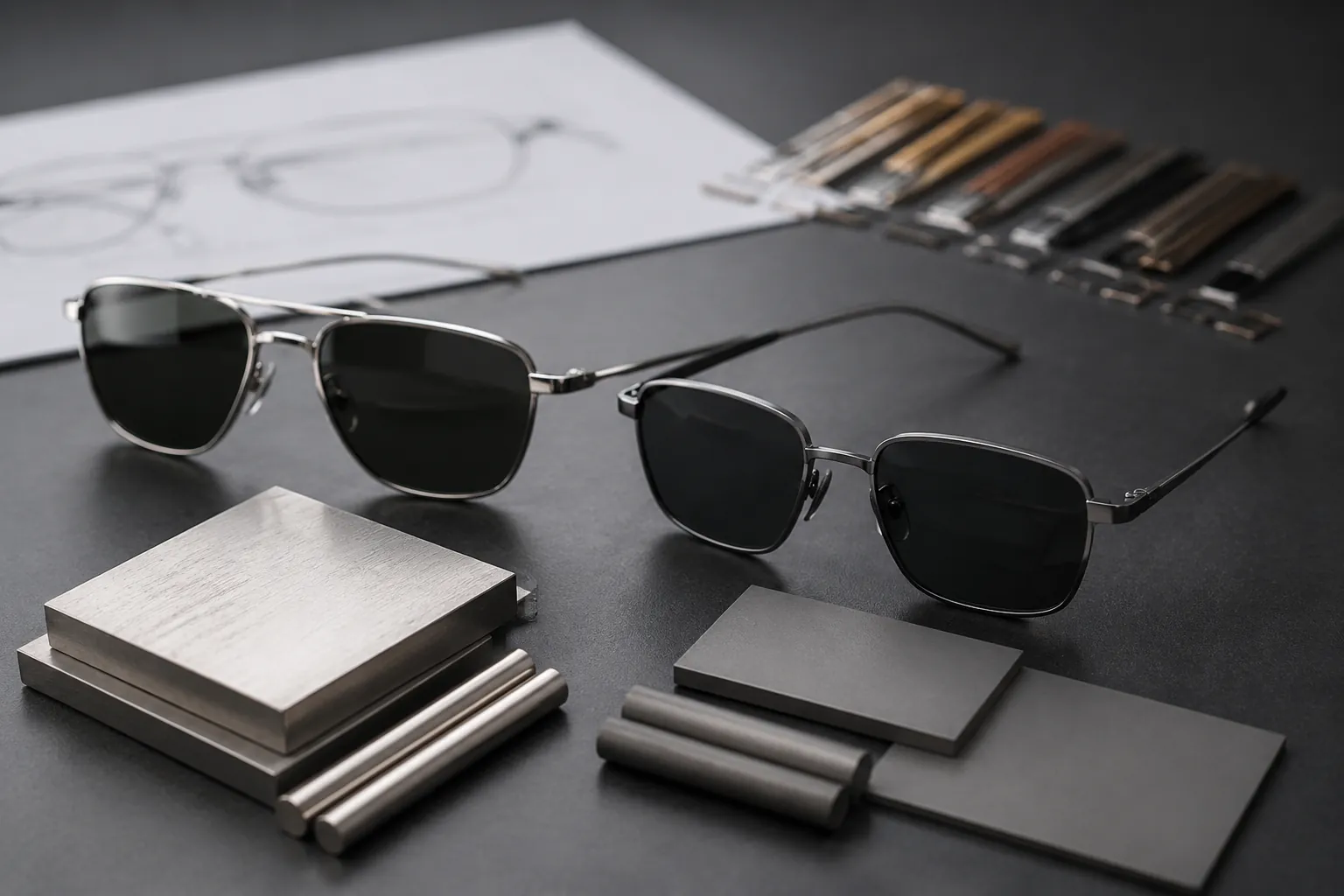
This guide is for buyers sourcing sunglasses for promotions, chain retail, tourist programs, and price-sensitive private label lines. It explains why injection-molded frames often beat acetate and metal once volumes rise, target costs tighten, and delivery windows stop moving. The advantage is not style. It is control: repeatable tooling, high-output molding, consistent part geometry, and branding that is easier to manage at scale. For buyers handling hundreds or thousands of pairs per design, injection is often the clearest route to tighter cost control, fewer QC surprises, and more realistic launch planning.
Why injection becomes the default at higher volumes
Injection-molded sunglasses dominate high-volume programs for three simple reasons: lower labor content than more hand-finished frame types, better repeatability from pair to pair, and output that scales well once the tool and process are approved. If a buyer needs large quantities that assemble consistently, hold lenses securely, and accept branding with limited variation, injection is usually the first construction worth costing.
The logic changes after sampling. A handmade acetate frame may tell a stronger premium story. A thin metal frame may fit a fashion brief better. But for festival merchandise, licensed promotions, tourist retail, school programs, entry-price chains, and value private label, injection usually wins for one reason: it is built for repeatable output.
At factory level, the process is structured. Resin is prepared, molded in steel tooling, cooled, ejected, trimmed, assembled with hinges and lenses, decorated, aligned, and inspected. Once the mold, material, and machine settings are stable, variation is usually easier to control than in frame types that rely more heavily on manual shaping and polishing. That matters. Small inconsistency in development samples is annoying. The same inconsistency across a large shipment becomes sorting, rework, or returns.
Injection also gives tighter control over frame geometry because the tool defines the shape. Front shape, bridge dimensions, lens groove geometry, and temple interface can usually be held more consistently than in constructions with heavier hand input. The buyer benefit is practical: easier assembly, steadier lens fit, and more uniform appearance across cartons.
Speed matters too. Bulk production still depends on approvals, materials, decoration, and packing complexity, but injection is often chosen because it supports clearer planning than many alternative frame constructions.
Cost structure: where injection really saves money
Injection frames are not always the cheapest option at sample stage. Tooling, color matching, and logo trials add upfront cost. But once volumes rise, unit economics usually improve because the process uses fewer labor minutes per frame than more hand-worked constructions and runs more efficiently across longer lots.
Buyers should separate one-time setup cost from repeat-order cost. Tooling is the main entry cost for a custom shape. After that, pair cost is usually driven by resin consumption, molding efficiency, hinge hardware, lens specification, decoration method, assembly labor, compliance-related testing or documentation, and packaging complexity.
| Order size | Typical commercial effect | Why price improves | Buyer takeaway |
|---|---|---|---|
| 50 pairs/design | Can work for MOQ discussions but usually carries a high setup burden | Color setup, print setup, and line preparation are spread over too few units | Useful for market testing; rarely the best landed unit cost |
| 300 pairs/design | Often the first meaningful price improvement | Setup dilution improves and scheduling becomes more efficient | Common entry point for promo resale and small retail programs |
| 1000 pairs/design | Stronger volume pricing and better planning leverage | Longer runs can reduce interruptions and simplify purchasing | Practical level for chain stores, importers, and repeat campaigns |
| 5000+ pairs/design | Highest efficiency if the specification stays stable | Molding, assembly, decoration, and packing can run with fewer changeovers | This is where injection most clearly justifies its tooling logic |
This is why experienced buyers often keep a proven frame architecture and change only lens tint, temple print, or packaging. Keeping one tool active while updating colorways is usually less risky than launching a new shape every season.
Cheap quotes can still become expensive orders. Weak hinge retention, inconsistent lens groove dimensions, poor print adhesion, or unstable color matching quickly erase any paper savings through rework, claims, or delayed shipment. Injection works best with a disciplined spec. Not a stripped one.
Material and process detail buyers should check before approval
Not all injection frames perform the same way. Factories may use different resin families depending on target cost, finish expectations, flexibility, impact behavior, and processing needs. Products described simply as "plastic sunglasses" can vary a lot in performance and cosmetic result.
Most buyers do not need deep polymer knowledge, but they should know what the process is sensitive to:
- Material preparation: some resins need controlled drying or handling before molding. Poor preparation can affect appearance or mechanical performance.
- Shrinkage behavior: molded parts change dimension as they cool. Tool design and machine settings must account for this to protect fit and assembly consistency.
- Wall thickness: reducing section thickness may save material and weight, but it can also increase the risk of weakness, warpage, or cosmetic defects.
- Gate and flow design: poor filling can create visible flow marks, weld lines, or stress areas in appearance-critical zones.
- Texture and finish: matte, polished, or grained surfaces affect both perceived quality and decoration performance.
On the QC side, factories typically monitor front shape, temple symmetry, hinge function, lens fit, and cosmetic defects. For larger orders, common checkpoints include inspection of molded parts before assembly, fit checks during assembly, and final alignment review after lenses are inserted. Buyers should ask directly how the supplier screens out twisted fronts, loose hinges, print-position errors, and cosmetic rejects before packing.
The practical lesson is simple. Injection is predictable when tool condition, resin control, and process settings stay stable. Risk rises when a buyer pushes for a very low target price while also demanding thin sections, tight appearance standards, and compressed lead time.
Consistency and decoration: why injection scales better
Consistency is one of injection's strongest advantages in mass programs. A stable mold supports repeatable front geometry, bridge shape, lens groove dimensions, temple seating, and logo area location. For promotional buyers, that means fewer surprises on arrival. For retailers, it means less hand-sorting and more consistent shelf presentation.
That repeatability also helps branding. Decoration methods usually perform better when the substrate is consistent and the logo area is flat, or at least predictable.
| Decoration method | Best use | Main strength | Main caution |
|---|---|---|---|
| Pad printing | Event logos, short text, simple one- or two-color marks | Fast, economical, and scalable for volume | Requires adhesion testing on the actual resin, texture, and color |
| Laser engraving | Permanent branding on suitable dark or coated surfaces | No ink layer to wear off; usually good positional consistency | Contrast depends heavily on base material and finish |
| Metal logo plates | Entry private label needing a more premium visual cue | Can raise perceived value at moderate added cost | Needs secure fixing, alignment control, and extra assembly handling |
| Hot foil or heat transfer accents | Selected decorative effects on fashion-led promo styles | Can add brightness or metallic effect | Durability varies by substrate and process; pretesting is essential |
For large orders, the key question is not whether a logo looks good on one sample. It is whether it still looks good after handling, packing, and transport. A fine-line logo that appears sharp on a smooth approval sample may lose legibility on a textured temple surface. So buyers should request branding approval on production-intent parts, not just on separate test plaques.
In practice, buyers should protect four things first:
- Logo adhesion or engraving contrast
- Position consistency from pair to pair
- Hinge durability after decoration handling
- Appearance after bulk packing and transit abrasion
Injection helps because part geometry is more stable. That reduces decoration drift and makes bulk presentation easier to control.
Lead time breakdown: where the days actually go
Buyers often hear a bulk lead time and treat it as one block. It is not. Delivery depends on several linked stages, and delays usually start upstream.
- Specification lock: frame color, lens category, artwork, packaging, carton marks, and compliance target are confirmed.
- Sampling: sample preparation, branding trial, and approval review are completed.
- Material planning: resin, hinges, lenses, logo parts, pouches, and cartons are allocated against the schedule.
- Molding: fronts and temples are produced, trimmed, and checked for cosmetic and dimensional stability.
- Lens preparation: lens forming, tinting, coating, or inspection is completed according to the spec.
- Decoration: pad printing, laser marking, foil, or logo plate application is carried out.
- Assembly: hinges are fitted, lenses inserted, and opening, closing, and alignment are checked.
- QC and packing: appearance inspection, quantity verification, packing, and shipment release are completed.
Many delays are administrative, not mechanical. Late artwork approval, packaging changes after sample sign-off, unclear lens requirements, or compliance discussions started too late can all hold production. For example, if a buyer wants a dark fashion lens but also requires a specific export standard, lens transmittance and labeling may need confirmation before production can proceed.
Factories with in-house molding, decoration, and QC usually have better control over stage-to-stage handoff. That helps. But buyers should still ask for a staged production calendar with approval deadlines, not just a shipment date.
Compliance and QC: injection does not remove legal risk
Low-cost sunglasses that fail compliance are not low-cost products. They become blocked goods, dead stock, or a claims problem. Injection as a frame process does not remove the need to assess the complete product against the target market requirement.
Relevant frameworks often include CE EN ISO 12312-1, ANSI Z80.3, AS/NZS 1067, REACH, and FDA registration where applicable to documentation or importer requirements. Many buyers also ask suppliers about systems such as ISO 9001 and BSCI because process discipline matters in repetitive volume production.
The main compliance risk often sits with the lens, not just the frame. Lens category, visible light transmittance, labeling, and supporting documentation must match the intended market. A frame can be dimensionally consistent and still be unsuitable if the lens classification or warnings are wrong.
Buyers should place compliance into the RFQ, PO, and sample approval file, then verify:
- Target market and applicable standard
- Lens category and transmittance range
- Required markings on product or packaging
- Chemical compliance needs such as REACH-related restrictions
- Supporting reports or declarations before shipment
QC should focus on the likely failure points of mass sunglasses: lens fit, screw security, temple opening and closing function, print durability, alignment, cosmetic appearance, and carton accuracy. For large promotional orders, packing errors alone can create expensive downstream problems, so count verification and barcode or label checks should be treated as formal QC points, not minor admin tasks.
When injection is the wrong choice — and a practical sourcing framework
Injection is the default for many large orders, but it is not right for every brief. Buyers save time when they know where it fits and where it does not.
Choose another path if your program depends on:
- Heavy handcrafted visual character: layered acetate depth, strong pattern variation, or hand-polished luxury cues.
- Very small niche runs with no repeat potential: tooling and setup may not pay back.
- Ultra-thin premium metal styling: different material story, different customer expectation.
- Frequent shape changes every season: repeated redesign reduces the efficiency advantage of a stable tool.
Injection can also look cheap if too much is taken out of the spec. Weak hinges, thin temple sections, poor lens fit, poor decoration durability, and underbuilt packaging can ruin an otherwise sound mold.
A practical sourcing framework for promo and retail buyers is straightforward:
- Define the sales channel: giveaway, tourist shop, chain retail, or private label resale.
- Set the real volume tier: test quantity, low-volume launch, repeat program, or mass order.
- Lock compliance early: CE EN ISO 12312-1, ANSI Z80.3, AS/NZS 1067, and any chemical requirements.
- Choose decoration before sampling: print, laser, foil, or plate.
- Request a production-intent sample: same material direction, same lens direction, same branding method.
- Approve a golden sample: color, logo position, hinge feel, and packaging all controlled in one reference.
- Confirm staged lead time: sample timing, bulk timing, and approval deadlines.
For buyers working to a landed cost ceiling and a fixed ship window, injection should usually be the first frame construction benchmark. Not because it looks most premium in every category, but because at volume it is often the most controllable option.
Have a custom sunglasses project in mind?
Send us your styles, target market and quantities and we will return a detailed quote with MOQ, lead time and a sample plan.
Get a QuoteWhy source this from Wenzhou with LumiShades
Wenzhou in Zhejiang Province is widely regarded as China’s eyewear manufacturing capital, producing a large share of the world’s sunglasses. That concentration matters to buyers: a deep local supply chain for acetate sheet, hinges, lens blanks, plating and packaging means shorter component lead times, easier color and material matching, and a workforce with decades of eyewear-specific skill. LumiShades has manufactured in this ecosystem since 2009, and our vertical integration — in-house injection molding, acetate cutting, CNC milling, lens tinting, decoration and quality control — means no part of your order is quietly subcontracted to a workshop you cannot audit.
For international buyers, that vertical control translates into accountability. When a single factory owns every step, defects are traced and fixed at source rather than bounced between vendors, and your specifications survive intact from first sample to bulk. We back this with 15+ years of experience, shipments to 60+ countries, more than 5 million pairs produced per year and a 98.5% on-time delivery rate. Our certifications — CE EN ISO 12312-1, FDA registration, ANSI Z80.3, AS/NZS 1067, REACH, ISO 9001 and BSCI audit — mean the compliance documentation your market requires already exists. Explore our manufacturing capabilities and quality control process to see how this works in practice.
Frequently asked questions
What order size makes injection-molded sunglasses financially sensible? Injection usually makes more sense once setup cost can be spread across a meaningful quantity. Ask the supplier to quote the same frame at several tiers, such as test quantity, 300, 1,000, and 5,000+ pairs per design, so you can see where the unit cost drops in a meaningful way. Also confirm whether the quote assumes an existing mold or a new custom tool, because that changes the decision.
Can injection frames still look acceptable for retail, not just giveaways? Yes. Retail suitability depends on the specification and execution, not the word "injection" by itself. Review a production-intent sample with the actual surface finish, lens color, hinge quality, decoration method, and packaging. For value retail or entry private label, focus approval on appearance consistency, hinge feel, lens fit, logo quality, and how the product presents in its final pack.
Which branding method is safest for a large promo order? Pad printing is often the most practical starting point for large promotional runs because it is economical and scalable, but it is only safe after adhesion testing on the exact resin, texture, and color in use. If permanence matters more than color, ask whether laser engraving is viable on that material and finish. If perceived value matters, consider metal logo plates, but confirm the attachment method, alignment control, and added handling time before approval.
How do I reduce compliance risk on export sunglass orders? State the target market and required standard at RFQ stage, repeat it on the purchase order, and confirm it again during sample approval. Ask the supplier to identify the intended lens category, visible light transmittance range, required markings, and the documents they will provide before shipment. Where relevant, align the order to CE EN ISO 12312-1, ANSI Z80.3, or AS/NZS 1067, and include any REACH-related chemical requirements in writing so they become part of the approved spec, not a late-stage debate.
Why do some very cheap injection sunglasses still fail in the market? Usually because cost was removed from the wrong places. Common failure points include weak hinge hardware, unstable molding control, poor lens retention, decoration that rubs off, inconsistent alignment, or inadequate final inspection. To reduce that risk, ask the supplier to define the hinge type, lens specification, decoration test method, final QC checkpoints, and packing controls before you approve bulk production. A low unit price matters only if the product is still sellable after shipping and handling.
Ready to start?
Explore our square sunglasses or request a quote — our sales team replies within 12 hours.
Request a Quote