
Wholesale Sunglasses Price Breaks: 300 to 5000 Pairs
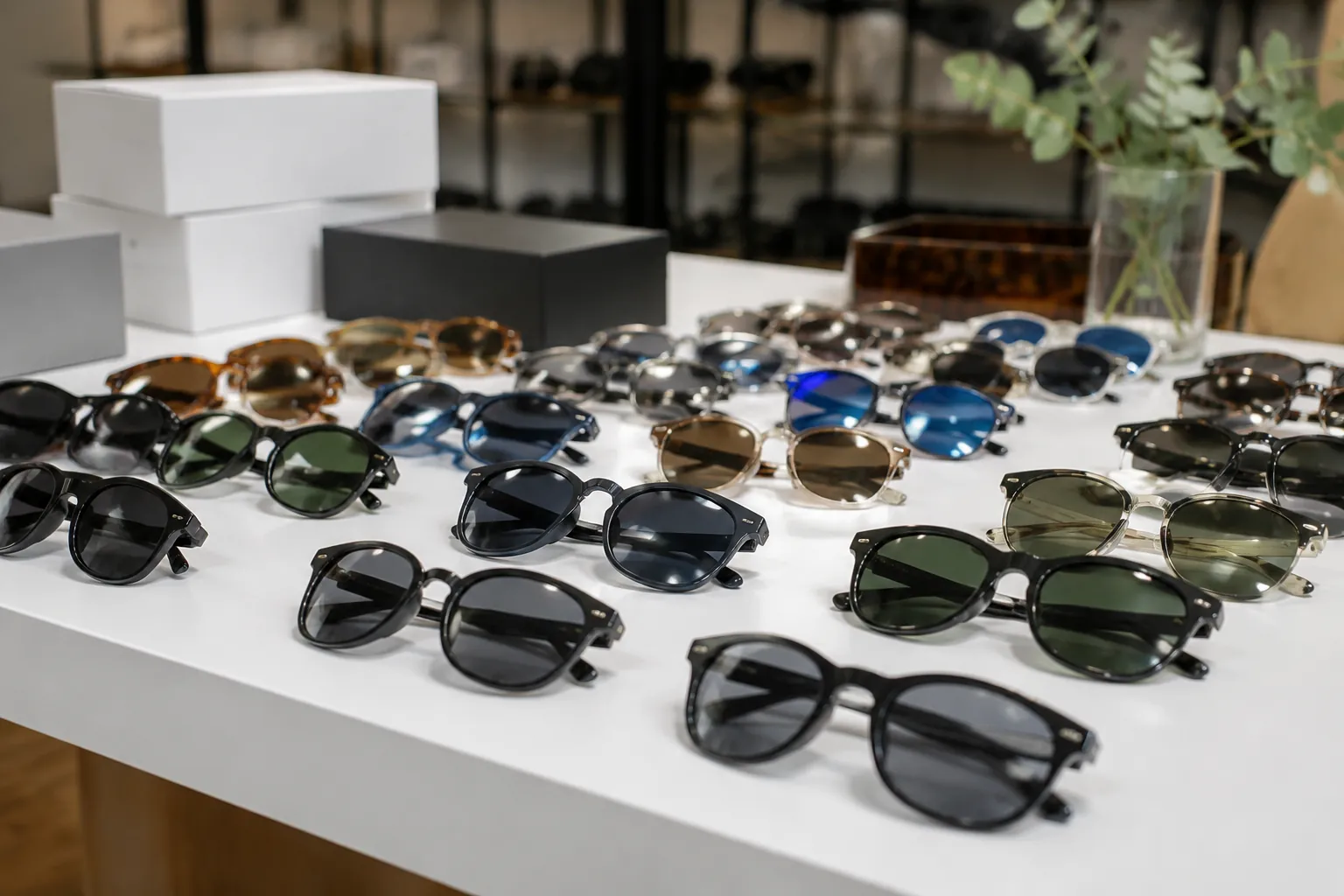
This guide is for overseas brands, importers, distributors, and retailers planning custom sunglasses orders from China. It explains what can change as volume moves from 300 to 1000 to 5000+ pairs: setup cost allocation, material buying, decoration efficiency, packaging, QC workload, lead-time risk, and production planning. Use it to compare quotes on the same specification. Quantity matters. So does every detail behind it.
Why Sunglasses Price Breaks Exist
Wholesale sunglasses pricing is not a simple discount ladder. Unit cost changes because setup work, material preparation, machine time, decoration setup, packaging preparation, and inspection planning are spread across more units. Before production starts, the factory must confirm frame material, color standard, mold or cutting method, lens tint, logo artwork, packaging layout, carton marks, inspection criteria, and export documents. Much of that work exists whether the order is 80 pairs or 5000 pairs.
LumiShades accepts an MOQ of 50 pairs per design, which can help with sampling, influencer drops, or small retail tests. But small orders carry a higher unit cost. The same preparation work is divided across fewer sellable pairs.
The first practical price break often appears around 300 pairs per design when the specification uses existing molds, standard lens options, simple decoration, and lean packaging. Pricing may improve again at 1000 pairs because materials, lenses, decoration, packing, and QC sampling can run in more efficient batches. At 5000+ pairs, the factory can plan longer production runs, buy some inputs more efficiently, and organize inspection by process stage instead of relying mainly on final packing checks.
The size of the price break depends on the specification. An injected PC frame with standard lenses, one-color temple logo, and pouch packaging scales differently from a handmade acetate frame with polarized lenses, metal plaques, spring hinges, and rigid gift boxes. Do not ask only, "What is your cheapest price?" Ask this instead: "What is the price at 300, 1000, and 5000 pairs using the same frame, lens, logo, packaging, and compliance requirements?"
What Changes at 300, 1000, and 5000 Pairs
Each order tier serves a different sourcing purpose. At 300 pairs, the buyer is usually validating a style. At 1000 pairs, the order becomes more production-friendly. At 5000+ pairs, purchasing, line scheduling, carton planning, and inspection flow have a larger effect on cost and delivery reliability.
| Order Tier | Best Use | Cost Behavior | Production Logic |
|---|---|---|---|
| 50-299 pairs/design | Samples, market tests, small launches | Highest unit cost because setup is spread thin | Use existing molds, standard lenses, and simple packaging |
| 300 pairs/design | First commercial order or retailer trial | First practical price break on common specifications | Good for one logo position, basic lens colors, pouch packaging, or simple case options |
| 1000 pairs/design | Repeat SKU, online stock, distributor order | Lower handling cost and better batch efficiency | More efficient lens tinting, decoration setup, carton packing, and QC sampling |
| 5000+ pairs/design | Seasonal program, chain retail, large distributor supply | Strongest pricing potential when the specification is stable and simple | Factory can plan longer production runs and standardize in-process inspection |
Price improvement is not equal across materials. Injection-molded PC and TR90 usually scale better than acetate because molding cycles are repeatable and labor per pair is lower. Acetate can still benefit from larger orders, but each frame passes through more manual finishing steps. Labor stays important.
Color count also affects the price break. One style in two colors at 500 pairs each is usually easier to produce than one style in ten colors at 100 pairs each. Every color change can require resin cleaning, lens matching, decoration adjustment, separate packing control, and extra QC attention. Too many low-volume colorways may reduce commercial risk on paper. In production, they often add cost and complexity.
Frame Material: Where Volume Helps Most
Frame material is one of the main reasons two sunglasses quotes at the same quantity can look far apart. Injected PC, TR90, acetate, and metal frames all have different cost structures, reject risks, finishing steps, and tolerance controls.
For injected PC or TR90 frames, savings may come from resin purchasing, color batching, machine scheduling, and lower handling time per piece. Once the mold is prepared and the color is approved, the factory can run a stable batch. At 1000 pairs, color change waste and machine setup time become easier to absorb. At 5000+ pairs, resin and component planning can often be handled more efficiently if the specification is confirmed early.
Acetate is different. A typical acetate process may include sheet selection, blank cutting, CNC front milling, temple milling, tumbling, polishing, hinge insertion, lens edging, assembly, alignment, and final cleaning. Acetate sheet thickness and pattern variation must be controlled because visual differences become obvious across a bulk shipment. Lens groove accuracy is critical. If the groove is too loose, lenses may pop out. If it is too tight, frame stress or lens distortion can appear. Good production control checks lens fit, temple opening angle, hinge tension, and frame alignment before packing.
Metal frames have their own cost drivers: soldering points, plating thickness, nose pad arms, screws, bridge shape, temple flexibility, and plating consistency. Volume can help with plating batches and component buying, but complex bridges, thin temples, mixed-material parts, or decorative screws can reduce part of the savings.
- Best scaling choice: existing injection mold, standard color, standard smoke or brown lens, and one logo position.
- Moderate scaling choice: TR90 or acetate style with limited colors and controlled decoration.
- Higher-risk scaling choice: metal or mixed-material frame with special plating, custom parts, or multiple assembly steps.
Decoration Choices by Quantity Tier
Decoration is where many buyers damage margin. A logo is not just a logo. Pad printing, laser engraving, hot stamping, metal logo plates, lens printing, and temple inserts all require different fixtures, surface preparation, reject controls, and labor steps. LumiShades can support laser engraving, pad printing, and metal logo plates, but each method has its own cost curve and QC requirement.
At 300 pairs, pad printing is often the safest choice for simple branding. It works for many temple logos and has a relatively low setup burden. Keep artwork to one color where possible. Avoid placing thick artwork across a sharply curved temple. A logo that looks balanced on a flat PDF can distort on a curved frame surface.
At 1000 pairs, laser engraving may become more practical because fixture setup is spread over more units. It can look cleaner than printing on suitable surfaces, but contrast depends on material color, coating, and surface finish. Black-on-black engraving may look premium in product renderings. Under retail lighting, it may be hard to see.
At 5000+ pairs, metal logo plates, custom temple badges, or decorative inserts can make sense if the retail price supports the added tooling, component purchasing, and assembly time. Metal plates require position control, adhesive or mechanical fixing, and rub or pull checks. If the plate is slightly misaligned, the product can look cheap even when the material is acceptable.
A practical decoration plan is simple: prove the frame first, then upgrade branding on reorder. For a first 300-pair order, use a simple temple logo and standard packaging. For a 1000-pair reorder, refine logo position or decoration method. For a 5000-pair retail program, add premium branding only after sell-through data supports the added cost and production complexity.
Lens Options, Testing, and Compliance Costs
Lenses are a major price driver. The cheapest lens is not always the lowest-cost choice after returns, complaints, or failed inspection. Buyers should define lens material, color, visible light category, UV performance, polarization, mirror coating, and destination-market compliance before asking for final pricing.
LumiShades produces and tints lenses in-house, which can help with color control and sample turnaround. Standard samples usually take 7-10 days. Bulk production normally runs 25-35 days after approval, depending on order size, packaging, component availability, and whether new molds, special materials, or additional testing are required.
Standard non-polarized lenses are usually the most cost-efficient choice for entry and fashion programs. Polarized lenses add cost and require additional inspection for axis alignment, stress marks, scratches, and consistency between left and right lenses. Mirror coatings add another risk layer because edge color shift, pinholes, rubbing marks, or coating unevenness can create rejects if handling is poor.
Compliance language must be precise. Relevant eyewear standards and documentation may include CE EN ISO 12312-1, ANSI Z80.3, AS/NZS 1067, REACH, FDA registration, ISO 9001, and BSCI. CE EN ISO 12312-1 is commonly relevant for sunglasses sold in Europe. ANSI Z80.3 applies to non-prescription sunglasses in the United States. AS/NZS 1067 applies to sunglasses sold in Australia and New Zealand. REACH relates to restricted substances in materials and surface treatments. FDA registration is relevant for U.S. eyewear import documentation, but it is not the same as a product performance test. ISO 9001 and BSCI relate to management-system or social-compliance frameworks. They do not prove optical performance for a specific pair of sunglasses.
Do not ask a factory to print marks or claims that do not apply to your product or destination market. A responsible quote should separate product specification, performance testing, chemical compliance, factory certification, document requirements, and label or marking requirements.
Packaging and Carton Planning
Packaging is often added late. That is a mistake. It affects unit cost, carton volume, freight cost, damage rate, barcode control, and retailer acceptance. A microfiber pouch is compact and cost-efficient. A hard case protects better but increases volume. A rigid retail box improves shelf presentation but can raise landed cost quickly because sunglasses are light and bulky.
At 300 pairs, keep packaging lean unless the sales channel requires retail presentation. A pouch, cleaning cloth, polybag, barcode label, and simple insert card may be enough. At 1000 pairs, printed pouches, branded cloths, and better insert cards become easier to price. At 5000+ pairs, custom boxes, hangtags, barcode systems, retailer carton labels, and inner-box planning can be built into the program more efficiently if the artwork and packing standard are approved early.
Carton details matter. If a hard case or rigid box increases carton volume, the landed cost may rise even when the factory unit price looks attractive. Importers should compare ex-factory price and estimated landed cost, not only product cost.
A useful quotation should show product cost, packaging cost, pairs per inner box, pairs per master carton, carton size, gross weight, and net weight. Without those details, freight estimates are guesswork. For retailer programs, also confirm barcode position, warning label language, carton marks, inner-box quantities, master carton labeling, and whether mixed-SKU cartons are allowed.
How to Build a Profitable Tier Plan
A practical buying plan usually starts with fewer designs and deeper quantities. Many new brands want ten colors at 100 pairs each because it feels safer. In production, that choice can create high unit cost, fragmented inventory, extra color approvals, and slower handling. Fewer colors at higher quantities are often easier to produce, inspect, replenish, and compare across sales channels.
- Choose one frame family and limit colorways for the first commercial run.
- Use 300 pairs per design to validate fit, sell-through, packaging, and return rate.
- Move winning SKUs to 1000 pairs per design once repeat demand is visible.
- Reserve 5000+ pairs per design for proven styles, retailer programs, or distributor commitments.
- Lock lens, logo, packaging, compliance, barcode, and carton requirements before final pricing.
When requesting quotes, ask for 300, 1000, and 5000 pairs using the same specification. Do not compare a basic 300-pair quote against an upgraded 5000-pair quote and call it a price break. Keep the specification fixed first. Then ask which upgrades become affordable at the next tier.
The quotation request should include an approved sample reference or target style, frame material, color standard, lens type and category, logo method and size, packaging files, compliance market, shipping mark, barcode data, carton requirements, and inspection standard. Factory capacity cannot fix unclear specifications. Unclear specifications usually create price changes, approval delays, or quality disputes.
Buyer rule: if a detail affects cost, quality, compliance, carton size, or lead time, include it in the quotation request before the factory prices the order.
QC and Lead Time at Higher Volumes
Higher volume does not mean less inspection. It means inspection must start earlier. A sunglasses QC plan should check frame color, lens category, UV performance, polarization if applicable, lens fit, hinge tension, temple alignment, screw security, logo position, surface defects, packaging, barcode labels, and carton marks.
For small runs, some issues may be caught near final assembly. For 5000+ pairs, that is usually too late. Rework can damage delivery time and margin. A stronger approach is in-process control: first-piece approval, color confirmation after molding or cutting, lens tint approval before full batch, decoration position approval, assembly checks, and final AQL inspection before shipment.
Lead time depends on complexity. Standard samples usually take 7-10 days. Bulk production is generally 25-35 days after approval. Add time for new molds, special acetate sheet, custom metal parts, polarized or mirror lenses, custom retail packaging, repeated artwork changes, or third-party testing. Many delays happen before mass production starts because artwork, packaging, compliance, or color approval is incomplete.
For repeat orders, keep a golden sample and a signed specification sheet. Include frame material, approved color sample or Pantone reference, lens color and category, logo method, logo size, packaging components, compliance target, barcode data, carton requirements, and inspection standard. This documentation helps protect margin, delivery time, and product consistency across reorders.
Have a custom sunglasses project in mind?
Send us your styles, target market and quantities and we will return a detailed quote with MOQ, lead time and a sample plan.
Get a QuoteWhy source this from Wenzhou with LumiShades
Wenzhou in Zhejiang Province is widely regarded as China’s eyewear manufacturing capital, producing a large share of the world’s sunglasses. That concentration matters to buyers: a deep local supply chain for acetate sheet, hinges, lens blanks, plating and packaging means shorter component lead times, easier color and material matching, and a workforce with decades of eyewear-specific skill. LumiShades has manufactured in this ecosystem since 2009, and our vertical integration — in-house injection molding, acetate cutting, CNC milling, lens tinting, decoration and quality control — means no part of your order is quietly subcontracted to a workshop you cannot audit.
For international buyers, that vertical control translates into accountability. When a single factory owns every step, defects are traced and fixed at source rather than bounced between vendors, and your specifications survive intact from first sample to bulk. We back this with 15+ years of experience, shipments to 60+ countries, more than 5 million pairs produced per year and a 98.5% on-time delivery rate. Our certifications — CE EN ISO 12312-1, FDA registration, ANSI Z80.3, AS/NZS 1067, REACH, ISO 9001 and BSCI audit — mean the compliance documentation your market requires already exists. Explore our manufacturing capabilities and quality control process to see how this works in practice.
Frequently asked questions
Is 300 pairs enough for custom sunglasses pricing? Yes, if the specification is production-friendly. Around 300 pairs per design is often enough for the first practical price break on existing molds with standard lenses, simple logo decoration, and lean packaging. Ask the factory to quote the same specification at 300, 1000, and 5000 pairs so you can see whether the next tier justifies the inventory risk.
When does sunglasses pricing improve most clearly? Pricing usually improves most clearly when the order uses stable materials, limited colors, existing tooling, standard lenses, and repeatable packaging. The strongest price breaks are often seen at higher volumes such as 1000 or 5000+ pairs per design, but the final price must always be tied to a fixed specification, not quantity alone.
Should I split 1000 pairs across many colors? Only if your sales plan supports each color. Ten colors at 100 pairs each can increase setup, color matching, decoration control, packing separation, and QC workload. For a first commercial order, fewer colors at deeper quantities usually produce cleaner pricing, easier inspection, and clearer reorder data.
Which compliance documents should I request? Match documents to the destination market and product claim. For Europe, ask about CE EN ISO 12312-1. For U.S. non-prescription sunglasses, ask about ANSI Z80.3 and confirm FDA registration documentation where relevant for import. For Australia and New Zealand, ask about AS/NZS 1067. For material restrictions, ask about REACH. ISO 9001 and BSCI may support factory evaluation, but they do not replace product testing.
How early should packaging be confirmed? Confirm packaging before the final quotation. Pouches, hard cases, printed boxes, hangtags, barcode labels, warning labels, inner boxes, and master carton marks affect unit cost, carton volume, freight estimates, QC checks, and lead time. Ask the supplier to include carton size, gross weight, net weight, and pairs per carton with the quote.
Ready to start?
Explore our shield & oversized sunglasses or request a quote — our sales team replies within 12 hours.
Request a Quote