
How to Build a Sunglasses Tech Pack Factories Can Quote
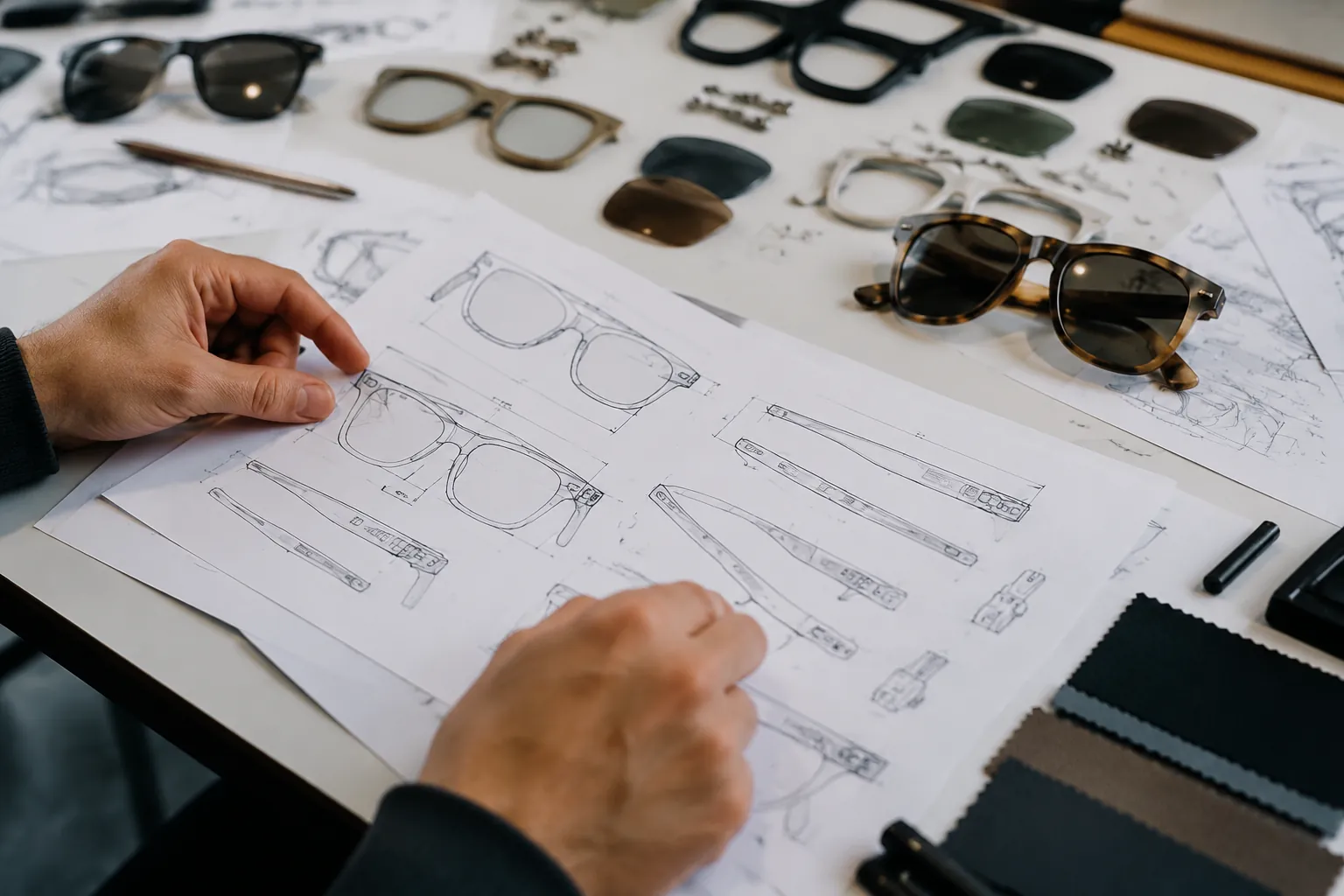
This guide is for overseas brands, importers, distributors, and retailers preparing RFQs for custom sunglasses. A strong tech pack is not a mood board. It is the controlled set of information a factory needs to confirm the production route, materials, lens specification, decoration method, packaging setup, compliance documents, MOQ tier, sampling process, and inspection standard. The goal is simple: make every factory quote the same product on the same basis.
Start with a quote-ready product summary
A sunglasses tech pack does not need to look like a fashion presentation. It needs to be quotable. Put the commercial and product basics on the first page so the factory can quickly see the production path: stock customization, ODM modification, private label production, or new mold development.
Include the product type, frame style, target buyer, sales channel, requested quantity, target ex-factory price range if available, delivery country, and launch deadline. If the first order is a market test, say so. If a larger reorder may follow retail approval, state that as a separate forecast, not as a confirmed order. Factories quote setup work, mold review, lens preparation, logo fixtures, packing labor, and QC differently depending on the real order shape.
- Project type: stock frame with logo, modified existing mold, new injection mold, acetate model, metal frame, or mixed-material frame.
- Quantity tiers: ask for several volumes, such as pilot order, standard wholesale order, and reorder quantity, so setup costs are visible.
- Target price: provide a realistic range only if it reflects your sales channel, packaging level, lens type, and compliance needs.
- Lead time: ask the factory to quote sample lead time and bulk lead time separately, and confirm when each clock starts.
- Compliance market: EU, US, Australia/New Zealand, or multi-market distribution may require different markings, user information, test evidence, and label artwork.
Do not hide the buying plan. A factory manager schedules injection molding, acetate cutting, lens tinting, logo decoration, assembly, packing, and inspection around the real order. Vague plans get vague quotes. Or no quote at all.
Provide drawings that remove guesswork
Most weak quotations start with missing dimensions. A front photo is not a drawing. For sunglasses, the factory needs the measurements that control fit, lens cutting, frame construction, and packaging: lens width, bridge width, temple length, frame front width, lens height, hinge-to-hinge width, base curve if relevant, temple opening width, and any critical wearing angle.
For existing injection molds, clear 2D drawings with front, side, top, and temple views are usually enough for a preliminary quotation. For a new mold, send CAD files if available and ask the factory to confirm whether the design is moldable before quoting tooling. For acetate, add front thickness, temple thickness, bevel shape, lamination direction, hinge position, polishing requirement, and any area where hand adjustment is expected. Small changes matter. They can affect lens seating, weight, hinge alignment, polishing time, and final fit.
| File or drawing | What it should show | Why the factory needs it |
|---|---|---|
| Front view | Lens width, bridge, total width, lens height, nose area | Confirms fit, lens cutting size, and mold suitability |
| Side view | Temple length, hinge position, temple drop, logo location | Controls wearing angle, hinge setup, and decoration placement |
| Top view | Frame curve, temple spread, hinge angle | Checks comfort, packing size, and adjustment needs |
| CAD or 3D file | Surface shape, part thickness, grooves, assembly points | Supports new mold review, CNC programming, and tolerance checks |
| Reference sample | Physical shape, finish, weight, lens fit, hinge feel | Reduces interpretation errors that drawings alone may miss |
Mark what must be copied functionally and what must not be copied visually. Factories need fit and construction direction. They do not need an instruction to reproduce another brand's protected design. If a feature may be legally protected, remove it from the brief and describe the functional goal instead.
Specify frame material, construction, and tolerances
Black sunglasses is not a specification. Frame material affects tooling, minimum quantity, polishing, color consistency, weight, durability, production time, and unit price. Choose the material before asking for a firm quote. If you are unsure, ask the factory to quote two production routes side by side.
PC is often used for cost-sensitive molded sunglasses and promotional programs. TR90 is usually chosen when flexibility, lighter weight, or sports positioning matters, but the material and processing route may cost more than basic PC. Acetate gives color depth and a premium hand feel, but it requires sheet cutting, CNC shaping, tumbling, polishing, hinge insertion, and manual adjustment. Metal parts add plating, soldering or mechanical assembly control, and more scratch-risk handling.
State the frame material, finish, color reference, hardware, and tolerance-sensitive areas. Do not rely on general tolerances for critical parts. Lens groove depth, hinge alignment, temple opening, bridge fit, screw seating, logo recesses, and metal plate pockets should be called out because they affect assembly, comfort, and QC.
- State the frame route: PC, TR90, acetate, stainless steel, aluminum detail, or mixed construction.
- Define the finish: gloss, matte, rubberized coating, transparent, tortoise, crystal, gradient, painted, or color block.
- Give color evidence: Pantone reference, physical color chip, acetate sheet code, approved master sample, or supplier color card.
- Identify hardware: 3-barrel or 5-barrel hinge, spring hinge, screw color, nose pad material, rivet style, or metal trim.
- Flag no-change areas: lens fit, hinge angle, logo recess, bridge width, pouch fit, or temple opening size.
For LumiShades projects, injection molding, acetate cutting, CNC milling, lens tinting, laser engraving, pad printing, and metal logo plate decoration can be coordinated through one supplier workflow when the selected design allows it. That reduces handoff risk. It does not replace a controlled specification.
Define lenses by performance, not color
Lenses are where many sunglasses quotes stop being comparable. Grey lens can mean basic tinted PC, TAC polarized lens, nylon lens, CR39 lens, mirror coating, gradient tint, UV400 claim, a specific filter category, or a prescription-ready blank. The cost and compliance impact can be very different.
For plano sunglasses, specify lens material, thickness, base curve if relevant, tint color, visible light transmission category if known, UV requirement, polarization, mirror coating, anti-scratch coating, and whether a logo or mark appears on the lens. If the product is high-curve, rimless, semi-rimless, sports-focused, or intended for a regulated retail channel, ask the factory to confirm the right lens material and thickness instead of guessing from a photo.
| Lens option | Typical use | Quote impact | Buyer warning |
|---|---|---|---|
| PC tinted lens | Entry, promo, and fashion sunglasses | Usually lower cost and faster to source | Confirm UV claim, filter category, and scratch requirement |
| TAC polarized lens | Fishing, driving, outdoor retail | Higher cost than basic tint | Confirm polarization direction and QC inspection method |
| Mirror coating | Sport, beach, and fashion styles | Adds coating cost and handling control | Scratches show quickly if pouch, case, or packing method is weak |
| Gradient tint | Lifestyle and fashion lines | Requires tighter tinting control | Send top, middle, and bottom shade references |
| Category-specific lens | EU, AU/NZ, and compliance-led orders | May require test confirmation | Do not estimate the category by appearance only |
For the EU, EN ISO 12312-1 is the key sunglasses standard commonly used for CE compliance. In the US, ANSI Z80.3 is commonly requested for non-prescription sunglasses. For Australia and New Zealand, specify AS/NZS 1067 when the product is intended for those markets. These standards can affect lens performance, warning text, product marking, user information, and test planning. Send a reference lens or approved color plate whenever possible. Office-lighting photos are poor color evidence.
Make logo and decoration files production-ready
Logo work often stalls because buyers send artwork made for a website, not a factory. A JPG or PNG is useful for visual reference. It is not enough for pad printing, laser engraving, metal plates, or accurate packaging print. Send vector artwork in AI, EPS, PDF, or SVG format with fonts outlined, exact size, placement, and color codes.
For temple logos, state the distance from the hinge, logo height, logo length, side direction, and whether the logo appears on one temple or both. For lens logos, confirm whether the mark is pad printed, laser marked, etched, or applied as a removable sticker. For metal plates, include plate size, thickness, finish, plating color, fixing method, and whether the temple needs a recessed pocket. A metal plate is not only decoration. It can affect tooling, CNC routing, adhesive selection, assembly inspection, and scratch protection.
- Pad printing: suitable for simple one- or two-color logos on temples or approved lens areas; requires a printing plate, color matching, and adhesion review.
- Laser engraving: useful for subtle marks on suitable plastic, metal, or approved lens areas; the final effect depends on material and surface finish.
- Metal logo plate: gives a stronger brand look but adds sourcing, plating, fitting, and scratch-control requirements.
- Hot stamping: can work for some temples and packaging applications, but foil color and durability should be approved by sample.
- Sticker or heat transfer: may suit some packaging uses, but it is usually weak for high-wear frame areas.
If logo color must match packaging, apparel, or a retail display, use the same Pantone reference across all production files. Gold, silver, and smoke grey are not fixed colors. Lock the reference and approve it by sample.
Include packaging, labeling, and compliance
Packaging is part of the quote. Treat it that way. A microfiber pouch, EVA case, folding case, paper box, retail hang tag, barcode sticker, instruction leaflet, polybag, and outer carton all change material cost, packing labor, carton size, and freight volume. For accurate pricing, include a packaging bill of materials with dimensions, print method, logo position, material, and quantity per carton.
State whether the product needs CE documentation based on EN ISO 12312-1, FDA registration support for US eyewear import, ANSI Z80.3 information, AS/NZS 1067 documentation, REACH material compliance, ISO 9001 factory quality management evidence, or BSCI social compliance documentation. LumiShades can support these commonly requested documents when they apply to the product and destination market: CE EN ISO 12312-1, FDA registration, ANSI Z80.3, AS/NZS 1067, REACH, ISO 9001, and BSCI. Do not request random certificates because a marketplace listing mentioned them. Ask for the documents your sales market, importer, retailer, or platform actually requires.
| Market | Common buyer requirement | Tech pack note to include |
|---|---|---|
| European Union | CE EN ISO 12312-1, REACH | Lens category, warning text, CE mark placement, language needs |
| United States | FDA registration support, ANSI Z80.3 | Importer details, labeling format, lens claims, barcode rules |
| Australia/New Zealand | AS/NZS 1067 | Category marking, user information, destination packaging |
| Multi-market | Mixed labels and test files | Separate artwork versions by destination if claims or warnings differ |
Carton markings matter for warehouses and import handling. Include model number, color, quantity per inner box and master carton, gross weight, net weight, carton size, country of origin, barcode placement, and any FBA or retailer-specific carton rules.
Ask for tiered quotes with assumptions shown
A useful RFQ asks the factory to quote the same design at several quantities with the assumptions visible. For LumiShades, suitable customization projects can start from 50 pairs per design, but actual MOQ depends on frame route, lens type, logo method, packaging, material availability, and compliance requirements. Pricing usually improves as volume increases because setup, decoration fixtures, machine time, packing preparation, material purchasing, and QC are spread over more units.
Do not compare factories unless the quote basis is the same. One supplier may quote a basic PC lens and pouch only. Another may include TAC polarized lenses, CE-related test documentation, a hard case, metal logo plate, and printed box. The lower unit price is not automatically cheaper once the same specification is applied.
- Request EXW and FOB pricing if you are comparing freight control, export handling, and responsibility for local charges.
- Ask for line items for frame, lens, decoration, packaging, mold or setup fee, sample fee, testing, and optional upgrades.
- Confirm sample lead time, bulk lead time, and exactly when the production clock starts.
- Ask which post-sample changes trigger new cost, new sample approval, or schedule changes.
- Request the defect standard, AQL level, inspection checklist, and photo report format before bulk production.
A serious factory should also tell you when the target price does not match the specification. If the buyer wants polarized lenses, a hard case, metal plates, retail box, market compliance documentation, and a very small order at promotional pricing, the supplier should propose trade-offs. Pretending everything fits every budget helps nobody.
Control the final tech pack and approval trail
Version control is not only for software. Sunglasses projects go wrong when drawings arrive by email, logo revisions by chat, lens color notes in a spreadsheet, and packaging changes in a file nobody named properly.
Use one folder per model. Name files with model number, version, and date. Keep an approval record for frame, lens, logo, packaging, labeling, and carton marks. If the black frame changes from gloss to matte after sample review, revise the tech pack and mark the old version obsolete. The factory should quote and produce against one controlled version, not a trail of mixed messages.
Practical rule: if a detail affects tooling, material, lens, logo, packaging, compliance, carton size, lead time, or QC, it belongs in the tech pack.
Before sending the RFQ, check that the factory can answer these questions without another email: What is the frame made of? What are the dimensions and critical tolerances? What lens is required? Where does the logo go? What packaging is included? Which standards or documents apply? What quantity tiers should be quoted? What sample approval date matters?
That is the point of a strong sunglasses tech pack. It does not make production automatic. It makes the first quotation specific enough to compare, negotiate, sample, approve, and inspect with fewer surprises.
Have a custom sunglasses project in mind?
Send us your styles, target market and quantities and we will return a detailed quote with MOQ, lead time and a sample plan.
Get a QuoteWhy source this from Wenzhou with LumiShades
Wenzhou in Zhejiang Province is widely regarded as China’s eyewear manufacturing capital, producing a large share of the world’s sunglasses. That concentration matters to buyers: a deep local supply chain for acetate sheet, hinges, lens blanks, plating and packaging means shorter component lead times, easier color and material matching, and a workforce with decades of eyewear-specific skill. LumiShades has manufactured in this ecosystem since 2009, and our vertical integration — in-house injection molding, acetate cutting, CNC milling, lens tinting, decoration and quality control — means no part of your order is quietly subcontracted to a workshop you cannot audit.
For international buyers, that vertical control translates into accountability. When a single factory owns every step, defects are traced and fixed at source rather than bounced between vendors, and your specifications survive intact from first sample to bulk. We back this with 15+ years of experience, shipments to 60+ countries, more than 5 million pairs produced per year and a 98.5% on-time delivery rate. Our certifications — CE EN ISO 12312-1, FDA registration, ANSI Z80.3, AS/NZS 1067, REACH, ISO 9001 and BSCI audit — mean the compliance documentation your market requires already exists. Explore our manufacturing capabilities and quality control process to see how this works in practice.
Frequently asked questions
Can I request a quote with only photos of a reference style? Yes, but treat it as a rough estimate only. For an accurate quote, send dimensions, frame material, lens material and performance requirements, logo method, packaging bill of materials, order quantity, destination market, and any required documents such as CE EN ISO 12312-1, ANSI Z80.3, AS/NZS 1067, REACH, or FDA registration support.
What file format should I send for logo decoration? Send vector artwork such as AI, EPS, PDF, or SVG with fonts outlined. Also provide logo size, Pantone or approved color reference, placement distance from the hinge, side direction, and whether the mark appears on one or both temples. For metal plates, add plate size, thickness, finish, fixing method, and whether a recessed pocket is required.
Do I need a new mold for custom sunglasses? Not always. Stock frames with logo or packaging changes usually avoid new tooling. Modified existing shapes may require mold adjustment or a new sample. A fully original injection frame normally needs CAD review, mold feasibility confirmation, tooling quotation, prototype or sample approval, and a longer development schedule before bulk production.
How detailed should lens specifications be? State lens material, thickness, tint color, UV requirement, polarization if needed, mirror or gradient finish, base curve if known, filter category if required, and the destination standard such as EN ISO 12312-1, ANSI Z80.3, or AS/NZS 1067. Send a physical reference lens or approved color plate when lens color matters.
What MOQ should I use for a first production run? Use the smallest quantity that still matches the production route. For LumiShades, suitable customization projects can start from 50 pairs per design, but MOQ depends on frame, lens, logo, packaging, and material availability. Ask for tiered pricing at a pilot quantity, a normal wholesale quantity, and a reorder quantity so setup and decoration costs are clear.
When does bulk lead time start? Bulk lead time should start only after sample approval, deposit, final artwork, packaging confirmation, labeling requirements, and compliance documents are locked. Ask the factory to state the start point in the quotation, because changes to lens color, logo position, packaging, or required test evidence can reset the schedule.
Ready to start?
Explore our aviator sunglasses or request a quote — our sales team replies within 12 hours.
Request a Quote