
Sunglasses Test Reports vs Certifications for B2B Buyers
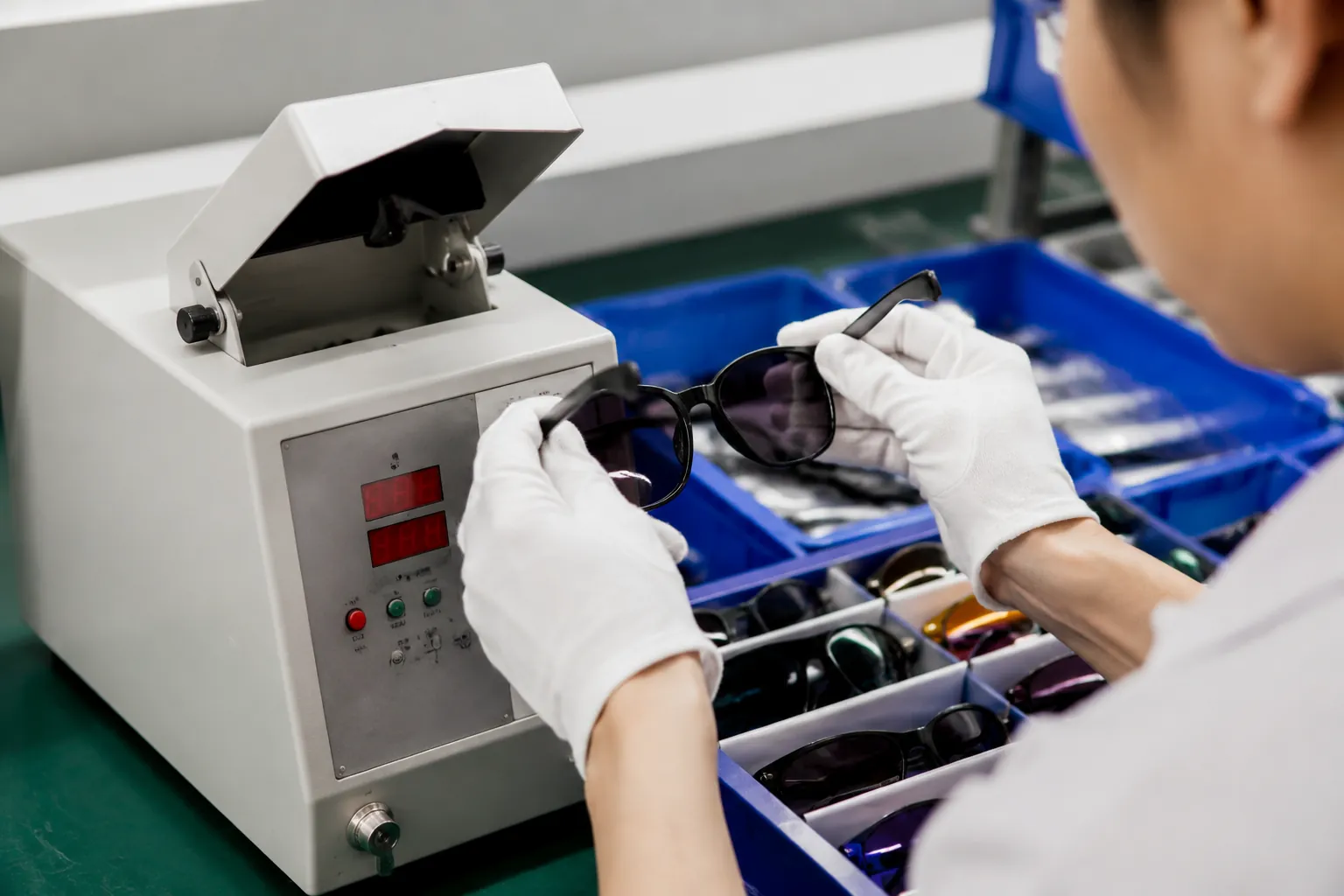
If you buy custom sunglasses for a brand, retailer, distributor, or promotional program, keep three document types separate: product test reports, factory certifications, and market-entry or compliance documents. They sound similar. They are not. Each answers a different risk question. A test report shows that a specific sample was evaluated against a specific standard on a specific date. A factory certification shows that a named site or organization has an audited management system or framework in place. A market document supports legal sale, import, or customer file requirements in a destination region. Mix these up and the usual B2B problems follow: rejected compliance files, PO delays, relabeling costs, customs questions, or stock that cannot be sold in the intended market. The safest rule is simple: match the paperwork to the exact SKU, exact market, and exact finished configuration before shipment leaves the factory.
1) The three document types buyers confuse most
Most compliance mistakes start with loose language. Buyers ask for a "certificate" when they actually need a lab test report. Suppliers send a factory audit when the buyer needs product evidence. For sunglasses, those documents are not interchangeable.
Test report: a laboratory report based on a submitted sample, pilot build, or other representative item. It records measured performance against a named standard. For sunglasses, that may include UV transmittance, visible light transmittance category, optical requirements, robustness, and other items required by the applicable standard.
Certification: evidence that a factory, system, or process has been audited or registered under a formal scheme. Examples include ISO 9001 for quality management and BSCI for social compliance. These documents can tell you something useful about process control, recordkeeping, corrective action, and sourcing governance. They do not prove that a specific sunglass style complies with CE EN ISO 12312-1, ANSI Z80.3, or AS/NZS 1067.
Market or compliance document: paperwork tied to a destination market, legal framework, or customer requirement. Examples include technical documentation supporting CE-marked sunglasses placed on the EU market, ANSI Z80.3 test evidence used for U.S. customer or channel requirements, or AS/NZS 1067 test reports for Australia and New Zealand. These documents must match the selling region, product category, and labeling.
The practical point is blunt: a strong factory audit does not replace a valid product test report. And a report for one black frame with one lens construction does not automatically cover the same frame fitted with a different tint, mirror coating, polarized lens, or decoration added after testing.
2) What a sunglasses test report should cover
A useful sunglasses report is more than a PDF with a lab logo. It should identify the product clearly enough that a buyer can tie it back to the approved item. At minimum, look for the style code or sample ID, lens description, frame description, applicable standard, report date, and the measured results or pass/fail conclusions for the required test items. If the report cannot be linked to your specification or BOM, it is weak evidence.
For most B2B sunglasses programs, buyers should request evidence covering at least these points:
- UV protection and spectral transmittance: confirms the lens performance required by the applicable standard and identifies the visible light transmittance category where relevant. A dark-looking lens is not automatically compliant.
- Optical and physical performance required by the standard: depending on market and standard, this may include optical quality, filter performance, and robustness or impact-related requirements defined by the test method used.
- Chemical compliance support: declarations or test evidence tied to restricted substances relevant to the destination market, especially for coatings, inks, paints, plated parts, plastics, nose pads, temple tips, and adhesives.
- Marking and warning review: confirms that category markings, warnings, origin marking, and packaging information align with market and customer requirements.
Then check change control. Small production changes can affect test outcomes. A shift in tint intensity can change visible light transmittance and therefore the filter category. Mirror coatings, gradient tints, and polarized lenses also change the compliance profile. Ask whether the tested sample used the same lens base material, coating stack, decoration process, and hardware as the intended bulk order.
Material choice matters too. Injection-molded plastic frames and acetate frames behave differently in production, finishing, and fit-up. That does not automatically create a compliance problem. But it does matter if you are trying to confirm that the tested sample and shipped product are truly the same configuration.
3) What factory certifications do—and do not—prove
Factory certifications matter for supplier selection and risk screening. Use them for that. Do not stretch them into product approval.
| Document | What it proves | What it does not prove | Best buyer use |
|---|---|---|---|
| ISO 9001 | A documented quality management system exists, with controlled procedures, records, and corrective-action processes | That a specific sunglass SKU passed CE EN ISO 12312-1, ANSI Z80.3, AS/NZS 1067, or any other product test | Assess process maturity, traceability discipline, and supplier quality management |
| BSCI | The factory has been audited against a recognized social compliance framework | Optical performance, UV protection, labeling compliance, or chemical compliance of the sunglasses | Meet retailer or brand sourcing-policy requirements |
| FDA registration | Registration status for an establishment where applicable under U.S. FDA requirements | Automatic product approval, customs clearance, or channel acceptance for every sunglass SKU | Support vendor setup and document review for U.S.-related programs where relevant |
| REACH-related declaration or test evidence | Material-level compliance support for restricted substances in declared or tested components | That future material substitutions, new coatings, or added trims remain compliant without review | Check chemical risk in coatings, inks, plastics, metals, and accessories |
Ask three direct questions every time: Who is the document holder? What is the scope? Does it cover the actual factory making the goods? A group-company certificate, trading-company document, or broad-scope certificate is not the same as evidence tied to the manufacturing site for your order.
Also check the issue date and whether the document still matches the live product. A report or declaration may still look official while no longer matching the BOM if the supplier changed lens construction, finish, or decoration after the document was issued.
4) Market-by-market proof buyers should request
Different markets ask different questions. Your document stack should follow the destination market and the customer requirement, not the supplier's default template.
- EU / UK: request test evidence tied to CE EN ISO 12312-1, plus the technical documentation used to support market placement and REACH-related material compliance where relevant. Check that category markings, warnings, and packaging match the approved product file.
- U.S.: request ANSI Z80.3 test evidence when required by your customer, sales channel, or internal policy. If a supplier refers to FDA registration, verify what is actually registered and whether that registration is relevant to the product and business model. Do not treat FDA registration as a substitute for product-level compliance evidence.
- Australia / New Zealand: request AS/NZS 1067 test evidence. Generic claims such as "UV400" do not replace standard-based documentation when the market or customer asks for it.
- Retail private-label programs: request the full product specification, test reports, labeling proofs, carton markings, and lot-linked QC records before final artwork signoff and before shipment approval.
Configuration changes should trigger a document review. In practice, the higher-risk changes are lens tint, mirror coating, polarized construction, frame material, decorative metal parts, soft-touch coating, and any logo process that adds inks, adhesives, or plating. A supplier may say the frame is "the same mold." That does not mean the compliance file still matches the finished product.
Use a simple rule: if the lens recipe changes, re-check the test coverage. If the BOM changes, update the file. If the destination market changes, confirm the standard, markings, and warnings again.
5) The pre-shipment document pack to request
Do not ask for "all certificates." That creates clutter, not control. Ask for a fixed pre-shipment pack tied to the PO and style code. A clean pack should include:
- Product specification sheet with style code, dimensions, frame material, lens material, colorway, hinge type, and decoration method
- Matched test report for the exact style or for a technically identical family, with clear equivalency notes if family coverage is claimed
- Destination-market compliance statement
- Factory certifications such as ISO 9001 and BSCI if required by your sourcing policy
- Packaging artwork proof showing warnings, category labels, origin mark, and barcodes
- Final inspection record or QC summary tied to the shipment lot
Timing matters as much as content. Lock the compliance file during sample approval and before mass production starts, not after final packing. Wait until the balance-payment stage and you may find that the approved sample and bulk production no longer match.
Small orders are not safer. They often get less document scrutiny because the order value is lower, but the same shipment can still be delayed, rejected by a customer, or forced into corrective relabeling if the paperwork does not match the goods. The cost of a missing report is usually far higher than the time saved by skipping document review.
6) How suppliers should control reports in production
Strong suppliers do not treat compliance as an end-of-order paperwork task. They build it into the production flow. The basic process should look like this:
- Confirm target market, sales channel, and required standard before sample development.
- Build samples using the intended materials: exact frame material, exact lens material, exact tint or coating construction, and exact logo method.
- Submit a representative sample or pilot build for testing.
- Review the results, then freeze the BOM, artwork, and labeling.
- Run mass production with in-process QC on dimensions, lens fit, hinge function, finish, and markings.
- Pull final inspection samples from the finished lot before carton release.
- Ship with matched reports, packing data, and lot traceability.
The factory's production methods affect how credible the paperwork is. Frame molding or machining influences geometry and fit. Lens tinting and coating affect filter performance. Pad printing, laser marking, hot stamping, and metal logo application all change the finished item in ways that may matter for durability, chemical compliance, or labeling control.
Ask practical QC questions. Are lens colors checked against an approved standard? Are markings reviewed against approved artwork? Are hinges and alignment checked during final inspection? Are plated trims or logo plates checked for attachment and edge safety? You are not trying to run a full factory audit. You are checking that the tested sample and the shipped product are the same in the ways that matter to compliance.
7) Common failure modes that delay shipment
Most shipment delays are not dramatic product failures. They are paperwork failures and change-control failures. Common examples include:
- Style-code mismatch: the PO, specification sheet, and report do not use the same style code, revision, or color suffix.
- Lens change after testing: a new tint, mirror layer, or polarized construction is added after the report is issued.
- Decoration change: a pad print, laser logo, or metal badge is approved late and never reviewed in the compliance file.
- Market mismatch: a report prepared for one market framework is reused for another without checking the correct standard and labeling.
- Missing lot traceability: the supplier cannot show which production lot matches the approved sample or tested build.
Late changes cause most of the damage. A "small update" on the factory side may be a real compliance change on the buyer side. Switching from a plain temple to a glued metal logo plate introduces a new adhesive and component. Moving from a solid tint to a gradient tint changes lens performance characteristics. Changing to a soft-touch coating can change the chemical and wear-risk profile.
Keep the control simple. Freeze the specification before bulk production. No casual lens swap. No unrecorded material substitution. No artwork revision without re-checking labels and warnings. Reliable delivery matters. Document control matters more.
8) Buyer checklist before releasing final payment
Use this checklist before approving the shipment balance:
- Does the test report match the exact style code, lens construction, and colorway or clearly documented family coverage?
- Does the report reference the correct standard for the destination market: CE EN ISO 12312-1, ANSI Z80.3, or AS/NZS 1067 as applicable?
- Are the frame material, lens material, coatings, and decorations consistent with the approved BOM?
- Are REACH-sensitive parts such as paints, inks, plated trims, adhesives, and soft-touch coatings identified and covered by declarations or supporting evidence where relevant?
- Do the labels, warnings, and outer-carton marks match the destination market and customer packaging guide?
- Is there a final QC or inspection summary tied to the actual shipment lot?
- Has any part of the product changed since testing or sample approval?
If two or three answers are unclear, pause release and request a revised file set. That pause is usually cheaper than a blocked shipment, retailer chargeback, or corrective relabeling project in the destination country. The goal is not maximum paperwork. It is the right paperwork: correct SKU, correct market, correct configuration, reviewed before goods leave the factory.
Practical rule: if the product changes, review the paperwork again. If the market changes, review the paperwork again.
Have a custom sunglasses project in mind?
Send us your styles, target market and quantities and we will return a detailed quote with MOQ, lead time and a sample plan.
Get a QuoteWhy source this from Wenzhou with LumiShades
Wenzhou in Zhejiang Province is widely regarded as China’s eyewear manufacturing capital, producing a large share of the world’s sunglasses. That concentration matters to buyers: a deep local supply chain for acetate sheet, hinges, lens blanks, plating and packaging means shorter component lead times, easier color and material matching, and a workforce with decades of eyewear-specific skill. LumiShades has manufactured in this ecosystem since 2009, and our vertical integration — in-house injection molding, acetate cutting, CNC milling, lens tinting, decoration and quality control — means no part of your order is quietly subcontracted to a workshop you cannot audit.
For international buyers, that vertical control translates into accountability. When a single factory owns every step, defects are traced and fixed at source rather than bounced between vendors, and your specifications survive intact from first sample to bulk. We back this with 15+ years of experience, shipments to 60+ countries, more than 5 million pairs produced per year and a 98.5% on-time delivery rate. Our certifications — CE EN ISO 12312-1, FDA registration, ANSI Z80.3, AS/NZS 1067, REACH, ISO 9001 and BSCI audit — mean the compliance documentation your market requires already exists. Explore our manufacturing capabilities and quality control process to see how this works in practice.
Frequently asked questions
Do I need both a test report and a factory certification for sunglasses orders? Usually, yes—if you are managing both product-compliance risk and supplier-risk screening. Ask for a product test report to show that the sunglass sample was evaluated to the applicable market standard. Ask for factory certifications such as ISO 9001 or BSCI only if they are part of your sourcing, customer, or retailer requirements. Use them for different purposes: the test report supports the product; the factory certification supports your supplier-approval process.
Can one CE-related test report cover every colorway of a sunglass style? Not automatically. Ask the supplier to show whether the colorways are technically identical in the areas that affect compliance: lens material, lens tint, visible light transmittance category, mirror coating, polarization, frame material, and decoration method. If any of those change, do not assume the original report still applies. Request a written equivalency explanation or new testing, depending on the nature of the change and your customer requirement.
Is FDA registration the same as product approval for the U.S. market? No. FDA registration is not a blanket approval for every sunglass SKU. If a supplier mentions FDA registration, ask what entity is registered, what that registration covers, and why it is relevant to your transaction. Then separately request product-level evidence such as ANSI Z80.3 testing if your customer, sales channel, or internal compliance process requires it. Keep those two issues separate in your file review.
What should I ask for before paying the shipment balance? Request a file set that matches the actual shipment: the product specification sheet, the applicable test report, the destination-market compliance statement, packaging artwork proof, and the final QC or inspection summary tied to the lot. Then cross-check five items before release: style code, lens construction, BOM, destination market, and labeling. If any one of those does not match across the documents, stop and ask for correction before shipment.
When should sunglasses test reports be updated? Re-check or update the compliance file whenever the finished product changes in a way that could affect test coverage or labeling. Typical triggers include a new lens tint, different mirror coating, adding polarization, changing frame material, changing decoration method, adding plated parts, changing coatings, or switching destination market. As a buyer, the safest practice is simple: any BOM change should trigger a compliance review, even if the supplier describes the change as minor.
Ready to start?
Explore our sport wrap sunglasses or request a quote — our sales team replies within 12 hours.
Request a Quote