
Sunglasses Samples Before Bulk Production
This guide is for brand owners, importers, retailers, and distributors buying custom sunglasses from an overseas factory. It explains how prototype, pre-production, and shipment approval samples help buyers control design, fit, color, lens performance, logo quality, packaging, compliance, cost, and delivery risk before bulk goods are released. The main risk is simple: approving a good-looking sample that does not represent the real production method, materials, tolerances, packaging, or compliance file for the order.
Why Sample Stages Matter in Sunglasses Production
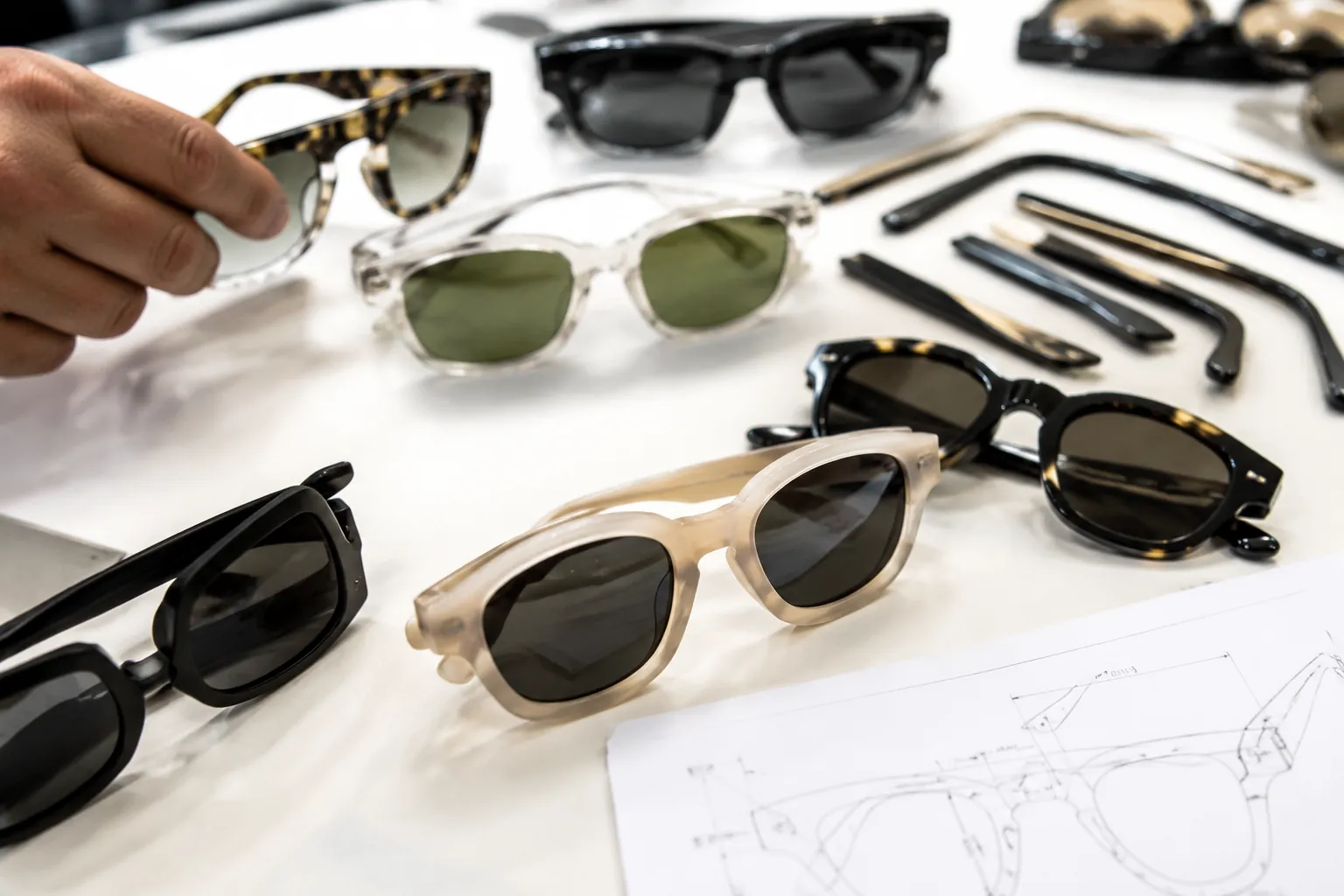
Sunglasses look simple. They are not. A finished pair combines frame parts, lenses, hinges, screws, surface finishing, decoration, packaging, labels, and market-specific markings. Small changes can create real problems. A narrow bridge can affect nose fit. Uneven hinge tension can make temples feel loose. A lens tint that looks fine under factory lighting may look wrong outdoors.
In custom sunglasses production, sample control usually falls into three stages: prototype sample, pre-production sample, and shipment approval sample. Not every order needs all three. A repeat order using an existing frame, standard lens, and approved packaging may only need a confirmation sample. A new mold, private acetate pattern, polarized lens, metal logo plate, special coating, or custom retail box needs tighter control.
Treat samples as decision gates. The prototype asks, "Does the idea work?" The pre-production sample asks, "Can the factory repeat this standard in bulk?" The shipment approval sample asks, "Do the packed goods match what we approved?" Buyer-supplier disputes often start when these questions are mixed together.
The Three Sample Types Compared
Buyers often say "sample" as if all samples are equal. They are not. A hand-finished prototype can help review shape and fit, but it may not prove final color, logo durability, lens performance, or production tolerance. A pre-production sample should become the master standard for mass production. A shipment approval sample should be pulled from real packed goods, not rebuilt or specially polished for presentation.
| Sample Type | Main Purpose | Typical Timing | What It Should Confirm |
|---|---|---|---|
| Prototype sample | Checks design direction, size, and wearing balance | After design files, reference samples, or drawings are agreed | Frame shape, bridge fit, temple length, front curve, lens concept, and basic logo position |
| Pre-production sample | Locks the repeatable bulk standard | Before mass production is released | Final material, final color, hinges, lenses, logo process, markings, accessories, and packaging |
| Shipment approval sample | Confirms finished goods before release | After bulk production, QC, and packing | Actual packed product, carton marks, labels, defect level, barcode, user information, and accessories |
| Color or component sample | Approves one variable without rebuilding the whole product | During revision or colorway approval | Lens tint, acetate sheet, injected color chip, mirror coating, pouch material, or print proof |
For a simple stock-frame order, one approved logo-and-color sample may be enough if the lens, frame, packaging, and compliance requirements are standard. For a private-mold frame with polarized lenses, custom temple printing, microfiber pouch, retail box, barcode labels, and market documents, one sample is rarely enough. The higher the risk, the more the approval standard must be written down before bulk production starts.
Prototype Samples: Confirm Shape, Fit, and Construction Direction
A prototype sample is for early design and fit decisions. Depending on the material and project stage, it may be made by CNC milling, acetate cutting, trial injection, 3D-assisted tooling review, hand polishing, or mixed manual processes. It may not use final mass-production tooling, final polishing time, final screws, final lenses, or final coating. Do not treat it as a production master unless the factory confirms that it represents the final route.
For a new sunglasses design, the prototype should confirm front width, lens width, lens height, bridge width, temple length, temple opening, pantoscopic angle, frame wrap, and overall balance on the face. A frame can look strong in CAD but sit too flat, pinch the nose, touch the cheeks, or flare too wide at the temples. Test it on people who match the target consumer head size. A display stand is not enough.
- Frame geometry: measure lens width, bridge, temple length, front width, lens height, and temple spread with calipers.
- Wearing comfort: wear the sample long enough to check pressure at the nose, ears, and temples.
- Lens direction: confirm category, base curve, color family, gradient position, mirror effect, and polarization plan.
- Decoration position: approve approximate logo location and scale, but mark temporary printing as non-final if needed.
- Material choice: confirm PC, TR90, acetate, stainless steel, aluminum, or mixed-material construction before pricing and tooling are locked.
Prototype color needs caution. Painted PC can differ from injected PC. TR90 often needs different color control from rigid PC. Acetate sheets show natural pattern variation, especially tortoise, marble, and laminated colors. Trial-tinted lenses can shift when bulk tinting or mirror coating is applied. If color matters commercially, approve a separate color chip, lens swatch, or material sheet before pre-production.
Pre-Production Samples: Lock the Bulk Standard
The pre-production sample is usually the key approval for B2B buyers. It should be made through the intended production route: injection molding for PC or TR90 frames, acetate sheet cutting and tumbling for acetate styles, CNC or stamping for metal parts, production hinges and screws, final lens cutting or edging, final tinting, and final decoration. Once this sample is approved, bulk production normally follows it.
This sample should include real branding. Pad printing is common for temple logos and can control cost, but it needs rub and adhesion checks, especially on curved, glossy, painted, or coated surfaces. Laser engraving gives a sharper and more permanent mark, but contrast can be weak on dark materials. Hot stamping can create a metallic effect, but pressure, foil, and surface control matter. Metal logo plates add perceived value, but they may need a recess, adhesive control, rivets, or other mechanical support. Lens logos must not disturb the wearer's view.
Use measurable approval limits. Visual approval alone is weak. The tolerance sheet should define which dimensions are critical, which are cosmetic, and how deviations will be judged. Key checkpoints often include lens width, bridge width, temple length, front width, lens height, inner temple opening, logo position, lens fit, hinge tension, and frame symmetry. Hinge tension should feel balanced left to right. Temples should open smoothly without grinding, wobble, or excessive resistance. Screw heads should sit cleanly and should not strip during normal adjustment.
Packaging belongs in the same approval. Confirm pouch material, case size, cleaning cloth specification, instruction sheet, barcode label, hangtag, inner box, export carton marks, and country-of-origin marking. A perfect frame in the wrong retail box, with the wrong barcode or missing warning text, can still fail receiving inspection.
Shipment Approval Samples: Check Real Packed Goods
A shipment approval sample must come from completed bulk goods. It should not be specially polished, rebuilt, or selected from a separate sample bench. Its value is that it shows what happened after molding, coloring, lens fitting, logo application, QC, and packing were repeated across the order.
Do not approve shipment based on one perfect pair unless you know how it was selected. Ask the factory to identify the carton number, SKU, color, production batch if available, and packing date. Pull samples from different cartons and from each color or SKU. For higher-value or compliance-sensitive orders, pair shipment samples with an inspection report that uses an agreed sampling plan, defect classification, photos, and carton count.
- Compare dimensions against the approved pre-production sample and agreed tolerance sheet.
- Open and close temples several times to check hinge tension, screw stability, and symmetry.
- Inspect lenses for scratches, stress marks, gaps, uneven tint, mirror coating defects, and poor edge fit.
- Rub temple logos, lens marks, and printed packaging lightly to catch weak adhesion before shipment.
- Verify carton marks, SKU labels, barcodes, country-of-origin labels, warnings, and user information.
- Review QC photos, defect counts, carton quantities, and packing method before paying the balance or authorizing release.
Shipment approval is the final buyer-side control before goods move by sea, air, rail, or courier. If the sample differs from the approved pre-production standard, record the difference in writing. Then decide if it is acceptable, repairable, sortable, discountable, or shipment-blocking.
Approval Files: What Buyers Should Record
A sample protects the buyer only if the approval record is specific. "Approved, looks good" is not enough. The file should define what was approved, what was not approved, and which tolerances apply. This matters even more when the buyer, trading company, factory, packaging supplier, and inspection company are in different locations.
A proper approval file should include product code, version number, date, sample type, frame material, lens material, lens category, UV claim, polarization claim if applicable, color references, decoration method, logo artwork, packaging list, carton specification, and signed or clearly identified photos from front, side, back, top, and wearing angles. When possible, keep one approved sample at the factory and one with the buyer.
For frame measurements, common checkpoints include lens width, bridge width, temple length, front width, lens height, inner temple opening, and frame weight. For packaging, record box dimensions, barcode number, label position, printed warnings, pouch color, cloth size, and case style. For color, use Pantone references for solid colors where practical, but do not expect molded plastic, painted surfaces, acetate, and lens coatings to match Pantone exactly.
Also state exclusions. If the prototype uses temporary lenses, write "lens for shape only." If the logo is only a position mockup, write "final logo requires separate approval." If the acetate pattern is directional or random, define acceptable variation. If packaging text is not final, mark it clearly. Small notes prevent expensive arguments after bulk production starts.
Compliance and Testing Points Before Approval
Sunglasses are regulated consumer products, so sample approval cannot focus only on appearance. The compliance file should match the destination market and product claim. Common requirements and buyer checks may include CE EN ISO 12312-1 for the European market, ANSI Z80.3 for the United States, AS/NZS 1067 for Australia and New Zealand, REACH chemical restrictions where applicable, FDA registration where applicable for U.S. import files, and supplier-management documents such as ISO 9001 or BSCI. Do not make UV400, polarized, impact, driving, or children's safety claims unless documents and test results support them.
For lens performance, confirm UV protection, visible light transmission category, optical quality, and polarization consistency if polarization is claimed. A dark lens without verified UV protection is not acceptable. A polarized lens should be checked for direction, distortion, and uneven stress patterns. For driving use, color recognition may matter. For children's sunglasses, material safety, coating stability, labeling, and small parts need extra control.
| Market or Requirement | Typical Buyer Check | Best Stage to Confirm |
|---|---|---|
| EU CE EN ISO 12312-1 | Lens category, UV protection, markings, user information, and warnings | Pre-production and shipment approval |
| United States ANSI Z80.3 | Non-prescription sunglass lens performance and labeling | Pre-production sample |
| Australia/New Zealand AS/NZS 1067 | Lens category, UV claim, warning text, and packaging information | Pre-production and packaging approval |
| REACH | Chemical restriction risk in frames, coatings, inks, pouches, and accessories | Material approval before bulk |
| FDA registration | Supplier documentation for U.S. import files where applicable | Supplier qualification stage |
Ask for required documents before bulk production if compliance is critical. Testing after goods are packed leaves fewer options and can cause delay, rework, discount demands, or shipment cancellation. If the buyer's market has additional rules, confirm them with the importer, test lab, or compliance adviser before approving the pre-production sample.
Cost, MOQ, and Lead-Time Decisions Around Samples
Sampling is a commercial decision as well as a technical one. Low-volume trial orders are easier to manage when the buyer avoids unnecessary complexity. Use existing molds, standard lenses, simple logo placement, and available packaging where possible. Custom tooling, special lens coatings, private colors, metal parts, and retail packaging usually increase sampling work, approval steps, and commercial risk.
Unit price often improves as volume increases because mold setup, material purchasing, decoration setup, QC, and packing labor are spread across more units. But larger orders need stronger sample control. Extra time spent confirming color, lens, logo, tolerances, and packaging is usually cheaper than sorting, reworking, discounting, or rejecting cartons after arrival.
Plan sample time separately from bulk production time. Sample timing depends on material, tooling status, decoration, lens process, packaging, revision rounds, and buyer feedback speed. If a launch date is fixed, approve frame, lens, logo, packaging, and compliance documents in parallel. Do not send small comments every few days. Slow feedback is one of the easiest ways to lose a delivery window.
Practical rule: release bulk production only when the pre-production sample matches the product you are willing to receive in cartons. If approval still depends on "we will adjust that later," the sample is not approved.
For shipment approval, give the factory a clear response deadline. Finished cartons take warehouse space, and delayed release can affect vessel booking, courier pickup, seasonal launch timing, and payment schedules.
Have a custom sunglasses project in mind?
Send us your styles, target market and quantities and we will return a detailed quote with MOQ, lead time and a sample plan.
Get a QuoteWhy source this from Wenzhou with LumiShades
Wenzhou in Zhejiang Province is widely regarded as China’s eyewear manufacturing capital, producing a large share of the world’s sunglasses. That concentration matters to buyers: a deep local supply chain for acetate sheet, hinges, lens blanks, plating and packaging means shorter component lead times, easier color and material matching, and a workforce with decades of eyewear-specific skill. LumiShades has manufactured in this ecosystem since 2009, and our vertical integration — in-house injection molding, acetate cutting, CNC milling, lens tinting, decoration and quality control — means no part of your order is quietly subcontracted to a workshop you cannot audit.
For international buyers, that vertical control translates into accountability. When a single factory owns every step, defects are traced and fixed at source rather than bounced between vendors, and your specifications survive intact from first sample to bulk. We back this with 15+ years of experience, shipments to 60+ countries, more than 5 million pairs produced per year and a 98.5% on-time delivery rate. Our certifications — CE EN ISO 12312-1, FDA registration, ANSI Z80.3, AS/NZS 1067, REACH, ISO 9001 and BSCI audit — mean the compliance documentation your market requires already exists. Explore our manufacturing capabilities and quality control process to see how this works in practice.
Frequently asked questions
Can I approve a prototype and skip the pre-production sample? Only for low-risk orders where the frame, lens, color, logo process, packaging, and compliance requirements are already proven and unchanged. Do not skip the pre-production sample for new molds, custom colors, acetate patterns, polarized lenses, special tinting, mirror coatings, metal logos, children's products, or retail packaging. If you skip it, state in writing which existing approved sample or specification becomes the production standard.
How many samples should I request before mass production? For a new custom style, request at least one prototype for shape and fit, then one pre-production sample made with final materials, lens, logo, and packaging. For multiple colors or SKUs, approve one full master sample plus color chips, lens swatches, print proofs, or finished samples for each colorway. Keep a dated approval file and, when possible, one signed master sample with the buyer and one with the factory.
What tolerances should I use for sunglasses samples? Use a written tolerance sheet instead of a general "looks good" approval. Identify critical points such as lens width, bridge width, temple length, front width, logo position, lens fit, hinge tension, frame symmetry, and packaging dimensions. The correct tolerance depends on material, tooling, construction, and price target, so confirm realistic limits with the factory before approving the pre-production sample.
What should I do if the shipment approval sample differs from the approved sample? First classify the difference as cosmetic, functional, packaging-related, labeling-related, or compliance-related. Ask for photos or video from multiple cartons, affected SKU and color details, estimated defect quantities, carton numbers, and the factory's correction plan. Do not authorize shipment or pay the balance until you decide in writing whether the goods should be repaired, sorted, discounted, reworked, retested, or rejected.
Are sample lead times included in bulk production time? Usually no. Sample development, sample revisions, lab testing, packaging proofing, and buyer approval normally happen before bulk production is released. Ask the supplier to separate the timeline into prototype sampling, pre-production approval, material purchasing, mass production, QC, packing, shipment approval, and transport so there is no misunderstanding about the delivery date.
What is the biggest sample approval mistake buyers make? The biggest mistake is approving appearance without recording specifications. A buyer should document dimensions, materials, lens category, UV or polarization claims, logo method, color references, packaging, markings, compliance documents, allowed tolerances, and exclusions. If a feature is temporary, untested, or subject to later approval, write that clearly before bulk production starts.
Ready to start?
Explore our aviator sunglasses or request a quote — our sales team replies within 12 hours.
Request a Quote