
Sunglasses Colorway Planning for Stronger Sell-Through
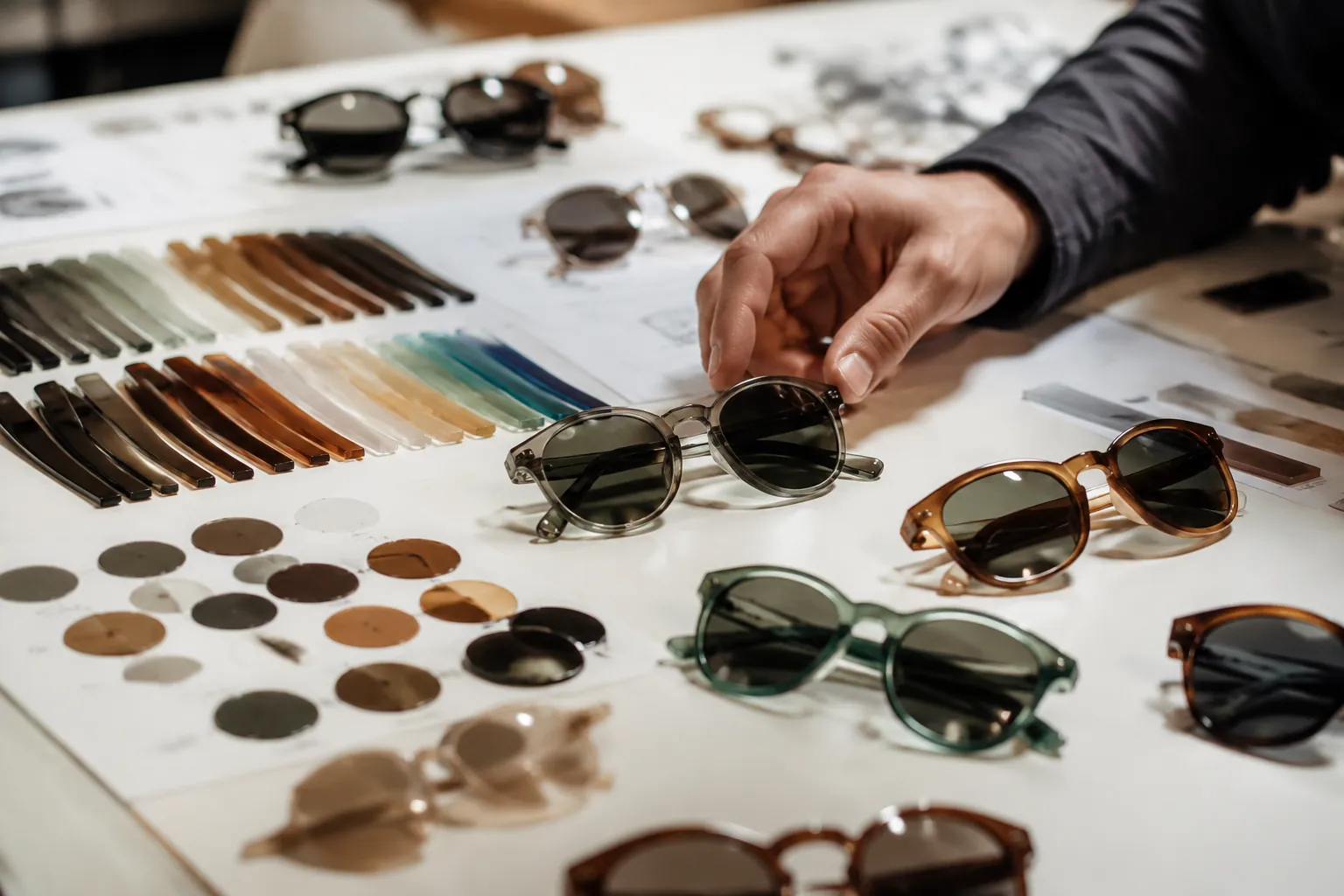
This guide is for overseas eyewear brands, importers, distributors, and retail buyers planning custom sunglass assortments. The aim is simple: reduce slow-moving colors, make replenishment easier, and use factory MOQ and price breaks with discipline. It shows how to plan frame and lens colorways by season, sales channel, material, decoration method, lead time, QC tolerance, and compliance before approving bulk production.
Start With the Commercial Role of Each Colorway
Many sunglass assortments get into trouble early. Color selection starts with taste: black, tortoise, champagne, pink, maybe one transparent frame. Taste matters. It is not a plan.
Every colorway needs a job. It should carry the line year-round, create a seasonal buying reason, support a retail display, test a trend, serve a specific channel, or complete a brand story. Before reviewing Pantone references, acetate sheets, lens swatches, or logo colors, assign each proposed colorway a clear role.
- Evergreen colors: black, dark tortoise, brown, crystal, smoke, navy, and other repeatable shades intended for year-round selling and replenishment.
- Seasonal colors: honey, milky beige, olive, burgundy, transparent pink, light blue, white, and resort colors with a planned launch period and stop date.
- Test colors: one or two higher-risk colors ordered in controlled quantities to confirm demand before a larger commitment.
- Channel colors: colors created for a specific account, resort, retail chain, corporate program, online drop, or geographic market.
LumiShades supports MOQs from 50 pairs per design. Unit pricing and production efficiency usually improve at higher quantities, especially when materials, lenses, decoration, and packaging are repeated. That does not mean a first order should be split across too many unproven colors. A stronger launch is often three core colorways, one or two seasonal options, and one controlled test.
Each additional color creates its own forecast, sample approval, QC reference, barcode, carton mark, product photo, replenishment decision, and dead stock risk. Treat a colorway as an SKU. Not a decoration choice.
Build the Calendar Backwards From the Selling Window
Sunglasses sell all year, but color demand is seasonal. Black with gray lenses can work across many months. A pastel transparent frame with pink lenses usually has a much shorter window. If it arrives late, the buyer may have to discount it or hold it for the next season.
For buyers importing from China, color decisions need enough time for sampling, approval, production, freight, customs clearance, and distribution. LumiShades' usual timing is 7-10 days for samples and 25-35 days for bulk production after samples and order details are approved. Buyers should also allow time for design confirmation, mold or tooling review if needed, logo artwork, packaging proofing, export booking, sea or air freight, customs clearance, domestic warehousing, and retail allocation.
| Collection Type | Color Strategy | Typical Planning Window | Risk if Late |
|---|---|---|---|
| Spring launch | Crystal, light tortoise, beige, olive, soft transparent colors | Approve color samples 60-90 days before retail reset | Medium; missed floor reset can weaken display impact |
| Summer peak | Black, tortoise, white, bright transparent, mirror lenses | Lock samples 90-120 days before peak selling | High; late fashion colors may lose most of their selling window |
| Autumn carryover | Dark tortoise, brown, smoke, burgundy, matte black | Use sell-through and stock data 45-75 days before demand | Low to medium; safer if colors are evergreen |
| Holiday or gift | Black, champagne, smoke, metal accents, premium packaging | Confirm packaging and decoration about 90 days before required ship date | Medium; packaging or labeling delays can hold finished goods |
A clear calendar also reduces decoration risk. Laser engraving, pad printing, hot stamping, metal logo plates, and foil details require approved position, size, contrast, durability, and placement tolerance. A black pad print on a dark smoke temple may look subtle in a render but become hard to read under store lighting. Fix that during sampling. Not after bulk production starts.
Match Color Depth to the Sales Channel
The right number of colors depends on how the product is sold. A distributor selling to many small retailers usually needs safer colors because reorder signals arrive slowly and stock is spread across accounts. A direct-to-consumer brand can test bolder colors because it controls product pages, advertising, pricing, and sell-through data. A resort chain may need brighter colors, but often in fewer frame shapes. An optical retailer usually needs conservative frame colors, compliant lenses, and clear labeling.
Physical retail needs colors that work on a wall, spinner, tray, or counter display. Five similar browns can confuse store staff and customers. Ecommerce needs accurate color names, photo consistency, lens darkness information, and on-face images because the buyer cannot handle the frame. Promotional programs often follow brand guidelines, but forcing an exact corporate color into translucent plastic can extend sampling and increase rejection risk.
- Wholesale distribution: use mostly evergreen colors, add a smaller seasonal group, and limit test colors until reorder data is available.
- Direct-to-consumer brand: use seasonal drops and trend colors, but cap test quantities until conversion, return, and review data confirm demand.
- Retail chain: keep the wall easy to explain: black, tortoise, crystal or smoke, one fashion color, and a clear lens story.
- Resort or beach channel: consider white, bright transparent, and mirror lens options, but evaluate scratch visibility, smudging, and pouch protection.
- Corporate or promo buyer: use fewer frame colors and create variation through logo method, pouch color, sleeve design, or lens tint.
The more fragmented the channel, the safer the color plan should be. Weak sell-through is harder to detect quickly when stock is spread across many accounts. Each color needs a reason to exist.
Use Material Behavior to Control Color Risk
Frame material changes how color looks, how stable it is, and how repeatable it can be in bulk production. A color approved on a small chip can look different on a thick front, a thin temple, or a translucent bridge. Approve finished frame samples, not only raw material chips or digital renders.
Injection-molded frames can be efficient for repeat programs, but color masterbatch must be controlled carefully, especially for transparent, crystal, smoke, and milky colors. Small pigment changes can shift the final appearance. Acetate can provide richer pattern, depth, and lamination effects, especially for tortoise and layered colors, but sheet cutting, CNC milling, tumbling, polishing, and material yield affect cost and timing. Metal frames and metal accents add plating color, coating adhesion, and corrosion-resistance checks.
| Material or Finish | Color Advantage | Production Watchpoint | Best Use |
|---|---|---|---|
| Injection plastic | Good cost control and repeatability at volume | Masterbatch ratio, flow marks, weld lines, transparency drift | High-volume evergreen colors and promo programs |
| Acetate | Rich tortoise, layered color, premium hand feel | Sheet pattern variation, polishing quality, material waste | Fashion collections and higher retail price points |
| Metal or plated parts | Premium shine and precise brand accents | Plating color tolerance, adhesion, corrosion resistance | Logo plates, temples, bridges, trims, mixed-material styles |
| Matte coating | Modern appearance and lower shine | Rubbing marks, coating thickness, fingerprint resistance | Sport-inspired and minimalist collections |
LumiShades offers production processes including injection molding, acetate cutting, CNC milling, lens tinting, decoration, assembly, and QC. This helps buyers coordinate a similar color story across several models. Still, black plastic, black acetate, black plating, and black pad print will not match perfectly. They are different surfaces with different gloss and light reflection.
For important colors, approve a golden sample and keep it as the bulk QC reference. For transparent or light colors, inspect under daylight or controlled D65 lighting where available. Photos can support discussion, but they should not be the only approval tool for production color.
Plan Frame, Lens, Hardware, and Logo as One SKU
A sunglass colorway is not only the frame. Lens color affects appearance, compliance files, retail messaging, photography, and sometimes return rates. Gray, brown, green, gradient, amber, pink, blue, yellow, polarized, and mirror lenses behave differently in use and in product images.
Gray lenses keep color perception relatively neutral and are a common choice for black, crystal, smoke, and metal-look frames. Brown lenses add warmth and often pair well with tortoise, honey, beige, olive, and champagne. Green lenses can look classic, but they should be matched carefully with the frame color and target market. Pink, blue, and yellow fashion lenses need caution because consumers may treat them as style lenses rather than everyday sun-protection lenses.
Compliance must be planned early. For non-prescription sunglasses, buyers should confirm lens category, visible light transmission, UV protection, labeling, and target-market claims. Relevant standards and requirements may include CE EN ISO 12312-1, ANSI Z80.3, AS/NZS 1067, REACH, FDA registration, ISO 9001, and BSCI, depending on the product, market, and buyer requirements. Do not make a protection claim that the test report and labeling cannot support. A very light fashion tint, for example, should not be marketed as high-sun protection unless testing confirms the correct category and performance.
| Lens Option | Best Use | Buyer Watchpoint | Common Pairings |
|---|---|---|---|
| Gray solid | Core everyday sunglasses | Confirm lens category, UV result, and darkness consistency | Black, crystal, smoke, metal accents |
| Brown solid | Warm fashion and lifestyle styles | Can make ecommerce images look warmer than expected | Tortoise, honey, beige, olive |
| Gradient smoke | Fashion retail and driving-style frames | Top-to-bottom gradient position must match left and right lenses | Black, burgundy, champagne, crystal |
| Mirror coating | Beach, resort, and sport-inspired channels | Shows scratches easily; pouch and lens protection matter | White, matte black, bright transparent frames |
Approve frame color, lens tint, hinge finish, logo color, temple decoration, pouch color, barcode label, and carton marking together. If these elements are approved separately, the final SKU can look like a stack of unrelated decisions.
Use MOQ and Price Breaks to Protect Cash
MOQ should shape assortment structure, not just total order size. LumiShades can start at 50 pairs per design, which is useful for market tests, retailer trials, influencer drops, or limited account programs. Unit cost usually improves as quantity rises, but the final price depends on frame construction, material, lens type, decoration, packaging, inspection level, and compliance requirements.
The common mistake is using low MOQ to create too many small color runs. Fifty pairs of six colors may look flexible. In practice, it creates six sets of samples, photos, labels, forecasts, and reorder decisions. It can also reduce production efficiency because each color may require separate setup, masterbatch control, acetate sheet allocation, lens pairing, and packing instructions.
- Use 50 pairs: when the goal is to answer a specific demand question or support a limited account test.
- Use 300 pairs: when the color has a defined channel and can justify better setup efficiency.
- Use 1000 pairs: for proven evergreen colors with reliable sell-through or confirmed chain-store placement.
- Use 5000+ pairs: for repeat programs where material, lens, logo, packaging, and QC standards are already stable.
For first orders, place deeper quantity on two or three proven colors and smaller quantities on tests. For repeat orders, shift budget toward colors with confirmed sell-through and low return rates. If a color is needed for brand presentation but demand is uncertain, keep it outside the core replenishment plan. Treat it as a campaign SKU with a planned end date.
Set Approval Tolerances Before Bulk Production
Color approval must be specific enough for production and inspection. A factory cannot work reliably from notes such as "make it softer," "more premium," or "closer to the mood board." Define reference samples, acceptable variation, inspection points, and decision authority before bulk production starts.
For plastic colors, confirm a Pantone reference or physical chip, then approve a finished molded frame. For acetate, approve both the sheet pattern and a finished polished frame because cutting position changes how the pattern appears. For lenses, approve tint, gradient position, UV performance, visible light transmission, and left-right matching. For decoration, check pad print adhesion, laser engraving depth, hot stamp clarity, metal plate alignment, screw color, and logo contrast.
A practical rule: if color affects sell-through, it needs a physical approved sample. If it affects compliance, it needs a test basis and correct labeling.
Common approval controls include a golden sample kept by the buyer and factory, written color codes, signed lens samples, artwork files with logo size in millimeters, position tolerance such as ±0.5 mm where practical, and carton or barcode label proofs. Some buyers use Delta E targets for visual color difference, but eyewear still requires judgment of the finished product because material, transparency, thickness, and surface gloss affect the result.
LumiShades' QC process can check incoming material, molding or cutting, lens tinting, decoration, assembly, and final packing. Buyers should provide AQL expectations, packaging rules, barcode format, market labeling, and documentation requirements for the EU, United States, Australia, New Zealand, or other target markets.
Design Replenishment Before the First PO
A strong color plan includes the reorder path before the first purchase order is placed. If a fast-selling color uses a special acetate sheet, non-standard lens coating, custom metal logo plate, or unique packaging, replenishment may not be as fast as expected. Standard colors and stable constructions are usually easier to repeat. Special colors need better forecasting and earlier reorder decisions.
Samples from LumiShades usually take 7-10 days, and bulk production usually takes 25-35 days after approvals. Replenishment is smoother when the buyer keeps the same frame construction, lens category, decoration method, packaging, and label details. It slows down when the reorder changes lens category, logo color, pouch material, compliance label, or barcode structure.
- Set reorder triggers: use sales velocity, warehouse stock, import lead time, and safety stock instead of waiting for stockout.
- Protect evergreen colors: keep black-gray, tortoise-brown, crystal-gray, and one channel-specific core option available where demand supports them.
- Limit seasonal reorders: set a last reorder date and avoid chasing late demand after the selling window closes.
- Document the SKU: record frame material, color code, lens tint, logo method, hardware finish, pouch, box, barcode, and carton mark.
- Review returns: scratches, tint complaints, loose decoration, color mismatch, and packaging damage show which colors or finishes need adjustment.
The best assortment is not the most colorful one. It is the one that sells through, repeats cleanly, protects cash, and gives the factory clear standards for every reorder.
Have a custom sunglasses project in mind?
Send us your styles, target market and quantities and we will return a detailed quote with MOQ, lead time and a sample plan.
Get a QuoteWhy source this from Wenzhou with LumiShades
Wenzhou in Zhejiang Province is widely regarded as China’s eyewear manufacturing capital, producing a large share of the world’s sunglasses. That concentration matters to buyers: a deep local supply chain for acetate sheet, hinges, lens blanks, plating and packaging means shorter component lead times, easier color and material matching, and a workforce with decades of eyewear-specific skill. LumiShades has manufactured in this ecosystem since 2009, and our vertical integration — in-house injection molding, acetate cutting, CNC milling, lens tinting, decoration and quality control — means no part of your order is quietly subcontracted to a workshop you cannot audit.
For international buyers, that vertical control translates into accountability. When a single factory owns every step, defects are traced and fixed at source rather than bounced between vendors, and your specifications survive intact from first sample to bulk. For procurement review, buyers can request process records, approved samples, quality checkpoints and project-specific compliance files before placing a bulk order. Required testing and documentation are confirmed against the destination market and product specification rather than assumed from a generic certificate list. Explore our manufacturing capabilities and quality control process to see how this works in practice.
Frequently asked questions
How many colorways should we launch for one new sunglass model? For a first B2B order, start with 3-5 colorways: 2-3 evergreen colors, 1 seasonal color, and 1 controlled test color. Before adding more, confirm that each color will have its own forecast, product photo, barcode, packing instruction, and replenishment decision. If the sales channel cannot support those steps, reduce the range.
Can we order only 50 pairs per colorway? Yes. LumiShades' MOQ starts at 50 pairs per design. Use that level for a specific purpose, such as a retailer test, limited drop, sample selling program, or account-specific trial. Do not use low MOQ to create too many unproven colors. Every color still needs sampling, labeling, QC reference, photography, and stock management.
Which sunglasses colors are safest for replenishment? The safest replenishment colors are usually proven basics in the buyer's own channel, such as black with gray lenses, dark tortoise with brown or gray lenses, crystal with gray lenses, smoke, navy, and conservative brown tones. Confirm this with sell-through, return rate, and reorder data before increasing quantity. Avoid treating pastel, neon, mirror-heavy, or bright transparent colors as core replenishment items until demand is proven.
Do lens colors affect compliance? Yes. Lens tint, visible light transmission, UV protection, and lens category must match the product claim and target-market requirements. Sunglasses sold into the EU, United States, Australia, or New Zealand may require documentation aligned with CE EN ISO 12312-1, ANSI Z80.3, or AS/NZS 1067, depending on the market. Confirm the required standard, label wording, lens category, and test report before approving bulk production or packaging claims.
How do we reduce color mismatch in bulk production? Approve a finished golden sample for each important colorway, not only a chip, photo, or render. Record the frame material, color reference, lens tint, logo color, hardware finish, packaging, and inspection standard. Keep one approved sample with the buyer and one with the factory, then use those samples for QC comparison during bulk production and final inspection.
When should seasonal sunglass colors be ordered? Work backwards from the retail launch date. Allow 7-10 days for samples, 25-35 days for bulk production after approvals, and extra time for artwork, packaging proofing, shipping, customs clearance, warehouse receiving, and retail distribution. For peak summer or holiday programs, approve colors earlier because late delivery can turn a seasonal SKU into slow-moving inventory.
Ready to start?
Explore our aviator sunglasses or request a quote — our sales team replies within 12 hours.
Request a Quote