
Sunglasses SKU Planning: Reorder or Expand?
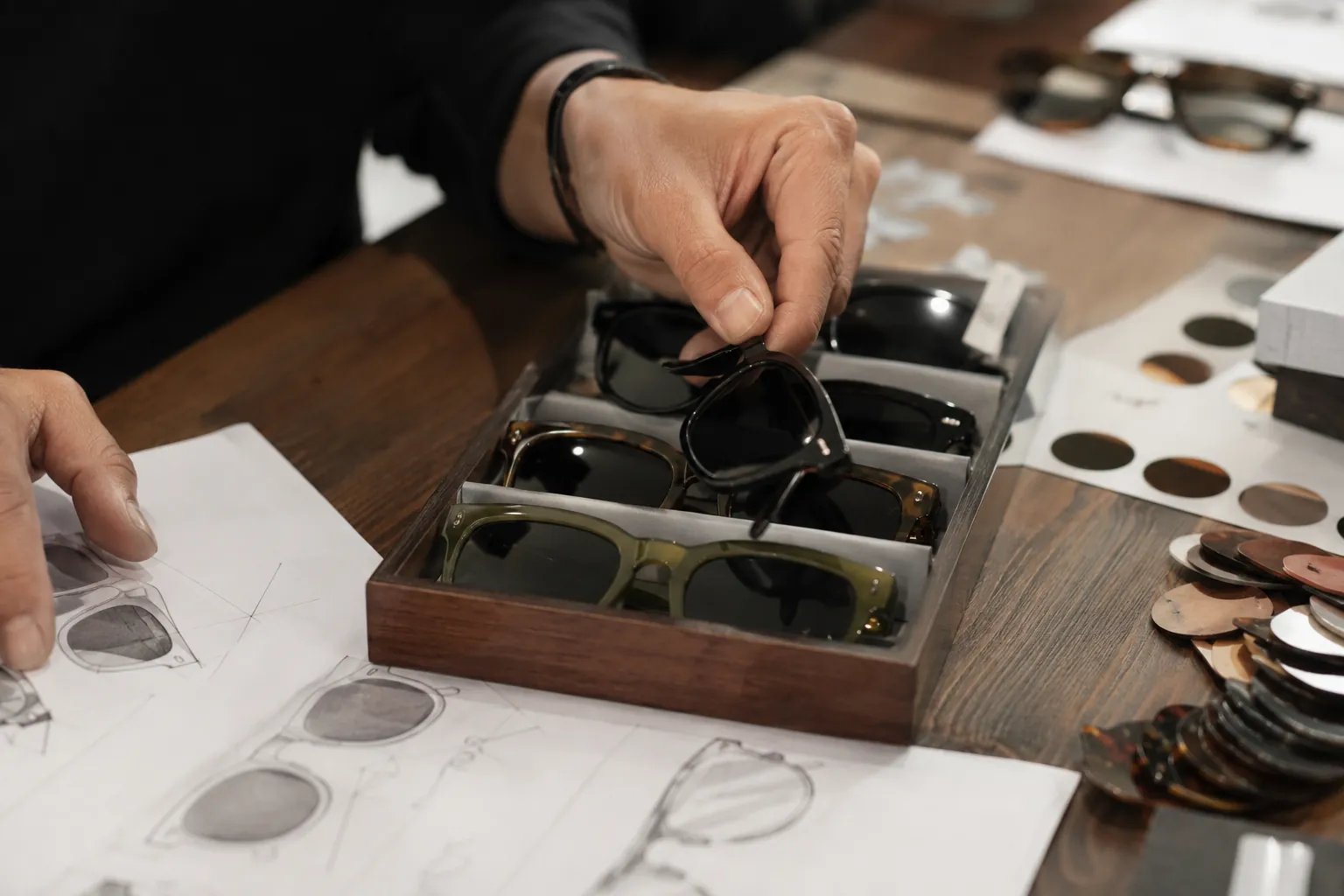
This guide is for overseas eyewear brands, importers, distributors, and retailers deciding whether to add new sunglasses styles, launch new colors, or buy deeper into proven sellers. It shows how to read SKU-level sell-through, set practical MOQ and price-break rules, protect margin after freight, and avoid slow stock before peak season. The aim is simple: fewer dead SKUs, cleaner factory scheduling, and better reorder timing when demand is real.
Start With SKU-Level Sell-Through
New sunglasses SKUs are easy to approve in a range meeting. Selling them through at full margin is harder. Before adding another frame shape, lens color, or logo treatment, separate proven demand from early interest.
Track each style-color-lens combination as its own SKU. A black square frame with grey lenses and a tortoise square frame with brown gradient lenses may sit in the same design family. They do not carry the same inventory risk. Your warehouse, cash-flow report, and reorder plan should treat them separately.
For fast retail and e-commerce channels, review sell-through 4 to 8 weeks after stock arrival. For wholesale, distributor, and travel retail channels, use a longer window because replenishment and store rollout move more slowly. A useful rule: above 60% sell-through at normal pricing is a reorder candidate; 35% to 60% needs diagnosis before adding depth; below 35% should not receive more variants unless there is a clear reason such as late delivery, wrong channel, weak display, or weather timing.
- Reorder winners: 60%+ sell-through, low returns, stable margin, and repeat buyer requests.
- Refresh carefully: 35% to 60% sell-through, good reviews, but weak color balance or lens mismatch.
- Hold: mixed data, enough stock on hand, and no urgent seasonal deadline.
- Exit: below 35% sell-through, heavy discounting, repeated fit complaints, or unclear target buyer.
Do not confuse visibility with demand. A frame that photographs well but needs markdowns to move is not a winner. It is a margin problem with good styling.
Use MOQ To Choose Depth Or Variety
The right order size depends on both learning value and commercial risk. A small MOQ is useful for testing new colors, influencer drops, distributor samples, and early private-label programs. But MOQ is not the same as the best economic order quantity. A small test protects cash. A larger reorder only makes sense after the SKU has proven velocity.
Price usually improves at higher volumes because mold setup, color matching, decoration setup, packaging preparation, inspection time, and export handling are spread across more pairs. Still, the lowest ex-factory price is not always the best decision. If the SKU later needs markdowns or ties up cash for months, the cheaper unit cost did not help.
| Order Choice | Best Use | Commercial Logic | Main Risk |
|---|---|---|---|
| 50 pairs per design | New style, new color, buyer sample run, influencer test | Small cash exposure and fast learning | Higher landed cost per pair and limited stock depth |
| 300 pairs | Small retail launch or early reorder | Better cost base while keeping risk controlled | Can sell out too fast if demand is already proven |
| 1000 pairs | Proven SKU with repeat orders | Improved unit economics and steadier supply | Cash concentrated in one color, lens, or channel |
| 5000+ pairs | Core program, chain retail, annual distributor plan | Strongest price leverage and planned production flow | Forecast errors become expensive and slow to clear |
A simple buying rule works well: use 50 to 300 pairs to learn, 1000 pairs to supply proven demand, and 5000+ pairs only when the SKU has earned core-program status. If the reorder case depends only on a lower unit price, the volume is probably too aggressive.
Add Colors Before New Frame Shapes
Many brands add too many frame shapes too early. That creates scattered inventory, higher fit risk, more packaging variation, and slower production planning. Color expansion is often safer because the bridge fit, lens size, hinge behavior, temple opening, and carton packing are already known.
If a black or tortoise frame sells strongly with low returns, test one or two new frame colors before opening a new mold or approving a new acetate front. For injection frames, color changes are efficient once the mold is stable, but the factory still needs to check shrinkage, gate marks, surface flow lines, and lens-groove consistency. For acetate, color selection affects sheet availability, cutting yield, lamination visibility, polishing time, and defect rate. Transparent acetate is unforgiving. Bubbles, internal stress, glue lines, and polishing marks show quickly.
Lens changes also affect sell-through and QC. Grey lenses keep color perception neutral and are safe for broad retail. Brown lenses feel warmer and can support lifestyle positioning. Gradient lenses are retail-friendly, but left and right tint transition must look balanced. For polarized lenses, axis alignment matters. A rotated polarized lens can create customer complaints even when the frame looks correct.
- Expand the best-selling frame into one new frame color first.
- Keep the lens category stable unless the buyer needs a new lens story.
- Approve physical samples under daylight and retail lighting.
- Compare the new color against the original SKU, not the whole collection.
Keep the test clean. Change fewer variables. Then you can see whether demand comes from the frame, the color, the lens, or the marketing.
Sample Only When It Answers A Buying Question
Sampling should answer a buying question, not satisfy curiosity. A sample run should test a commercial gap: missing face fit, missing price point, missing lens function, missing trend shape, or a specific distributor request.
For a new frame shape, check technical risk before approving the sample budget. Wide shield styles can create lens-curve and stress problems. Oversized acetate fronts need stable CNC milling and careful polishing so the bevel does not become uneven. Thin temples can warp after heating, packing, or long-distance shipping. Injection frames need gate position, shrinkage, and lens groove fit reviewed early because small dimensional errors can make lenses loose or difficult to mount.
A serious sample review should cover fit, hinge tension, temple alignment, lens retention, surface finish, logo position, logo durability, and packing tolerance. Sunglasses are visual products. Small defects look big in a retail tray. A metal logo plate placed off center may pass a casual desk review, but it will look cheap beside a competitor's frame. Temple spread should feel consistent on both sides. Hinge screws should not loosen after repeated opening. Lenses should sit cleanly without rattle or excessive stress.
Factory-floor rule: if the sample only looks good from one angle, it is not ready for bulk.
Approve samples with written notes and reference photos. Mark the approved sample with SKU code, date, lens category, color code, logo method, and packaging version. Verbal approval creates disputes later, especially when a reorder is placed months after the first shipment.
Set Margin Targets Before The Range Grows
Line expansion must protect gross margin after freight, duty, packaging, inspection, returns, and markdowns. A new SKU with an attractive factory price can still fail if the packaging is bulky, the decoration is overbuilt, or the item needs promotion to sell.
Set a target landed cost before sampling. A retailer selling sunglasses at $29.99 has a different cost ceiling from a premium brand selling at $95. Importers should calculate landed cost, not only ex-factory cost. Freight can punish low-volume, bulky packaging. Rigid cases improve presentation but increase carton volume. Microfiber pouches reduce weight and cube, but they may not fit the brand position.
Decoration changes both cost and risk. Laser engraving is clean, repeatable, and suitable for many temple or lens positions when the mark is subtle. Pad printing works well for simple logos but needs adhesion testing on the chosen coating or acetate surface. Metal logo plates can raise perceived value, but they add part cost, placement labor, glue or pin control, and inspection points. For low-price traffic items, keep decoration simple and put margin into fit, lens quality, and packaging consistency.
- Set target landed cost before sample approval.
- Model margin at full price and first markdown.
- Include packaging volume in freight estimates.
- Keep decoration proportional to retail price.
- Confirm inspection criteria before bulk production.
- Reorder proven SKUs before adding expensive trims to weak ones.
Price breaks matter. Markdown risk matters more. Moving from 300 to 1000 pairs can improve unit economics, but it is not a win if the order later clears at discount.
Match Production Timing To The Buying Calendar
Bulk production lead time depends on order size, material availability, decoration, lens work, packaging, and QC requirements. That lead time only works if SKU decisions happen early enough. The common mistake is waiting for perfect sell-through data and then missing the replenishment window.
If a proven SKU reaches 50% sell-through after a few strong weeks and the remaining inventory will run out before the next shipment can arrive, start the reorder process before the dashboard looks perfect. Sunglasses demand can accelerate quickly when weather, holidays, travel, or retailer promotions begin.
For new SKUs, count backward from the warehouse date. Allow time for samples, internal review, revisions, bulk production, freight, and any retailer packaging or compliance approval buffer. If the order uses custom hinges, special acetate, mirrored or polarized lenses, metal plaques, or multiple packaging formats, add more buffer. Retailers do not care that the factory finished on time if goods miss the shelf date.
A practical calendar uses three lanes. First, immediate reorders for winners. Second, controlled color tests for medium performers. Third, true new development for the next season. Do not mix all three into one late purchase order. Pressure creates mistakes: wrong lenses, rushed labels, weak inspection plans.
Build Compliance Into SKU Planning
Compliance affects SKU planning because different markets require different claims, labeling, and test expectations. Do not add UV, safety, polarized, or category claims unless the supporting documents and test scope match the SKU being sold.
For sunglasses sold in Europe, CE EN ISO 12312-1 matters for general-use sunglasses. For the United States, buyers often ask for FDA registration and ANSI Z80.3 alignment. Australia and New Zealand buyers may require AS/NZS 1067. REACH matters for restricted substances in frame materials, coatings, inks, and some decoration components.
Discuss compliance before bulk production, especially when changing lens color, lens category, coating, frame material, decoration ink, nose pad material, or packaging label. A black frame with grey lenses that passed one review should not automatically be treated as identical after changing to a mirrored lens, new coating, or different ink system. The commercial change may look small. The test implication may not be.
- Confirm destination market before sampling.
- Define lens category and labeling requirements.
- Keep material, coating, and ink records by SKU.
- Do not print UV or safety claims without support.
- Retain approved samples for comparison during QC.
Compliance is cheapest when built into the SKU plan. Fixing labels, claims, and cartons after packing is slow, visible, and expensive.
Use A Decision Matrix For Every SKU
A range review should end with decisions, not opinions. Use a simple matrix that assigns every SKU to one of four actions: reorder, extend color, hold, or exit. Sales, buying, finance, and production should be able to agree without another meeting.
Reorder when sell-through is strong, margin is healthy, returns are low, and replenishment can arrive before shelves go empty. Extend color when the frame is proven but the range needs freshness or channel segmentation. Hold when data is mixed and there is enough stock to keep learning. Exit when the SKU requires discounting, has repeated fit complaints, or competes against a stronger item in the same range.
For factory planning, clean purchase orders group similar materials and processes. Three acetate reorders using the same hinge, lens category, and packaging flow better than a mixed PO with acetate, injection, mirrored lenses, metal plates, and three carton formats. Complexity is not free. It shows up in setup time, QC workload, and delay risk.
| SKU Signal | Recommended Action | Factory Move |
|---|---|---|
| 60%+ sell-through, stable margin, low returns | Reorder deeper | Book bulk slot and confirm same approved specs |
| Strong frame, narrow color offer | Add one or two colors | Sample colorways before scaling to 300 or 1000 pairs |
| 35% to 60% sell-through with mixed feedback | Hold or adjust channel | Delay new PO until more sales data arrives |
| Below 35% sell-through or discount dependent | Exit or clear | Do not spend sample budget on variants |
If you are not sure whether to place a new PO, ask three questions: Is the SKU selling at full margin? Can the factory repeat the approved spec without revision? Will the stock arrive before the next demand window? If any answer is no, slow down or reduce the order size.
Good SKU decisions are rarely dramatic. They are small, repeatable choices that prevent overbuying and keep the best sellers in stock. The discipline is boring. That is why it works.
Have a custom sunglasses project in mind?
Send us your styles, target market and quantities and we will return a detailed quote with MOQ, lead time and a sample plan.
Get a QuoteWhy source this from Wenzhou with LumiShades
Wenzhou in Zhejiang Province is widely regarded as China’s eyewear manufacturing capital, producing a large share of the world’s sunglasses. That concentration matters to buyers: a deep local supply chain for acetate sheet, hinges, lens blanks, plating and packaging means shorter component lead times, easier color and material matching, and a workforce with decades of eyewear-specific skill. LumiShades has manufactured in this ecosystem since 2009, and our vertical integration — in-house injection molding, acetate cutting, CNC milling, lens tinting, decoration and quality control — means no part of your order is quietly subcontracted to a workshop you cannot audit.
For international buyers, that vertical control translates into accountability. When a single factory owns every step, defects are traced and fixed at source rather than bounced between vendors, and your specifications survive intact from first sample to bulk. For procurement review, buyers can request process records, approved samples, quality checkpoints and project-specific compliance files before placing a bulk order. Required testing and documentation are confirmed against the destination market and product specification rather than assumed from a generic certificate list. Explore our manufacturing capabilities and quality control process to see how this works in practice.
Frequently asked questions
How many pairs should we order when testing a new sunglasses SKU? Start small enough to learn without tying up cash. A common test range is 50 to 300 pairs per design, depending on channel and risk. Set a sell-through target before ordering, then use the result to decide whether to reorder, extend color, or exit.
Should we add new colors or a completely new frame first? If the frame already sells well and fit complaints are low, test color first. New colors usually carry less risk than a new shape because the fit, lens size, and construction are already approved. Move to a new frame only when the current shape is proven but limited by assortment, channel needs, or price tier.
How early should we start development before peak sunglasses season? Work backward from the in-stock date you need. Leave time for sampling, internal review, revisions, bulk production, freight, and any retailer approval or labeling checks. For seasonal programs, starting early is safer than waiting for sell-through data that arrives too late to replenish.
What compliance documents should we ask for by market? For Europe, ask for CE EN ISO 12312-1 support. For the United States, ask whether the supplier can support FDA registration and ANSI Z80.3 requirements. For Australia and New Zealand, ask about AS/NZS 1067. Also confirm REACH-related material compliance for frames, coatings, inks, and decoration parts. Match the document set to the exact SKU, not only the style family.
When is a higher-volume order worth it? A larger order makes sense when the SKU is already proven: strong sell-through, healthy margin after freight and duty, low returns, and clear replenishment demand. If the only advantage is a lower unit price, the order may be too large. Bigger orders help when they improve supply reliability without creating excess stock risk.
Can decoration changes affect production risk? Yes. Laser engraving, pad printing, and metal logo plates each add setup, placement, and inspection risk. Before bulk production, confirm adhesion, alignment, durability, and appearance on the approved sample. Keep decoration proportional to the retail price so it does not create avoidable margin pressure.
Ready to start?
Explore our round sunglasses or request a quote — our sales team replies within 12 hours.
Request a Quote