
Soft-Touch, Matte, or Gloss: Which Finish Wears Best?
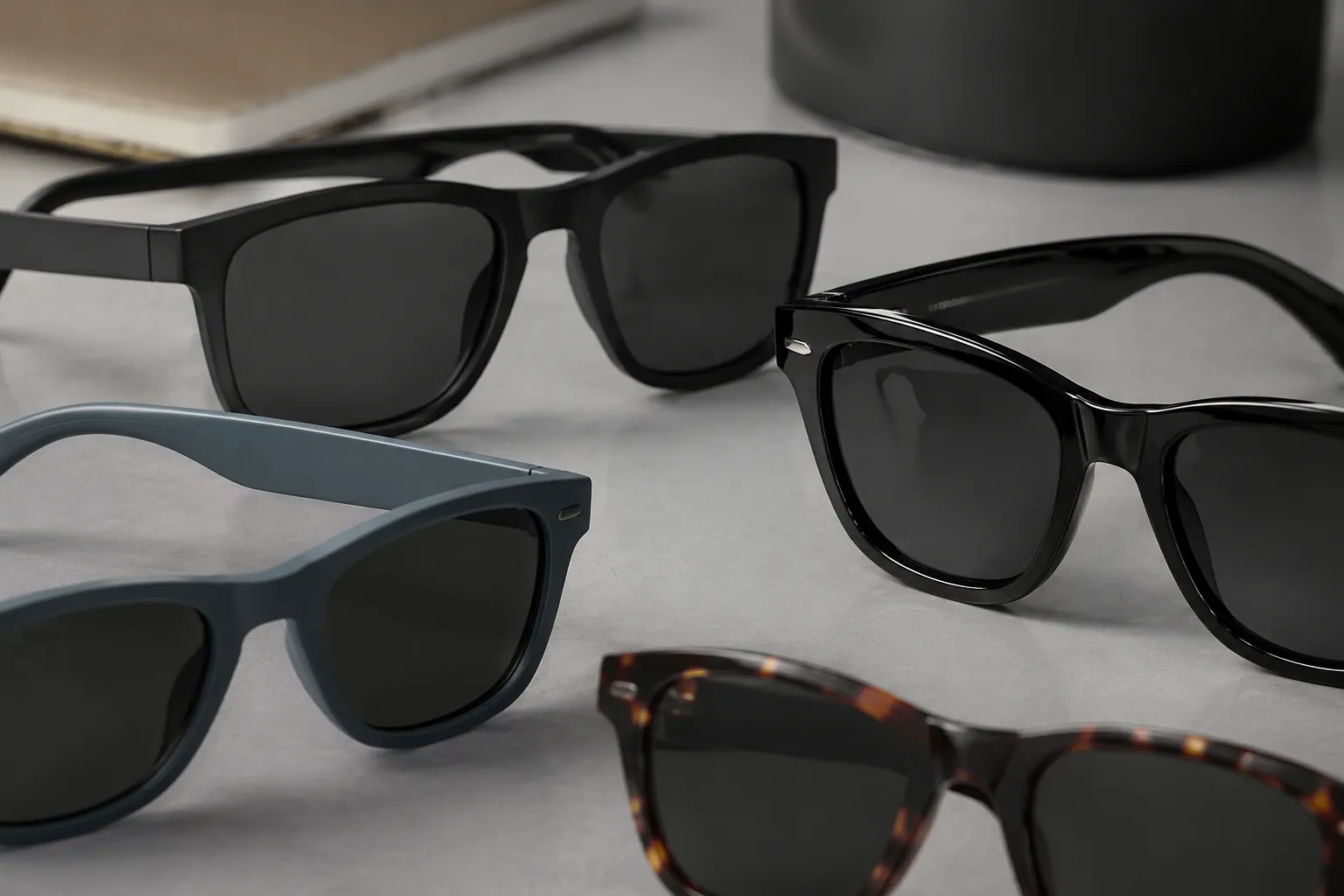
Frame finish is not just a style choice. In retail, it affects how fast a frame shows fingerprints, how it reacts to store cleaners, and whether it still looks saleable after repeated try-ons. The real question is not matte versus gloss. It is how the finish is created on a specific substrate and how the frame will be handled in the channel. This guide compares soft-touch, matte, and glossy finishes across common eyewear manufacturing routes and outlines the checks buyers should require before bulk approval.
Start with material and channel, not the finish name
Pick the finish after you lock the substrate, color, and sales channel. That order matters. 'Gloss' on cellulose acetate is often the polished surface of the base material. 'Gloss' on an injected frame may come from mold polish, a coating, or both. Those routes do not wear the same, so the supplier should state exactly which one is being used.
These are usually the safest starting points:
- Polished acetate for fashion-led frames, transparent colors, laminated patterns, and premium presentation.
- Molded matte on injected frames for high-traffic chain retail, sport, travel retail, and programs where easy upkeep matters more than shine.
- Soft-touch only when grip or tactile feel is part of the product story and the retailer can control cleaners, trays, and storage conditions.
The buyer's key question is simple: is the appearance built into the material, built into the mold, or added later as a coating? That answer predicts most finish risk.
How gloss, matte, and soft-touch are built
Glossy acetate is usually made by sanding and buffing the sheet or machined frame until the material itself takes the shine. On injected frames, gloss may come from a highly polished tool, a clear topcoat, or both. If a coating is involved, ask for the coating system, cure method, and adhesion data from production-equivalent samples.
Matte is usually most durable when the low-sheen look is molded into the part through tool texture rather than added later as a sprayed layer. Spray matte can help with color flexibility or appearance correction, but it brings the same scratch, chip, and adhesion risks as other coatings. Soft-touch is normally a multi-step coating system that uses surface preparation and one or more top layers to create a rubberized feel. It is coating-driven. Because of that, edge coverage, cure control, and chemical compatibility matter more than they do with polished acetate or molded matte.
A supplier should be able to explain which surfaces are coated, which are not, and how adhesion is checked after full cure. Without that detail, finish comparisons are guesswork.
Retail handling comparison
The table below assumes open-shelf sunglasses that shoppers try on, staff clean, and stores return to trays or stands. That setting is tougher than sealed e-commerce stock, so it is a useful screen for early cosmetic complaints.
| Finish | Typical construction | Print visibility | Cleaner tolerance | Typical shelf aging | Main watch-out |
|---|---|---|---|---|---|
| Glossy acetate | Polished substrate with no separate soft-touch layer | High, especially on dark solid colors | Usually good with approved eyewear cleaner and clean microfiber | Prints show quickly; hairline scratches stay visible | Appearance depends heavily on cleaning discipline and tray condition |
| Glossy coated injected | Injected frame with clear or pigmented topcoat | High | Varies by coating chemistry and cure quality | Swirl marks, edge chips, or rub-through can appear if the coating is weak | Do not approve without adhesion and wet-wipe testing on the final color |
| Molded matte | Texture built into the mold or base part | Low to medium | Usually the most forgiving in retail use | High-contact points can burnish smoother over time but often stay acceptable at shelf distance | Check whether burnish changes the look too much on corners and bridge areas |
| Soft-touch | Primed and coated rubberized surface | Low when new | Most sensitive to cleaner choice, skin oil, and heat | Can develop shiny rub zones, darkened oil areas, tack, or edge wear | Validate with the retailer's actual cleaner, tray material, and climate profile |
For many open retail programs, molded matte is the lowest-risk finish on injected frames, polished acetate is the lowest-risk gloss route on acetate, and soft-touch gives the strongest day-one tactile effect with the tightest durability margin.
Fingerprints, cleaners, and chemical resistance decide shelf life
Fingerprint visibility is driven by color, reflectivity, and handling. Dark glossy frames usually show prints first because skin oil sits on a reflective surface. That does not make gloss a bad retail choice. It means the store needs a safe cleaning routine. Clean microfiber and approved eyewear cleaner are one thing. Paper towels, general-purpose sprays, or dusty cloths are another.
Chemical resistance matters more than a single wipe. Some coatings handle standard lens cleaners well; others change sheen, soften, or lose adhesion after repeated contact with alcohol-heavy cleaners, sunscreen, hand cream, or insect repellent. Do not assume a cleaner that is safe for lenses is also safe for every frame finish. Ask the supplier for written cleaner compatibility, then repeat the check with the retailer's actual wipe or spray on production-equivalent samples. If stores use disinfecting wipes or storewide cleaning chemicals, include those too.
Perceived value depends on substrate, color, and price point
Finish adds value only when it fits the substrate and design language. High gloss can make premium acetate look richer because it shows depth in transparent colors, laminations, bevels, and visible wire cores. The same glossy look on a low-quality injected frame can expose parting lines, gate vestige, sink, or inconsistent molding that matte would hide.
Matte usually fits technical, outdoor, sport, or youth styling and hides everyday tray scuffs better than gloss. The tradeoff is simple: matte can flatten the visual depth of crystal or translucent colors. Soft-touch creates a strong first-touch impression and can suit grip-focused or promotional concepts, but it rarely works for programs trying to mimic polished acetate. The finish should support the product story. Not fight the base construction.
Try-ons and decoration put the finish under real stress
Open retail wear concentrates at the bridge, lens rim edges, hinge shoulders, temple tips, and logo zones. Check those first. They take pinching, folding, rubbing, and repeated contact with trays. Gloss usually stays structurally sound but shows micro-scratching faster. Molded matte tends to smooth slightly at contact points. Soft-touch is the most variable because any weak cure, thin edge coverage, or chemical incompatibility shows up early in exactly these areas.
Decoration should be approved on the final finished surface, not on an unfinished sample. Pad printing, hot foil, metal plates, and laser marking can all behave differently once matte or soft-touch layers are added. Ask for decoration adhesion and appearance checks after full cure and after the same wipe or rub testing used for the base finish. On soft-touch in particular, laser engraving can expose a lower layer and create unintended color contrast.
Cost, MOQ, and lead-time logic
Finish changes cost because it changes process steps, yield risk, and approval workload. On injected frames, molded matte is often the simplest route once the mold texture is locked because it avoids a separate spray-and-cure operation. Spray matte and coated gloss add finishing steps and more cosmetic rejection points. Soft-touch usually carries the highest process risk because surface preparation, cure, and edge durability all need tighter control.
On acetate, polished gloss is mainly a labor and surface-quality issue rather than a coating issue. Price the real finish stack early. Ask the supplier to quote each finish as a separate configuration and explain what changes in process, scrap risk, and lead time. Sampling one finish and switching to another after approval is not a small styling change. It resets color review, decoration validation, and cosmetic standards.
Approval checklist before bulk release
Do not release bulk from a single beauty sample. Approve the actual substrate, actual color, actual decoration, and actual cleaning method together. Most finish disputes start because the sample was hand-finished, lightly handled, or judged under better conditions than production stock.
- Request matched samples in each candidate finish on the same frame construction, same base color, and same decoration.
- Ask the supplier to state whether the finish is polished material, molded-in texture, or a coating system, and whether any pretreatment or primer is used.
- Run a simple handling screen that reflects the real channel: dry microfiber rubbing, wet wiping with the retailer's actual cleaner, and repeated placement into the intended tray, pouch, or display.
- Inspect the bridge, outer rim, hinge shoulder, temple tip, and logo area under consistent lighting for gloss shift, rub-through, edge wear, print damage, or tackiness.
- Document pass/fail criteria in the PO or approval sheet, including the allowed cosmetic limit after testing and the compliance documents required for the finished sunglasses.
Compliance should also be checked on the finished product, not only on raw materials. Depending on market, buyers may need conformity evidence to EN ISO 12312-1 for CE-marked sunglasses, ANSI Z80.3 test reports, or AS/NZS 1067 test reports, plus REACH screening for coatings, inks, and adhesives. If the importer or brand requires them, request FDA registration records where applicable and supplier qualification documents such as ISO 9001 or BSCI. Those documents do not replace finish testing, but they do show whether the program is being controlled properly.
Have a custom sunglasses project in mind?
Send us your styles, target market and quantities and we will return a detailed quote with MOQ, lead time and a sample plan.
Get a QuoteWhy source this from Wenzhou with LumiShades
Wenzhou in Zhejiang Province is widely regarded as China’s eyewear manufacturing capital, producing a large share of the world’s sunglasses. That concentration matters to buyers: a deep local supply chain for acetate sheet, hinges, lens blanks, plating and packaging means shorter component lead times, easier color and material matching, and a workforce with decades of eyewear-specific skill. LumiShades has manufactured in this ecosystem since 2009, and our vertical integration — in-house injection molding, acetate cutting, CNC milling, lens tinting, decoration and quality control — means no part of your order is quietly subcontracted to a workshop you cannot audit.
For international buyers, that vertical control translates into accountability. When a single factory owns every step, defects are traced and fixed at source rather than bounced between vendors, and your specifications survive intact from first sample to bulk. For procurement review, buyers can request process records, approved samples, quality checkpoints and project-specific compliance files before placing a bulk order. Required testing and documentation are confirmed against the destination market and product specification rather than assumed from a generic certificate list. Explore our manufacturing capabilities and quality control process to see how this works in practice.
Frequently asked questions
Is soft-touch too risky for hot or humid markets? Not by default, but it should be treated as a validation case, not a standard choice. Ask for production-equivalent samples in the final color and test the actual retailer cleaner, the expected heat or humidity exposure from shipping and store conditions, and post-test checks for tack, gloss change, and edge wear at the bridge, rim, and temples. If the supplier cannot show stable results in writing, keep soft-touch out of the program or limit it to lower-contact channels.
Which finish is safest for black frames in chain retail? Start with molded matte if the frame is injected and will sit on open shelves. It hides fingerprints and tray scuffs better than gloss and avoids the added risk of a soft-touch coating. If the brand needs a gloss look, compare side-by-side samples in the same black material and define the store cleaning method and cosmetic limits before approval. For acetate, polished gloss can still work well, but it needs stricter handling discipline.
Can I add pad printing or metal logo plates on matte or soft-touch frames? Yes, but approve the decoration only after the final finish is fully cured. Ask the supplier what pretreatment, adhesion promoter, or print system is used on that specific surface, then test the decorated sample after the same wipe and handling checks used for the frame itself. For metal plates or inserts, verify pocket fit after finishing because coating build can reduce clearance and cause edge lift.
Does finish choice affect CE, ANSI, or REACH paperwork? Finish choice does not remove the need for compliance on the finished sunglasses. It can change the chemistry that must be screened under REACH because coatings, inks, and adhesives add substances beyond the base material. Ask for conformity evidence to EN ISO 12312-1 for CE-marked products, ANSI Z80.3 for US programs, and AS/NZS 1067 for Australia or New Zealand programs as required by the market, plus FDA registration records where applicable. Raw resin or raw acetate data alone is not enough.
What sample test catches finish problems fastest? Use a short, written retail-use screen on production-equivalent samples: dry microfiber rubbing, wet wiping with the actual retailer cleaner, and repeated in-and-out motion with the planned tray or pouch. Inspect the bridge, outer rim, hinge shoulder, temple tip, and logo zone under consistent lighting and record pass/fail criteria before the supplier ships samples. The fastest way to miss a finish problem is to approve a beauty sample without handling it.
Ready to start?
Explore our sport wrap sunglasses or request a quote — our sales team replies within 12 hours.
Request a Quote