
Buyer Checks for Recycled PET, PC, and Bio-Based Frames
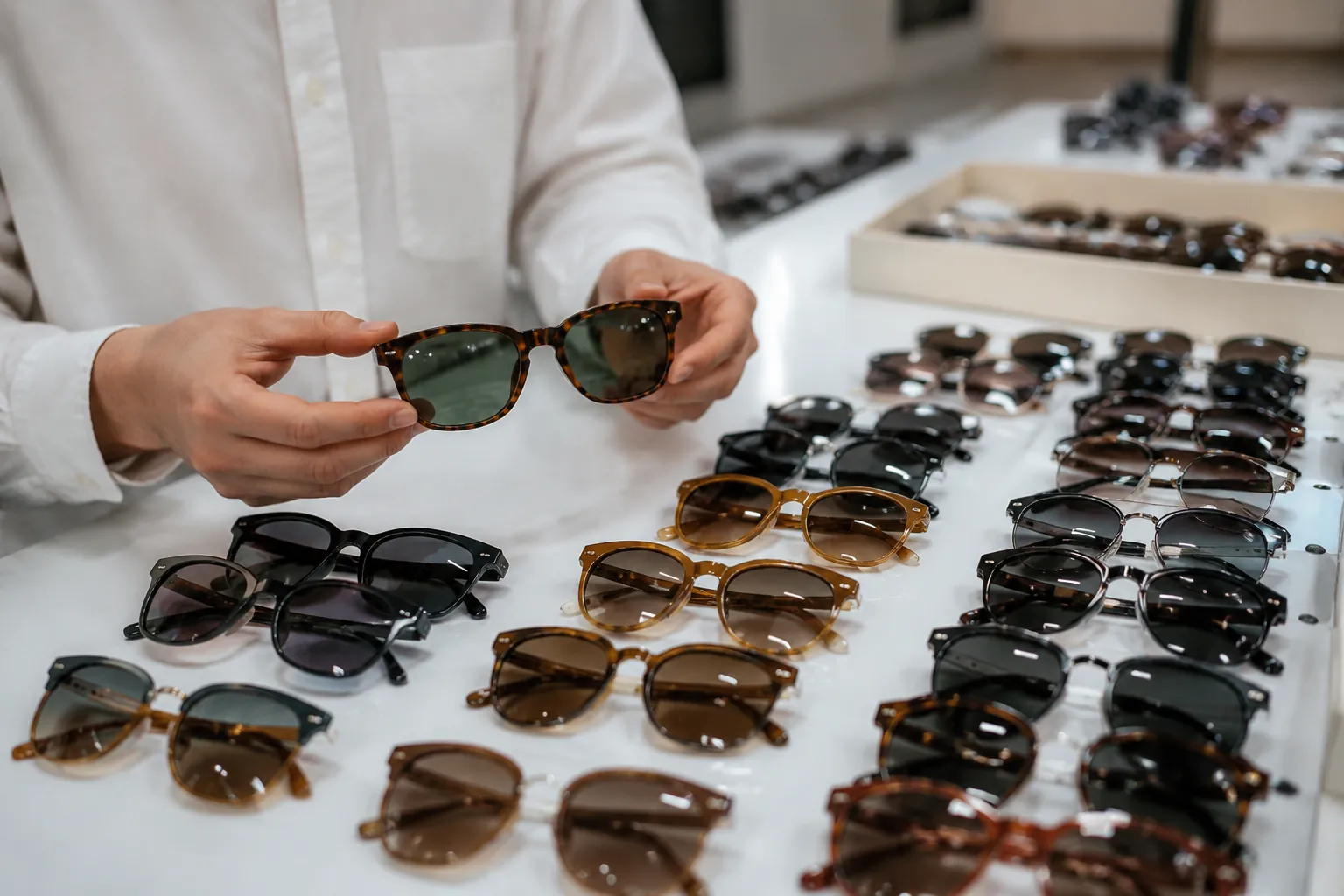
This guide is for brand owners, importers, distributors, and retail buyers assessing alternative frame materials without vague sustainability claims. The focus is factory reality: resin handling, molding stability, shrinkage control, cosmetic yield, decoration compatibility, compliance paperwork, and schedule risk. If you are comparing recycled PET, recycled PC, and bio-based frame options, ask better questions before sampling. Do that early, and you are less likely to discover avoidable limits after artwork approval or bulk deposit. This is written for bulk custom sunglass sourcing, not consumer marketing copy.
Set The Product Target Before The Material Story
Weak quotes often start the same way: a buyer asks for an eco frame before defining the product target. The result is predictable. You get a generic answer, a sample made under favorable trial conditions, and trouble later in production.
Reverse the order. Define the product target first. Then discuss material.
Before a supplier recommends recycled PET, recycled PC, or a bio-based injection grade, lock down the basics: target cost, frame category, finish expectation, color family, compliance market, and reorder volume. A slim fashion sunglass in opaque black at 5,000 pairs is a different job from a wrapped sport style in translucent smoke at 300 pairs.
Ask the supplier to link the material choice to four decisions:
- Frame construction: full-rim fashion, wrapped sport, kids frame, promotional frame, or entry-price giveaway.
- Surface target: matte texture, medium gloss, high gloss, transparent effect, crystal effect, or soft-touch coating if used.
- Claim type: recycled-content claim, bio-based or renewable-feedstock claim, or a narrower claim such as reduced virgin plastic use.
- Commercial scale: sample development, low-volume trial order, or scale pricing at 300, 1,000, and 5,000+ pairs.
If the supplier cannot explain why one material fits that exact combination, the quote is not ready. A capable factory should also tell you what not to do. That matters. For example, it may say recycled PET is workable in an opaque dark color with pad print, but not a good fit for a near-clear glossy fashion frame with strict cosmetic requirements. That is useful pushback, not negativity. It shows process knowledge.
What Usually Changes Between Recycled PET, Recycled PC, And Bio-Based Grades
Buyers do not need a chemistry lesson. They need to know what changes in molding, decoration, and final QC. Start there.
| Material option | Best use case | Main production risk | Finish limitation | Typical buyer check |
|---|---|---|---|---|
| Recycled PET | Lower- to mid-price fashion frames, simpler front shapes, opaque or lightly translucent colors | Lot-to-lot variation in flow, color shift, or haze depending on recycled feedstock consistency and drying control | Near-clear, crystal, or very wet-look gloss finishes are usually harder to keep uniform in bulk | Ask for molded color approval samples and confirmation of how bulk color is controlled by lot |
| Recycled PC | Sport sunglasses, wrapped geometry, or frame shapes that need higher rigidity and impact-oriented performance | Visible flow lines, gate marks, color shift, or cosmetic defects if drying and molding conditions are not tightly controlled | Perfect transparency and premium cosmetic surfaces can be harder to maintain on some recycled grades than on virgin material | Ask how the factory controls drying, warp, and hinge alignment on wrapped styles |
| Bio-based injection resin | Lifestyle frames and brand programs that prioritize renewable-content positioning over maximum finish flexibility | Grade-to-grade variation in shrinkage, decoration adhesion, processing window, and supply availability | Not every grade supports the same polish level, engraving contrast, or print performance as standard petroleum-based plastics | Ask for the exact resin family, the basis of the bio-based claim, and previous production examples in a similar finish |
| Standard acetate reference | Premium fashion looks, rich depth, lamination effects, and polished optical-style aesthetics | Longer machining cycle, higher labor input, and more material waste than injection-molded frames | Not a like-for-like benchmark for the cost, cycle time, or finish behavior of recycled injection materials | Use only as a finish reference if the recycled injection target becomes unrealistic |
In practice, recycled PET is often chosen for a recycled-content story and lower cost barriers. Recycled PC usually fits technical shapes and higher-curvature frames better. Bio-based resins can work, but only if the exact grade has already been tested against your finish and logo process. "Bio-based" alone tells you very little. Get the grade, the claim basis, and proof it has run in comparable conditions.
Bulk Risk Starts With Consistency, Not The First Sample
Most sourcing failures show up after sample approval. Not before.
A supplier can sometimes produce one acceptable prototype from a favorable resin lot, slower trial settings, and extra hand sorting. That proves very little. The real question is whether the result can be repeated in bulk without visible drift.
Start with incoming resin control. A serious factory should explain whether resin is tracked by lot, how it is dried before molding, how opened material is stored, and what reference standard is used for color and appearance approval. If the answer is vague, repeatability risk is high.
In production, consistency problems usually show up in three places:
- Color drift: opaque black and other dark colors are usually easier to control than translucent tea, smoke, olive, amber, or milky crystal tones.
- Surface variation: one lot may take texture or polish cleanly while another shows haze, swirl, streaks, or flow marks more easily.
- Fit variation: front curve, temple alignment, hinge seating, and left-right symmetry can shift when shrinkage is unstable or process control is weak.
Ask sharp questions. What dimensions are checked in process? How often? How is appearance approved during the run? Does the factory use approved limit samples, fixture checks, or other internal controls for alignment and assembly consistency? Specific answers are more credible than broad reassurance.
Also ask whether molding, decoration, and QC are coordinated in-house or split across subcontractors. That affects problem-solving speed. If troubleshooting requires changes to drying conditions, mold settings, surface finishing, or logo application, a fragmented supply chain adds time and communication risk.
Confirm Finish And Decoration Limits Early
With alternative materials, disappointment is often cosmetic. Not structural. A render may look like a standard virgin-resin frame. The quote may assume normal decoration yield. The molded part may behave differently.
Close that gap before artwork approval.
Check these points before confirming the quote:
- Gloss level: ask whether the frame can reach the target gloss without visible haze, especially on wide temple surfaces.
- Transparency: recycled feedstock usually performs more safely in opaque or lightly translucent colors than in near-clear crystal effects.
- Texture performance: matte textures can hide minor surface inconsistency, but some grains can also make flow variation more visible.
- Metal logo plates: confirm local wall thickness and whether insertion or assembly could create sink marks, stress whitening, or cosmetic distortion.
- Pad printing: ask for adhesion testing on the actual substrate and finish, especially for bio-based grades or coated surfaces.
- Laser engraving: verify contrast on the final color because engraving legibility varies by pigment, surface, and resin type.
Decoration method affects yield. Pad printing is flexible and cost-efficient, but weak adhesion on the wrong substrate creates rejects. Laser engraving avoids ink adhesion issues, but contrast and surface quality still matter. Metal logo plates can increase perceived value, yet they also add assembly steps and local stress that some materials handle better than others.
The key question is simple: has the factory run that exact combination of resin, color, finish, and logo process before? Ask for a comparable production sample or a clearly comparable development sample. If the factory has only tested the material in matte black with a laser logo, do not assume the same grade will hold a high-gloss translucent color with pad print at the same yield.
If your brand sells finish first, be stricter during sample validation. If your brand prioritizes alternative-material content and accepts tighter color limits or a less perfect cosmetic surface, your sourcing range is wider.
Separate Compliance From Material Claims
Alternative frame material does not replace standard sunglass compliance. Keep three questions separate: can the finished sunglasses meet market requirements, can the material claim be supported, and can restricted-substance compliance be documented.
For supplier review, keep only verifiable document categories in scope. Common references may include CE EN ISO 12312-1, ANSI Z80.3, AS/NZS 1067, REACH, FDA registration, ISO 9001, and BSCI, depending on the product, market, and supplier profile. These relate to finished-product requirements, restricted substances, quality systems, regulatory registration, or social compliance. They do not automatically prove a recycled-content or bio-based marketing claim.
Request three separate document tracks:
- Finished product compliance for the exact sunglass model, lens category, and destination market.
- Material declaration for the specific resin used on your project, including the exact wording the supplier can support for recycled or bio-based content.
- Chemical compliance support for relevant parts and substances, such as REACH-related declarations where required.
Wording matters. There is a real difference between a claim tied to the frame material and a broad phrase such as eco-friendly product. If packaging or hangtags will state that the frame is made with recycled PET or a bio-based resin, make sure the supplier can support that wording with project-specific material documentation before packaging is printed.
Also ask what supports the claim: a resin supplier declaration, a batch-specific document, or a standing material specification. The more exact the answer, the lower the risk later.
How Alternative Materials Change MOQ, Pricing, And Lead Time
Alternative materials do not change cost through resin price alone. The bigger variables are development time, molding stability, cosmetic yield, decoration compatibility, and sorting labor. That is why a low headline unit price can still become an expensive program.
Ask for scale pricing, not one unit price. Small trial volumes often carry proportionally higher setup cost, color-development cost, and logo-preparation cost. Larger runs usually price better because fixed preparation is spread across more units and production can be planned more efficiently.
Alternative materials can also extend lead time when the project needs:
- Color matching trials on non-standard recycled lots or translucent shades.
- Molding setup adjustment to reduce warp, sink, flow lines, or gate marks.
- Decoration testing for pad-print adhesion, laser contrast, or logo-plate fit.
- Extra QC sorting to maintain cosmetic consistency on visible surfaces.
Ask the supplier to break the quote into major cost elements such as material, molding or frame processing, decoration, packaging, tooling if applicable, and any stated reject allowance or finish-risk assumption. That last point is important. A disciplined factory should say plainly if a demanding finish is likely to lower yield and affect cost or schedule.
For timing, request sample lead time and bulk lead time separately, then ask what assumptions support each one. If the color, resin grade, or decoration method is new to the project, confirm whether trial work is included in the quoted schedule or treated as extra development time.
A Seven-Point Quote Checklist Buyers Should Send
Before requesting final pricing, send a short checklist. It improves quote quality and exposes weak assumptions early. Serious suppliers usually answer faster and more accurately when the brief is specific.
- Name the exact frame material, not just recycled or bio-based. Ask for the resin family or trade description used for sampling.
- State the finish target clearly: matte, medium gloss, high gloss, transparent effect, textured grain, or coated soft-touch finish.
- Define color expectation, including whether lot-to-lot variation is acceptable and whether translucent colors are required.
- List decoration methods: pad print, laser engraving, hot stamp if relevant, or metal logo plate, plus logo position and size.
- Ask what compliance documents apply to the finished sunglasses and which documents support the material claim.
- Request sample and bulk lead time separately, including whether color trials, decoration tests, or additional approvals add days.
- Ask for scale pricing at your target volumes so you can judge whether the material story still works commercially when the order grows.
This kind of brief forces a real answer. It also makes supplier comparison easier because you are judging process understanding, not just unit price. If one supplier answers with clear assumptions, approval points, and lead-time conditions while another only says no problem, the detailed answer is usually the safer one.
Be honest about the target. If your brand needs premium cosmetic perfection, some recycled and bio-based options may not be the right commercial fit for that frame. If your brand can prioritize recycled content, renewable feedstock, or reduced virgin plastic use while accepting stricter color limits and tighter sample validation, these materials can work. Match the material to the frame style, finish target, supportable claim, and reorder plan. That matters more than any sustainability label on a quote sheet.
Have a custom sunglasses project in mind?
Send us your styles, target market and quantities and we will return a detailed quote with MOQ, lead time and a sample plan.
Get a QuoteWhy source this from Wenzhou with LumiShades
Wenzhou in Zhejiang Province is widely regarded as China’s eyewear manufacturing capital, producing a large share of the world’s sunglasses. That concentration matters to buyers: a deep local supply chain for acetate sheet, hinges, lens blanks, plating and packaging means shorter component lead times, easier color and material matching, and a workforce with decades of eyewear-specific skill. LumiShades has manufactured in this ecosystem since 2009, and our vertical integration — in-house injection molding, acetate cutting, CNC milling, lens tinting, decoration and quality control — means no part of your order is quietly subcontracted to a workshop you cannot audit.
For international buyers, that vertical control translates into accountability. When a single factory owns every step, defects are traced and fixed at source rather than bounced between vendors, and your specifications survive intact from first sample to bulk. We back this with 15+ years of experience, shipments to 60+ countries, more than 5 million pairs produced per year and a 98.5% on-time delivery rate. Our certifications — CE EN ISO 12312-1, FDA registration, ANSI Z80.3, AS/NZS 1067, REACH, ISO 9001 and BSCI audit — mean the compliance documentation your market requires already exists. Explore our manufacturing capabilities and quality control process to see how this works in practice.
Frequently asked questions
Can recycled PET frames be made in clear or crystal colors? Sometimes, but this is one of the first areas where risk rises. Recycled PET is usually easier to control in opaque or less demanding translucent colors than in near-clear cosmetic finishes, where haze, flow variation, or color inconsistency can show more easily. Ask the supplier for an actual molded sample in the exact target color, review it under consistent lighting, and confirm that the appearance is repeatable in bulk, not just achievable in one trial sample.
Is recycled PC better than recycled PET for sports sunglasses? Often yes for wrapped or higher-curvature sports styles, because PC-based systems are commonly chosen where rigidity and impact-oriented performance matter more. But the choice still needs to be validated on the actual frame geometry. Ask how the factory controls drying, warp, hinge alignment, gate-mark appearance, and cosmetic consistency on the final design, and request a sample built to the real curvature and lens fit rather than a simplified development piece.
What documents should I request to support a recycled or bio-based material claim? Request a material declaration for the exact resin used on your project and make sure the wording supports the claim you plan to print. Keep that separate from finished-product and regulatory documents such as CE EN ISO 12312-1, ANSI Z80.3, AS/NZS 1067, REACH, or FDA registration, because those do not by themselves prove a recycled-content or bio-based claim. Also ask whether the declaration comes from the resin supplier, a batch-specific record, or a standing specification.
Will alternative materials change MOQ or lead time? They can, especially during development. The material itself is only one variable; color trials, molding adjustments, appearance approval, and decoration testing can all add time or raise the minimum efficient order size for a specific finish. Ask for sample lead time and bulk lead time separately, and ask what assumptions sit behind each one: approved color, tested decoration method, confirmed resin availability, and no extra tooling or process trial beyond the quoted scope.
How do I know if a factory can actually control these materials? Ask process questions that require specific answers. For example: Is resin tracked by lot? How is drying handled and recorded? What appearance standard is used for bulk approval? Which dimensions and assembly points are checked during production? How is decoration adhesion verified on the actual substrate? Can the factory show comparable production samples in the same resin and finish? A supplier that answers clearly on material control, molding control, decoration validation, and in-process QC is usually more credible than one that only confirms the material is available.
Ready to start?
Explore our cat-eye sunglasses or request a quote — our sales team replies within 12 hours.
Request a Quote