
Private-Label Sunglasses for Chain Stores
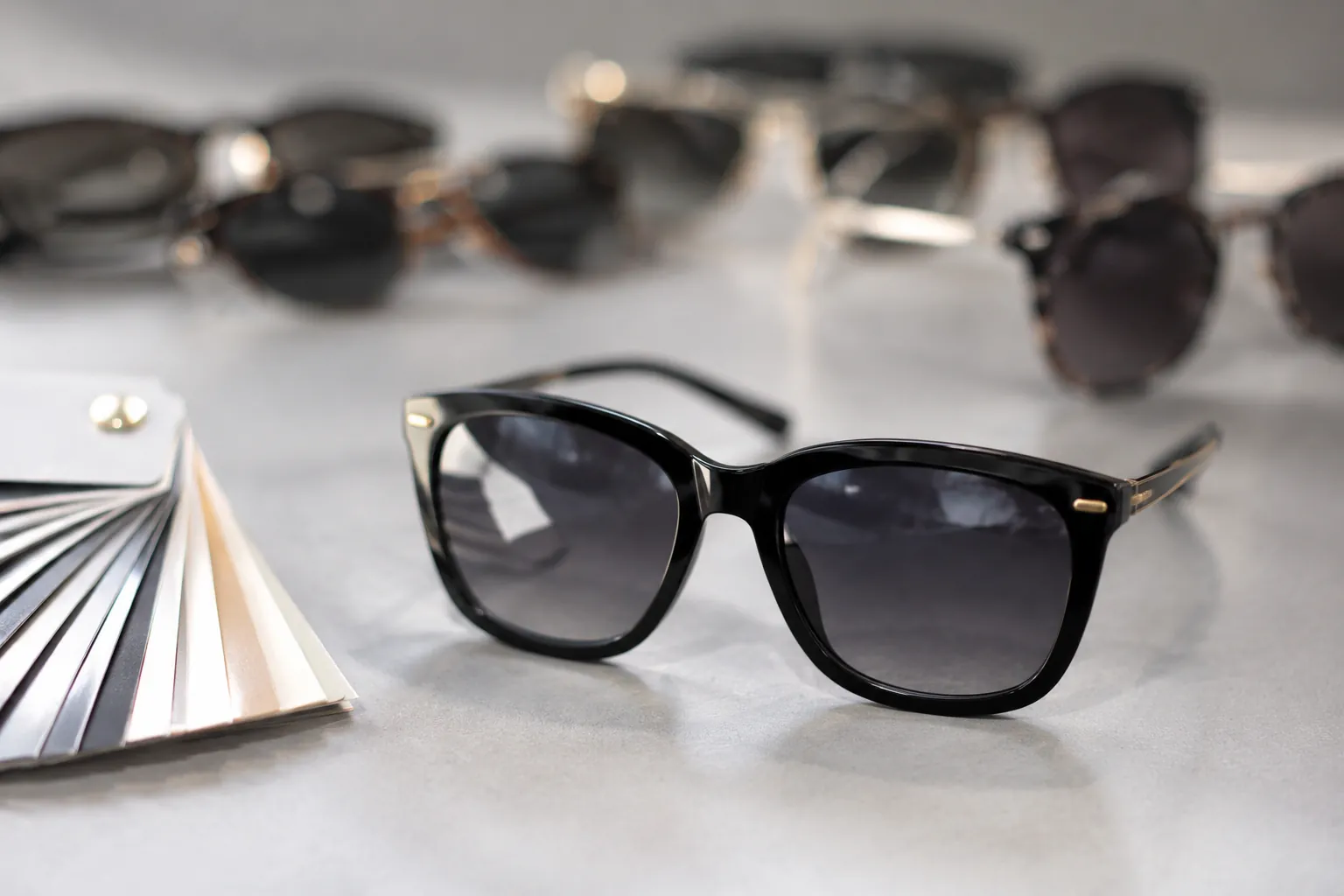
Chain-store sunglasses buying is not just about finding a good-looking frame. The job is to build a range that can repeat: locked molds, approved colors, clear lens requirements, stable packaging, and inspection criteria that every order can be checked against. This guide is for brand owners, importers, distributors, and retail buyers sourcing private-label sunglasses for pilot orders, rollouts, and replenishment. It explains how to brief a supplier on dimensions, materials, decoration, compliance, MOQ bands, pricing inputs, sampling, bulk production, and reorders so each style stays tied to an approved specification.
1) Build the core range before adding newness
Start with SKU architecture, not a mood board. A chain-store sunglasses program needs a small set of frame families with controlled variation in color, lens tint, logo method, and packaging. If every season changes the bridge, hinge, temple shape, and lens curve, you are not building a replenishment program. You are buying short-life novelty stock. That creates more approvals, more risk, and weaker reorders.
A practical launch range often looks like this:
- 2 acetate or acetate-look silhouettes for fashion doors
- 2 injection-molded sport, casual, or value frames for price-sensitive doors
- 1 metal or mixed-material style for a higher-ticket tier
- 2 to 4 lens tints per frame family, instead of a large tint library
- 1 fixed logo position per style to reduce decoration drift
This structure gives the buyer enough shelf variety without multiplying production variables. For example, a black frame with grey lens, tortoise frame with brown lens, crystal smoke frame with green lens, and one seasonal accent can cover many retail needs. More colors may look stronger in a line review. They also add more material matching, lens tint approval, packing control, and inventory work.
Before approving the range, ask the supplier which processes are done in-house and which are subcontracted. Injection molding, acetate cutting, CNC milling, lens tinting, logo decoration, assembly, and final inspection can all affect repeatability. Document who controls each step, which master samples are retained, and how the supplier prevents changes between the first production order and later reorders.
2) Lock molds, dimensions, and fit tolerances early
The mold, or the approved frame construction, is the backbone of a private-label sunglasses program. Do not approve a frame by appearance alone. Before sampling starts, define the key dimensions and acceptable tolerance range. Without written tolerances, "same as sample" means too little.
At minimum, the tech pack should include frame width, lens width, bridge width, temple length, hinge opening angle, front wrap, lens base curve, nose fit, temple tip drop, finished weight, logo position, and packaging dimensions. Tolerance values should be agreed by style and material. Smaller fitting points often need tighter control than larger frame dimensions, but the final range must be confirmed with the factory based on the mold, material, and construction.
Material behavior matters. Acetate can move during cutting, tumbling, polishing, and heat adjustment. Over-polishing can distort the front. Poor heat setting can twist the frame or affect the lens groove. Injection frames can be repeatable once tooling and cycle settings are stable, but buyers should still check for sink marks near hinges, flow lines on wide temples, flash on parting lines, color variation, and whitening around stressed screw holes.
Ask which points are checked at first article inspection and which are checked during bulk production. Good suppliers can name the control points: bridge width after molding or cutting, lens groove condition before lens insertion, hinge alignment after assembly, and temple opening angle before packing. If the supplier cannot explain where the product can drift, do not assume the process is ready for chain-store replenishment.
3) Choose materials for volume, margin, and repeatability
Material choice should follow the retail program. Not personal preference. Acetate, injection plastic, metal, and mixed-material frames behave differently in cost structure, tooling, finishing, durability checks, and repair risk. A chain store may use all of them, but each material needs a clear role in the assortment.
| Material type | Best use | Process notes | Buyer watch-outs |
|---|---|---|---|
| Acetate | Fashion frames and higher perceived value | Cut, CNC-shaped, tumbled, polished, heat-set, and assembled | Color batch variation, polishing distortion, lens groove control, higher labor content |
| Injection plastic | Value, sport, and high-volume chain programs | Molded in cycles, trimmed, assembled, and decorated | Tooling accuracy, sink marks, flash, flow lines, color consistency |
| Metal | Premium, thin-profile, or lightweight retail tiers | Stamped, welded or soldered, plated, adjusted, and assembled | Plating durability, joint strength, screw retention, nose pad consistency |
| Mixed material | Brand-led designs with visible hardware or contrast details | Combines plastic fronts, metal temples, plates, trim parts, or inserts | More components, more fit points, more assembly and inspection risk |
Injection frames are often practical for larger chain-store orders because tooling can support repeat production after the mold is stable. Acetate gives richer color depth and stronger fashion appeal, but it needs more manual process control. Metal can support a higher retail position, yet plating, soldering, screw retention, and pad-arm alignment need close checks. Failures there are easy for shoppers to see.
The right answer is usually not one material for the whole program. A balanced private-label range may use injection frames for entry price points, acetate or acetate-look frames for fashion stories, and one metal or mixed-material style for a premium slot. That spreads design, cost, and production risk across the range.
4) Control colors, lenses, and decoration with references
Color is one of the fastest ways for a reorder to fail. "Transparent smoke," "warm tortoise," and "dark green lens" are not production specifications. Every repeatable color needs a physical master sample, a written description, and an approved finish reference. For frame colors, define gloss level, translucency, pattern density, and whether the color is solid, transparent, sprayed, plated, laminated, or made from patterned sheet. For lenses, define tint family, visible darkness target, mirror coating if used, polarization requirement if applicable, and lens base curve.
For a core chain-store range, a tight color library is easier to manage than a broad one. Common commercial frame colors include black, matte black, tortoise, crystal brown, transparent smoke, and one seasonal accent. Keep lens choices just as controlled: grey, brown, green, gradient smoke, and one mirror option if the price point, packaging, and return policy can support it.
Write lens requirements in performance language, not only color language. Specify UV protection claim, filter category where relevant, visible light transmission range if required, polarization requirement if applicable, lens material, lens thickness, and lens base curve. A casual fashion frame may use a flatter lens than a sport wrap frame. If the lens curve and frame groove do not match, expect lens rattle, stress marks, edge chipping, or uneven seating.
Decoration should match the surface, order size, and brand position. Pad printing is efficient for simple temple logos, but curing and rub resistance must be checked on the actual frame finish. Laser engraving is clean and durable on suitable materials, but it does not produce a full-color logo. Metal logo plates can look premium, yet they add adhesive, riveting, inset, and alignment controls. Hot stamping can work on some fashion finishes, but foil adhesion must be tested on the approved surface. For each method, lock the artwork, size, color, placement tolerance, and abrasion requirement before bulk production.
5) Put QC targets into numbers, samples, and limits
Chain-store buyers need inspection criteria that production and inspection teams can apply. Words like "nice," "premium," and "good quality" do not help at the inspection table. The supplier should know what counts as a critical defect, major defect, and minor defect. Some defects should require rejection every time. For volume retail programs, agree on an AQL plan or another written inspection standard before bulk production starts.
| QC item | What to inspect | Practical target | Why it matters |
|---|---|---|---|
| Frame alignment | Front balance, temple height, left/right symmetry | No visible skew on a flat surface or at normal viewing distance, based on approved inspection method | Misalignment is obvious on shelf and causes fit complaints |
| Hinge action | Open/close tension, screw stability, temple play | Consistent resistance, no loose screws, no grinding feel, no excessive temple play | Loose hinges quickly become returns |
| Lens fit | Gap, rattle, edge chip, groove seating | Even seating with no rattle under agreed handling check | Poor lens fit signals weak assembly control |
| Surface finish | Scratches, bubbles, flash, dust, plating marks | No major visible defects; minor marks only within the approved limit sample or defect standard | Surface flaws reduce perceived value immediately |
| Decoration | Logo position, rub resistance, color match | Placement held to the written tolerance and matched to approved artwork and color reference | Logo drift makes private-label goods look inconsistent |
A strong QC process connects sample approval to bulk inspection. Ask for incoming material checks, first article approval, in-process checks after molding or cutting, assembly checks, lens inspection, decoration inspection, packed-goods inspection, and a final inspection report. Request photos of rejected defects, not only a pass/fail summary. A visual defect library helps both sides apply the same standard on future orders.
Inspect packaging too. A sunglass frame can pass product QC and still fail retail requirements if the polybag scratches the lens, the barcode is wrong, the hangtag is misprinted, the warning label is missing, or the carton count does not match the routing guide. For chain stores, labeling and packing errors can cause receiving delays, chargebacks, and store-level confusion even when the product itself is acceptable.
6) Match compliance files to the destination market
Compliance must be tied to the selling market, product type, lens category, and SKU family. Do not pay for documents that do not apply. Do not assume one generic certificate covers every region. Sunglasses sold into the EU, U.S., Australia, New Zealand, and other markets may need different test standards, labeling, warnings, and chemical documentation.
- CE EN ISO 12312-1 for EU sunglasses safety and performance requirements
- ANSI Z80.3 for U.S. nonprescription sunglasses performance expectations
- AS/NZS 1067 for Australia and New Zealand sunglasses requirements
- REACH for chemical compliance of materials and components where applicable
- FDA registration where applicable for U.S. eyewear-related marketplace requirements
- ISO 9001 and BSCI as factory-system references, not product-performance substitutes
The rule is simple: packaging, labeling, warning copy, and test files must match the destination market. If one style sells into several regions, keep separate compliance packs by market. Ask for actual test reports, registration evidence where applicable, and material declarations linked to the relevant frame and lens family. A logo sheet, catalogue page, or sales brochure is not a compliance file.
LumiShades lists certifications and references including CE EN ISO 12312-1, ANSI Z80.3, AS/NZS 1067, REACH, FDA registration, ISO 9001, and BSCI. Buyers should still verify document dates, issuing bodies, product scope, model references, lens categories, and whether the tested construction matches the order. Do not move a chain-store program to bulk until the compliance route, label copy, claims, and packaging text are approved for the selling market.
7) Use MOQ and price bands to plan pilots and reorders
Many buyers ask for the lowest unit price first. Ask a better question: which order band fits the selling plan? Unit price depends on material, mold use, color count, lens type, polarization, decoration method, packaging, inspection level, and forecasted repeat volume. A custom case, mirror lens, metal logo plate, low-run color, or extra compliance test can change landed cost more than the frame shape itself.
For LumiShades, MOQ and pricing should be confirmed against the current quotation for the exact frame, lens, decoration, and packaging specification. If the current program uses an MOQ of 50 pairs per design and price breaks at 300, 1000, and 5000+ pairs, the ladder can help buyers test styles, scale winners, and avoid overbuying weak performers. Treat large-volume prices as quote-specific, not universal. They depend on the approved specification and order conditions.
| Order band | Best use | Cost behavior | Planning note |
|---|---|---|---|
| 50 pairs/design | Sample selling, boutique test, buyer presentation | Highest unit cost because setup and handling are spread over few units | Use for validation, not margin optimization |
| 300 pairs | Regional trial or seasonal launch | Better setup amortization and a more realistic production read | Keep colors limited so sell-through results are readable |
| 1000 pairs | Core replenishment SKU | Lower cost potential if the spec is stable and production is efficient | Requires locked spec, approved samples, and clearer demand forecast |
| 5000+ pairs | Chain-wide best-seller | Best cost potential when tooling, materials, and packaging are already controlled | Use for proven styles with stable sell-through and approved reorder files |
Do not judge price only by the first quote. A low unit price can become expensive if the frame has a high reject rate, unstable color, weak hinge performance, slow approval cycle, or packaging errors. For chain stores, real cost includes rework, delayed floor sets, chargebacks, returns, freight changes, and lost reorder timing. The best quote supports the full retail program, not only the first purchase order.
8) Control sampling, bulk timing, and reorder discipline
Lead time is reliable only when the specification is stable. LumiShades sample and bulk timelines should be confirmed in the current quotation because timing depends on mold status, material availability, decoration method, packaging, compliance review, and order quantity. Any quoted timeline means little until the buyer locks the frame, colors, lens, decoration, packaging, and destination-market requirements.
A practical sourcing rhythm is:
- Approve base shape, fit, and key dimensions first
- Confirm color chips, lens tint, and decoration method second
- Review focused sample variants instead of every possible color
- Lock QC criteria, packaging, barcode, labeling, and compliance files before bulk
- Keep one approved master sample set and one signed specification file for every repeat order
Use the sample stage to catch expensive problems: lens haze, temple tension, bridge comfort, hinge looseness, logo placement, finish gloss, barcode position, label copy, and carton fit. Once bulk starts, every change adds delay risk. A small temple logo move may require a new fixture. A lens tint change may require a new approval sample. A packaging change may affect carton quantity, shipping cube, retail display, and routing-guide compliance.
The best private-label chain programs are disciplined. Same frame family. Same tolerances. Same logo location. Same color master. Same carton count. Same barcode logic. When a style sells, do not keep changing it unless sales data, return data, or compliance requirements prove there is a problem. Keep the mold, material reference, lens specification, decoration process, packaging file, and inspection standard unchanged so reorders stay comparable and easier to control.
Have a custom sunglasses project in mind?
Send us your styles, target market and quantities and we will return a detailed quote with MOQ, lead time and a sample plan.
Get a QuoteWhy source this from Wenzhou with LumiShades
Wenzhou in Zhejiang Province is widely regarded as China’s eyewear manufacturing capital, producing a large share of the world’s sunglasses. That concentration matters to buyers: a deep local supply chain for acetate sheet, hinges, lens blanks, plating and packaging means shorter component lead times, easier color and material matching, and a workforce with decades of eyewear-specific skill. LumiShades has manufactured in this ecosystem since 2009, and our vertical integration — in-house injection molding, acetate cutting, CNC milling, lens tinting, decoration and quality control — means no part of your order is quietly subcontracted to a workshop you cannot audit.
For international buyers, that vertical control translates into accountability. When a single factory owns every step, defects are traced and fixed at source rather than bounced between vendors, and your specifications survive intact from first sample to bulk. We back this with 15+ years of experience, shipments to 60+ countries, more than 5 million pairs produced per year and a 98.5% on-time delivery rate. Our certifications — CE EN ISO 12312-1, FDA registration, ANSI Z80.3, AS/NZS 1067, REACH, ISO 9001 and BSCI audit — mean the compliance documentation your market requires already exists. Explore our manufacturing capabilities and quality control process to see how this works in practice.
Frequently asked questions
What is the safest way to start a chain-store private-label sunglasses program? Start with 3 to 5 core frame families, controlled colorways, 2 to 4 lens tints per style, and one approved logo method per frame. Before placing a scale order, approve the fit, lens specification, decoration, packaging, barcode, destination-market compliance files, and defect standard. Use the first production order to validate sell-through and return feedback before expanding colors or quantities.
How many colorways should I launch per sunglasses style? Keep colorways limited enough that sales results are readable. A practical starting point is a small set of commercial colors such as black, tortoise, transparent smoke, crystal brown, and one seasonal accent. Each colorway should have a physical master sample, written finish description, approved lens pairing, and reorder reference.
What tolerances should I include in a sunglasses tech pack? Include frame width, lens width, bridge width, temple length, hinge opening angle, front wrap, lens base curve, nose fit, temple tip drop, weight, logo position, and packaging dimensions. Do not rely on generic tolerance language. Agree on tolerance values with the supplier by material and construction, then require first article checks and bulk inspection against the approved sample and signed spec.
Which decoration method is best for private-label sunglasses? Choose the method based on surface material, brand look, order quantity, and durability requirement. Pad printing is efficient for simple logos, laser engraving is durable on suitable surfaces, metal logo plates create a premium look but add assembly controls, and hot stamping works only when foil adhesion is proven on the approved finish. Always test placement, color, rub resistance, and adhesion before bulk.
How do I know if the price is competitive? Compare quotes only after the full specification is the same: frame material, mold status, lens type, polarization, coating, decoration, packaging, compliance scope, inspection level, order quantity, and payment terms. Ask for price breaks by volume and confirm what changes at each band. A lower unit price is not better if it creates higher rejects, late shipments, chargebacks, or weak reorder consistency.
Which compliance documents should I ask for? Ask for market-linked files for the exact product family. Relevant documents may include CE EN ISO 12312-1 for the EU, ANSI Z80.3 for U.S. nonprescription sunglasses, AS/NZS 1067 for Australia and New Zealand, REACH declarations where applicable, and FDA registration where applicable. ISO 9001 and BSCI can support factory evaluation, but they do not replace product test reports.
How long should samples and bulk production take? Confirm sample and bulk lead times in the current quotation because timing depends on mold availability, material sourcing, lens type, decoration, packaging, compliance review, and quantity. Treat any timeline as conditional until the specification, color masters, artwork, label copy, packaging, and inspection standard are approved. Late changes to logo position, lens tint, or packaging can reset the schedule.
Ready to start?
Explore our round sunglasses or request a quote — our sales team replies within 12 hours.
Request a Quote