
Low-MOQ Private Label Sunglasses That Look Premium
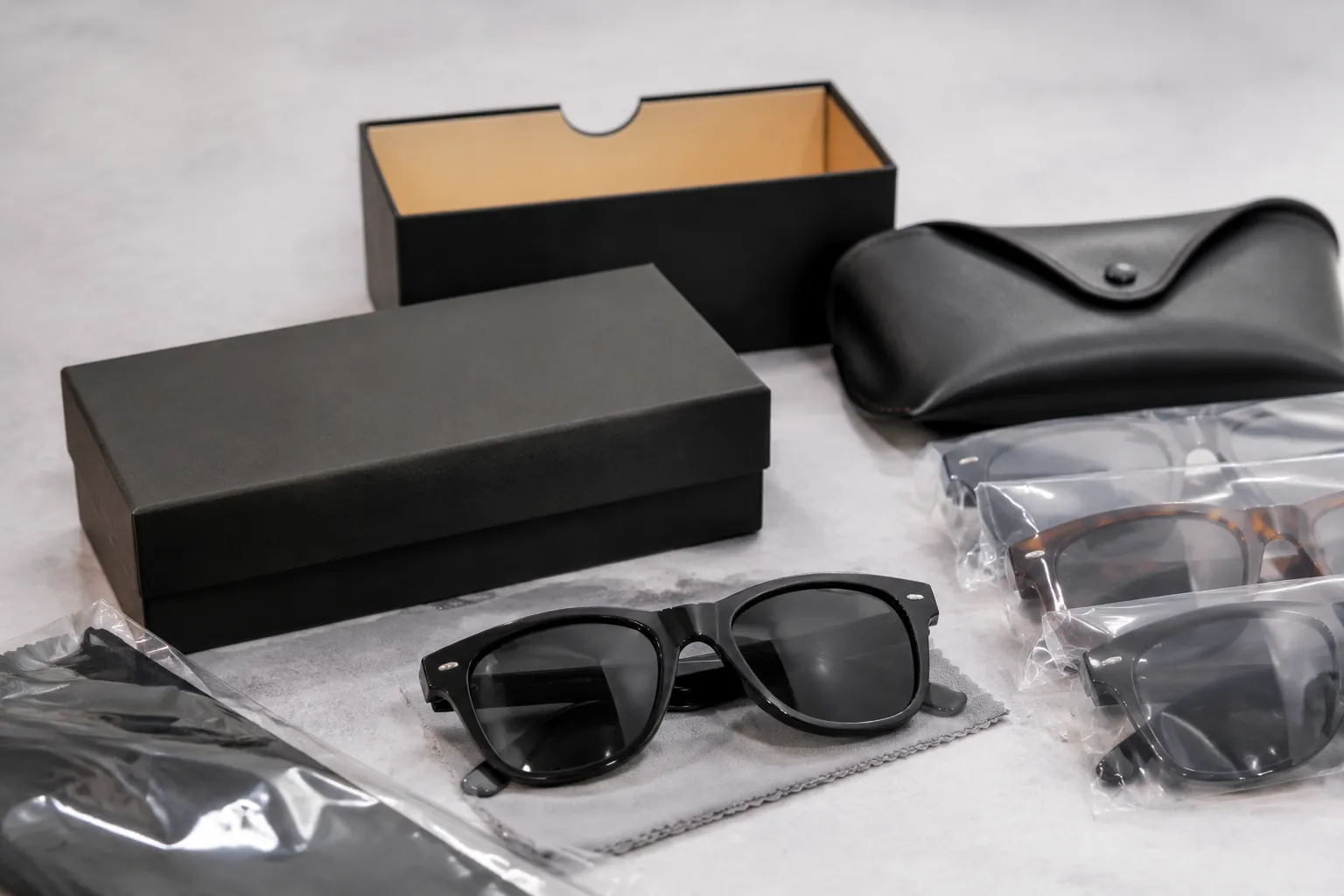
This guide is for brand owners, importers, distributors, and retailers who want private label sunglasses to look premium without committing to large production runs. At low MOQ, the result depends less on the logo file and more on fit: the branding method has to suit the frame material, construction, and QC plan. That is the real buying question. Which customization choices stay durable, look precise, and still make commercial sense at lower volumes? Get that right, and a low-MOQ program looks retail-ready. Get it wrong, and it looks improvised.
Start with the right decision framework
Low-MOQ branding is not mainly a logo decision. It is a manufacturing decision. At lower volumes, the most reliable premium result usually comes from decoration methods that work with existing molds, standard temple constructions, and established finishing processes. Less re-engineering means lower cost, shorter lead times, and better consistency.
That does not mean low-MOQ programs have to look basic. It means buyers should separate visible customization from structural customization. Visible customization includes logo application, color selection, lens tint, and packaging. Structural customization includes new molds, revised temple geometry, new hinge structures, or custom metal insert dimensions. Structural changes add development work. They also add approval risk and more inspection points.
In practical terms, buyers should make decisions in this order:
- Choose frame material first: injection-molded plastic or acetate.
- Choose a proven frame construction second: temple thickness, hinge type, and available logo area.
- Choose logo location third: outer temple, inner temple, lens corner, or packaging.
- Choose decoration method fourth: pad printing, laser engraving, or metal logo plate.
- Check compliance impact before approving artwork, especially lens category, tint, and required product markings for the destination market.
That order matters because each step limits the next one. A thin temple will not support the same insert strategy as a thicker acetate temple. A high-gloss surface makes print variation easier to see. A dark lens chosen for style still has to meet the target market standard. Buyers who start with the logo often approve branding that looks fine in a rendering but weak on the actual frame.
Which branding methods look premium at low MOQ
Not all decoration methods create the same result. Some look strong in a mockup but less convincing in hand. Others are quieter and hold up better through assembly, cleaning, packing, and daily wear.
| Branding method | Typical MOQ fit | Typical setup logic | Premium signal | Main trade-off |
|---|---|---|---|---|
| Pad printing | Strong fit for low MOQ | Low setup complexity; requires artwork preparation and positioning control | Clean when the logo is simple and correctly sized | Can wear faster on high-contact outer temple areas |
| Laser engraving | Strong fit for low MOQ | No ink; result depends on how the material reacts to engraving | Subtle, integrated, premium-looking | Contrast varies by color, gloss, and material composition |
| Metal logo plate | Possible at low MOQ if the factory already supports the size and placement | Works best with existing plate dimensions and established fitting process | Strong premium cue on the outer temple | Alignment and flushness must be controlled carefully |
| Molded-in logo | Usually poor fit for low MOQ | Often requires mold revision or a dedicated insert solution | Permanent and scalable for repeat programs | Higher development cost and longer approval cycle |
At low volumes, three methods do most of the useful work: pad printing, laser engraving, and metal logo plates. Pad printing is the easiest option for inside temple branding, model codes, country-of-origin marking, and compact logos. It works well. But keep the artwork realistic. Fine strokes, tiny reverse text, and oversized logos expose variation fast.
Laser engraving often gives the cleanest premium impression for the least complexity, especially when the brand wants a restrained look. On acetate or selected coated parts, it can read as part of the product rather than a decorative add-on. But the result depends on the substrate. On dark glossy acetate, engraving may look elegant but low-contrast. On lighter or more matte surfaces, legibility is usually better.
Metal logo plates cost more and demand tighter assembly control, but they can raise perceived value quickly. A small plate placed consistently near the hinge often looks better than a large outer-temple print. The risk is obvious. If the plate is not level, centered, or flush, the frame looks cheap immediately.
Match the branding method to the frame material
Material determines what will hold, what may shift, and what will still look sharp after assembly and packing. This is not just a design question. It affects yield, rework, and long-term appearance.
Injection-molded frames are efficient for commercial programs and can produce consistent results when surface quality is stable. They take pad printing well if the surface is properly prepared and the finish is uniform. They can also accept metal logo plates, but only if the temple structure supports the operation. If the wall is too thin or flexible, pocketing for an insert can weaken the section or leave the plate sitting unevenly. Surface variation on lower-cost molded frames can also soften print edges, especially on very glossy dark colors.
Acetate usually carries higher perceived value because of its depth, polish, weight, and machined finish. It also supports laser engraving, CNC detailing, and cleaner edge work. On acetate, buyers often get better-looking metal insert results because the temple can be machined and finished more precisely. Small details matter here: edge polish, plate flushness, hinge alignment, and left-right symmetry.
- Pad printing on injection plastic is efficient, but surface preparation matters because contamination can reduce adhesion.
- Pad printing on acetate often looks better after final polishing and cleaning, especially for inner temple text.
- Laser engraving on acetate works best for subtle branding rather than large marks that need strong contrast.
- Metal plates on acetate often look better than on very thin molded temples because the material gives better support for pocketing and fit.
- Molded-in branding usually makes commercial sense only when the same design will repeat at higher volume over time.
Buyers should also think about how the material behaves during assembly and use. A logo plate that sits securely in a rigid acetate temple may behave differently in a more flexible injection temple. The premium look comes from matching the branding method to the substrate. Not forcing one idea onto every frame type.
The cheapest way to look more expensive
Low-MOQ buyers often spend in the wrong place. They push for a structurally unique frame too early, then cut spend on the details that customers actually notice. That usually makes the project harder to manage without making the product look better.
A better approach is to keep the base frame close to a proven construction and invest in the details that create perceived value in hand. In most low-volume programs, the strongest value stack looks like this:
- Use an existing mold or an acetate style the factory already produces well.
- Add one controlled outer temple brand point by laser engraving or a standard metal plate process the factory already runs.
- Keep inner temple branding crisp, aligned, and compliant for the target market and importer records.
- Select lens tint and frame color carefully so the product looks deliberate rather than generic.
- Upgrade packaging only after the product itself reads premium.
This works because premium-looking eyewear is usually restrained. A small engraved mark or compact metal plate near the hinge often creates more value than multiple large logos. It also works because every extra branding operation adds handling, inspection, and more chances for inconsistency. At low volumes, that complexity does not pay for itself.
The goal should not be the lowest theoretical ex-works price. It should be careful spending on the one or two details that move perceived value the most, while avoiding custom features that create hidden development work and avoidable quality risk.
Lead times, setup costs, and where orders slow down
On low-MOQ sunglasses, delays usually come from unresolved specifications and repeated approvals, not from basic factory capacity. Most competent factories can decorate and assemble a simple private label order efficiently once the product definition is locked. Orders slow down when buyers keep changing artwork, insert dimensions, packaging requirements, or lens specifications after sampling starts.
Lead times vary by factory, season, and component availability, so buyers should ask for a written schedule covering sample preparation, approval points, bulk production, and shipment readiness. The most useful question is not "What is your standard lead time?" Ask this instead: "What exactly could delay this program once sampling starts?" That forces the supplier to name real dependencies.
The usual bottlenecks are predictable:
- Artwork detail too fine for the process. Pad print artwork with thin strokes, small counters, or long temple text often needs revision before it can be reproduced cleanly.
- Metal plate changes after sample stage. A plate revision can trigger another fitting test, another appearance approval, and another assembly check.
- Temple text corrections. Importers often discover late that origin marking, model reference, size, or internal traceability information is missing or incomplete.
- Late lens changes. A tint or lens-specification revision can affect appearance approval and may require the factory to reconfirm market suitability.
There is simple tolerance logic behind these delays. Premium-looking assembly depends on repeatable logo placement, even spacing, clean text, and pair-to-pair consistency. So lock the final logo file, target market, decoration location, and required temple information before sample production starts.
Compliance details that affect branding choices
Branding and compliance overlap on sunglasses. Buyers often treat them as separate workflows. They are not. The connection shows up in lens specification, temple markings, and decorative components. A private label program can look premium and still fail commercially if the product is not specified and documented correctly for the destination market.
Relevant references may include CE EN ISO 12312-1 for applicable sunglasses requirements in Europe, ANSI Z80.3 for the United States market context, AS/NZS 1067 for Australia and New Zealand, and REACH for material restrictions that can affect coatings, inks, and metal finishes. Depending on the supply chain structure and sales channel, buyers may also request evidence of FDA registration where relevant to the supplier's regulatory profile, as well as management and social compliance records such as ISO 9001 and BSCI. These are not interchangeable. None should be claimed without documentation.
Three issues show up repeatedly in private label orders:
- Lens choice made without market review. A fashionable dark tint may still need to align with the destination market's applicable standard and intended use.
- Temple text incomplete or poorly planned. Buyers often forget origin marking, model reference, or internal traceability information needed for import control and after-sales support.
- Decorations that complicate inspection. Large lens logos or crowded temple layouts can make visual QC harder and reduce consistency.
REACH matters more than many first-time buyers expect because inks, paints, coatings, and plated decorative parts all create a documentation requirement. If the program uses a metal plate or special finish, ask early what the base material and finish system are, and request the supporting compliance documents before bulk approval. Simple rule: decide the sales market before finalizing the lens and branding layout.
How to verify a supplier before you approve branding
At low MOQ, buyers often focus on price and skip verification. That is a mistake. Premium-looking eyewear depends more on process control than on a polished sales presentation. Before approving branding, ask the supplier to show what it can document, what it can repeat, and what it will inspect before shipment.
A practical supplier check should cover four areas:
- Process fit: confirm whether the requested branding method is already part of the supplier's normal production, not an experimental add-on.
- Material and finish records: request compliance documentation relevant to the frame, lenses, coatings, inks, and metal components.
- System credibility: if the supplier claims ISO 9001, BSCI, or FDA registration, ask for current evidence and verify that the claim is relevant to the transaction.
- Sample-based proof: ask for approval samples that show the exact branding position, text layout, lens tint, and finish you expect in bulk.
Buyers should also ask to see the supplier's QC checkpoints for logo position, print adhesion, hinge alignment, symmetry, and cosmetic appearance. If the supplier cannot explain how those points are controlled, consistent premium output is unlikely. Documentation does not replace physical sample review, but it does help separate real manufacturing capability from unsupported claims.
A practical low-MOQ branding recipe
If the goal is a premium result without unnecessary tooling cost, the safest formula is discipline, not complexity. For a first low-MOQ order, buyers usually get the best outcome by limiting customization to the areas with the highest visual return and the lowest structural risk.
A strong low-MOQ specification usually looks like this:
- Frame: proven injection-molded or acetate shape with no new mold requirement.
- Outer branding: one small laser logo or one metal plate only if the factory already has a stable process for that size and placement.
- Inner branding: pad-printed brand name, model code, origin information, and required product details.
- Lens: one commercially sensible tint already reviewed against the destination market requirement.
- QC focus: logo position, print durability, plate flushness, hinge fit, lens consistency, and pair symmetry.
This approach works because it concentrates budget on the parts the end customer notices in hand: temple detail, finish quality, and consistency from pair to pair. It also fits how most established factories operate, where molding or acetate machining, lens fitting, decoration, assembly, and QC are easier to manage when the specification is clear and controlled.
Premium at low MOQ is realistic. But it rarely comes from adding more. It usually comes from choosing one branding method that suits the material, keeping the logo restrained, checking compliance early, and controlling execution tightly enough that every pair looks like it belongs to the same product line.
Have a custom sunglasses project in mind?
Send us your styles, target market and quantities and we will return a detailed quote with MOQ, lead time and a sample plan.
Get a QuoteWhy source this from Wenzhou with LumiShades
Wenzhou in Zhejiang Province is widely regarded as China’s eyewear manufacturing capital, producing a large share of the world’s sunglasses. That concentration matters to buyers: a deep local supply chain for acetate sheet, hinges, lens blanks, plating and packaging means shorter component lead times, easier color and material matching, and a workforce with decades of eyewear-specific skill. LumiShades has manufactured in this ecosystem since 2009, and our vertical integration — in-house injection molding, acetate cutting, CNC milling, lens tinting, decoration and quality control — means no part of your order is quietly subcontracted to a workshop you cannot audit.
For international buyers, that vertical control translates into accountability. When a single factory owns every step, defects are traced and fixed at source rather than bounced between vendors, and your specifications survive intact from first sample to bulk. We back this with 15+ years of experience, shipments to 60+ countries, more than 5 million pairs produced per year and a 98.5% on-time delivery rate. Our certifications — CE EN ISO 12312-1, FDA registration, ANSI Z80.3, AS/NZS 1067, REACH, ISO 9001 and BSCI audit — mean the compliance documentation your market requires already exists. Explore our manufacturing capabilities and quality control process to see how this works in practice.
Frequently asked questions
What is the best branding method if I only need 50 to 100 pairs? For most first orders, start with pad printing or laser engraving. Use pad printing for inner temple text, model codes, and origin marking because it is cost-efficient and easy to approve visually. Use laser engraving when the frame material supports it and you want a more integrated look, especially on acetate. Before deciding, ask the supplier for two things: an approval sample with your exact artwork and a clear statement of where the logo will be applied. If you are considering a metal logo plate, confirm that the factory already runs that plate size and placement on a similar temple construction. If not, low MOQ can become slower and less predictable.
Do metal logo plates require custom tooling? Not always. Some factories already have standard plate sizes, pocket dimensions, and fitting methods that can be used without developing a new solution. Do not assume that is the case. Ask specific questions: Is the plate size already standard? Is the temple thickness sufficient for that insert? Is the pocket made by an established process on this frame? What approval sample will show plate flushness and alignment? If those answers are vague, treat the plate as a development item, not a simple decoration choice.
How much should I customize on my first private label order? Keep the structure standard and customize the visible details. A practical first order usually means choosing an existing frame shape, then customizing logo application, frame color, lens tint, and packaging. That approach lets you judge quality, branding accuracy, and market response before spending on new molds or exclusive hardware. Before approving production, make sure the sample confirms five points: logo location, inner temple text, lens appearance, finish quality, and the compliance plan for the destination market.
Can branding choices affect compliance? Yes. Branding choices can affect the space available for required temple information, whether lens markings remain clear, and what materials or finishes need supporting documentation. Decorative parts such as metal plates, coatings, inks, and paints may also need to align with REACH-related material controls. Confirm the destination market first, then review the product against the applicable framework such as CE EN ISO 12312-1, ANSI Z80.3, or AS/NZS 1067. Ask the supplier for the exact marking layout and the relevant compliance documents before bulk approval, not after shipment booking.
What usually delays low-MOQ sunglass orders? The most common delays are late artwork revisions, logo details that are too fine for the chosen process, changes to metal insert specifications after sampling, missing temple text, and last-minute lens changes. Buyers can reduce delay risk by locking four items before samples start: the final logo file, the exact branding position, the destination market, and the required product markings. It also helps to request a written approval flow that shows who signs off artwork, samples, compliance documents, and bulk production. That turns a vague lead-time promise into a process you can manage.
Ready to start?
Explore our square sunglasses or request a quote — our sales team replies within 12 hours.
Request a Quote