
Polarized vs Non-Polarized Lenses by Channel
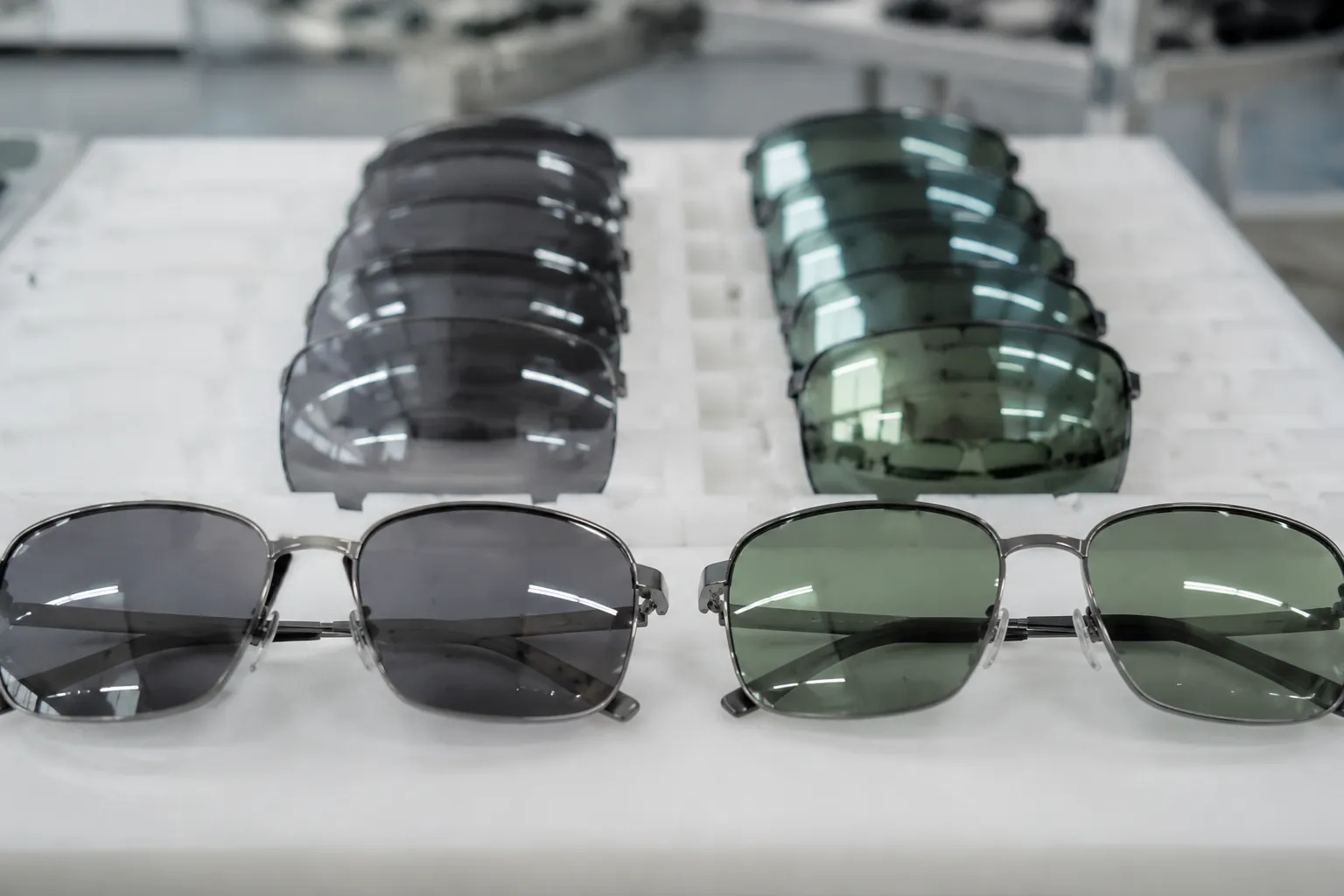
Wholesale buyers do not need a theory lesson. They need to know which lens type fits each channel, what it costs, and where it helps or hurts margin. Polarized lenses reduce reflected glare in the right use cases, but they are not the default for every program. For retail, promo, travel, and sports assortments, the right answer depends on price point, expected use, production tolerances, and how the product will actually be sold.
What polarization changes
Polarization is an optical filter that reduces horizontally reflected glare from water, asphalt, glass, snow, and chrome. Standard non-polarized lenses can cut brightness, but they do not block reflected glare in the same way. That is why drivers, anglers, boaters, and outdoor travelers notice polarized lenses quickly. The view looks calmer. Reflections are easier to handle.
For a buyer, the question is simple: does the channel benefit enough from that glare reduction to justify the added cost and explain the feature at shelf level? If the shopper is buying fashion-first sunglasses, event giveaways, or low-price basics, the extra cost may not pay back. If the program targets travel, driving, fishing, boating, or premium lifestyle retail, polarized lenses can support a stronger value story because the benefit is visible and easy to explain.
Lens color is separate from polarization. Gray lenses are common when neutral color perception matters. Brown and amber are often chosen for stronger contrast in mixed light. Green sits between the two. None of those tints determines whether a lens is polarized. Treat tint and polarization as separate choices. That keeps the spec aligned with the channel and the end use.
Manufacturing changes too. In many constructions, a polarized film is laminated inside a multi-layer lens stack; in others, the polarization is built into the lens material itself. Either way, process control matters. Alignment, flatness, haze, surface defects, and optical consistency all need close checks. Small errors show up fast in use.
Channel-by-channel decision framework
The right lens choice depends on where the product will sell and what the shopper expects to pay. A retail display beside swimwear is not the same as a promo order for 10,000 event units. Use the channel, not the trend. The wrong choice usually shows up later as slow sell-through, margin pressure, or complaints about value.
| Channel | Best lens choice | Why it wins | Risk if you choose wrong |
|---|---|---|---|
| Retail fashion | Mixed, with polarized as the premium tier | Creates a clear value ladder and supports a higher ticket price on hero styles | All-polarized assortments can overprice basic fashion frames and narrow color options |
| Promotional | Non-polarized | Lower landed cost, simpler quoting, and better quantity for branded giveaways | Polarized cost can reduce units, pack-outs, or decoration flexibility |
| Travel / driving | Polarized | Glare reduction is easy to demonstrate and easy to explain | Non-polarized can feel generic against competing travel SKUs |
| Sports / outdoor | Polarized for water and road use; mixed use for cycling, snow, and screen-heavy programs | Strong fit for fishing, sailing, road trips, and general outdoor recreation | Polarized can interfere with some displays, instrument panels, and user preferences |
Retail buyers should think in tiers. Entry SKUs can stay non-polarized, especially when frame color and shape do most of the work. Mid and upper tiers can carry polarized lenses as the feature that supports a higher price. Promo buyers usually want the opposite: one clean spec, low cost, predictable delivery, and little explanation. Travel and outdoor channels usually support a polarized story better than most categories because the use case is concrete. Sports needs more discipline. "Outdoor" does not automatically mean "polarized."
A practical rule: if the shopper can notice glare relief quickly, polarization has a good chance of selling. If the lens is mainly there to match a logo color, an outfit, or an event theme, polarization usually adds less value.
Cost logic and MOQ planning
At LumiShades, MOQ starts at 50 pairs per design. That matters because lens choice changes the economics early. Non-polarized programs are easier to launch at low volume because the lens build is simpler and the inspection burden is lighter. Polarized programs make more sense once the order size can support the added material, lamination control, and QC time.
Price ladder matters as much as lens spec. Small runs usually carry higher unit cost because setup, color matching, and decoration are spread across fewer pairs. As volume rises, pricing typically improves at 300, 1,000, and 5,000+ pairs. Actual pricing depends on frame material, lens spec, decoration, and packing. Polarized lenses generally cost more than comparable non-polarized lenses because the build is more complex and QC is tighter.
That cost logic should drive assortment decisions. If the target retail is low and the buyer needs quantity, non-polarized keeps the item inside budget. If the target retail is premium or the consumer benefit is obvious, polarized can support a higher selling price and help protect margin. The weak move is forcing a polarized build into a promo budget or basic fashion program and then cutting corners elsewhere to compensate.
- Use non-polarized lenses for low-ticket promo, club events, broad fashion assortments, and color-driven programs.
- Use polarized lenses for travel, driving, fishing, boating, and premium retail displays where glare relief is part of the value story.
- Mix both only if the channel can explain the difference clearly at shelf level or in a sales deck.
- Do not force polarized into a price point that cannot absorb the added material and QC cost.
If you are building a 300-pair test run, ask for both lens types only if you need market feedback on sell-through. Otherwise, choose one spec and keep the program simple. Overcomplicated assortments create more inventory drift than they solve, especially when color, decoration, and lens type all vary at once.
What changes in manufacturing and QC
Polarized lenses need tighter process control than basic tinted lenses. The film or polarized layer must be aligned correctly, the laminate must stay flat, and the lens surface must stay free of haze and visible stress. Even a small deviation can create optical distortion that the consumer notices when moving from direct sunlight to shade. Non-polarized lenses are simpler, but they still need consistent tint density, UV performance, and clean finishing.
LumiShades runs in-house injection molding, acetate cutting, CNC milling, lens tinting, decoration, and QC. That matters because lens and frame fit are linked. If the frame curve is off, the lens can sit under stress. If hinge tolerances drift, alignment can change and polarized lenses may reveal visual issues sooner than a plain tinted lens. Good factories check lens centering, temple symmetry, rim pressure, coating uniformity, and sample-to-bulk consistency before production is released.
Practical tolerance control starts with the frame itself. On sunglass programs, lens seating and temple symmetry need to stay tight enough that the wearer does not see tilt or twist when the frame is viewed head-on. The exact tolerance depends on the construction, but the operating principle is the same: polarized optics are less forgiving of poor alignment than basic tinted lenses.
Decoration also affects yield. Pad printing is fast and economical, but logo placement must avoid distortion from curved surfaces and soft-touch coatings. Laser engraving works well on metal or coated components when the buyer wants a cleaner premium cue. Metal logo plates add perceived value, but they also add an assembly step and require correct substrate preparation for reliable adhesion. On bulk runs, QC should include print registration, logo adhesion, lens scratch inspection, and appearance checks under both diffuse light and point-source light.
For samples, lead time is typically 7-10 days. Bulk production is usually 25-35 days, depending on color matching, mold availability, and decoration complexity. Buyers should compare polarized and non-polarized options in hand, not just on paper. A polarized lens that looks strong on a spec sheet can still be too dark, too reflective, or too costly for the target channel.
Compliance buyers should ask for
Do not treat compliance as a checkbox after launch. Ask at quoting stage, before artwork approval, before packaging sign-off, and before the buyer commits to a destination market. The applicable standard depends on region, channel, and product claims. LumiShades can support certifications and compliance documents for CE EN ISO 12312-1, ANSI Z80.3, AS/NZS 1067, REACH, FDA registration, ISO 9001, and BSCI.
For polarized and non-polarized sunglasses alike, the buyer should confirm the intended market standard before the order moves forward. CE EN ISO 12312-1 is the core sunglasses standard for many European programs. ANSI Z80.3 is commonly used for the U.S. market. AS/NZS 1067 applies to Australia and New Zealand. REACH addresses chemical compliance in the EU supply chain. FDA registration is part of the U.S. regulatory context, but it does not automatically make every style compliant for every claim or channel.
Ask for test reports tied to the exact model, not a generic factory folder from another product or another year. Different lens tints, frame materials, curvature, and decoration choices can change the result. If the customer-facing claim changes the lens color, mirror finish, or base material, the compliance file should be updated to match the actual build.
Buyer rule: the lens type does not replace compliance. A polarized lens that does not meet the market standard is still a bad buy.
The safest workflow is simple: confirm the market, confirm the standard, confirm the exact model, then confirm artwork. If the sequence is reversed, issues often surface after samples are already approved and the schedule is tight.
How to build a better assortment
A practical assortment is not 100% polarized and it is not 100% basic. It usually splits by channel intent. A retailer might carry non-polarized frames for entry price points, then add polarized SKUs for travel, outdoor, and premium wall positions. A distributor may prefer polarized in core sun channels and non-polarized for volume fill. A promo buyer will usually stay with non-polarized unless the campaign justifies the cost.
The most efficient assortments are easy to buy, explain, and reorder. That means fewer moving parts: a limited number of frame silhouettes, a short list of lens colors, and a clear rule for when polarization is used. If every frame comes in both lens types, inventory multiplies fast. Then colors, logo methods, and packaging variations stack on top of each other, which makes forecasting harder and increases dead stock risk.
- Start with the sales channel and target ticket, not lens features.
- Define the use case: fashion, driving, beach, fishing, or event giveaway.
- Choose one lens spec that matches the use case and price point.
- Check MOQ, sample timing, decoration method, and landed cost before approving artwork.
- Request compliance documents for the exact model and market.
Polarized lenses can improve perceived quality, but only if the frame, packing, and decoration match the price tier. A low-cost frame with a premium lens can still look like a low-cost item. Consumers read the whole package, not just the lens. If the temple finish, packaging insert, and logo application do not support the price, the optical upgrade will not carry the program on its own.
Common mistakes buyers make
The most common mistake is buying polarized because it sounds premium, then discovering the channel cannot explain why it is premium. The second mistake is using non-polarized lenses in a use case where glare is the main problem. Both hurt sell-through. Both are avoidable if the buyer starts with the channel and the consumer need instead of the catalog description.
Another mistake is overcomplicating the SKU set. If every frame comes in both lens types, inventory will sprawl quickly. Colors, lens tints, logo methods, and packaging multiply the problem. Keep the line tight unless you have real demand data. For most buyers, three to five hero styles with distinct lens roles beat a broad but fuzzy assortment that no one can explain.
Inspection is the final trap. Polarized lenses can fail visually even when the paper spec looks fine. Hold samples under bright light. Check reflection behavior, lens centering, screen visibility, and whether the image darkens evenly across the field of view. Then compare the same frame in non-polarized form. The right choice usually becomes obvious quickly, and that comparison can save a full production cycle.
It also helps to test the product where it will live. A lens that performs well in a showroom can behave differently on a windshield, under retail LEDs, or beside reflective packaging. If the buying decision is based on a single hand sample, ask for a second review in the actual channel environment before locking the spec.
Bottom-line buying rule
Use polarized lenses where glare reduction is obvious and relevant: travel, driving, fishing, boating, and higher-ticket outdoor retail. Use non-polarized lenses where cost, volume, and straightforward fashion appeal matter more than glare control: promo, basic retail, and some broad lifestyle programs. If the channel cannot explain the feature in one sentence, do not pay for it.
For custom wholesale programs, LumiShades can support both paths with samples in 7-10 days, bulk in 25-35 days, MOQ from 50 pairs per design, and pricing that improves at 300, 1,000, and 5,000+ pairs. The smart move is not to pick one lens type forever. It is to match the lens to the channel, target price, and actual use case so you protect margin on both ends.
If the program is still uncertain, start with one polarized hero style and one non-polarized value style. That gives you a clean test without flooding the assortment. Once sell-through data comes back, expand only where the channel actually supports the spec.
Have a custom sunglasses project in mind?
Send us your styles, target market and quantities and we will return a detailed quote with MOQ, lead time and a sample plan.
Get a QuoteWhy source this from Wenzhou with LumiShades
Wenzhou in Zhejiang Province is widely regarded as China’s eyewear manufacturing capital, producing a large share of the world’s sunglasses. That concentration matters to buyers: a deep local supply chain for acetate sheet, hinges, lens blanks, plating and packaging means shorter component lead times, easier color and material matching, and a workforce with decades of eyewear-specific skill. LumiShades has manufactured in this ecosystem since 2009, and our vertical integration — in-house injection molding, acetate cutting, CNC milling, lens tinting, decoration and quality control — means no part of your order is quietly subcontracted to a workshop you cannot audit.
For international buyers, that vertical control translates into accountability. When a single factory owns every step, defects are traced and fixed at source rather than bounced between vendors, and your specifications survive intact from first sample to bulk. We back this with 15+ years of experience, shipments to 60+ countries, more than 5 million pairs produced per year and a 98.5% on-time delivery rate. Our certifications — CE EN ISO 12312-1, FDA registration, ANSI Z80.3, AS/NZS 1067, REACH, ISO 9001 and BSCI audit — mean the compliance documentation your market requires already exists. Explore our manufacturing capabilities and quality control process to see how this works in practice.
Frequently asked questions
Should I use polarized lenses for all retail sunglasses? No. Use polarized lenses for travel, driving, and outdoor premium tiers where glare relief is part of the value. Keep non-polarized lenses for entry fashion and price-led assortments where the shopper is less likely to pay extra for the feature.
Are polarized lenses always better for sports? No. They are useful for fishing, boating, and road use, but they are not ideal for every sports program. Buyers should check whether the user needs to view screens, dashboards, or other displays, and whether the channel can support the higher cost.
What MOQ should I plan for a new lens program? At LumiShades, MOQ starts at 50 pairs per design. For better unit economics, buyers usually get more efficient pricing at 300, 1,000, and 5,000+ pairs. Use the MOQ to decide whether to launch one lens spec or split the program into polarized and non-polarized tiers.
How fast can I get samples and bulk production? Samples are typically 7-10 days. Bulk production is usually 25-35 days, depending on frame type, lens spec, decoration, and approval speed. If your launch date is fixed, confirm artwork and compliance early so the schedule does not slip at the sample stage.
What compliance documents should I request? Ask for the exact standard that matches your market and model, such as CE EN ISO 12312-1, ANSI Z80.3, AS/NZS 1067, REACH, FDA registration, ISO 9001, and BSCI where relevant. Request test reports for the exact SKU, not a generic factory file.
Can polarized lenses work with logo decoration and custom frames? Yes. They can be used with pad printing, laser engraving, and metal logo plates. The key is tighter QC on lens fit, alignment, and cosmetic finish because visual defects are easier to notice on polarized programs.
Ready to start?
Explore our sport wrap sunglasses or request a quote — our sales team replies within 12 hours.
Request a Quote