
TAC vs PC Polarized Lenses by Market Fit
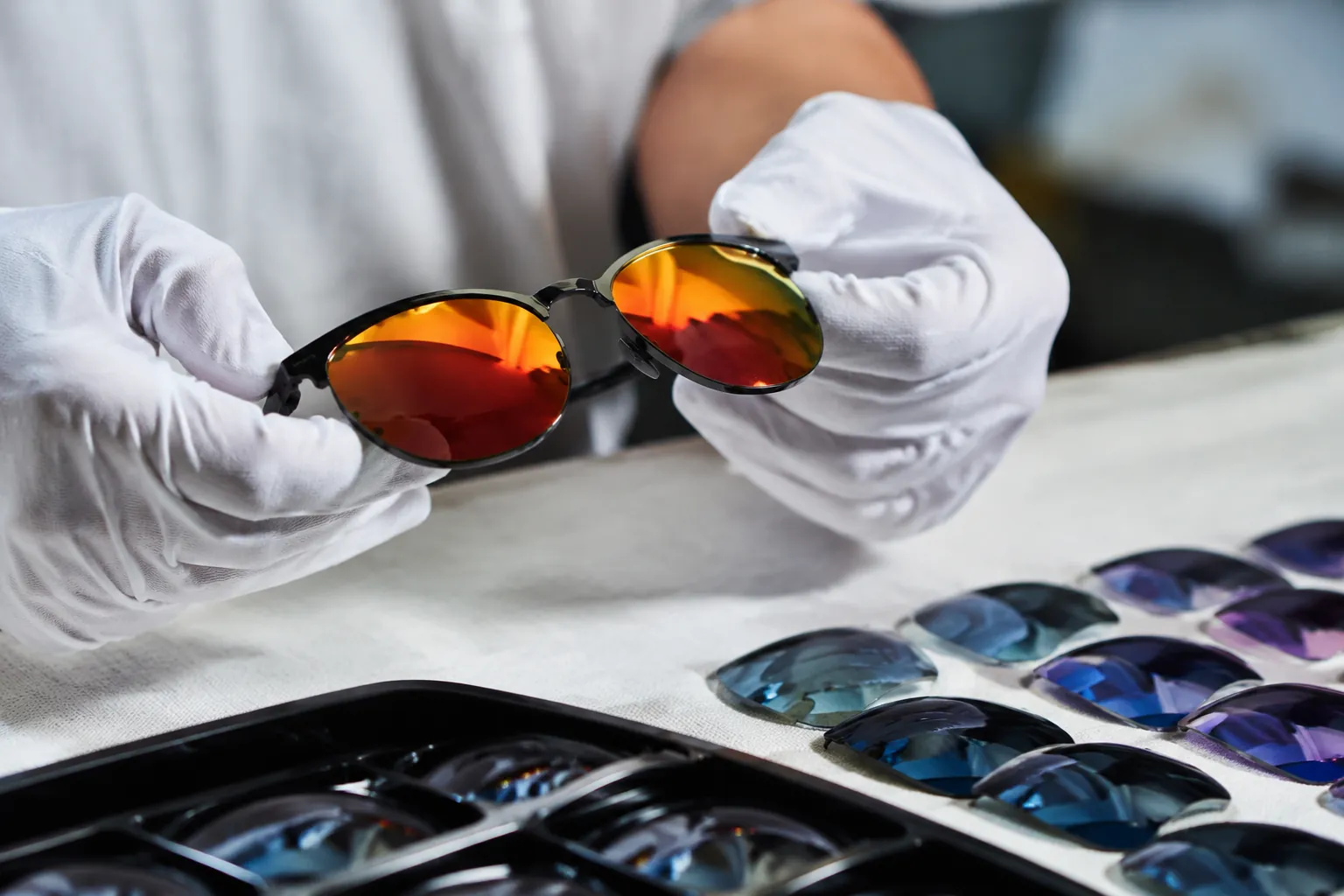
This guide is for brand owners, importers, distributors, and retail buyers weighing TAC polarized lenses against polycarbonate polarized lenses for bulk sunglasses. The choice affects more than unit cost. It shapes breakage risk, scratch complaints, sample approval, compliance work, and after-sales cost. Pick the wrong lens and the problem often shows up later—in returns, replacements, or failed claims. Pick the right one and the product fits its market. Use the framework below to compare material behavior, commercial trade-offs, common failure points, compliance checks, and the sourcing questions worth settling before sample approval and mass production.
Start with the market, not the material name
Many buyers start with the wrong question: "Which lens is better?" Too broad. The useful question is: better for which price point, which user, and which return-risk profile?
TAC polarized lenses and polycarbonate polarized lenses both have a place in commercial sunglasses. Both can work in fashion, driving, outdoor, promotional, and sport-oriented programs. Neither wins by default. The real issue is fit.
TAC is common in price-sensitive fashion and casual sunglasses because it supports a polarized offer at lower cost. Polycarbonate is more often chosen where impact resistance, rough handling, or demanding frame geometry matter more than the cheapest lens. If the product sells on style, packaging, color, and value pricing, TAC often makes sense. If it sells on active use, youth positioning, driving, marine use, or durability claims, PC deserves a hard look.
Most lens problems are not caused by a bad material. They come from a bad material-to-market match.
That matters at scale. A lower quoted lens cost does not always mean a lower total cost. Not if it leads to more scratches, breakage, or quality complaints. Compare total delivered value instead: unit cost, compliance workload, sample confidence, and post-sale friction.
What TAC and PC polarized lenses mean in production
TAC usually refers to a laminated polarized lens construction built around tri-acetate cellulose layers with a polarizing film inside the structure. In bulk sunglasses, buyers often choose TAC because it is lightweight, visually clean in standard fashion curves, and cost-efficient for many volume programs.
Polycarbonate polarized lenses use a polycarbonate substrate with a polarized construction suited to that material and process. Polycarbonate is valued for toughness. It usually handles drops, edge stress, and rough use better than laminated TAC constructions. But there is a catch. Surface performance depends heavily on coating quality, because polycarbonate needs a solid hard coat to control scratch sensitivity.
For buyers, the production implications matter more than the chemistry:
- TAC polarized: often used for lower-cost and standard fashion programs; lightweight and widely available, but performance depends on lamination quality, edge finishing, and correct frame assembly.
- PC polarized: often used for tougher-use programs and more demanding shapes; generally stronger against impact and handling stress, but performance depends heavily on molding, coating, and handling control.
- Both lens types: still require control of UV protection, polarization alignment, tint consistency, optical quality, edge finishing, and frame fit.
Lens thickness, base curve, and frame geometry also change the outcome. A lens that performs well in a flatter casual frame may not behave the same way in a wrapped or tight-fitting frame. Review lens choice with frame design. Not after.
Trade-offs: cost, durability, and use case
| Factor | TAC Polarized | PC Polarized | Buyer Takeaway |
|---|---|---|---|
| Unit lens cost | Usually lower | Usually higher | TAC is often easier to fit into entry and mid-price programs. |
| Impact resistance | Moderate | Higher | PC is often the safer option for sport, youth, driving, and rough-use channels. |
| Scratch risk | Coating-dependent | Strongly coating-dependent | Review hard-coat performance and handling controls, not just substrate claims. |
| Edge stability in assembly | More sensitive to rim stress | Generally tougher | PC often tolerates difficult fitting conditions better. |
| Optical appearance | Good in standard fashion use | Good when processed well | Execution matters more than brochure language. |
| Best frame shapes | Standard fashion, casual retail | Wraps, shields, active shapes | Frame geometry should influence the decision early. |
| Best channels | Fashion, gifting, promo, seasonal retail | Sport, marine, driving, youth, outdoor | Match the lens to expected abuse level and return tolerance. |
If the sunglasses are likely to end up in a beach bag, backpack, glove box, or tackle box, polycarbonate is often the safer commercial choice. If the product is mainly style-led and sold on color, packaging, and price, TAC often supports a stronger margin.
Decoration also changes the risk profile. Mirror coatings, flash finishes, and branded lens or temple decoration add handling steps. More handling means more chances for damage. Ask how lenses are protected between coating, assembly, and final packing.
Price-band logic: where TAC fits and where PC earns the extra cost
Lens choice should follow the target cost structure and retail position of the program. In bulk sunglasses, even a small material shift can change quotation competitiveness, especially in chain retail, e-commerce, distributor, and promotional business.
As a general sourcing pattern, TAC polarized lenses are more common in entry-price and mid-market fashion programs because they keep the polarized claim affordable. Polycarbonate polarized lenses show up more often where durability, active use, or frame geometry justify a higher lens cost.
Use this commercial logic:
- Promotional and entry-price retail: TAC polarized often protects margin better while still supporting a polarized sales claim.
- Mid-market fashion or casual sunglasses: TAC remains common unless the frame shape, target user, or durability requirement pushes the program toward PC.
- Active, youth, marine, or driving programs: PC often earns its higher cost through better toughness and lower breakage risk.
- Wrapped sport frames: PC is often the safer specification because frame geometry and use case put more stress on lens fitting and handling.
Keep the comparison honest. Do not reduce TAC and PC to a lens-price gap. Compare expected returns, replacement risk, channel demands, and the credibility of the claims on packaging or sales material.
Do this early. If you are still weighing both materials, settle it before packaging artwork, compliance submissions, and production scheduling move too far. A late lens change can trigger rework in testing, labeling, or sample approval.
Failure modes to ask about before sample approval
Many sourcing problems do not show up on a desk sample. They appear later during assembly, shipping, storage, and store handling. Ask about failure modes before you approve the production build.
- Delamination: a key watchpoint in laminated lens constructions if bonding quality or heat resistance is weak. Ask how the supplier checks bonded lens stability.
- Warping: can result from poor edging, heat exposure during storage, or too much frame pressure after installation. Review the lens inside the actual frame, not only as a loose lens.
- Stress cracking at the edge: often linked to assembly stress, groove design, or lens/frame mismatch rather than the material alone.
- Scratch complaints: commonly tied to hard-coat performance and post-coating handling. Ask how lenses are separated and protected before assembly.
- Polarization mismatch: can appear when left and right lenses are not aligned or paired consistently during production.
- Batch-to-batch color shift: possible when tint control and sample retention are weak. Ask how approved reference samples are stored and matched on repeat orders.
During approval, do not stop at appearance under office light. Check lens color consistency, mirror uniformity if used, left-right match, logo position, edge fit, and visible stress after installation. Also ask how the product moves through the factory before final packing. Damage often starts there.
Compliance and testing for TAC and PC programs
Compliance is a finished-product issue, not a shortcut tied to lens material. TAC and PC polarized sunglasses can both be used in compliant products, but compliance depends on the full sunglass design, processing, labeling, and destination market.
Standards and frameworks commonly referenced in this category include CE EN ISO 12312-1, ANSI Z80.3, AS/NZS 1067, REACH, FDA registration, ISO 9001, and BSCI. Not all of these serve the same purpose. Buyers should confirm which ones matter for the target market and for supplier qualification.
Focus on these control points:
- UV protection and visible light transmittance: confirm that finished lens category and labeling match the market requirement and intended use.
- Optical quality: especially important for driving and long-wear products, where distortion complaints can damage customer trust fast.
- Impact expectation: if the line targets active, youth, marine, or rough-use channels, raise that use case early and review whether PC is the better route.
- Chemical compliance: REACH and related requirements may apply to frame materials, coatings, paints, and decorative parts for EU-bound goods.
- Documentation consistency: the approved sample, technical sheet, labeling, packaging claims, and test documents should all match the final production specification.
A common sourcing error is approving one lens build and then changing tint, mirror treatment, thickness, or frame curve later without reassessing compliance and performance. Small changes can affect transmittance category, optics, or durability. Lock the specification early. Then control revisions tightly.
A practical workflow for choosing the right lens
If you want fewer surprises, compare TAC and PC through a simple sourcing process before mass production.
- Define the channel clearly. Identify whether the line is for fashion retail, e-commerce, outdoor distribution, promotional use, or youth-oriented selling. Channel logic drives much of the lens decision.
- Set the target cost band. Work from a real ex-works or landed target so the lens choice reflects commercial reality.
- Choose the frame family and base curve. Flatter fashion shapes often leave more room for TAC, while wrapped active shapes often justify closer review of PC.
- Confirm decoration method early. Mirror finishes, printed logos, hot stamping, and packaging inserts all affect handling steps, cost, and risk.
- Request two sample builds if uncertain. Where possible, compare one TAC polarized build and one PC polarized build in the same frame.
- Test the sample like a buyer, not only a designer. Check handling marks, frame fit, lens appearance, and how the product behaves after normal carrying and repeated use.
- Lock the production specification. Record lens material, thickness, tint, polarization, logo method, packaging, and compliance target on one approved technical sheet.
- Align testing and documentation before release. Make sure the approved build, labeling, and required compliance documents all refer to the same final specification.
- Leave realistic bulk lead time. Build in enough time for sample revision, testing if needed, packaging approval, and production scheduling.
This workflow is simple by design. It prevents a common sourcing mistake: approving a good-looking sample without confirming that the lens build fits the actual selling environment and compliance path.
Quick decision guide by buyer scenario
Need a fast screen? Use the logic below.
| Buyer scenario | Better lens choice | Why |
|---|---|---|
| Fashion retailer with strong price pressure and standard frame shapes | TAC polarized | Lower cost and suitable visual performance for casual, style-led use. |
| Outdoor distributor with driving, fishing, or marine positioning | PC polarized | Better toughness and lower breakage risk in active handling conditions. |
| Promotional campaign with logo-heavy branding and tight budget | TAC polarized | Helps control unit cost while retaining a polarized value proposition. |
| Youth, sport, or rough-use retail line | PC polarized | Impact resistance and handling durability matter more than the lowest lens cost. |
| E-commerce fashion brand with low tolerance for returns | Depends on positioning | TAC can suit style-first products; PC may be safer where buyers expect stronger durability. |
If you are still unsure, compare both constructions in the same frame and judge them under real use conditions. The extra sample cost is usually minor. A bulk order built on the wrong lens logic is not.
Have a custom sunglasses project in mind?
Send us your styles, target market and quantities and we will return a detailed quote with MOQ, lead time and a sample plan.
Get a QuoteWhy source this from Wenzhou with LumiShades
Wenzhou in Zhejiang Province is widely regarded as China’s eyewear manufacturing capital, producing a large share of the world’s sunglasses. That concentration matters to buyers: a deep local supply chain for acetate sheet, hinges, lens blanks, plating and packaging means shorter component lead times, easier color and material matching, and a workforce with decades of eyewear-specific skill. LumiShades has manufactured in this ecosystem since 2009, and our vertical integration — in-house injection molding, acetate cutting, CNC milling, lens tinting, decoration and quality control — means no part of your order is quietly subcontracted to a workshop you cannot audit.
For international buyers, that vertical control translates into accountability. When a single factory owns every step, defects are traced and fixed at source rather than bounced between vendors, and your specifications survive intact from first sample to bulk. We back this with 15+ years of experience, shipments to 60+ countries, more than 5 million pairs produced per year and a 98.5% on-time delivery rate. Our certifications — CE EN ISO 12312-1, FDA registration, ANSI Z80.3, AS/NZS 1067, REACH, ISO 9001 and BSCI audit — mean the compliance documentation your market requires already exists. Explore our manufacturing capabilities and quality control process to see how this works in practice.
Frequently asked questions
Is TAC polarized always cheaper than PC polarized? Usually, TAC polarized is the lower-cost option at the lens level, which is why it is common in fashion, seasonal, and promotional sunglasses. But do not decide on lens price alone. Ask the supplier for two complete quotations in the same frame and compare the full build, including coating, decoration, packaging, and any required testing. Then weigh return risk and handling demands for your channel before choosing the cheaper option.
Which lens is better for sport or wrap sunglasses? Polycarbonate is usually the safer starting point for sport, outdoor, and wrapped sunglasses because it is generally more impact resistant and more tolerant of handling stress. Still, the final result depends on frame design, lens thickness, coating quality, and assembly control. If the frame is highly wrapped or sold with an active-use message, ask for a PC sample in the actual frame and review both fit stress and optical quality before approval.
Can both TAC and PC polarized lenses meet CE EN ISO 12312-1 and ANSI Z80.3? Yes. Both TAC and PC polarized lenses can be part of a finished sunglass that meets CE EN ISO 12312-1 or ANSI Z80.3, provided the complete product is designed, tested, and labeled correctly. Ask for test documents tied to the final approved build, not a generic certificate for a similar model or lens material. If you later change tint, mirror coating, lens thickness, or frame geometry, confirm whether retesting or document revision is needed.
What sample and bulk lead times should I plan for? Lead time varies by supplier, material availability, coating route, packaging complexity, and whether compliance testing is needed. Ask for a written timeline that covers sampling, sample revision, testing if required, packaging approval, and bulk production. If you are comparing TAC and PC at the sample stage, do it early. A late material change can delay labeling, documentation, and production release.
How should I compare TAC and PC before placing a larger order? Ask for the same frame in both lens options whenever possible. Compare them side by side for color consistency, lens fit, visible stress after installation, scratch sensitivity after normal handling, and overall appearance under both indoor and outdoor light. Then make sure your approved technical sheet records the exact lens material, tint, polarization, coating or mirror finish, and frame reference used for the decision. That gives you a clear basis for quotation, compliance review, and repeat production control.
Ready to start?
Explore our aviator sunglasses or request a quote — our sales team replies within 12 hours.
Request a Quote