
Polarized Lens Specs Buyers Should Ask For
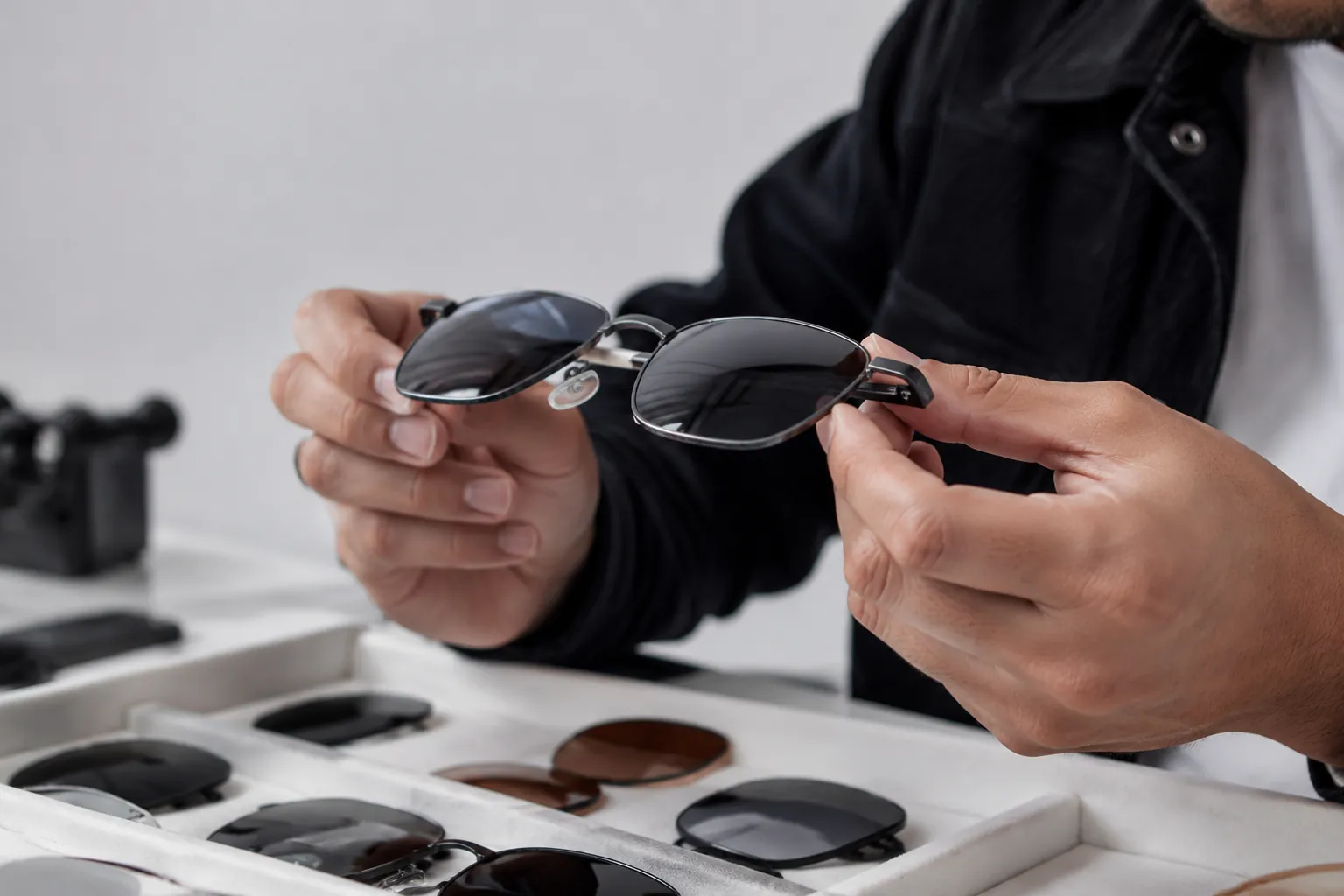
If you buy polarized sunglasses for retail, private label, or distribution, a weak spec sheet can mean returns, complaints, and lost margin. Polarization efficiency is only one part of the story. Buyers also need to ask about transmission, haze, axis control, lamination quality, and the test method behind the claim. This guide covers the specs that matter and the tradeoffs that show up in production.
What Polarization Efficiency Means
Polarization efficiency shows how well a lens blocks reflected glare when the lens axis is aligned correctly. In plain terms, it tells you how much glare is removed from water, roads, glass, and other shiny surfaces. For sunglass programs, ask for the measured efficiency, the test method, and the test condition used to get it. A percentage by itself is not enough.
Consistency matters just as much as the number. A lens can test well at one point and poorly at another if the polarizing film is uneven, stretched, or cut off-axis. Ask how the factory controls orientation, what tolerance it allows, and how it checks left-right matching. A usable spec should define the target efficiency, the allowed deviation between lenses, and the inspection method for the finished pair.
Do not look at polarization alone. Visible light transmission, haze, and tint uniformity belong in the same review. A lens can be strongly polarized and still look bad if the tint is muddy or the laminate looks cloudy. Clarity is part of the product. It is not a bonus.
Ask for four things: the polarization target, the test method, the left-right variance, and the haze limit.
Good suppliers can explain how film placement, lens cutting, and final inspection are controlled. That matters because those steps affect optical consistency and batch stability, especially on private-label programs that get reordered later.
Specs To Put In The PO
Do not stop at "polarized." Write the spec. The purchase order should define lens material, target tint, transmission range, base curve, coating stack, and inspection criteria. If the supplier cannot repeat the requirement back correctly, the quote is probably built on assumptions.
Use numeric tolerances where you can. Define visible light transmission by market and use case, and say whether the requirement applies across the full lens or only in the central viewing area. If a mirror finish is required, specify whether it is on the front surface only or both sides. For wraparound frames, confirm the base curve and whether the lens is plano or decentered to fit the frame.
- Polarization efficiency target: request the measured value, the test method, and the pass/fail threshold.
- Visible light transmission: define the target range and where the measurement applies.
- Lens material: specify TAC, PC, or glass, since each material behaves differently.
- Pair matching: define the acceptable difference in tint, color, and appearance between left and right lenses.
- Surface defects: state limits for haze, bubbles, edge chipping, coating pinholes, and film wrinkles.
- Coating stack: confirm whether hard coat, AR, hydrophobic, oleophobic, or mirror layers are included and where they sit.
Cost follows process complexity. A standard TAC polarized lens is usually simpler to make than a mirrored lens with multiple coatings and tighter cosmetic criteria. More finish layers mean more labor, more inspection time, and more scrap. That is normal.
Also define what fails. State that bubbles, visible laminate shadow, edge whitening after mounting, or color shift beyond the agreed tolerance will not pass inspection. Clear language reduces disputes once production starts.
How Polarized Lenses Are Built
Most polarized sunglass lenses for commercial programs use TAC or PC with a polarizing film laminated into the lens structure. TAC polarized lenses are common in fashion and mainstream retail because they are lightweight, cost-effective, and optically clear. PC polarized lenses are often used where impact resistance matters more, but they need tighter process control because molding stress can affect appearance. Glass polarized lenses offer strong clarity and scratch resistance, but they are heavier and less common in programs that care most about comfort and price.
Film orientation is critical. If the axis is off, glare reduction drops and the lens can look uneven in use. Factories usually control alignment during lamination and verify it again during inspection. Dust, tension marks, and uneven pressure can create streaks or haze. Aggressive cutting or too much heat can cause stress whitening or edge defects.
- Film selection and incoming inspection for thickness, color, and consistency.
- Axis alignment during lamination, with controlled temperature, pressure, and dwell time.
- Curing or bonding stabilization before cutting or finishing.
- Lens cutting to frame shape, with blade condition and feed speed monitored.
- Tinting or coating, if specified, with batch control and cure verification.
- Final QC for axis, appearance, thickness uniformity, and distortion.
In-house lens tinting and CNC cutting can help control fit and finish because fewer handoffs usually mean fewer defects. That affects rejection rates and batch consistency. A line that controls heat, pressure, blade wear, and post-cut inspection is more likely to stay stable.
Frame tolerance matters too. If the groove depth varies or the frame front is unstable, lens seating can create pressure points and optical stress after assembly. Buyers often blame the lens when the real issue is frame geometry or mounting force. Good suppliers check lens and frame together, not as separate jobs.
The Checks That Matter In Production
Polarized lenses should be checked at incoming, in-process, and final stages. A visual demo is not enough. Real factories use both instrument checks and practical inspection because different defects show up at different stages. The control plan should catch optical failures and cosmetic defects before cartons are sealed.
Ask how polarization, tint, haze, and fit are measured. The useful answer is specific: what instrument is used, what is checked by hand, what the pass threshold is, and how drift is handled. If a supplier only says "100% QC," that does not tell you much.
| Check | What It Catches | Buyer Value | Common Risk If Skipped |
|---|---|---|---|
| Polarization axis test | Wrong film orientation or pair mismatch | Confirms glare reduction works consistently | Customers notice uneven performance between lenses |
| Visual haze inspection | Cloudiness, laminate marks, surface defects | Protects optical clarity and shelf appeal | Lenses look poor even if they are technically polarized |
| Transmission check | Tint drift and uneven darkening | Supports market-specific VLT targets | Color inconsistency across batches |
| Fit and stress test | Lens stress in the frame | Reduces field failures and packing damage | Edge cracking after transport or heat exposure |
Ask how samples and bulk are checked differently. Sample builds often get more hand attention and slower machine settings. Bulk may use a different film lot, operator, or cycle time. That is why sample approval should use the same lens construction, coating stack, and assembly method planned for mass production.
For volume programs, ask for a first-article report and a packed sample from the actual production run. If the supplier can provide photos or inspection records from the bulk lot, that helps confirm the sample reflects real output. The goal is simple: avoid a beautiful sample and a weak container load.
Price, Clarity, And Durability
Polarized lenses are not priced the same because materials, coatings, and yield loss are not the same. A lower-cost lens can still work for promotional programs, but buyers should know the tradeoffs. They usually show up in clarity, scratch resistance, coating durability, or batch consistency.
The main pricing drivers are material choice, coating count, cosmetic acceptance level, and order size. MOQ affects cost because setup time and film waste are spread across fewer units. On smaller runs, alignment, cutting, and QC cost more per pair. On larger runs, those costs usually fall if the spec stays stable and the process stays under control.
| Lens Option | Typical Strength | Tradeoff | Best Fit |
|---|---|---|---|
| TAC polarized | Lightweight, good glare reduction, widely used | Can scratch more easily without a proper hard coat | Mainstream retail and private label |
| PC polarized | Impact resistance, suitable for active use | Optical feel can vary with molding control | Sport, youth, and outdoor use |
| Glass polarized | Strong clarity and scratch resistance | Heavier and less common in fashion frames | Premium or niche programs |
Pricing should match the build. A plain polarized lens is not the same as a polarized lens with a mirror layer, special tint, hydrophobic topcoat, or tighter cosmetic rejection limits. Each extra step adds labor, inspection, and scrap risk. A real quote should show that.
MOQ, sample lead time, and bulk lead time depend on the program and the factory schedule. Ask for the lead-time impact of coatings, decoration, and special packaging before approving the final spec. Simpler builds are usually faster to deliver.
Compliance And What Certificates Cover
Do not confuse marketing claims with compliance. Certificates matter, but they cover different parts of the product and the supply chain. A factory can have the right paperwork and still ship a lens that misses buyer expectations if the production spec is weak or the approved sample does not match bulk output.
Only real certifications should be referenced in sourcing documents. The items commonly requested in eyewear procurement include CE EN ISO 12312-1, ANSI Z80.3, AS/NZS 1067, REACH, FDA registration, ISO 9001, and BSCI. Each serves a different purpose. CE EN ISO 12312-1 and ANSI Z80.3 are important eyewear safety and performance references in their respective markets. AS/NZS 1067 applies to Australia and New Zealand. REACH addresses restricted chemicals in the EU supply chain. FDA registration applies to the facility and product positioning in the U.S. as applicable. ISO 9001 and BSCI help buyers assess process control and social compliance.
Certificates do not guarantee a good lens. They show that a factory has a framework, recordkeeping, and a baseline system. They do not prove that the polarization axis is centered within your tolerance, that the hard coat will survive handling, or that the mirror layer will resist packing abrasion. Those issues still need a clear PO spec, a test plan, and approved bulk samples.
Ask for the exact standard version used for testing, the lab name if third-party testing was done, and whether the report applies to the exact model being ordered. If the frame shape, lens size, or coating changes, the old report may no longer be enough for the new build.
How To Write A Better RFQ
A strong RFQ reduces back-and-forth and leads to cleaner quotes. Start with lens type, target color, polarization requirement, frame material, decoration method, and packed quantity. Then add acceptance criteria. Use actual thresholds where you have them, not just descriptive language.
Include the following in the RFQ:
- Lens material and polarization type, including TAC, PC, or glass.
- Target VLT range, lens color, and any mirror or gradient requirement.
- Coating requirements, including hard coat, AR, hydrophobic, or oleophobic layers.
- Frame material and build type: acetate, injection, or mixed construction.
- Decoration method: laser engraving, pad printing, hot stamping, metal logo plate, or embossed detail.
- Carton, case, hangtag, barcode, and carton mark requirements.
- Applicable test standard, sample approval method, and packing method.
Decoration affects both cost and quality. Laser engraving is clean and permanent, but it depends on the material color and surface finish. Pad printing is flexible and affordable, but it can wear if the coating stack is poor or the ink cure is weak. Metal logo plates can look premium, but they add assembly time and adhesive risk. Hot stamping can work well for short runs, but it depends on temperature control and substrate stability.
If you compare suppliers, ask all of them to quote the same build. Otherwise one price may look cheaper only because it excludes the hard coat, second-pass QC, a logo process, or compliant packaging. For custom eyewear, lock the lens spec first and finalize frame styling after that. The lens drives comfort, complaint rate, and return risk. The frame drives aesthetics and tooling cost.
A Practical Buyer Checklist
Use this checklist before approving a polarized lens program. It reduces rework and keeps approval based on facts, not assumptions.
- Confirm the exact lens material and film structure.
- Ask for polarization efficiency, test method, and pass threshold.
- Set visible light transmission targets by market and frame style.
- Define acceptable haze, color shift, edge quality, and pair-to-pair variation.
- Confirm whether coatings and mirror layers are included in the quoted price.
- Verify the compliance documents needed for the target market only.
- Approve a bulk sample from the actual production line, not a hand-finished sample.
- Ask for the lead-time impact of decoration, coating, and special packaging.
One simple rule helps buyers judge a quote: if the supplier cannot explain why the cost changes with volume, they may not understand their own process well enough yet. Real factories know where the cost sits. Film, labor, yield, coating, decoration, packing, and test time all affect pricing.
For overseas buyers, the real job is not just buying polarized sunglasses. It is buying a lens spec that can survive shipping, storage, and customer use with predictable optics and acceptable margins.
Have a custom sunglasses project in mind?
Send us your styles, target market and quantities and we will return a detailed quote with MOQ, lead time and a sample plan.
Get a QuoteWhy source this from Wenzhou with LumiShades
Wenzhou in Zhejiang Province is widely regarded as China’s eyewear manufacturing capital, producing a large share of the world’s sunglasses. That concentration matters to buyers: a deep local supply chain for acetate sheet, hinges, lens blanks, plating and packaging means shorter component lead times, easier color and material matching, and a workforce with decades of eyewear-specific skill. LumiShades has manufactured in this ecosystem since 2009, and our vertical integration — in-house injection molding, acetate cutting, CNC milling, lens tinting, decoration and quality control — means no part of your order is quietly subcontracted to a workshop you cannot audit.
For international buyers, that vertical control translates into accountability. When a single factory owns every step, defects are traced and fixed at source rather than bounced between vendors, and your specifications survive intact from first sample to bulk. We back this with 15+ years of experience, shipments to 60+ countries, more than 5 million pairs produced per year and a 98.5% on-time delivery rate. Our certifications — CE EN ISO 12312-1, FDA registration, ANSI Z80.3, AS/NZS 1067, REACH, ISO 9001 and BSCI audit — mean the compliance documentation your market requires already exists. Explore our manufacturing capabilities and quality control process to see how this works in practice.
Frequently asked questions
What polarization efficiency should I ask for in a sunglass RFQ? Ask the supplier to state the measured polarization efficiency, the test method, and the pass/fail threshold. For many commercial sunglass programs, buyers often request 95% or higher, but the number should always be tied to the exact test condition and lens design.
Is TAC or PC better for polarized sunglasses? TAC is often a good choice for lightweight, value-oriented fashion and retail programs because it usually offers good clarity and cost efficiency. PC is often better when impact resistance matters, such as sport or youth use. The best choice depends on the frame design, end use, and target price.
Can polarized lenses still be compliant under CE EN ISO 12312-1 or ANSI Z80.3? Yes. Polarization is a lens feature, while CE EN ISO 12312-1 and ANSI Z80.3 are safety and performance standards. The finished sunglass still has to meet the relevant optical and mechanical requirements for the target market.
Why do some polarized samples look better than bulk? Samples may receive extra hand attention, slower machine settings, or more selective material. Bulk production can use different film lots, operators, or cycle times. To reduce surprises, ask for a first-article sample taken from the actual production run.
What should I expect on MOQ and lead time for custom polarized sunglasses? MOQ and lead time vary by supplier and build complexity. Ask for the minimum order quantity per design, sample lead time, and bulk lead time in writing, and confirm how coatings, decoration, and packaging affect the schedule.
What causes complaints on polarized sunglasses most often? Common causes include wrong axis alignment, haze, scratches, uneven tint, and frame stress near the lens edge. Most of these are process-control issues, which is why buyers should review both sample approval and bulk QC records before release.
Ready to start?
Explore our wayfarer sunglasses or request a quote — our sales team replies within 12 hours.
Request a Quote