
OEM vs ODM Sunglasses: Which Lowers Bulk Order Risk?
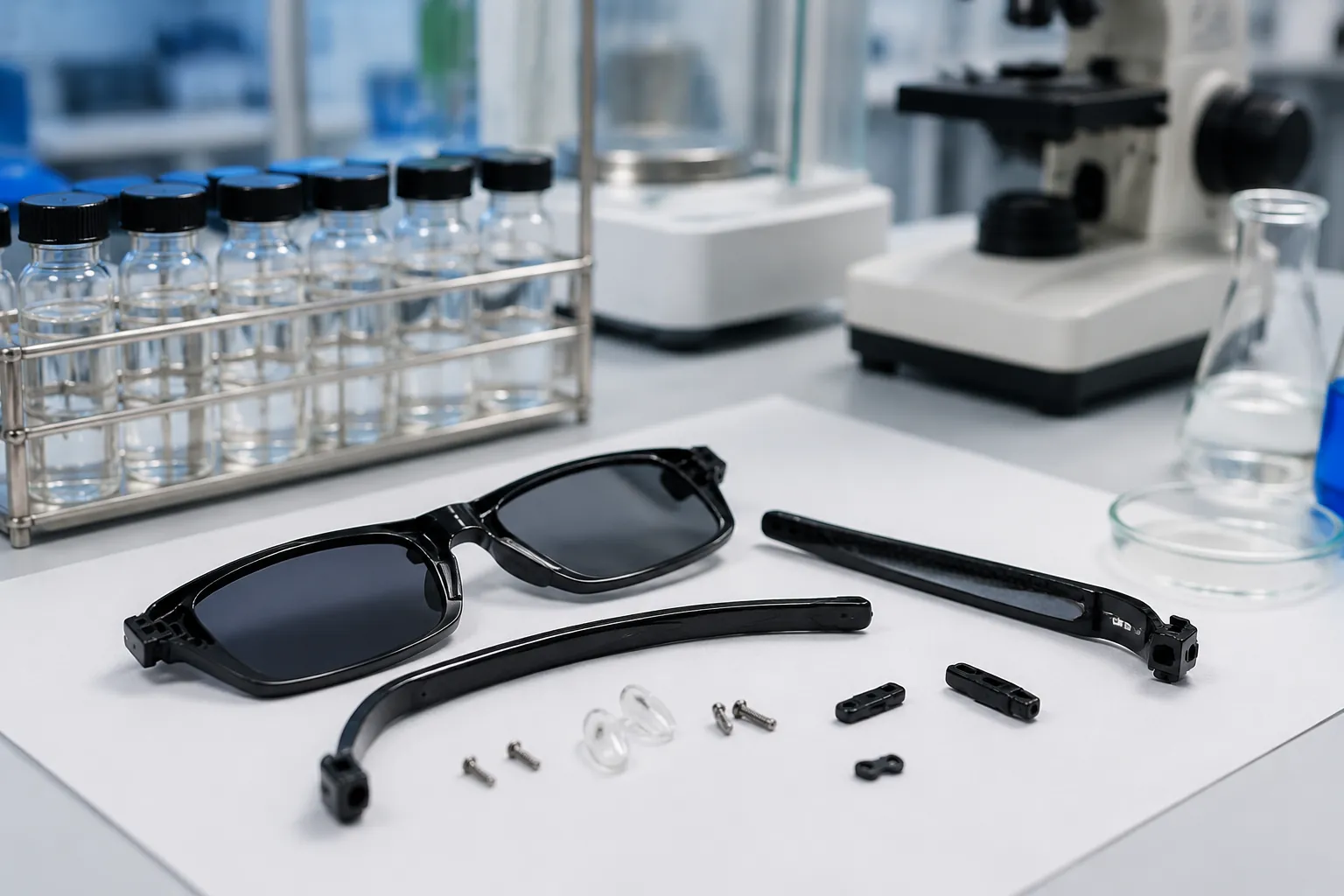
This guide is for brand owners, importers, distributors, and retailers buying sunglasses in volume. It does not dwell on textbook definitions. It compares the real operating risks behind OEM and ODM once you account for tooling, sample approval, tolerance control, compliance, and reorder planning. Pick the wrong model and you can tie up cash, miss a season, or end up with a frame that competitors can copy too easily. Pick the right one and you protect what matters most: speed, cash flow, exclusivity, or long-term control of a repeatable core SKU.
Start with the risk you actually need to reduce
Buyers often treat OEM and ODM as a branding choice. In practice, it is a risk-allocation choice.
ODM usually means choosing an existing factory frame platform, then changing visible elements such as frame color, lens tint, logo placement, temple print, packaging, and sometimes trim details like metal badges or tip colors. The base geometry, mold, lens shape, and assembly process already exist. That removes several variables before bulk production starts.
OEM usually means building a new frame from your drawing, reference sample, CAD file, or design brief. Depending on the material and structure, that can require new molds, prototype work, lens-shape matching, hinge-position review, and multiple sample-correction rounds before final approval.
If your biggest risk is missing a selling season, ODM is usually safer. If your biggest risk is offering a frame shape that competitors can buy from the same supplier network, OEM is usually safer. If your biggest risk is tying up cash before demand is proven, ODM is usually the lower-risk choice.
Keep the question simple. Over the next six months, what hurts margin more: delay, upfront development cost, weak differentiation, or unstable reorders? Answer that first. The OEM-versus-ODM choice gets much clearer after that.
OEM vs ODM: speed, budget, exclusivity, and control
The table below covers the trade-offs most overseas buyers check first when comparing custom sunglasses programs.
| Decision factor | ODM sunglasses | OEM sunglasses |
|---|---|---|
| Development speed | Usually faster because existing mold and frame geometry are already in use | Usually slower because new engineering, fit review, and approval loops are more likely |
| Sample timing | Often shorter when changes are limited to color, logo, lens tint, or packaging | Often longer because new geometry may require prototypes and revision rounds |
| Tooling budget | Often lower when an existing platform is used without new molds | Often higher if new molds, dedicated cutters, or special jigs are required |
| MOQ pressure | Usually easier for market testing because some factories allow lower starting quantities on existing styles | Usually higher because the supplier must recover development time and setup cost |
| Exclusivity | Limited unless exclusivity is agreed in writing by structure, market, or term | Stronger because the frame shape, lens profile, and detailing are custom-developed |
| Reorder consistency | Good when the same mold, color standard, and assembly specification are maintained | Very strong if the sealed sample, dimensions, and QC tolerances are documented clearly |
| Best fit | Trend tests, retail pilots, event launches, promotional volume, price-sensitive entry lines | Signature styles, protected silhouettes, and long-life core SKUs with repeat demand |
For many importers, the safest move is not choosing one model for the whole line. Split the collection instead. Use ODM for faster-turn commercial styles, and reserve OEM for the frames that need real separation in the market.
Choose ODM for speed, lower cash exposure, and market testing
ODM works best when the commercial question is still open. You may know your customer segment, target retail price, or preferred lens look, but not yet know which shape will sell best. In that case, full custom development too early is often the more expensive mistake.
With ODM, the factory has already solved key technical issues such as frame balance, lens cut, mold behavior, and basic assembly flow. You are usually adjusting branding and cosmetic elements, not rebuilding the product from scratch. Common changes include solid or transparent frame colors, gradient or category-based lens tints, mirror coatings, temple printing, inner-arm laser marking, branded packaging, and custom pouches or cases.
- Use ODM if you want to test demand before paying for dedicated tooling or long development cycles.
- Use ODM if you need to hit a seasonal deadline and cannot absorb repeated sample rounds.
- Use ODM if your target ex-factory price leaves little room for development overhead.
- Use ODM if you expect to reorder successful styles and negotiate better pricing only after sell-through is proven.
This is where reorder economics matter more than design ambition. Start with a proven structure. Validate demand. Then place larger follow-up orders once the style proves itself. Simple logic. Prove the market first, then optimize margin with scale.
Choose OEM when the frame shape is part of the brand
OEM makes sense when the product is more than a logo on a standard shape. Some brands compete on packaging and color. Others compete on silhouette, bridge line, front curvature, bevel depth, temple profile, fit, or a signature lens shape. If those structural details drive the sale, OEM is often the safer model despite the longer timeline and higher upfront cost.
A real OEM program should follow a disciplined sequence, not an informal sketch exchange.
- Confirm target market, end use, and compliance pathway before freezing the design. For sunglasses, that may include CE EN ISO 12312-1 for Europe, ANSI Z80.3 for the US, AS/NZS 1067 for Australia and New Zealand, and REACH for material-related requirements where applicable.
- Lock the construction method: injection, acetate, metal, or mixed material. Each affects cost, lead time, and tolerance behavior.
- Define measurable specifications such as lens category, base curve, bridge width, temple length, hinge type, logo method, and acceptable cosmetic limits.
- Review prototype fit carefully, including temple spread, pressure points, lens seating, and balance on the nose.
- Approve a sealed sample that becomes the bulk reference for dimensions, finish, hardware, color, and packaging.
OEM reduces one major commercial risk: direct comparability. If the geometry and construction details are custom-developed, competitors cannot easily source the same structure as an off-the-shelf option. But OEM raises another risk: development drift. Without a clear specification sheet, projects lose time in repeated tweaks to fit, lens color, hinge feel, or surface finish. Control documents matter. A lot.
Lead times, tooling, and unit price do not tell the whole story
Factories often quote standard lead times. Buyers need to know what makes those dates hold or slip. Sample and production timing depend on whether the project is technically stable, whether materials are available, and whether approvals are clear.
ODM usually stays closer to quoted timelines because the mold, lens shape, and assembly process already exist. OEM can also move well, but only when the frame is straightforward and approvals move fast. New tooling, unusual hardware, custom metal trim, special coatings, or repeated lens-color changes can extend both sampling and production.
| Cost or timing driver | Lower-risk effect in ODM | Lower-risk effect in OEM |
|---|---|---|
| Existing mold use | Reduces development steps and may avoid new mold cost | Usually not relevant if the frame front or temple geometry is new |
| Logo and color changes | Usually manageable if the decoration method is standard and approved clearly | Usually manageable, but can still trigger resampling if cosmetics affect approval |
| New frame geometry | Usually not available because the core structure is fixed | Adds engineering review, fit checks, correction rounds, and possible tooling cost |
| Volume scaling | Can improve unit economics once the style is proven and reordered in larger quantities | Can also improve unit economics, but development and tooling must be absorbed first |
Another common mistake is comparing unit prices without comparing total approved-SKU cost. A style that looks cheaper on paper can end up costing more if it needs extra sample rounds, misses a ship window, or fails approval because the specification was vague. The better calculation is total cost to get a compliant, approved, repeatable style into bulk on time.
Materials, tolerances, and decoration methods decide whether the order holds up
Many sourcing failures blamed on OEM or ODM are really specification failures. The buyer approves the look, but not the measurable construction limits behind it.
Injection-molded frames are efficient for volume and can deliver strong visual consistency, but shrinkage, wall thickness, and tooling conditions affect fit and lens seating. Acetate frames offer a more premium look and hand feel, but sheet variation, polishing loss, and hinge drilling accuracy require tighter process control. Metal and mixed-material frames add variables such as solder quality, plating consistency, and alignment across different components.
Ask for measurable checkpoints, not vague assurances. Typical control points include front width, bridge width, temple length, lens fit, hinge alignment, opening resistance, logo placement, and color consistency against an approved standard. Lens retention should be checked after assembly. Color control should reference an approved sample, especially for transparent, gradient, or mirrored effects where variation is easy to spot.
- Confirm front width, bridge width, and temple length tolerances in writing.
- Confirm lens fitting consistency, retention, and seating quality.
- Confirm the color reference for frame material and lens tint, especially for repeat orders.
- Confirm the decoration method: pad printing, laser engraving, hot stamping, screen printing, or metal logo plate.
- Confirm the expected durability of logos under normal handling, cleaning, and packing friction.
Decoration method matters more than many buyers expect. Pad printing is flexible and cost-effective, but it depends heavily on surface preparation, ink choice, and curing control. Laser engraving is usually more durable on suitable surfaces, but it offers fewer visual effects. Metal logo plates can look premium, but they add parts, assembly steps, and alignment risk.
Compliance also needs to be addressed early, not after packaging is printed. Depending on market and lens setup, relevant frameworks may include CE EN ISO 12312-1, ANSI Z80.3, AS/NZS 1067, REACH, FDA registration, ISO 9001, and BSCI. These are not interchangeable labels. Some apply to product performance or material-related obligations. Others relate to quality systems or social compliance. Buyers should request the exact documentation that matches the target market and product claim before shipment.
A practical model for first orders and repeat orders
Most serious buyers should not force one sourcing model across the whole line. Split the range by risk type.
A sensible first collection often looks like this: use ODM for proven commercial shapes with your own lens colors, logo treatment, and packaging; keep first orders close to the supplier's workable minimum if demand is not yet validated; then move strong sellers into larger reorder bands once sales data justifies the commitment. Reserve OEM for one signature style only after the sales channel shows it can support the higher development cost and longer timeline.
This approach cuts exposure on both sides. You avoid paying for originality before demand exists. You also avoid building your whole line on structures that are too easy to compare. It works especially well for buyers launching into new retailer accounts, testing regional preferences, or balancing promotional volume with brand-building styles.
The decision rule is simple. If the collection must ship fast, start with ODM. If the frame itself is the brand asset and will likely stay in the line for multiple seasons, invest in OEM. If you are not yet sure which design deserves that investment, test with ODM first and move proven winners into deeper custom development only after the market confirms them.
Buyer checklist before approving OEM or ODM
Before you place the order, settle these points in writing. That keeps risk in the product decision, not in process confusion.
- Is the project ODM using existing tooling, or OEM with new geometry, engineering work, and possible tooling charges?
- What is the exact MOQ by design and by colorway?
- What sample becomes the sealed bulk-approval standard, and who signs off on it?
- What lead time applies to samples and what lead time applies to bulk production?
- Which compliance standards apply to the target market and lens setup: CE EN ISO 12312-1, ANSI Z80.3, AS/NZS 1067, REACH, or FDA registration requirements?
- What decoration method will be used, and what durability expectation applies under normal handling and packing?
- At what reorder volumes do price breaks apply, if any?
- What dimensional tolerances, color standards, and cosmetic defect limits will QC use at shipment?
If a supplier cannot answer those clearly, the main risk is not whether the program is OEM or ODM. The main risk is weak process control.
Have a custom sunglasses project in mind?
Send us your styles, target market and quantities and we will return a detailed quote with MOQ, lead time and a sample plan.
Get a QuoteWhy source this from Wenzhou with LumiShades
Wenzhou in Zhejiang Province is widely regarded as China’s eyewear manufacturing capital, producing a large share of the world’s sunglasses. That concentration matters to buyers: a deep local supply chain for acetate sheet, hinges, lens blanks, plating and packaging means shorter component lead times, easier color and material matching, and a workforce with decades of eyewear-specific skill. LumiShades has manufactured in this ecosystem since 2009, and our vertical integration — in-house injection molding, acetate cutting, CNC milling, lens tinting, decoration and quality control — means no part of your order is quietly subcontracted to a workshop you cannot audit.
For international buyers, that vertical control translates into accountability. When a single factory owns every step, defects are traced and fixed at source rather than bounced between vendors, and your specifications survive intact from first sample to bulk. We back this with 15+ years of experience, shipments to 60+ countries, more than 5 million pairs produced per year and a 98.5% on-time delivery rate. Our certifications — CE EN ISO 12312-1, FDA registration, ANSI Z80.3, AS/NZS 1067, REACH, ISO 9001 and BSCI audit — mean the compliance documentation your market requires already exists. Explore our manufacturing capabilities and quality control process to see how this works in practice.
Frequently asked questions
Can I get exclusivity on an ODM sunglasses model? Sometimes, but it needs to be defined in writing before you place the order. Ask the supplier to specify exactly what is exclusive: the frame structure, a specific colorway, your sales territory, a customer segment, or a fixed time period. Also ask whether the factory can sell the same base mold with different cosmetic changes to other buyers. If exclusivity matters commercially, put the scope, term, and remedy for breach into the purchase agreement or a separate contract instead of relying on email wording alone.
What is usually the safer choice for a first order under 300 pairs? Usually ODM, because it reduces development variables and limits upfront commitment. For a smaller first order, ask the supplier for the exact MOQ by frame and by colorway, confirm what customization is possible without new tooling, and make sure one approved sample is identified as the sealed production reference. That gives you a clearer way to test sell-through before deciding whether a style justifies a larger reorder or an OEM version later.
How much control do I give up with ODM? You usually give up control over the core frame geometry, mold, and basic lens shape. You may still control visible commercial elements such as frame color, lens tint, logo application, packaging, and some trim details, but the exact scope depends on the supplier's existing mold library and decoration capability. To avoid misunderstandings, ask the factory to mark which elements are fixed, which are optional, and which changes would shift the project from ODM to OEM.
Does OEM always mean a longer lead time? Not always, but it usually carries more schedule risk because there are more approval points. A simple OEM project can move smoothly if specifications are complete and decisions are made quickly. Ask the supplier to separate the timeline into prototype development, revision rounds if needed, final sample approval, and bulk production. That breakdown is more useful than a single overall lead-time promise because it shows where delays are most likely.
Which documents and standards should I ask about before production? Ask which standards apply to your target market and exact product configuration, then request documentation that matches those claims. For sunglasses, that may include CE EN ISO 12312-1, ANSI Z80.3, AS/NZS 1067, REACH, and FDA registration depending on market and product scope. If supplier qualification also matters to your company, ask separately about ISO 9001 and BSCI. In addition, request the approved sample record, product specification sheet, packaging artwork approval, and any test reports or declarations the supplier is using to support the order.
Ready to start?
Explore our square sunglasses or request a quote — our sales team replies within 12 hours.
Request a Quote