
Is Memory Metal Eyewear Worth the Higher Cost?
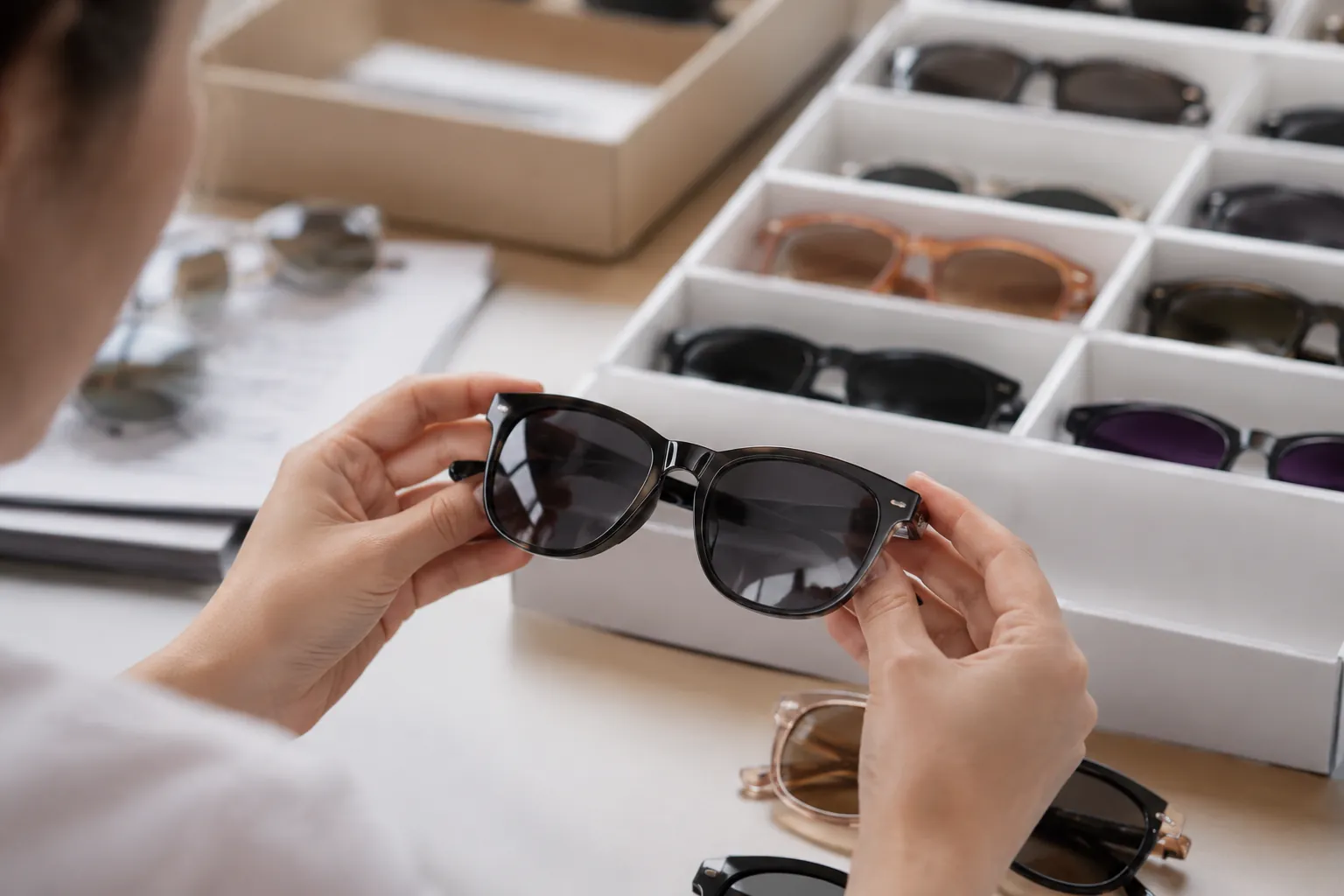
This guide is for brand owners, importers, distributors, and retail buyers comparing memory metal with stainless steel, TR90, and acetate in private label sunglasses programs. The real question is simple: does memory metal create enough practical and commercial value to justify a higher unit cost? Sometimes yes. Often no. The answer depends on channel, retail price, expected handling, frame construction, and order volume. Use the framework below to assess performance claims, cost logic, process impact, compliance requirements, and sample-review priorities before you commit to bulk production.
Start With the Business Case, Not the Material Story
Memory metal is often sold as a premium upgrade. Buyers should strip that pitch down to a few hard questions. Will the customer notice the benefit in try-on or daily wear? Will the construction reduce deformation, refits, or replacements enough to justify a higher landed cost? Can your channel explain the feature clearly enough to support margin?
For many private label programs, memory metal is not the default best choice. In seasonal fashion sunglasses with short selling cycles or low repeat wear, the premium may not pay back. In optical retail, travel retail, uniform programs, and active-lifestyle collections, the case is stronger because handling is frequent and the benefit is easier to show.
Treat memory metal as both a material choice and a merchandising choice. If shoppers mainly compare shape, lens tint, and price, the added value may stay invisible. If they handle the frame in person and care about fit retention, the premium is easier to defend.
- Good fit for programs where durability can be explained or demonstrated during selling.
- Stronger fit for channels with frequent handling, repeat wear, or low tolerance for returns and refits.
- Weaker fit for giveaway lines, fast-fashion drops, and strict opening-price-point products.
- Most defensible when the durability benefit appears in the sales script, packaging, or product page.
What Memory Metal Changes in Frame Construction
In eyewear, "memory metal" usually means a highly elastic alloy used in temples, bridge sections, or selected structural parts rather than the full frame. Its main characteristic is elastic recovery. If bent within its working range, the part returns closer to its original shape than a conventional low-flex metal component.
That can help reduce permanent temple spread or visible misshaping from routine handling. But it does not remove the engineering burden. Not even close. Memory metal parts still need controlled forming, joining, finishing, and assembly.
Key risk points usually include hinge integration, end-piece alignment, geometry consistency, and the transition between the elastic section and any more rigid material such as acetate, injected polymer, or decorative metal parts. In commercial programs, buyers typically see three formats: flexible temples, flexible bridge elements, or hybrid temple constructions with covered tips. Each one changes assembly complexity and QC requirements.
Decoration matters too. Plating, pad printing, laser engraving, foil transfer, or applied logo parts can narrow the process window and increase defect risk. The benefit is real, but it has limits. Memory metal can help with repeated opening and closing, accidental outward bending, and showroom handling. It does not make a frame indestructible. Screws still loosen. Hinges still wear. Lenses can still fail to seat properly. Surface finish can still become the complaint driver.
Use Cost, MOQ, and Lead Time as One Decision
Memory metal usually costs more, so buyers should assess it against retail math, not supplier language. Exact pricing depends on shape, thickness, finish, lens spec, decoration, packaging, and order volume. In most cases, memory metal hybrids sit above simpler standard-metal builds because the material is more specialized and the assembly and inspection burden is higher.
| Frame option | Typical factory cost position | Common MOQ logic | Best use case | Main cost risk |
|---|---|---|---|---|
| Standard metal frame | Often used as a lower-cost baseline for entry and mid-tier programs | Can be practical for smaller and mid-size runs depending on design complexity | Fashion sunglasses, promotional retail, value-driven chains | Permanent bending or temple spread under repeated handling |
| Memory metal hybrid frame | Usually positioned above comparable standard metal because of material and process complexity | Often easier to justify when repeat orders or larger volumes can absorb setup and QC effort | Optical, travel retail, premium private label, active lifestyle | Higher product cost and tighter process control can compress margin if the feature is not monetized |
| TR90 or injected polymer frame | Can be cost-efficient at volume, especially for lightweight designs | Economics depend heavily on tooling status and run size | Sport, youth, everyday comfort, lightweight programs | Different in-hand feel and lower perceived metal premium in some channels |
| Acetate frame | Often ranges from mid-tier to premium depending on material quality and finishing steps | Can work across different run sizes, but finishing labor and material waste affect cost | Boutique fashion, style-led collections, stronger visual identity | Heavier weight and lower elastic recovery than memory metal |
Do not isolate MOQ from development effort. Small runs can make a technically complex frame hard to justify because setup, component sourcing, and inspection effort are spread across fewer units. Larger repeatable programs are usually a better fit because the buyer has more room to absorb development cost and maintain process consistency.
Lead time needs the same discipline. Sampling and bulk timing depend on whether the frame architecture is fixed, artwork is approved, and decoration and compliance requirements are clear. Projects often slip when buyers keep revising temple profile, hinge feel, tip shape, logo placement, or finish after the first sample review. Structural changes usually trigger another tolerance and fit check. That adds time.
Where the Premium Usually Pays Back
Memory metal makes the most sense in channels where fit stability, handling resistance, and after-sales performance matter more than hitting the lowest opening price. It is easiest to monetize when staff can demonstrate controlled flex or when end users repeatedly wear, pack, and handle the product.
Optical retail and prescription-compatible sunglass programs are common candidates because customers often expect better durability and sales staff can explain the benefit in person. Travel retail is another logical fit. Eyewear gets stored in bags, seat pockets, and carry-ons, so resistance to misshaping is a practical selling point, not a vague one.
Uniform and corporate programs can also benefit when replacement cost includes administration, redistribution, and user downtime rather than just the frame cost. Active-lifestyle collections may justify memory metal as well if the brand wants a lighter metal look with more flex tolerance than a rigid standard-metal frame.
The case is weaker in fast-fashion racks, deep-discount channels, and promotional programs where shoppers focus mainly on price and appearance. If retail staff will not explain the feature and the user is unlikely to notice the difference in normal wear, memory metal becomes an internal cost, not a market advantage.
Failure Modes, Tolerances, and QC Still Decide Outcomes
Buyers often focus too much on the alloy and not enough on assembly quality. That is a mistake. In real programs, many failures come from connection points, finish systems, or dimensional inconsistency rather than from the memory metal concept itself.
- Hinge fatigue: Flexible temples still rely on stable screw retention, hinge alignment, and consistent opening resistance.
- Mixed-material joint weakness: The transition between memory metal and acetate, injected polymer, or decorative components is often a primary stress point.
- Plating and coating defects: Poor surface preparation or inconsistent finishing can cause peeling, uneven color, or early wear complaints.
- Lens retention problems: A flexible structure still needs secure lens seating and stable groove or rim dimensions after handling.
- Over-flex damage: Demonstrations or misuse outside the intended flex range can damage adjacent parts even if the elastic section itself recovers.
This is where supplier process discipline matters. A factory should be able to explain how it checks left-right symmetry, front alignment, hinge feel, lens fit, and cosmetic finish before packing. Basic dimensional consistency matters because a frame can pass static inspection and still feel inconsistent in store if opening force, alignment, or fit varies from unit to unit.
During sample review, focus on repeatability. If temple opening angle, alignment, hinge resistance, or lens seating changes noticeably after repeated handling, the issue may sit in the construction or assembly method rather than in the material claim.
Lock Down Compliance and Test Points Early
Memory metal does not change normal sunglass compliance obligations. The alloy is only one part of the finished product, and material quality alone does not prove market compliance. Buyers should confirm the compliance path at quotation stage, not after sample approval.
Depending on the destination market and product category, relevant references may include CE EN ISO 12312-1, ANSI Z80.3, AS/NZS 1067, REACH, and FDA registration where applicable. ISO 9001 and BSCI can help as factory-level references, but they do not replace product-level compliance evidence.
Ask the supplier to separate in-house checks from third-party lab testing in writing. That distinction matters for both timing and risk. In-house checks can catch obvious appearance, fit, and dimensional issues early. Market-entry documentation may still require external test reports or supporting records, depending on the destination market.
Useful checkpoints include lens category, visible light transmission, UV performance, coating durability, and chemical review where required under REACH. For memory metal constructions, ask for a post-flex review that checks alignment, hinge feel, and lens retention after repeated opening, closing, or controlled bending. That is far more useful than accepting a generic statement that the frame is flexible.
A Practical Sourcing Framework for Private Label Buyers
If you are choosing between standard metal and memory metal, use a five-point commercial screen. First, does your retail price leave room for a premium frame story? Second, will the selling channel physically demonstrate or explain the feature? Third, are deformation complaints, post-sale adjustments, or replacement costs a real issue? Fourth, can you support the development effort with enough order volume or repeat potential? Fifth, does your design concept fit a rational hybrid construction?
| Decision factor | If yes | If no |
|---|---|---|
| Your retail price can absorb a better frame story | Memory metal remains commercially viable | Use standard metal, TR90, or acetate |
| Your channel sells in hand or through staff explanation | Durability is easier to monetize | The feature may go unnoticed |
| Returns, refits, or temple spread are a measurable issue | Higher product cost may pay back through lower service cost or fewer claims | The upgrade may not improve margin |
| You can support a repeatable volume program | Development and QC effort are easier to justify | Small runs may make the build less economical |
| Your design allows rational hybrid construction | The material can be engineered more reliably | Style-first concepts may fit acetate or simpler metal better |
Then run the project in a strict sequence: define the retail target, freeze the frame architecture, confirm the compliance route, approve artwork and decoration methods, request a representative sample, and stress-test that sample under realistic handling. Open and close the temples repeatedly. Check recovery. Review alignment. Inspect finish consistency. Evaluate logo durability. Confirm that the frame still presents correctly after handling.
Do not approve on looks alone. If the sample performs well but margin is still tight, review decorative complexity before rejecting the material. Multi-step logos, applied plaques, special plating combinations, and extra cosmetic parts can raise both cost and defect risk. In some cases, a simpler specification is the better cost fix than changing the substrate.
Bottom Line for Buyers
Memory metal can justify a higher cost when the frame will face repeated handling, the selling environment can explain the durability benefit, and the retail structure leaves room for a premium build. It is not the right answer for every private label sunglasses line.
For optical retail, travel, active-lifestyle, and repeat-wear programs, the premium can make sense because users are more likely to notice fit retention and the channel is better positioned to explain the benefit. For fast-turn fashion lines, promotions, and strict entry-price programs, standard metal, TR90, or acetate often deliver cleaner economics.
The buying approach is simple: match the material to the channel, confirm compliance early, and test the sample as a finished product, not as a visual mock-up. That is how you avoid paying extra for a feature the customer will not value.
Have a custom sunglasses project in mind?
Send us your styles, target market and quantities and we will return a detailed quote with MOQ, lead time and a sample plan.
Get a QuoteWhy source this from Wenzhou with LumiShades
Wenzhou in Zhejiang Province is widely regarded as China’s eyewear manufacturing capital, producing a large share of the world’s sunglasses. That concentration matters to buyers: a deep local supply chain for acetate sheet, hinges, lens blanks, plating and packaging means shorter component lead times, easier color and material matching, and a workforce with decades of eyewear-specific skill. LumiShades has manufactured in this ecosystem since 2009, and our vertical integration — in-house injection molding, acetate cutting, CNC milling, lens tinting, decoration and quality control — means no part of your order is quietly subcontracted to a workshop you cannot audit.
For international buyers, that vertical control translates into accountability. When a single factory owns every step, defects are traced and fixed at source rather than bounced between vendors, and your specifications survive intact from first sample to bulk. We back this with 15+ years of experience, shipments to 60+ countries, more than 5 million pairs produced per year and a 98.5% on-time delivery rate. Our certifications — CE EN ISO 12312-1, FDA registration, ANSI Z80.3, AS/NZS 1067, REACH, ISO 9001 and BSCI audit — mean the compliance documentation your market requires already exists. Explore our manufacturing capabilities and quality control process to see how this works in practice.
Frequently asked questions
Is memory metal suitable for low-MOQ private label orders? It can be, but the economics need a hard review before development starts. Ask for a side-by-side quotation that compares memory metal with standard metal or TR90 using the same lens, finish, decoration, and packaging assumptions. Then check whether your retail price, gross margin, and likely reorder volume justify the added development and inspection effort. If the order is a one-off small run with little repeat potential, a simpler construction is usually easier to defend.
Does memory metal mean the whole frame is flexible? No. In many eyewear designs, memory metal is used only in the temples, bridge, or another selected structural section, while the front remains standard metal, acetate, or injected polymer. Buyers should ask the supplier to identify exactly which components use the alloy and which do not. That affects performance expectations, assembly risk, repair considerations, and how the product should be demonstrated in sales training.
Will memory metal reduce returns enough to offset the higher cost? Sometimes, but that is a program-specific question, not a blanket promise. Start with your own return and service data. Look for issues such as temple spread, misshaping, refits, or replacement requests caused by handling. Then test a sample built to final construction under repeated opening, closing, and controlled bending. If your current problems are mostly hinge loosening, lens damage, finish complaints, or poor assembly, memory metal alone may not solve them.
What should I test on the first sample? Use a practical checklist. Confirm left-right alignment, hinge resistance, lens seating, finish consistency, logo durability, and overall dimensions. Then run repeated opening and closing cycles and controlled flexing within normal handling limits, followed by a second inspection to see whether alignment, hinge feel, or lens retention changes. Record the results with photos and notes so you can compare later samples and bulk production against the same criteria.
Which compliance documents matter for export sunglasses programs? That depends on the destination market and product category, but common checkpoints include CE EN ISO 12312-1, ANSI Z80.3, AS/NZS 1067, REACH, and FDA registration where applicable. Ask the supplier to state which standard applies to the intended market, what evidence is already available, and what still requires third-party testing or documentation. Also keep product-level compliance separate from factory credentials such as ISO 9001 and BSCI, because those do not replace finished-product compliance requirements.
Ready to start?
Explore our rimless sunglasses or request a quote — our sales team replies within 12 hours.
Request a Quote