
Laser Engraving vs Pad Printing vs Logo Plates
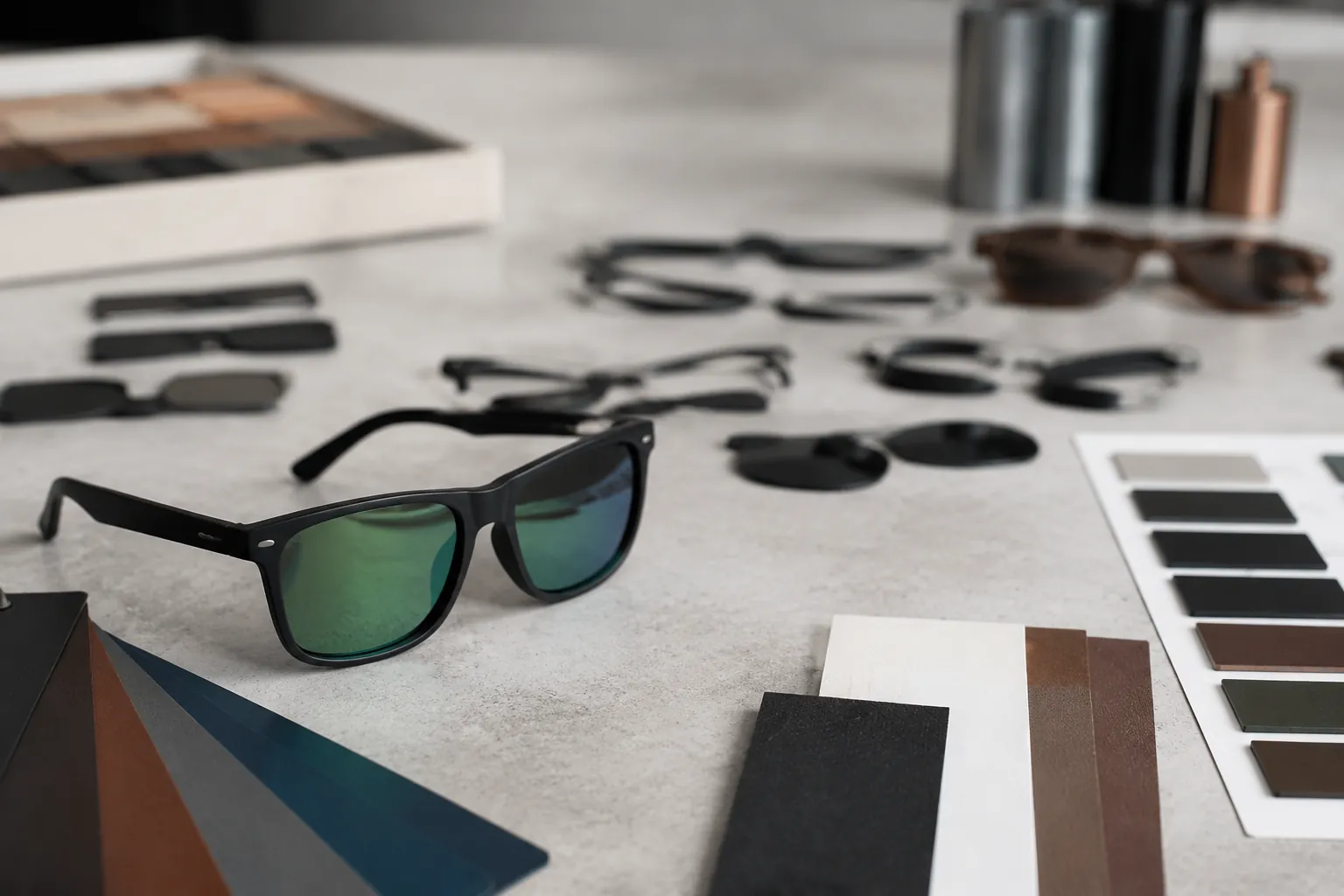
If you buy custom sunglasses for a brand, chain, or distribution program, the logo method matters more than many buyers realize. A mark that looks sharp on day one can wear differently after repeated cleaning, handling in transit, and daily use. This guide compares laser engraving, pad printing, and metal logo plates using the factors that affect production outcomes: durability, appearance, cost, substrate compatibility, lead time, and real-world wear.
The short answer: which branding method usually lasts longest
If durability is the top priority, laser engraving is usually the most durable option on acetate and metal parts. The mark is created by removing or altering surface material, so there is no ink layer to rub away. On the right material, an engraving can remain legible through repeated cleaning and normal handling. The tradeoff is visual: engraving is usually subtle and lower-contrast than printed color or a raised emblem.
Pad printing offers the most flexibility for color, small graphics, and fine detail, but it is also the most dependent on surface preparation, ink selection, and curing. On sunglasses, wear commonly shows first at the edges of the logo, then as fading after repeated wiping with alcohol pads or frequent cloth cleaning. A well-executed pad print can be suitable for fashion or seasonal programs; a weak one may show visible wear early.
Metal logo plates are generally resistant to surface abrasion because the visible branding is metal rather than ink. The plate itself is durable; the main risk is attachment. If adhesive, pins, or mounting geometry are not correct for the frame shape and material, the plate can lift, loosen, or detach.
For buyers, the better question is not "which looks best?" It is "which method fits the frame material, target price, and expected handling?" A volume program and a premium acetate collection should not be decorated the same way.
How each method is made on the factory floor
Laser engraving is typically applied after molding, cutting, or milling. On acetate, the laser removes a thin layer of material or creates contrast by altering the surface finish. On coated metal, it can remove coating to expose the base layer beneath. The main controls are focal depth, speed, power, and beam stability. If settings are too aggressive, the edge can scorch or look fuzzy; if too light, the mark may be faint. Because material color, coating thickness, and surface gloss affect the result, factories usually confirm settings on the actual production batch.
Pad printing uses a silicone pad to transfer ink from an etched cliché plate onto the frame. The logo is printed after the part is cleaned and often surface-treated, then cured according to the ink system used. Surface condition matters. Residue from molding, polishing, handling, dust, or oil can reduce adhesion. Depending on the substrate, factories may use alcohol wiping, flame treatment, corona treatment, or primer to improve ink bond. For small temple logos, even minor misalignment is visible, so registration control is important.
Metal logo plates are usually stamped, etched, laser-cut, or die-formed from alloy sheet, then plated, painted, brushed, or filled with color. They may be fixed with pressure-sensitive adhesive, heat-activated adhesive, pins, or a hybrid method. Plate thickness, curvature, and placement all affect appearance and retention. On narrow or curved temples, a plate that is too thick or mounted under tension can look uneven or lift at an edge.
Decoration should be treated as part of the full production process, not as a separate step. Frame finish, adhesive cure, cooling time, and handling sequence all affect the final result.
Durability under sweat, wipes, and pocket friction
In real use, logo wear usually comes from skin oil, alcohol wipes, repeated microfiber cleaning, and contact with other hard objects in bags, trays, or shipping cartons. Those are the conditions buyers should test before bulk approval.
- Laser engraving: Generally the most resistant to wiping and sweat because the mark is part of the surface itself. On coated metal, contrast may soften as the coating wears, but the engraved shape remains. On acetate, the engraving depth should be controlled so the mark is visible without weakening the part.
- Pad printing: Most vulnerable to edge wear and chemical exposure. Good inks can perform adequately, but repeated cleaning, alcohol exposure, sunscreen contact, and abrasion all reduce service life. If the frame flexes near the hinge, printed areas can also show cracking or early wear.
- Metal logo plates: Strong against abrasion and cleaning, but only if the plate is attached properly. Adhesive failure, poor surface preparation, or mounting on a tight curve can cause corner lift or loosening before the plate face itself shows wear.
A practical rule: if the logo must stay intact through long use, do not rely on ink alone unless you have tested the exact frame, ink system, surface treatment, and cleaning method. Buyers in retail, pharmacy, optical, and corporate gifting programs should assume customers will wipe frames more often than expected.
Side-by-side comparison for buyers
| Method | Best on | Typical durability in real use | Visual style | Process notes |
|---|---|---|---|---|
| Laser engraving | Acetate, metal, some coated parts | High; resistant to rubbing and cleaning | Subtle, technical, low-gloss | Needs correct power and depth; contrast varies by material color and coating thickness |
| Pad printing | Most frame materials if prepared well | Medium to low; depends heavily on ink and cure | Best for color logos and fine detail | Requires cleaning, surface treatment, and tight registration control |
| Metal logo plates | Temples, front corners, premium programs | High if attachment is correct | More premium and visible | Needs plate sourcing, fixing method, and extra inspection for lift or misalignment |
If you simplify the buying decision, the table usually points to the right answer:
- Choose laser engraving if you want low-profile branding with strong wear resistance and the material supports it.
- Choose pad printing if your design needs color, small type, or graphic detail and you accept more wear risk.
- Choose metal logo plates if the program needs a premium look and you can support extra assembly and inspection.
None of these is universally best. The right choice depends on channel, price point, material, and how the product will be handled.
Cost, MOQ, and lead-time logic buyers should actually use
Decoration cost is not just the per-piece print fee. It also includes setup, test-run waste, alignment time, handling, curing, and final inspection. At low quantities, the fixed labor often matters more than the decoration itself.
For a small pilot order, a simple laser mark is often easier to manage than a metal plate program that requires extra sourcing and assembly. Pad printing may look inexpensive on paper, but if the artwork needs multiple colors or the surface is difficult to prepare, the effective unit cost can rise.
A supplier's MOQ does not change the physics of the decoration method. It changes only how much fixed work gets spread across the order. Buyers testing a new chain, a seasonal style, or a market-entry program should usually start with the least complex decoration that still matches the brand.
As order size rises, setup cost is spread across more units and the economics usually improve. At higher volume, buyers should negotiate the full process load: decoration, packing, inspection, and defect risk, not only the logo line.
Lead time also changes by method. A straightforward laser mark may fit inside the normal sample cycle, while a metal plate program can add sourcing and assembly time. If the logo requires custom plating, multiple colors, or a new fixture, expect extra days. The exact schedule should be confirmed by the factory for the specific model and decoration method.
The cheapest logo is often the expensive one after returns, rework, or customer complaints. That is especially true for retail, pharmacy, optical, and distributor programs where replacement cost can outweigh the original savings.
Material matters more than the decoration brochure says
The same logo method behaves differently on different frame materials, and that is where many buyer mistakes begin.
Injection-molded plastic: Usually suitable for pad printing if the surface is cleaned and treated correctly. It can also accept engraving in some cases, especially when the finish and color provide enough contrast. The main risk is contamination from molding or polishing residues, which can reduce print adhesion. On flexible parts, a rigid printed layer may wear or crack sooner than expected.
Acetate: Often a strong candidate for laser engraving because it cuts and marks cleanly. When the settings are correct, engraved marks can look crisp and feel integrated with the frame. Pad printing can work on acetate too, but performance depends on surface finish, cleaning, and ink compatibility.
Metal: Usually the most stable substrate for engraving and metal plates. If the metal is coated, final appearance depends on coating thickness and engraving depth. Pad printing is possible on metal, but buyers should test it under the same cleaning and transport conditions expected in real use.
Because decoration performance depends on the full frame build, suppliers should evaluate the logo method on the actual finished part, not on a generic sample piece.
How to test logo durability before you place a big order
Do not approve a logo based on a render alone. Ask for physical samples and run a simple abuse test that reflects how your customers will use the product. You do not need a full laboratory program for every order, but you do need a repeatable pass/fail method.
- Rub the logo with a dry microfiber cloth 50 times.
- Wipe it 20 times with the cleaning method your customer is likely to use, such as an alcohol wipe if that is realistic for the channel.
- Leave a sample in a warm environment for a few hours, then inspect for edge lift, ink softening, or adhesive creep.
- Place a pair with other frames and check whether the logo scratches or scuffs.
- Flex the temple through normal wear positions and look for print cracking, plate corner lift, or adhesive failure near the hinge.
For compliance programs, decoration does not replace product testing. Buyers still need the correct standards for the target market: CE EN ISO 12312-1 for the EU, ANSI Z80.3 for the U.S., AS/NZS 1067 for Australia and New Zealand, and REACH where chemical restrictions apply. FDA registration, ISO 9001, and BSCI are relevant to factory systems and buyer due diligence, but they do not make a weak logo durable.
Buyer rule: if the logo fails your wipe test, it is not ready for bulk production. Fix it before you place the order.
One more useful control: ask the supplier to define the acceptance criteria in writing. For example, is the pass standard "no visible loss at normal viewing distance," "no edge lift after heat exposure," or "no ink removal beyond an agreed limit"? Vague standards create disputes later.
A practical decision framework for your next order
If you want a fast way to choose, use this framework:
- Choose laser engraving if you want the most durable low-profile branding and the frame material supports it.
- Choose pad printing if the logo needs color or fine detail and you can accept more wear risk, but insist on proper surface prep and cure control.
- Choose metal logo plates if the collection is positioned as premium and you can support the extra assembly, alignment, and attachment checks.
- Choose samples first and test them with wiping, flexing, heat, and transport handling before you approve mass production.
For many overseas buyers, the smartest program is mixed rather than uniform. Use engraving on core sell-through SKUs, pad printing on fashion colorways, and plates on flagship or gift-box programs. That spreads risk and lets you match decoration to channel expectations.
In short: buy the logo method as if it were part of the product, not an afterthought. The right branding choice reduces complaints, preserves margin, and makes the sunglasses feel like a finished branded item instead of a generic frame with a mark added later.
Have a custom sunglasses project in mind?
Send us your styles, target market and quantities and we will return a detailed quote with MOQ, lead time and a sample plan.
Get a QuoteWhy source this from Wenzhou with LumiShades
Wenzhou in Zhejiang Province is widely regarded as China’s eyewear manufacturing capital, producing a large share of the world’s sunglasses. That concentration matters to buyers: a deep local supply chain for acetate sheet, hinges, lens blanks, plating and packaging means shorter component lead times, easier color and material matching, and a workforce with decades of eyewear-specific skill. LumiShades has manufactured in this ecosystem since 2009, and our vertical integration — in-house injection molding, acetate cutting, CNC milling, lens tinting, decoration and quality control — means no part of your order is quietly subcontracted to a workshop you cannot audit.
For international buyers, that vertical control translates into accountability. When a single factory owns every step, defects are traced and fixed at source rather than bounced between vendors, and your specifications survive intact from first sample to bulk. We back this with 15+ years of experience, shipments to 60+ countries, more than 5 million pairs produced per year and a 98.5% on-time delivery rate. Our certifications — CE EN ISO 12312-1, FDA registration, ANSI Z80.3, AS/NZS 1067, REACH, ISO 9001 and BSCI audit — mean the compliance documentation your market requires already exists. Explore our manufacturing capabilities and quality control process to see how this works in practice.
Frequently asked questions
Which branding method is most durable for sunglasses sold in retail stores? For most retail sunglasses, laser engraving is usually the most durable option on acetate and metal because it does not rely on an ink layer. Metal logo plates can also last well if the attachment is strong and the plate fits the frame shape. Pad printing is typically the least durable under repeated wiping and chemical exposure. Before approving bulk, ask for samples and test the exact logo method on the exact frame model.
Can pad printing survive alcohol wipes and sunscreen? Sometimes, but only if the ink system, surface preparation, and curing are all correct. Even then, pad print is more vulnerable than engraving or a metal plate. The practical test is simple: wipe a sample with the cleaning method your customers are likely to use, then inspect for edge wear, fading, or lift before approving production.
What registration tolerance should I expect for small temple logos? Small temple logos need tight placement because misalignment is easy to see on a narrow surface. For buyer review, set a clear visual standard with the factory and approve against the physical sample, not a render. If a logo looks off-center at normal viewing distance, it is usually not acceptable even if the measured offset seems small.
Are metal logo plates a bad idea for low-MOQ orders? Not necessarily, but they add sourcing, attachment, and inspection work. For low-MOQ test runs, they only make sense if the brand needs the premium look and is willing to pay for the extra handling. If the goal is to test demand quickly, a simpler decoration method is often easier to approve and manage.
Does the logo method affect CE, FDA, or ANSI compliance? The decoration method does not replace product compliance. The sunglass model still needs the correct testing and documentation for the target market, such as CE EN ISO 12312-1, ANSI Z80.3, AS/NZS 1067, REACH, and FDA registration where applicable. Decoration is only one part of the finished product; it should be reviewed alongside the full frame and lens specification.
What should I ask a factory before approving a logo method? Ask which material the logo will be applied to, how it is fixed or cured, what the likely failure mode is, what the inspection standard is, and whether the factory can provide physical samples for wipe, flex, and heat checks. Also confirm MOQ, lead time, and whether the decoration is done in-house or through a subcontractor. The best answer is specific and tied to the exact frame model.
Ready to start?
Explore our cat-eye sunglasses or request a quote — our sales team replies within 12 hours.
Request a Quote