
Spec Wire-Core Temples for Fit, Hold, and Value
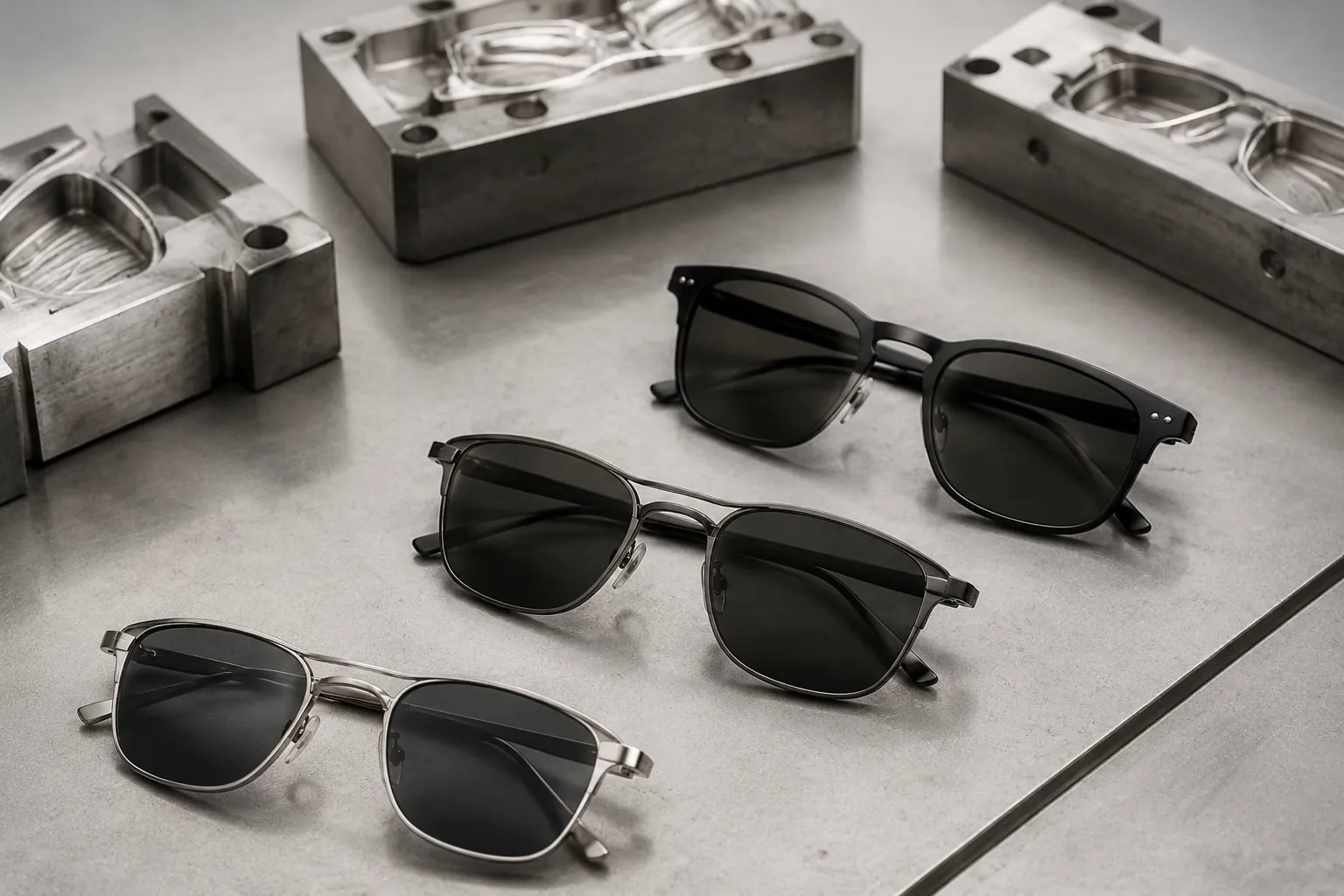
This guide is for buyers sourcing custom sunglasses at volume and deciding whether wire-core temples are worth the extra cost, process time, and QC discipline. In the right program, they are. A metal core inside the temple can improve fit tuning, bend hold, hand feel, and perceived value. But it only pays off when the temple section is thick enough, the finish standard can hide the core, and the factory can control placement and cosmetics consistently. That is the real question. Not whether wire-core sounds premium, but whether it fits the product position and whether the supplier can make it without read-through, asymmetry, hard points, or late-stage cosmetic scrap. This article explains where wire-core belongs, what to put on the spec sheet, how MOQ and price logic usually work, and which process controls matter most before bulk approval.
Start with product position, not material story
Wire-core temples are not automatically better. They are a construction choice. Use them when the frame needs post-adjustment shape hold, a denser hand feel, or more controlled fit adjustment behind the ear. In sunglasses, that usually points to acetate programs, higher-trim injected styles, or retail programs where staff may adjust fit before sale.
For an opening-price promotional frame, a plain injection temple is often the better answer. It is simpler, usually safer cosmetically, and easier to scale. Wire-core earns its place only when the commercial case is clear: the frame sits above entry tier, the temple profile is thick enough to hide the core cleanly, decoration or milling already pushes the build into a higher trim level, or the brand wants more controlled adjustment than a plain plastic temple usually gives.
The technical reason is simple. A non-core plastic temple often bends over a wider area and may spring back more after fitting. A cored temple can make adjustment more localized and more repeatable, especially near the ear bend, if the core profile, insertion depth, and surrounding material are specified correctly. That can reduce left-right mismatch after fitting. But only if the build and QC method are controlled.
- Use wire-core when the frame is positioned as mid-tier or premium, not purely opening price.
- Use it when temple thickness is sufficient to hide the core without cosmetic read-through.
- Use it when the selling channel expects fit adjustment at retail or during dispensing.
- Skip it when the style is very slim, highly cost-driven, or meant mainly for short-cycle promotional volume.
If those conditions do not apply, keep the bill of materials simple. Extra process steps need a clear payback.
What wire-core changes in use
Buyers often call wire-core "more premium." That is too vague to guide a factory. What usually changes is flex character, adjustment control, tactile feel, and sometimes weight distribution.
Start with flex. A plain injected temple often feels springy along much of its length. A cored acetate or cored injection temple usually feels more controlled, with the fitter able to create a defined ear curve instead of a general bow. That matters in retail. Small adjustments need to stay where they were made.
Adjustment hold may also improve. On a well-built cored temple, the bend stays closer to the fitted shape than it would on a non-core plastic temple. But the words wire core alone guarantee nothing. Results depend on core material, profile, length, anchoring, surrounding wall thickness, and the adjustment method used during evaluation.
Hand feel changes too. A cored temple often feels denser and less hollow when opened, closed, or handled. On acetate styles with beveling, logo plates, or stepped milling, that tactile difference may support the retail impression better than an added decorative detail.
Weight distribution can change as well, but the effect varies with core design, temple dimensions, and front-lens mass. Do not rely on a generic weight claim. If balance matters, ask the supplier to weigh the approved sample and compare it with the non-core alternative.
Specify measurable performance, not factory shorthand
Do not write add wire core for premium feel and expect consistent production. Different factories may use nickel silver, stainless steel, or other approved alloys; flat strips, shaped wires, or other profiles; and different insertion depths or anchoring methods. Those choices affect rebound, comfort, corrosion behavior, and cosmetic risk.
At minimum, the spec sheet should define material, profile, position, adjustment zone, rebound test method, symmetry tolerance, and cosmetic limits. Leave those points open and the supplier will usually optimize for process convenience, not your intended retail result.
- Core material: specify nickel silver, stainless steel, or another approved alloy, and state whether equivalents are allowed.
- Profile and size: call out flat or shaped profile and nominal dimensions matched to the temple section drawing.
- Core position: define start and stop position relative to hinge side and tip side, using the technical drawing or approved sample as the reference.
- Wall thickness: require enough cover over the core to prevent visible read-through after polishing or finishing.
- Bend retention: define the adjustment point, target angle or shape, hold time, inspection condition, and allowed rebound.
- Symmetry tolerance: set a maximum left-right difference for opening angle, rear-view drop, or other agreed geometry checks.
- Cosmetic limit: state that no visible shadow line, sink, ripple, or edge telegraphing is acceptable under the agreed inspection distance and lighting condition.
Also ask the supplier to document its internal test method. If the factory says bend retention is "OK," that is not enough. The sample record should show the exact forming point, angle or shape reference, hold time, inspection timing, and acceptance rule.
Choose the right route for cost, volume, and finish
Wire-core is not a single build method. The right route depends on material family, target cost, geometry, and decoration plan. Use the table below during RFQ review.
| Construction route | Typical temple section | Best use case | Typical added cost impact | Main risk |
|---|---|---|---|---|
| Acetate temple with inserted wire core | Medium to thick temple bodies with enough cover over the core | Higher-trim sunglasses, polished acetate, styles where fit adjustment and hand feel matter | Higher than a comparable non-core temple because of added insertion, finishing, and cosmetic control steps | Read-through or polishing exposure if cover thickness is inconsistent |
| Injection temple with embedded core | Molded temple sections designed to capture and conceal the core | Commercial programs needing better fit behavior at more controlled cost than full acetate | Higher than a non-core molded temple because tool design and process control are more demanding | Cosmetic variation from core shift, warp, cooling imbalance, or molding inconsistency |
| CNC-shaped acetate temple with logo plate or stepped detail | Thicker temple sections with local detail areas | Private-label lines where surface finish, decoration, and hand feel all matter | Usually the highest-cost route because machining, insertion, finishing, and inspection all become tighter | High scrap risk if decoration highlights flatness, symmetry, or surface defects |
| Non-core plastic temple | Thin to medium sections where simple construction is preferred | Opening price point, promotional volume, simple fashion programs | Baseline lowest-cost option | Less controlled adjustment behavior and lower perceived trim level |
Then look at MOQ and price logic. At small quantities, the supplier is spreading setup time, sample-translation risk, and a higher scrap allowance over fewer units. The per-pair delta for wire-core often looks inefficient. As volume rises, that added cost becomes easier to absorb if the process is already stable.
Lead time works the same way. A clean sample can move quickly when the drawing already fixes temple section, hinge location, core type, and decoration position. Bulk timing becomes predictable only after the approved sample locks those details. Change temple thickness, logo position, or finish level after approval and the cored temple can quickly become a schedule problem.
Control the failure modes that make it look cheap
Most complaints about wire-core temples come from predictable process failures, not from the idea itself. The first is surface read-through. A faint line, shadow, ripple, or sink appears because the core sits too close to the outer wall or finishing removes too much material in one area. Slim temples are especially exposed. If the visual target is thin and sharp, ask the factory early whether the section still leaves enough cosmetic cover over the core.
The second is asymmetry. One temple may open wider, drop lower, or carry a different ear curve than the other. Causes include inconsistent core forming, hinge-seat variation, unequal material removal during polishing, or aggressive hand adjustment during final fitting. Do not accept "can adjust in store" as the answer. If the frame already looks uneven at final QC, perceived value drops fast.
The third is hard-point discomfort near the bend zone or tip end. This happens when the core ends too abruptly, sits too close to the inside surface, or the temple narrows too quickly after finishing. A frame can pass cosmetic review and still feel bad in wear.
The fourth is finish mismatch after decoration. Pad print, laser marking, hot foil, and especially metal logo plates create visual reference lines that make local surface defects easier to see. On decorated programs, check more than logo position. Check flatness around the decorated area, local polish uniformity, and left-right height consistency.
Good factories control these issues in process. They check core placement before closure or final shaping, check left-right temple geometry before decoration, and recheck surface appearance after finishing. If molding, acetate processing, decoration, and QC are split across multiple outside vendors, defects often slip downstream until rework becomes expensive.
Build sample approval around a hard checklist
Too many samples get approved on photos and first impressions. That is not enough here. A wire-core temple needs functional sign-off. Inspect the sample physically and use a short checklist that can be repeated in-line and at final QC.
- Rear-view symmetry: place the frame on a consistent inspection fixture or flat reference and compare left-right temple drop against the approved sample and tolerance.
- Opening angle: measure both temples against the approved sample or drawing and record the left-right difference.
- Bend response: adjust both temple ends using the agreed method, hold for the agreed time, then compare rebound to the approved shape and tolerance.
- Surface cosmetics: inspect under the agreed white-light condition and distance for shadow lines, sink marks, polish waves, logo misalignment, and local gloss change.
- Comfort zones: check the inside temple and tip area by touch to find pressure points, sharp transitions, or abrupt section changes.
- Hinge transition: open and close repeatedly to confirm the flex pattern and hinge feel are balanced left to right.
- Documentation match: confirm the approved frame build is tied to the correct market compliance file, not a generic or mismatched document.
That last point matters. Sunglass compliance depends on the selling market, not on whichever document a supplier sends first. Depending on destination market, buyers may need CE EN ISO 12312-1, ANSI Z80.3, or AS/NZS 1067. Material-side requirements such as REACH may also apply, and some customers still ask for FDA registration status in their vendor file. Quality-system and social-compliance requests often route through ISO 9001 and BSCI. Use the exact documentation that applies to the transaction, and make sure the approved sample references the same construction that will go into bulk.
Where the extra cost pays back
Wire-core temples are rarely the right choice because of the metal alone. The real cost sits in process control: inserting or molding around the core, maintaining adequate wall thickness, slowing finishing where needed, and tightening cosmetic inspection. Make the decision commercially. Not emotionally.
The feature usually pays back in three cases. First, frames sold at a mid-to-better retail tier where hand feel and fit control support the price position. Second, collections with acetate detailing, beveling, CNC work, or logo plates where a plain flexible temple would weaken the overall trim level. Third, retail or distributor programs where more stable adjustment can reduce post-sale fit complaints.
It usually does not pay back on short-run promotions, aggressive opening-price projects, or very thin temples where cosmetic risk is high and the fit benefit is limited. In those cases, the budget may do more for the product if moved to lens quality, coatings, packaging, or hinge upgrades.
When comparing quotations, ask the factory to break out the cost delta: acetate versus injection route, extra machining, decoration insertion, reject allowance, or tighter final QC. That gives you a cleaner basis for negotiation and sourcing decisions. On volume programs, review price breaks across multiple order levels rather than judging the feature only on a small pilot run.
A practical spec template is short: define temple construction, core type, visible-surface rule, bend-retention test method, left-right symmetry tolerance, comfort requirement at the tip and bend area, cosmetic inspection method, and market-specific compliance-file requirement. Clear language prevents expensive interpretation later.
Have a custom sunglasses project in mind?
Send us your styles, target market and quantities and we will return a detailed quote with MOQ, lead time and a sample plan.
Get a QuoteWhy source this from Wenzhou with LumiShades
Wenzhou in Zhejiang Province is widely regarded as China’s eyewear manufacturing capital, producing a large share of the world’s sunglasses. That concentration matters to buyers: a deep local supply chain for acetate sheet, hinges, lens blanks, plating and packaging means shorter component lead times, easier color and material matching, and a workforce with decades of eyewear-specific skill. LumiShades has manufactured in this ecosystem since 2009, and our vertical integration — in-house injection molding, acetate cutting, CNC milling, lens tinting, decoration and quality control — means no part of your order is quietly subcontracted to a workshop you cannot audit.
For international buyers, that vertical control translates into accountability. When a single factory owns every step, defects are traced and fixed at source rather than bounced between vendors, and your specifications survive intact from first sample to bulk. We back this with 15+ years of experience, shipments to 60+ countries, more than 5 million pairs produced per year and a 98.5% on-time delivery rate. Our certifications — CE EN ISO 12312-1, FDA registration, ANSI Z80.3, AS/NZS 1067, REACH, ISO 9001 and BSCI audit — mean the compliance documentation your market requires already exists. Explore our manufacturing capabilities and quality control process to see how this works in practice.
Frequently asked questions
Does every acetate sunglass frame need wire-core temples? No. Use wire-core only when the product needs more controlled fit adjustment, stronger shape hold after fitting, or a higher-trim hand feel that supports the selling price. For entry-price acetate or very slim temples, ask the supplier to compare a non-core and cored sample side by side. Approve wire-core only if the fit benefit is clear and the temple section still hides the core without cosmetic risk.
How should I judge bend retention during sample approval? Use a written test method, not a visual impression alone. Define where the temple is adjusted, the target shape or angle, how long it is held, how long you wait before inspection, and what rebound is acceptable. Record the result on the approval sample. If the supplier cannot state the method clearly, the bend-retention claim is not controlled well enough for bulk production.
Can wire-core be used on injection-molded temples as well as acetate? Yes. Injection-molded temples can use embedded cores, and this is a common way to improve adjustment behavior without moving to full acetate construction. The key checks are mold design, core location control, warp management, and cosmetic consistency after molding. Ask for a cut-section sample or detailed drawing review if the temple is slim or highly polished.
What cosmetic defect is most common on wire-core temples? Surface read-through is usually the main risk. It can appear as a shadow line, sink, ripple, or edge telegraphing when the core is too close to the surface or too much material is removed in finishing. To control it, require clear wall-thickness rules on the drawing, inspect samples under agreed lighting, and check whether later polishing or decoration could expose the core visually.
How do MOQ and lead times usually work on this type of program? Wire-core programs are generally less efficient at very low quantities because setup, sampling, and scrap allowance are spread across fewer units. Lead time also becomes more sensitive to late design changes because temple thickness, decoration location, and finish level all affect the cored construction. Ask the supplier for lead time and pricing at more than one volume level, and lock the approved sample before bulk planning so the core design, hinge position, decoration, and finish standard do not shift mid-process.
Ready to start?
Explore our aviator sunglasses or request a quote — our sales team replies within 12 hours.
Request a Quote