
How to Source Kids' Sunglasses Without Fit or Safety Errors
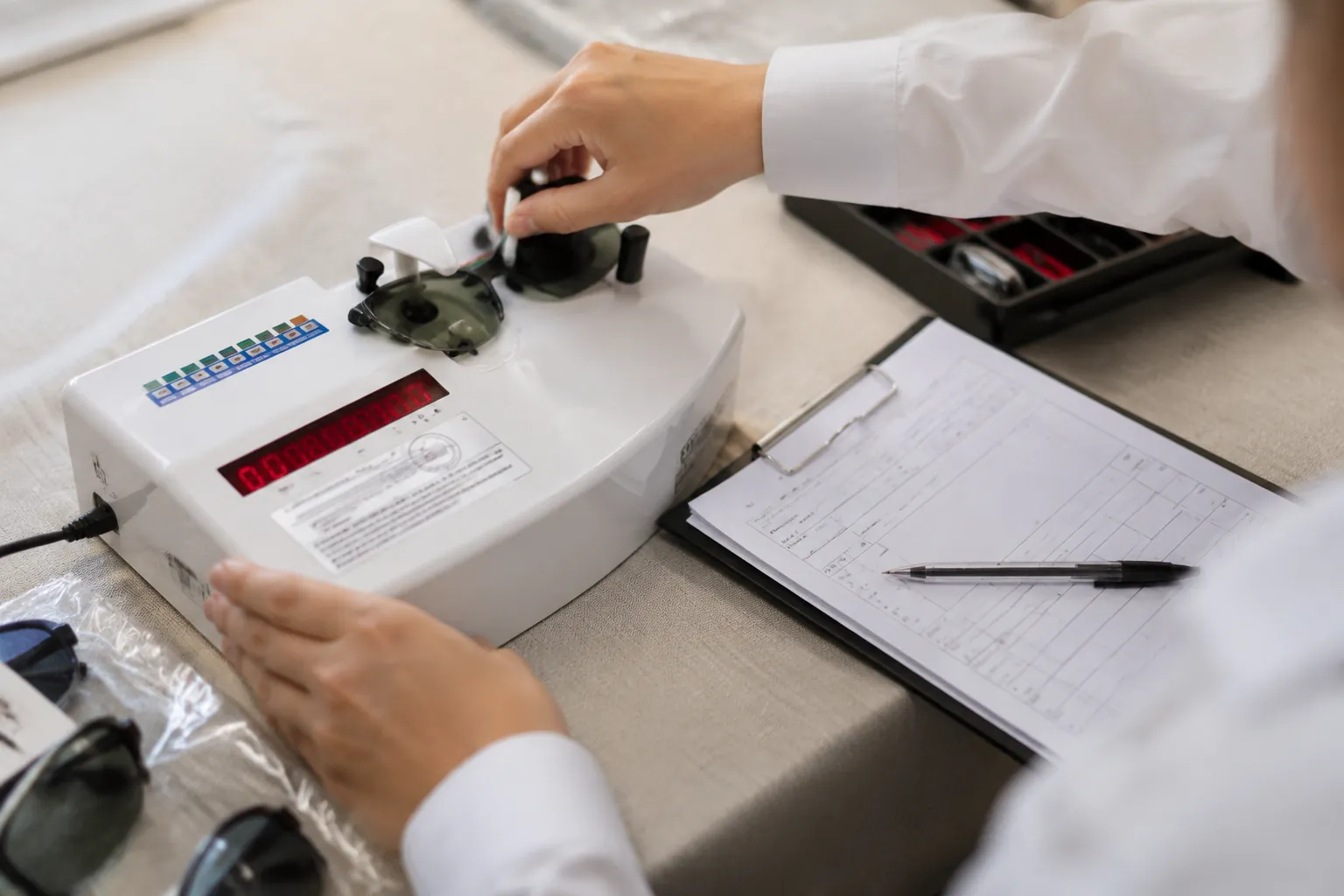
This guide is for brand owners, importers, distributors, and retail buyers building kids' sunglasses programs at scale. The goal is simple: prevent fit problems, hinge failures, decoration complaints, labeling mistakes, and compliance gaps before bulk production starts. Kids' sunglasses leave less room for error than adult fashion eyewear. Small mistakes in bridge fit, temple length, lens coverage, hinge tension, age grading, or packaging copy can quickly turn into returns, chargebacks, or delayed shipments. If you source from China, start by defining the retail program. Then lock the technical brief. Then approve a sample against measurable checkpoints before you commit bulk materials and packaging.
Start with the retail program, not the frame shape
Many sourcing problems start the same way: a buyer sends a reference photo, asks for price, and leaves the rest open. That usually backfires. For kids' sunglasses, define the retail program first. Then build the frame, lens, packaging, and compliance file around it.
A discount chain, a children's boutique, and a resort gift program do not need the same product. A discount chain may need injection-molded frames, simple decoration, and low-cost packaging. A boutique program may support better finishing, more color work, and upgraded packaging. A resort or seasonal gift program may care most about bright colors, fast replenishment, and durability for short-term heavy use.
Before asking for a quote, lock these five commercial points:
- Age band: 0-2, 3-5, 6-9, or 10-12 years. Do not combine multiple age bands in one sample brief.
- Target retail price: define the retail band clearly because it drives material choice, lens route, decoration, and packaging.
- Required markets: EU, US, Australia/New Zealand, or multi-market. Label copy and document requirements differ.
- Order structure: number of colors per style, expected repeat orders, and approximate volume per SKU.
- Packaging format: polybag, pouch, folding box, peggable card, blister card, or gift set.
MOQ and price logic still matter. Setup and handling costs do not disappear on small runs. Color matching, logo prep, packaging collation, and QC all take time. If you request many color splits, several packaging versions, or market-specific artwork at the start, unit cost and lead time usually go up. A stable brief gives you a real RFQ. Open variables do not.
Pick the right age grade and fit envelope
The most common technical mistake in kids' eyewear is obvious: taking an adult frame and shrinking it slightly. That is not enough. Children do not wear scaled-down adult geometry well. The result usually fails in three places. The bridge sits too high and slips. The temples run too long behind the ear. The lens position misses the face.
Ask the supplier to quote by age grade using actual dimensions, not vague labels like small kids or junior. Review eye size, bridge width, temple length, front curve, and overall front width together. If you plan to hold tolerances, say which dimensions are critical and confirm how the factory will check them during production and final QC.
| Age band | Typical fit envelope | Common failure point | What to verify on sample |
|---|---|---|---|
| 0-2 years | Small eye size, narrow bridge, short low-pressure temples | Bridge slip and nose-area discomfort | Stable bridge contact, smooth finishing, low weight, and a clean hinge area |
| 3-5 years | Small-to-medium eye size, secure retention, moderate front width | Cheek contact and loose temples | Temple grip, front width, and lens height during a smile test |
| 6-9 years | Medium eye size, better side coverage, more defined sport or fashion shapes | Adult-looking shape scaled down poorly | Eye alignment, hinge resistance, side coverage, and lash clearance |
| 10-12 years | Larger junior fit with stronger fashion acceptance | Pressure at the temples or a front that sits too flat | Front width, short wear comfort, stable alignment, and controlled temple splay |
Do not approve a pre-production sample from CAD, a mannequin head, or hand feel alone. Put samples on children in the intended age band if your testing process allows it. Watch the bridge, cheeks, and temples. Record what happens. Even a basic wear check can expose bad bridge geometry, temple overlength, and cheek interference fast. For active-use programs, also ask how the factory checks hinge consistency and lens retention during internal QC.
Material choices: where breakage and complaints begin
Material choice is not just a style call. It affects breakage risk, weight, color consistency, decoration wear, heat response, and how the product survives backpacks, beach bags, and repeated opening and closing.
Injection-molded plastic is common in volume retail because it supports cost control and repeatable output when the specification is disciplined. Acetate can give a more premium look and finish, but it usually costs more and may not suit lower-price or rough-use programs. Match the material to the retail position and expected handling. Nothing more. Nothing less.
Ask the supplier to explain the full construction, not only the visible front material. Buyers should confirm:
- Front and temple material: injection plastic or acetate, and whether that construction stays consistent across all colors.
- Hinge type: standard barrel hinge or spring hinge, if the design and construction support it.
- Lens material and thickness: how the lens is specified, how it seats in the frame, and whether the edge fit is secure.
- Decoration method: pad print, laser engraving, or metal logo plate.
- Edge finishing standard: especially around hinge cuts, nose contact points, and temple tips.
Decoration needs a hard review. Pad print is common and cost-effective, but check adhesion and cure on the actual production surface. Metal logo plates can add perceived value, but they also add assembly steps and more finish checks. Laser engraving can reduce print wear in some cases, but only if the material and surface support it. For younger age groups and lower-price programs, simpler decoration is usually easier to control.
Also ask about post-processing where relevant. CNC milling can refine shape details or recesses, but every added step creates another chance for variation. On children's eyewear, rough edges and burrs are not minor flaws. They become complaints.
Compliance checkpoints by market
Kids' sunglasses are not just smaller adult sunglasses. The compliance file must match the target market, the actual lens category, and the final packaging statements. If you plan to sell into multiple regions, decide early whether one technical specification can support all destinations or whether you need market-specific labeling and document packs.
Factories may reference systems and standards such as CE EN ISO 12312-1, ANSI Z80.3, AS/NZS 1067, REACH, FDA registration, ISO 9001, and BSCI. Those references are useful, but they are not enough by themselves. Buyers need model-specific evidence for the product that will ship. A general capability statement is not a shipment-ready compliance file.
- EU: confirm conformity to CE EN ISO 12312-1 and make sure user information, warnings, and lens category statements match the tested product and final packaging.
- US: check alignment with ANSI Z80.3 and keep importer documentation organized, including any FDA registration support the supplier provides where relevant.
- Australia/New Zealand: review AS/NZS 1067 requirements and confirm whether packaging statements or lens-use information need adjustment for that market.
- Chemical compliance: verify REACH support where required for frame materials, coatings, inks, and decorative parts.
Do not ask the supplier for "all certificates." Ask for the compliance pack for the exact model and market: the applicable test report, supporting declaration or technical file where appropriate, material compliance statements, and final approved packaging artwork with warnings and lens category information. This is where many programs break down. The sunglasses may be acceptable, but the leaflet, sticker, or use statement may not match the approved documentation.
If one frame is shipping to multiple markets, keep a separate artwork and document checklist for each destination. One wrong warning line or lens statement can trigger relabeling, customer rejection, or customs delay.
Labeling and packaging errors that delay shipments
Packaging is often where last-minute delays show up. The factory may finish the product on time and still miss ship date because the insert, sticker, retail card, or outer carton carries the wrong market statement, wrong SKU, or wrong barcode.
Set up a packaging approval process before mass production starts. Keep one approved master file per market and per SKU family. At minimum, review these checkpoints:
- Age grading statement: confirm it matches the intended fit band and merchandising plan.
- Country-specific warning copy: align it with the target market and your internal legal or compliance review.
- Lens category or use statement: make sure it matches the tested lens and approved compliance file.
- Importer or brand identification: verify spelling, address format, and SKU codes exactly.
- Barcode and carton marks: approve them at artwork stage, not after printing starts.
Packaging mistakes are expensive because they affect finished goods that are otherwise ready to ship. Even if the sunglasses are correct, bad printed material can force rework, relabeling, or stock holds while replacement packaging is made.
Ask for a physical packaging dummy with the production sample, not just a PDF proof. A dummy lets you check carton fit, folded insert visibility, peg-hole orientation, barcode scan position, and whether accessories change the retail presentation. For carded formats, confirm that the product hangs correctly and faces the intended direction once sealed.
Use a controlled sample-to-bulk process
Strong buyers manage kids' sunglasses as a controlled production process, not just a design project. The supplier should move from quotation to shipment through clear approval gates with measurable checkpoints.
| Stage | Typical timing | Buyer input required | Main risk if skipped |
|---|---|---|---|
| Brief and quotation | Usually a few working days, depending on clarity of brief | Age band, market, quantity by color, packaging, logo method | Inaccurate costing and the wrong material route |
| Sample development | Often faster on an existing platform than on a new design | Color references, logo artwork, lens tint target | Visual approval without technical alignment |
| Fit and abuse review | Buyer-side timing depends on wear test and internal review | Wear check, hinge feel, decoration check, packaging review | Fit issues discovered after bulk start |
| Pre-production approval | After final sample and artwork confirmation | Final sign-off on dimensions, barcode, carton pack, and label copy | Labeling mismatch and preventable rework |
| Bulk production | Lead time depends on quantity, material, and packaging complexity | Frozen specification | Delay from late color or artwork changes |
| Final QC and release | Scheduled before shipment release | QC standard and document checklist | Shipment of mixed, incorrect, or incomplete goods |
This process matters because late changes cost money and create confusion. If the buyer changes lens tint, logo position, or packaging copy after bulk materials are prepared, the supplier may need to repeat print setup, replace packaging, or sort components manually.
If a factory controls more steps in-house, communication may be simpler because fewer parties are involved. But that is not the core issue. What matters is clear ownership, documented approvals, and a frozen specification before bulk starts.
Where costs move and where they should not
Many buyers focus on piece price and miss the bigger cost later. In kids' sunglasses, the expensive problems often come from relabeling, rework, claims, and returns. Not from the frame cost alone.
| Cost driver | What increases cost | What controls it | What not to cut |
|---|---|---|---|
| Low MOQ production | Setup, color handling, and packaging spread over few units | Consolidate SKUs where possible and stabilize the brief early | Fit review and artwork approval |
| Decoration | Multiple print positions, metal plates, and custom inserts | Use one durable method per style where possible | Adhesion, curing, and placement checks |
| Material upgrade | Acetate, added trim, and more complex construction | Match upgrades to the retail position and margin structure | Edge finishing and hinge quality |
| Compliance paperwork | Multi-market revisions and repeated artwork changes | Freeze market list early and keep separate market checklists | Correct labeling and matching documents |
Lower piece price does not help if the product comes back. For kids' programs, protect three things even on a tight budget: stable fit, safe finishing, and correct compliance labeling.
If cost must come down, simplify shape complexity, reduce decoration steps, limit color splits, standardize packaging, and use an existing platform where possible. Do not cut the checks that keep the product sellable and document-ready. Skipping a wear check, packaging dummy, or model-specific compliance review does not save much. It just shifts the cost downstream.
Final inspection points buyers should insist on
Before shipment, ask for a QC report that is specific to the kids' program, not a generic pass sheet. A useful report should reference the approved sample, approved packaging artwork, and agreed dimensions or tolerances.
- Dimension check: front width, temple length, bridge, and lens size against the approved sample or approved specification.
- Lens check: color consistency, visible defects, scratch inspection, secure seating, and left-right matching.
- Function check: hinge feel, frame alignment, and stability when opened on a flat surface.
- Cosmetic check: print position, logo plate placement, edge finish, sink marks, flow lines, and surface scratches.
- Packaging check: correct insert, barcode, carton quantity, assortment ratio, and outer shipping marks.
Ask for inspection photos of random packed units, not only loose samples. Packed-goods review helps catch wrong pouch insertion, mixed color ratios, reversed temple print, and carton assortment errors. For retailer programs with strict document control, make paperwork release part of the shipment gate: if the QC file, packaging approval, and compliance pack are incomplete, do not release the goods.
This rule is simple. It prevents avoidable problems after the goods leave the factory. In kids' sunglasses, many failures come from rushed approvals and mismatched documents, not difficult manufacturing steps.
Have a custom sunglasses project in mind?
Send us your styles, target market and quantities and we will return a detailed quote with MOQ, lead time and a sample plan.
Get a QuoteWhy source this from Wenzhou with LumiShades
Wenzhou in Zhejiang Province is widely regarded as China’s eyewear manufacturing capital, producing a large share of the world’s sunglasses. That concentration matters to buyers: a deep local supply chain for acetate sheet, hinges, lens blanks, plating and packaging means shorter component lead times, easier color and material matching, and a workforce with decades of eyewear-specific skill. LumiShades has manufactured in this ecosystem since 2009, and our vertical integration — in-house injection molding, acetate cutting, CNC milling, lens tinting, decoration and quality control — means no part of your order is quietly subcontracted to a workshop you cannot audit.
For international buyers, that vertical control translates into accountability. When a single factory owns every step, defects are traced and fixed at source rather than bounced between vendors, and your specifications survive intact from first sample to bulk. We back this with 15+ years of experience, shipments to 60+ countries, more than 5 million pairs produced per year and a 98.5% on-time delivery rate. Our certifications — CE EN ISO 12312-1, FDA registration, ANSI Z80.3, AS/NZS 1067, REACH, ISO 9001 and BSCI audit — mean the compliance documentation your market requires already exists. Explore our manufacturing capabilities and quality control process to see how this works in practice.
Frequently asked questions
What is the safest MOQ for testing a new kids' sunglasses program? For a pilot, use an MOQ large enough to judge fit consistency, packaging accuracy, and production quality across more than a few samples. If the factory accepts a small trial run, ask exactly what changes versus bulk production: unit cost, color options, decoration method, packaging format, and QC scope. Before placing the order, confirm three things in writing: the approved sample standard, the final packaging artwork, and the inspection checklist to be used before shipment.
How long should custom kids' sunglasses sampling and bulk production take? Lead time depends on whether you are using an existing platform or developing a new style, and on how many variables you change at once. Ask the supplier to separate timing into stages: sample development, buyer review, packaging approval, bulk production, and final QC. The useful question is not just total lead time. Ask what inputs are required from your side at each stage and what event officially starts the production clock.
Can one kids' sunglasses model be used for EU, US, and Australia at the same time? Sometimes, but only after you confirm that the product specification, test support, labeling, and packaging copy work for each destination. Treat this as document control, not assumption. Ask the supplier for a market-by-market matrix showing the applicable standard, required warnings, lens category statements, carton marks, and supporting paperwork for EU, US, and Australia/New Zealand before you approve artwork.
What documents should I ask for before shipment? Ask for the model-specific compliance file for the destination market, relevant material compliance support such as REACH where required, final approved packaging artwork, approved carton marks, and the pre-shipment QC report tied to the approved sample. Also check that the product name or model code is consistent across the test report, packaging, carton labels, and commercial documents so the file is usable during import review or customer audit.
What causes most returns on children's sunglasses? Returns usually come from a small set of preventable issues: poor bridge fit, loose or uneven temples, hinge-area breakage, decoration wear, cosmetic lens defects, and packaging or labeling mismatches. Reduce those risks by building your review around three checkpoints: a fit test on the intended age band, a packaging approval against final market artwork, and a pre-shipment QC review against the approved sample and specification.
Ready to start?
Explore our rimless sunglasses or request a quote — our sales team replies within 12 hours.
Request a Quote