
How to Negotiate Custom Eyewear Tooling Fees
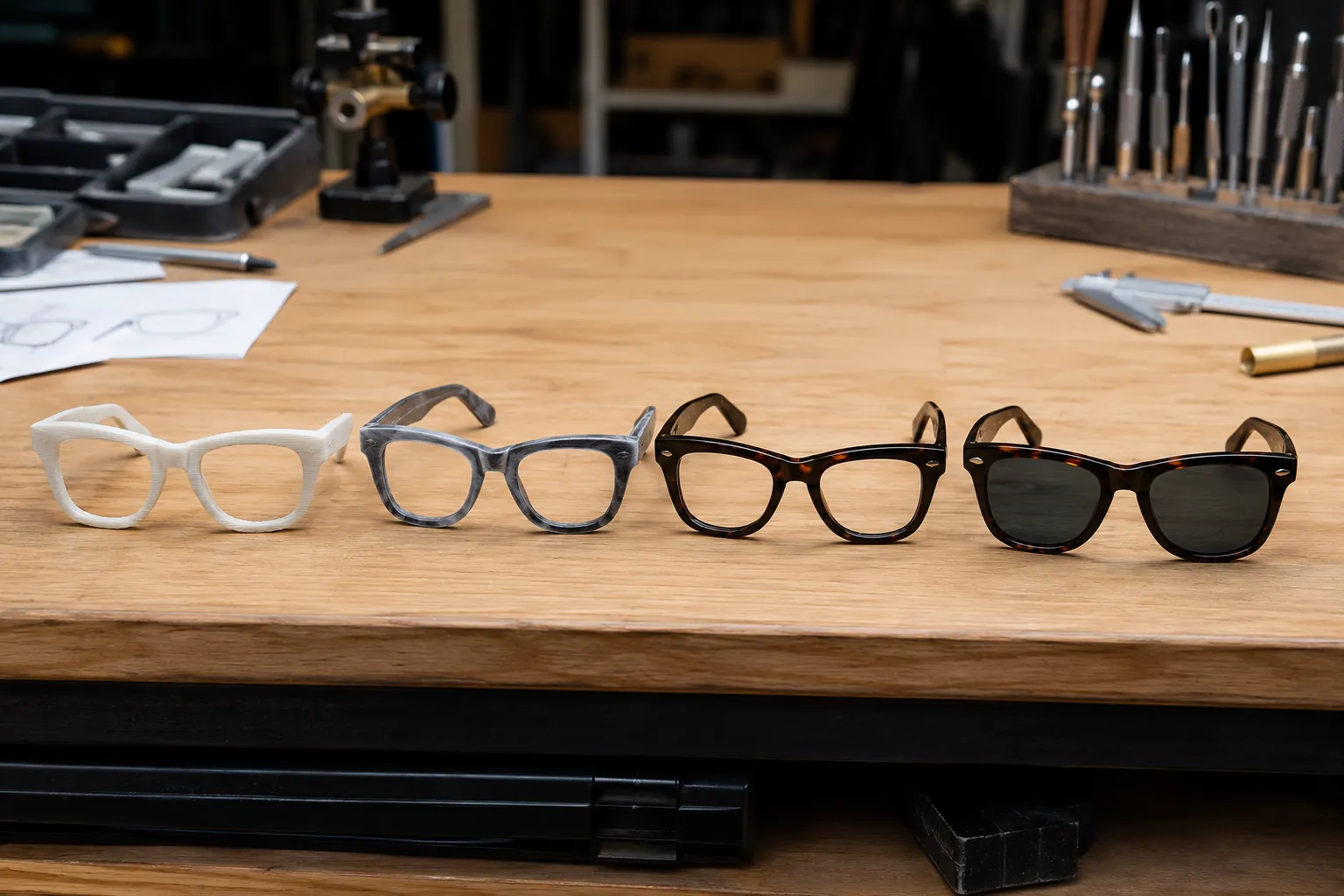
If you buy custom sunglasses in volume, tooling is where a lot of bad deals start. Some fees are real and unavoidable, but many are padded by vague drawings, too many revisions, or unclear ownership terms. This guide shows procurement teams and brand owners what actually drives mold cost, how suppliers build it, and where you can reduce upfront spend without creating production problems later.
When tooling fees are unavoidable
Tooling is unavoidable any time you are asking a factory to create a new physical part that cannot be made from standard stock tooling. For eyewear, that usually means a new injected frame front, temples, temple tips, hinge interface, or a custom acetate shape that needs new cutting programs and fixtures. If you are only changing lens tint, logo decoration, or packaging, you should not be paying a full mold fee.
There is a simple rule: if the part affects shape, fit, or structural geometry, expect tooling. If it only affects color, surface marking, or assembly sequence, you should be in development cost territory, not mold steel territory. On injected frames, the mold is what controls front curvature, bridge width, hinge seats, and temple alignment. On acetate, the cost often comes from cutting, polishing, and fit-up fixtures rather than one giant mold bill, but the principle is the same.
Buyers get into trouble when a supplier says "custom" and bundles everything together. Ask for a breakdown. A proper quotation should separate mold work, sampling, decoration, testing, and mass-production unit price. If the supplier cannot explain which part of the cost is one-time and which part is recurring, the quote is not ready for approval.
What drives mold cost
Three things move the number most: complexity, cavity count, and finish requirement. A simple frame front with clean lines, standard lens shape, and no hidden undercuts costs less than a wrap frame with deep curvature, metal inserts, or fine logo relief. More cavities raise tooling cost but can reduce unit cost later if you are buying enough volume.
Material also matters. For injected sunglasses, the mold structure, cooling, and wear resistance need to match the resin and cycle time. TR90 and similar injected materials are different from acetate processing. Acetate is cut and polished from sheets, so the upfront cost often shows up in CNC programs, cutting jigs, polishing fixtures, and temple fit tooling instead of a large multi-cavity mold block.
Logo placement changes cost more than many buyers expect. A clean pad print is cheap. A recessed metal logo plate, laser engraving on a curved temple, or a multi-step decoration zone needs more process control and more sampling. If the logo sits too close to a hinge or flex point, the factory may need to reinforce the design, which can push the tool cost up again.
| Project type | Upfront cost pressure | What usually drives it | Best way to reduce it |
|---|---|---|---|
| Simple injected frame | Low to medium | Basic geometry, standard hinge seat, one logo area | Reuse a proven base shape and limit revisions |
| Wrap or sport frame | Medium to high | Curvature, lens retention, tighter alignment checks | Standardize lens shape and avoid extra undercuts |
| Acetate frame | Medium | CNC cutting, polishing, fit fixtures, temple alignment | Keep the silhouette close to existing factory patterns |
| Premium decoration package | Low to medium | Laser engraving, metal logo plate, multi-color pad print | Combine decoration steps and reduce artwork changes |
What a fair tooling quote should include
A fair quote is specific. It should tell you what is being tooled, how many cavities, what material the tool is made from, how many sampling rounds are included, and who owns the tool after payment. If the quote only says "mold fee" with no detail, push back.
For a custom eyewear project, the quote should cover at least the following:
- Part scope: frame front, left temple, right temple, lens fit elements, or accessories
- Tool structure: single cavity or multi-cavity, insert type, and expected tool life
- Sample plan: first sample, correction sample, and any extra revision charges
- Surface finish: matte, gloss, woodgrain-style texture, or high-polish requirements
- Ownership terms: who keeps the mold, where it is stored, and whether you can move it later
- Production effect: whether the mold fee is refundable, amortized, or deducted against volume orders
Be careful with "free mold" offers. In practice, the cost is often hidden in the unit price, locked to a high MOQ, or recovered through a long payback curve. That is not automatically bad, but you should know where the money moved. A supplier quoting 50 pairs per design and a much lower unit cost at 300, 1000, and 5000+ pairs is signaling that tooling and setup are being spread over volume. At LumiShades, the pricing structure reflects that reality; unit cost improves as the development cost is absorbed over larger runs.
How to reduce upfront development cost
The cheapest mold is the one you do not need to fully redesign. Start from a proven factory base, then change only the visible brand elements. That usually means adjusting color, finish, temple logo, lens tint, or small geometry details rather than asking for a completely new frame platform.
There are four practical ways to cut cost without creating a weak product:
- Reuse a base shape that already works for similar face sizes and hinge placement.
- Limit custom changes to one or two parts instead of the whole frame set.
- Lock artwork early. Late logo changes cause extra sample cycles.
- Choose standard finish levels instead of asking for multiple surface effects on the same part.
For buyers who need fast market entry, the smart move is often to start with a small design adjustment and validate demand first. A new mold for every collection is expensive. If the first order is only 50 pairs per design, heavy tooling spend rarely makes sense unless the style is clearly intended for repeat volume. If the target is 300 to 1000 pairs, you can usually justify more development if the style has staying power and the fit is not risky.
LumiShades can reduce some of the front-end work by handling injection molding, acetate cutting, CNC milling, lens tinting, and decoration in-house. That matters because fewer handoffs mean fewer excuses, fewer hidden charges, and less time lost between sample rounds.
How to negotiate the actual fee
Do not negotiate only the headline number. Negotiate the structure. If the supplier wants a high mold fee, ask what happens at 300, 1000, and 5000 pairs. A good answer ties the development cost to your volume plan. A weak answer is a flat number with no rationale.
Use these questions in the first round:
- What exact part is included in the tooling quote?
- How many sample iterations are included before extra charges start?
- Who owns the tooling after payment?
- Can the fee be partially refunded or credited against bulk orders?
- What changes would trigger a second mold or extra insert cost?
If you are sourcing from a factory in Wenzhou, ask for a comparison between the new design and an existing platform. Experienced suppliers can usually tell you whether a bridge adjustment, temple length change, or lens curve change will require new steel or only a modified insert. That conversation is where the real savings sit.
Be direct about volume. If you expect repeat business, say so and ask for amortization over the first purchase order set. If you do not yet know the volume, keep the tooling scope conservative. Paying for a complex mold before the market is validated is a fast way to bury margin.
Sampling, tolerance, and compliance checks
Tooling is not finished when the steel is cut. It is finished when the sample fits, functions, and passes the checks that matter for your market. For eyewear, that means hinge alignment, temple opening force, lens seating, and surface quality. Small geometry errors show up fast in wear tests. A frame can look right on paper and still pinch, wobble, or sit unevenly once assembled.
Typical development flow is straightforward: 2D or 3D confirmation, tool build, first sample, correction, second sample, then production approval. Sample lead time is usually 7 to 10 days for straightforward projects; bulk production often runs 25 to 35 days once the tool is approved and the order is locked. If the project needs extra corrections, add time. Rushing that step usually costs more later.
Compliance should be discussed before tool approval, not after. For export sunglasses, the relevant standards depend on your market: CE EN ISO 12312-1 for the EU, ANSI Z80.3 for the US, AS/NZS 1067 for Australia and New Zealand, plus REACH for restricted substances. FDA registration applies to the supplier or facility side where applicable. If your design includes lenses, coatings, or decoration layers that affect performance, ask what testing is needed before mass production starts.
A practical buyer playbook
If you want to keep tooling spend under control, run the project like a sourcing exercise, not a design fantasy. The best buyers lock business requirements early and avoid endless aesthetic changes after the first sample. They also keep one person responsible for approval so the factory does not get conflicting comments from sales, marketing, and operations.
Use this sequence:
- Set target price, MOQ, and first-year volume before design release.
- Confirm which parts are truly custom and which can use existing factory tooling.
- Approve the drawing only after fit, decoration, and compliance needs are all listed.
- Ask for a tooling breakdown with ownership and revision terms.
- Release sample approval quickly or you will pay for delay in both time and labor.
The blunt truth: if your volume is small and your design is highly specific, tooling will never feel cheap. That is normal. The job is not to make tooling free. The job is to avoid paying for unnecessary complexity, unnecessary revisions, and vague supplier markup. A clean, well-scoped development process is usually worth more than a slightly lower headline mold number.
What to ask before you pay
Before any tooling payment leaves your account, ask for the mold scope, ownership terms, sample plan, and the production price ladder. If the supplier cannot tie those four items together, pause. The bill may still be valid, but the project is not controlled.
Good tooling negotiation is not about pushing every charge down. It is about paying only for what the project actually needs. For custom sunglasses, that means designing around the right base platform, limiting revisions, and using a factory that can handle molding, cutting, tinting, decoration, and QC without handing the job off five times. That is where development cost becomes manageable instead of random.
Have a custom sunglasses project in mind?
Send us your styles, target market and quantities and we will return a detailed quote with MOQ, lead time and a sample plan.
Get a QuoteWhy source this from Wenzhou with LumiShades
Wenzhou in Zhejiang Province is widely regarded as China’s eyewear manufacturing capital, producing a large share of the world’s sunglasses. That concentration matters to buyers: a deep local supply chain for acetate sheet, hinges, lens blanks, plating and packaging means shorter component lead times, easier color and material matching, and a workforce with decades of eyewear-specific skill. LumiShades has manufactured in this ecosystem since 2009, and our vertical integration — in-house injection molding, acetate cutting, CNC milling, lens tinting, decoration and quality control — means no part of your order is quietly subcontracted to a workshop you cannot audit.
For international buyers, that vertical control translates into accountability. When a single factory owns every step, defects are traced and fixed at source rather than bounced between vendors, and your specifications survive intact from first sample to bulk. For procurement review, buyers can request process records, approved samples, quality checkpoints and project-specific compliance files before placing a bulk order. Required testing and documentation are confirmed against the destination market and product specification rather than assumed from a generic certificate list. Explore our manufacturing capabilities and quality control process to see how this works in practice.
Frequently asked questions
When should I expect a mold fee on custom sunglasses? When the frame, temple, hinge seat, or other structural part is new and cannot be made from existing tooling. Decoration-only changes should not need full mold fees.
Can I avoid tooling costs completely? Only if you use an existing frame platform and limit changes to color, lens tint, logo decoration, or packaging. Once you change geometry, expect tooling or fixture cost.
What is a reasonable sample timeline after tooling starts? For a straightforward project, first samples often take 7 to 10 days. Complex shapes, extra revisions, or compliance-related changes add time.
How do I know if a mold fee is inflated? Ask for a breakdown by part, cavity count, material, revision allowance, and ownership terms. If the quote is just one number with no scope, it is not transparent.
Should I ask for tooling ownership in writing? Yes. If you pay for the tool, the agreement should state who owns it, where it is stored, and whether you can move it later if needed.
Which compliance items matter for export sunglasses? Ask for the standards that match your market, usually CE EN ISO 12312-1, ANSI Z80.3, AS/NZS 1067, REACH, and relevant FDA registration requirements.
Ready to start?
Explore our cat-eye sunglasses or request a quote — our sales team replies within 12 hours.
Request a Quote