
How to Load Multiple Sunglass Styles in One Container
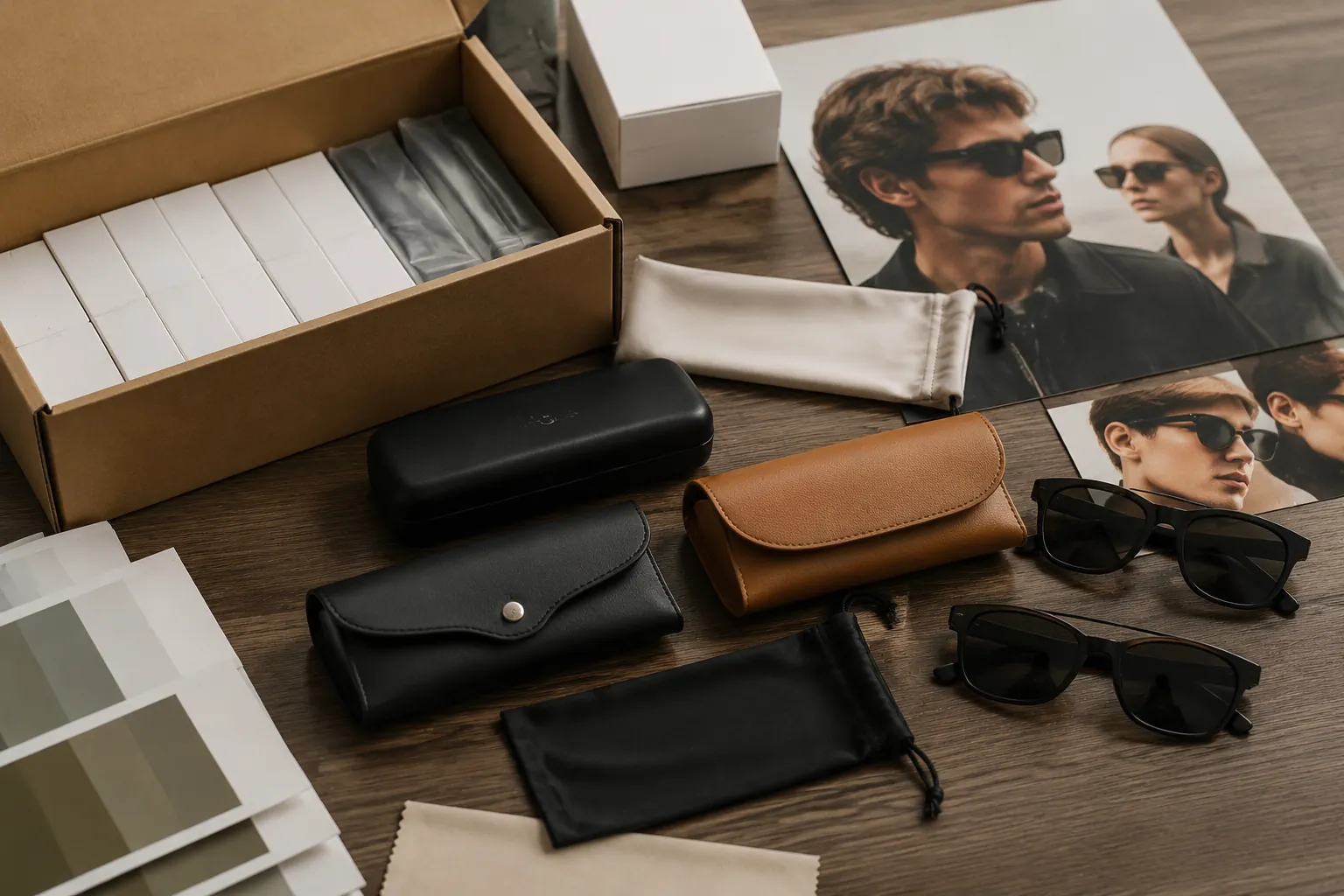
Brands, importers, distributors, and retailers often need several sunglass styles in one order and one container. The problem is not just volume. It is style mix, packaging readiness, and production sequence. Get those three right early and you can load more pairs, avoid split shipments, and protect the ship date.
Start with the container, not the style list
Most delays start with the wrong order of decisions. Buyers pick styles first and plan the container later. Do the reverse. Set the container target first, then fit the styles into it by packed volume.
A 20GP, 40GP, and 40HQ do not load the same way. If your sunglasses ship in folding cartons, rigid cases, or trays with inserts, the packed carton size matters more than the frame size. A small-looking style can still take up a lot of space once packaging is added.
Before you confirm the final style count, ask for three numbers for each SKU: packed dimensions, gross weight per pair, and carton quantity. Then total the carton cube against the booked container cube. Leave room. In real loading, carton tolerances, loading pattern, and dunnage reduce usable space. If you plan to fill a 40HQ to the theoretical limit, the load may slip.
Practical rule: plan to use no more than 92-94% of theoretical container cube unless the carton spec, pallet pattern, and loading method are already fixed and agreed.
Build the mix by packed cube, not pair count
Buyers often say, "We need 12 styles and 20,000 pairs." That is not enough. The real question is how many packed cartons each style consumes and how many cartons fit before the vessel cut-off.
| SKU type | Typical packed size logic | Risk to container loading | Buyer action |
|---|---|---|---|
| Thin injection frame with soft pouch | Low cube per pair | Usually easy to mix into the load | Use as a filler SKU to balance carton counts |
| Acetate frame with hard case | Higher cube per pair | Case shape often drives carton size | Confirm case dimensions before you set the style mix |
| Heavy decorated frame with metal logo plate | Same frame size, higher handling risk | Needs stronger packing protection and more QC attention | Allow extra inspection time and slower packing-line speed |
If one style uses a large rigid case and another ships with a microfiber pouch, they are not equal in the loading plan. A 2,000-pair order can still fail to fit if the packaging spec changes after the order is set. That is common when the buyer approves the frame first and leaves packaging for later.
Use a style matrix. Put every SKU in one sheet with frame material, lens type, package type, carton spec, gross weight, destination market, and production lead. That gives you the real mix, not a guess.
Lock packaging early or the ship date will slip
Packaging is not a finishing touch. It is part of the critical path. If you wait until after sample approval to finalize cartons, pouches, inserts, and labels, you lose time. Sometimes a lot of time.
For custom sunglasses, the packaging chain usually includes inner box artwork, barcode labels, carton markings, and, when needed, retail-ready hangtags or display cards. Any one of those items can block final packing. A missing barcode or a mismatch between the carton and the approved artwork is enough to stop a shipment that is otherwise ready.
- Approve carton dimensions before bulk production starts.
- Confirm print text and barcode content in one proof round.
- Set the outer carton count per style so the warehouse can stage loads cleanly.
- Ask for packing photos from the factory before the final truck booking.
LumiShades states that decoration is handled in-house, including laser engraving, pad printing, and metal logo plates. That matters because logo work can be timed with production rather than added as a late outsourcing step. The same logic applies to final QC: if inspection is done inside the factory, problem units can be caught before they enter export cartons.
Sequence production so the container fills in the right order
If you have multiple styles, do not release them all at once unless tooling, lenses, and packaging are already confirmed. Sequence by risk.
- Run samples first. For custom styles, sample lead time is commonly 7-10 days when the specification is complete and unchanged.
- Freeze materials. Frame resin, acetate sheet, lens tint, hardware, and logo parts must be locked before bulk starts.
- Start long-lead or high-risk SKUs earlier. Complex decoration or nonstandard lens colors should not sit at the end of the line.
- Use easy SKUs as recovery volume. Simple injection styles can help recover container fill if another style runs short.
- Stage final packing by style code. Mixed cartons should be palletized only after style counts are checked against the loading plan.
LumiShades says its process includes injection molding, acetate cutting, CNC milling, lens tinting, decoration, and QC under one roof. That does not remove risk. It does give more control over sequencing. A factory can still miss a ship date if the buyer keeps changing lens tint, logo placement, or carton copy during bulk.
Know which styles delay the order, and which ones help recover it
Some styles are forgiving. Some are not. A clean injection frame with a standard tint can move quickly. A heavier acetate style with CNC details, a special lens shade, and a metal logo plate needs more discipline.
| Style type | Typical lead behavior | Common failure mode | Buyer control point |
|---|---|---|---|
| Injection molded frame | Fastest to stabilize in bulk | Color mismatch between sample and bulk | Approve a master color chip and retain a sealed sample |
| Acetate frame | More sensitive to cutting and polishing timing | Edge finish or symmetry drift | Require first-piece approval before full run |
| Mixed-material or decorated frame | Slower because of extra operations | Decoration delays or rework | Freeze artwork and placement coordinates early |
If the shipment has to hit a fixed sail date, build the order mix so part of the volume sits in lower-risk SKUs. That gives you a buffer if one style needs rework. On the factory floor, that buffer can be the difference between loading this week and rolling to next week.
For volume pricing, LumiShades states that MOQ starts at 50 pairs per design, with pricing improving at 300, 1,000, and 5,000+ pairs. Treat those figures as supplier-provided commercial terms, not an industry standard. Smaller runs may be possible, but the order structure still has to justify the packing and setup time. If you want many styles in one container, do not expect every SKU to reach the lowest unit price.
Use compliance as a release gate
Some buyers treat compliance as a document pack for the forwarder. That is too late. For sunglasses, compliance should be checked before bulk production release, especially when the load mixes styles for different markets.
Use only the certifications and standards that are actually documented for the product and supplier. For this article, the relevant references are CE EN ISO 12312-1, ANSI Z80.3, AS/NZS 1067, REACH, FDA registration, ISO 9001, and BSCI. A mixed container may include SKUs intended for the EU, US, Australia/New Zealand, or general retail channels, and each style still needs to match its destination market.
- EU-bound styles: confirm CE EN ISO 12312-1 and REACH material status.
- US-bound styles: confirm FDA registration and ANSI Z80.3 alignment where required for the product and market.
- Australia/New Zealand: confirm AS/NZS 1067 requirements for the intended use category.
- All markets: keep the QC record tied to style code, not only the order number.
Ask for style-level compliance mapping. One container can contain multiple SKUs, but the paperwork should still show what is in each carton and which market each style is intended for.
A buyer checklist for on-time multi-SKU loading
Use this before you release the order. It prevents most missed ship dates.
- Confirm packed dimensions for every SKU.
- Lock carton spec, case spec, and label copy.
- Set a production sequence by risk, not by style popularity.
- Approve color chips and first-piece samples before bulk.
- Match compliance to the destination market.
- Ask for a carton count sheet before booking freight.
- Leave space in the container plan for carton tolerances and loading losses.
If you are buying 50 to 300 pairs per design across many styles, the order is more fragile than a single-style volume run. That is normal. The fix is tighter change control. Once bulk starts, every late adjustment to lens tint, logo placement, or carton art costs time.
For larger programs at 300, 1,000, or 5,000+ pairs per style, build the container plan around production blocks. A factory with in-house molding, cutting, milling, tinting, and QC can reduce handoffs, but only if the buyer holds the spec steady.
What to ask your factory before you book the vessel
Do not ask for "best price" first. Ask for the loading facts.
- How many cartons per style will the final packing produce?
- What is the gross weight and packed cube per carton?
- Which styles need extra QC hold time before release?
- Can the factory finish packaging before the freight cut-off date?
- Which certifications apply to each destination SKU?
If the factory cannot answer those five questions clearly, the container plan is not ready. A serious supplier should be able to show the production sequence, packing map, and style-level compliance status. If they can do that, the shipment has a chance of leaving on time. If not, expect rolled cargo or split cartons.
That is the real job. Not just buying sunglasses. Controlling the mix so the container closes when it should.
Have a custom sunglasses project in mind?
Send us your styles, target market and quantities and we will return a detailed quote with MOQ, lead time and a sample plan.
Get a QuoteWhy source this from Wenzhou with LumiShades
Wenzhou in Zhejiang Province is widely regarded as China’s eyewear manufacturing capital, producing a large share of the world’s sunglasses. That concentration matters to buyers: a deep local supply chain for acetate sheet, hinges, lens blanks, plating and packaging means shorter component lead times, easier color and material matching, and a workforce with decades of eyewear-specific skill. LumiShades has manufactured in this ecosystem since 2009, and our vertical integration — in-house injection molding, acetate cutting, CNC milling, lens tinting, decoration and quality control — means no part of your order is quietly subcontracted to a workshop you cannot audit.
For international buyers, that vertical control translates into accountability. When a single factory owns every step, defects are traced and fixed at source rather than bounced between vendors, and your specifications survive intact from first sample to bulk. We back this with 15+ years of experience, shipments to 60+ countries, more than 5 million pairs produced per year and a 98.5% on-time delivery rate. Our certifications — CE EN ISO 12312-1, FDA registration, ANSI Z80.3, AS/NZS 1067, REACH, ISO 9001 and BSCI audit — mean the compliance documentation your market requires already exists. Explore our manufacturing capabilities and quality control process to see how this works in practice.
Frequently asked questions
How early should I finalize packaging for a multi-SKU sunglasses order? Before bulk production starts. Cartons, inserts, labels, and case dimensions should be locked before release, because packaging changes can delay packing and change the container plan.
What is the biggest mistake buyers make with mixed styles in one container? They plan by pair count only. Packed cube, carton size, and case type matter more than frame count when you are trying to fit a shipment into a fixed container.
Can I mix styles with different certifications in one shipment? Yes, but each SKU must match its destination market. Keep compliance tied to style code and carton content so the receiving team and customs records stay consistent.
What lead times should I plan for samples and bulk? Use the supplier's confirmed lead times for the specific order. As a reference from the draft supplier information, samples are typically 7-10 days when the spec is complete, and bulk is often 25-35 days when the spec and packaging are frozen.
What MOQ should I expect if I want many styles in one order? Use the supplier's stated MOQ, not an industry guess. In the draft supplier information, the starting MOQ is 50 pairs per design, with pricing improving at 300, 1,000, and 5,000+ pairs per style.
How do I reduce the risk of missing the ship date? Freeze artwork, packaging, and lens tint early; sequence high-risk styles first; approve first-piece and color references before bulk; and ask for a carton count sheet before you book freight.
Ready to start?
Explore our aviator sunglasses or request a quote — our sales team replies within 12 hours.
Request a Quote