
Driving Sunglass Lens Specs for Wholesale Buyers
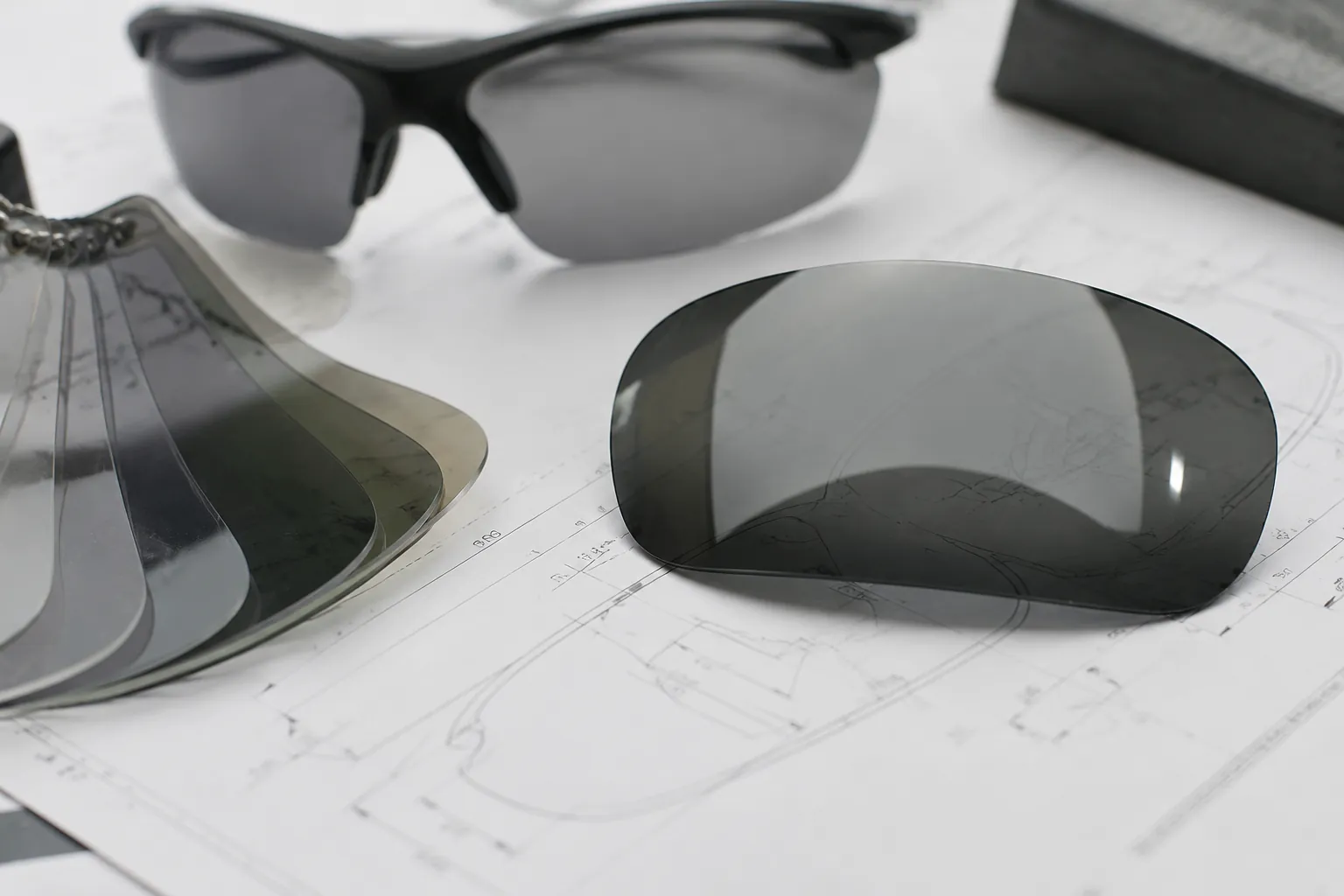
This guide is for brand owners, importers, distributors, and retailers building driving-focused sunglass assortments. It explains how visible light transmission, tint family, and contrast profile affect daily use in commuting and travel. It also shows how to turn those choices into factory specs, compliance checks, MOQ planning, and pricing decisions that work in volume.
Start with the use case, not the tint name
Driving sunglasses are not one product. A commuter in stop-and-go traffic, a highway buyer crossing bright open road, and a traveler wearing shades from morning to evening all need different optical behavior. Start with the use case: city commuting, highway driving, mixed travel, or long daytime wear. That choice sets the target darkness, tint family, and whether polarization is worth the extra cost and trade-offs.
For wholesale buyers, this is not a style-only decision. It affects returns, complaints, and sell-through. A lens can look premium on a display card and still fail in a car if it is too dark for shade changes, too warm for a neutral line, or too reflective for the route it will be used on. The lens has to manage glare, road reflections, and shifts between sun and shadow without making lane markings, signs, or signal lights harder to read. That is the job.
The cleanest buy is a frame-and-lens sample, together. Ask the supplier for the exact frame shape, lens color, coating, and decoration as one build. Do not approve the lens in isolation. Check it in daylight and, if possible, inside a car through a windshield before you sign off.
A real spec beats a vague reference. For driving assortments, the spec should name the target VLT range, tint family, finish, and whether the lens is polarized or mirrored. Without that, the factory is guessing and the buyer is guessing.
Use VLT as the first control knob
Visible light transmission, or VLT, is the percentage of visible light that passes through the lens. Start here. It is the most useful control number in a driving sunglass spec. Lower VLT means a darker lens. Too dark is a problem in shade or late afternoon. Too light does little in hard sun.
For most wholesale assortments, 10% to 40% VLT covers the practical driving range. Around 8% to 12% works for bright open-road conditions and long highway use. Around 15% to 25% is the most versatile everyday range. Around 30% to 40% can work for cloudy weather, urban commuting, and customers who want mild glare reduction without a heavy sunglass feel.
| VLT range | Typical use | Buyer risk | Best note for spec sheet |
|---|---|---|---|
| 8% to 12% | Bright sun, highway driving | Can feel too dark in tunnels, late afternoon, or shaded streets | Strong glare reduction; not for low light |
| 15% to 25% | Mixed driving and travel | Balanced and broad in appeal, but still needs good color control | Recommended everyday driving tint |
| 30% to 40% | Cloudy weather, commuting, casual wear | Less glare control in harsh sun | Comfort tint; better for mild brightness reduction |
| Polarized version of 15% to 25% | High glare, wet pavement, water | Can be too dark if the base tint is already aggressive | Specify both base tint and polarizing layer |
Do not buy by darkness alone. Two lenses can share the same VLT and still feel different because of tint family, polarization, mirror coating, or lens material. A darker-looking lens may not perform better on the road. Ask for the target VLT, the tolerance the supplier will hold, and the test method used by the factory or lab. If those answers are vague, the spec is not ready.
Use numbers. Avoid words like medium dark or nice driving shade. Those do not travel well through procurement, compliance, or production.
Match tint family to the road condition
The tint family controls how the world looks through the lens. Gray is the neutral default. It reduces brightness without pushing the scene warm or cool, so it usually creates the fewest color complaints. Brown and amber warm the scene and can raise perceived contrast. Green sits between gray and brown and feels comfortable for long wear, though it is less common in many wholesale programs.
Pick the tint for the road condition and the buyer. Gray is the safest all-purpose option if you want broad appeal and lower return risk. Brown or amber is the better fit for a contrast-driven product, especially for rural roads, variable weather, or customers who want road texture and lane edges to feel more defined. Green can work as a heritage-style option, but it is usually a secondary SKU, not the core one.
- Gray: neutral color rendering, easiest general-driving sell-through.
- Brown/amber: higher perceived contrast, warmer visual feel, useful in mixed conditions.
- Green: moderate contrast, comfortable tone, classic look.
- Mirror over tint: reduces transmitted glare further, but makes the lens feel darker than the base VLT.
Material choice changes tint behavior too. TAC and other laminated lens constructions are common in polarized driving products because they keep weight low. Polycarbonate is impact-resistant and lightweight, but it can require careful coating control to avoid optical distortion or surface stress. Acetate and mineral-style builds are less common in mass-market sunglass lenses but may appear in premium or specialty builds. Ask what lens substrate is being used. It affects coating adhesion, scratch resistance, and final appearance.
For overseas assortments, the cleanest plan is usually one neutral tint and one contrast tint. That keeps the range simple to merchandise and reduces the risk of overbuilding a fashion color that looks good in photos but disappoints on a long drive.
Know what contrast and polarization actually change
Contrast is the lens's ability to separate useful detail from visual noise. On the road, that means lane markings, curb edges, brake lights, wet pavement shifts, and dashboard reflections. A contrast lens should help detail stand out without distorting colors so much that traffic signals, navigation screens, or signage become harder to read.
Brown and amber lenses often increase perceived contrast because they cut some blue light and warm the scene. That can make the road surface feel more defined and can improve comfort in haze or variable weather. The trade-off is color shift. Some customers want that. Others do not. Test the sample in a car, through glass, in daylight, and in a few different weather conditions if possible. Do not skip that step.
Polarization is separate from tint color. It helps reduce reflected glare from wet roads, water, and shiny surfaces. It can also make some LCD and dashboard displays harder to read depending on the screen type and viewing angle. Test it in the target vehicle before locking the spec. Cheap assumptions create expensive complaints.
For driving products, test the lens where it will actually be used: inside a car, through glass, on real roads, in mixed weather. A showroom check is not enough.
Do not promise night driving unless the lens is specifically intended for low-light use and the destination market allows that claim. Most sunglass driving lenses are daytime products. If a customer wants a dusk or low-light product, treat it as a separate specification and a separate compliance review.
Translate buyer specs into factory details
Wholesale orders go wrong when the specification is vague. The factory needs a clear target for lens darkness, tint family, coating, polarization, and decoration. For driving sunglasses, specify the target VLT range, acceptable tolerance, tint sample code, whether the lens is polarized, whether a mirror is required, and whether the finish should be glossy, matte, or semi-matte.
The frame build and the lens build should be planned together. A thick acetate frame with a deep lens groove behaves differently from an injection frame. A metal temple plate may interfere with hinge clearance. A large logo print can sit too close to the lens edge or get partially hidden by a mirror coating. Decoration is not an afterthought. It changes the production flow and sometimes the tooling.
A practical approval sequence looks like this:
- Approve frame shape, fit, and bridge size first.
- Lock the lens family and VLT target.
- Confirm coating, mirror, and polarization, if any.
- Approve decoration method and placement.
- Check the sample in daylight and inside a car.
In the spec sheet, include the acceptable production window. For example, state VLT as 18% to 22% rather than simply about 20%. If you can tolerate minor variation across an MOQ, say so clearly. That reduces disputes later and helps the factory decide whether a batch is within spec or needs rework.
Also request the lens edge and surface standard. For driving products, ask about optical clarity, distortion limits, coating uniformity, and scratch-resistance expectations. A lens that looks right in a sample but shows coating haze or edge stress in bulk can sink a program fast.
Use compliance as a document check
For export driving sunglasses, compliance is part of the product specification, not a marketing line. Buyers should map the required documentation to the destination market and request the report that matches the exact build they are purchasing.
Different standards cover different markets and different concerns. CE EN ISO 12312-1 is the common reference for EU-facing sunglasses. ANSI Z80.3 is widely used for the U.S. market. AS/NZS 1067 applies in Australia and New Zealand. REACH addresses restricted substances in the EU supply chain. FDA registration is a regulatory status for the facility, not a product certification, so it should be described correctly in the compliance file.
The key point is simple: compliance is tied to the exact lens build. A gray lens and a brown lens can have different optical behavior. Polarized and non-polarized versions are not interchangeable. If the factory changes the base tint, adds a mirror, or modifies coating, the compliance file should be reviewed again. Ask for the test report, declaration, and product code that match the approved sample.
In volume programs, ask how the factory handles batch traceability. Good process control means each lot can be linked to a production date, material batch, and final inspection record. That matters if a customer questions reorder consistency or if a market requires proof of conformity after shipment.
Be precise about what is documented and what is only claimed. ISO 9001 and BSCI relate to management systems and social compliance, not to sunglasses performance itself. Treat them as supporting evidence of process maturity, not as substitutes for product testing.
Build the assortment around MOQ, price breaks, and reorder planning
For volume buyers, the business case is usually not about finding one perfect lens. It is about building a small set of sellable options at a landed cost that supports margin. The supplier should quote pricing by order size, and the buyer should use that structure to decide whether the SKU is a test, a launch, or a core program.
Use the minimum order quantity to validate a new frame, lens tint, or market response. Use the next price tier when you want to test demand in one channel or one region. Move to larger volumes when the SKU is proven and the tint family is stable. At higher volumes, the factory can usually optimize material yield, decoration setup, and production flow more efficiently.
| Order level | Use case | Typical buying logic | Factory impact |
|---|---|---|---|
| 50 pairs/design | Sample market test | Validate fit, tint, and sell-through | Highest unit cost, lowest inventory risk |
| 300 pairs | Small launch | Test one market or channel | Better price, still flexible |
| 1000+ pairs | Core SKU | Scale the winning colorway | Lower cost, more stable scheduling |
| 5000+ pairs | Volume program | Commit to repeat orders | Best price efficiency, tighter planning |
Lead time is tied to spec stability. The more the buyer changes tint, logo, finish, or lens material after sample approval, the more the schedule moves. If the program needs to go faster, the best lever is faster decision-making on the sample, not pressure after the order is placed.
A good wholesale plan also includes a reorder threshold. Reorder before the first batch is fully gone so the calendar has room for production, transit, and merchandising lead time.
What to ask before you place the order:
- What is the target VLT, and what tolerance will the factory hold?
- Is the lens gray, brown, amber, green, mirrored, or polarized?
- What substrate is being used?
- Which compliance standard will be tested for the destination market?
- Which decoration method is being used, and will it affect temple durability or lens visibility?
- How are tint consistency, coating defects, alignment, and frame fit checked before shipment?
Have a custom sunglasses project in mind?
Send us your styles, target market and quantities and we will return a detailed quote with MOQ, lead time and a sample plan.
Get a QuoteWhy source this from Wenzhou with LumiShades
Wenzhou in Zhejiang Province is widely regarded as China’s eyewear manufacturing capital, producing a large share of the world’s sunglasses. That concentration matters to buyers: a deep local supply chain for acetate sheet, hinges, lens blanks, plating and packaging means shorter component lead times, easier color and material matching, and a workforce with decades of eyewear-specific skill. LumiShades has manufactured in this ecosystem since 2009, and our vertical integration — in-house injection molding, acetate cutting, CNC milling, lens tinting, decoration and quality control — means no part of your order is quietly subcontracted to a workshop you cannot audit.
For international buyers, that vertical control translates into accountability. When a single factory owns every step, defects are traced and fixed at source rather than bounced between vendors, and your specifications survive intact from first sample to bulk. We back this with 15+ years of experience, shipments to 60+ countries, more than 5 million pairs produced per year and a 98.5% on-time delivery rate. Our certifications — CE EN ISO 12312-1, FDA registration, ANSI Z80.3, AS/NZS 1067, REACH, ISO 9001 and BSCI audit — mean the compliance documentation your market requires already exists. Explore our manufacturing capabilities and quality control process to see how this works in practice.
Frequently asked questions
What VLT should I choose for general driving sunglasses? For most wholesale buyers, 15% to 25% VLT is the safest starting point because it balances glare reduction and day-to-day usability. If you want a brighter comfort option for commuting, 30% to 40% can work. If you want a stronger highway lens, 8% to 12% is the darker end of the practical driving range. Ask for the target VLT and the acceptable tolerance in writing.
Should I choose gray or brown lenses for driving? Choose gray if you want the most neutral color rendering and the lowest risk of color complaints. Choose brown or amber if you want more perceived contrast and a warmer visual feel. In practice, many wholesalers carry one neutral option and one contrast option so they can cover both broad appeal and road-focused demand.
Do I need polarized lenses for driving? Not always. Polarization helps reduce reflected glare from wet roads, water, and shiny surfaces, but it can also make some LCD and dashboard displays harder to read. Treat polarization as a separate decision from tint color, and test it in the target vehicle before you approve the spec.
What certifications matter for export sunglasses? Use the documentation that matches the market: CE EN ISO 12312-1 for EU-facing sunglasses, ANSI Z80.3 for the U.S., AS/NZS 1067 for Australia and New Zealand, and REACH where applicable. FDA registration is a facility-level regulatory status, not a product certification. Ask for the report and product code that match the exact lens build you are buying.
How many pairs do I need to start? Start with the smallest quantity that lets you test fit, tint, and sell-through in your target channel. If the supplier offers 50 pairs per design, that is useful for a first test. If your channel can absorb more, use the next price tier only after the sample is approved and the spec is stable.
How long does a custom driving sunglasses order take? Ask the supplier to quote sample and bulk lead times against the final spec. Lead time depends on frame material, lens process, decoration, and whether the build is stable. Any change after sample approval, especially tint, coating, or logo placement, can delay the order.
Ready to start?
Explore our wayfarer sunglasses or request a quote — our sales team replies within 12 hours.
Request a Quote