
Color-Injected vs Painted Frames: Bulk Buyer Checklist
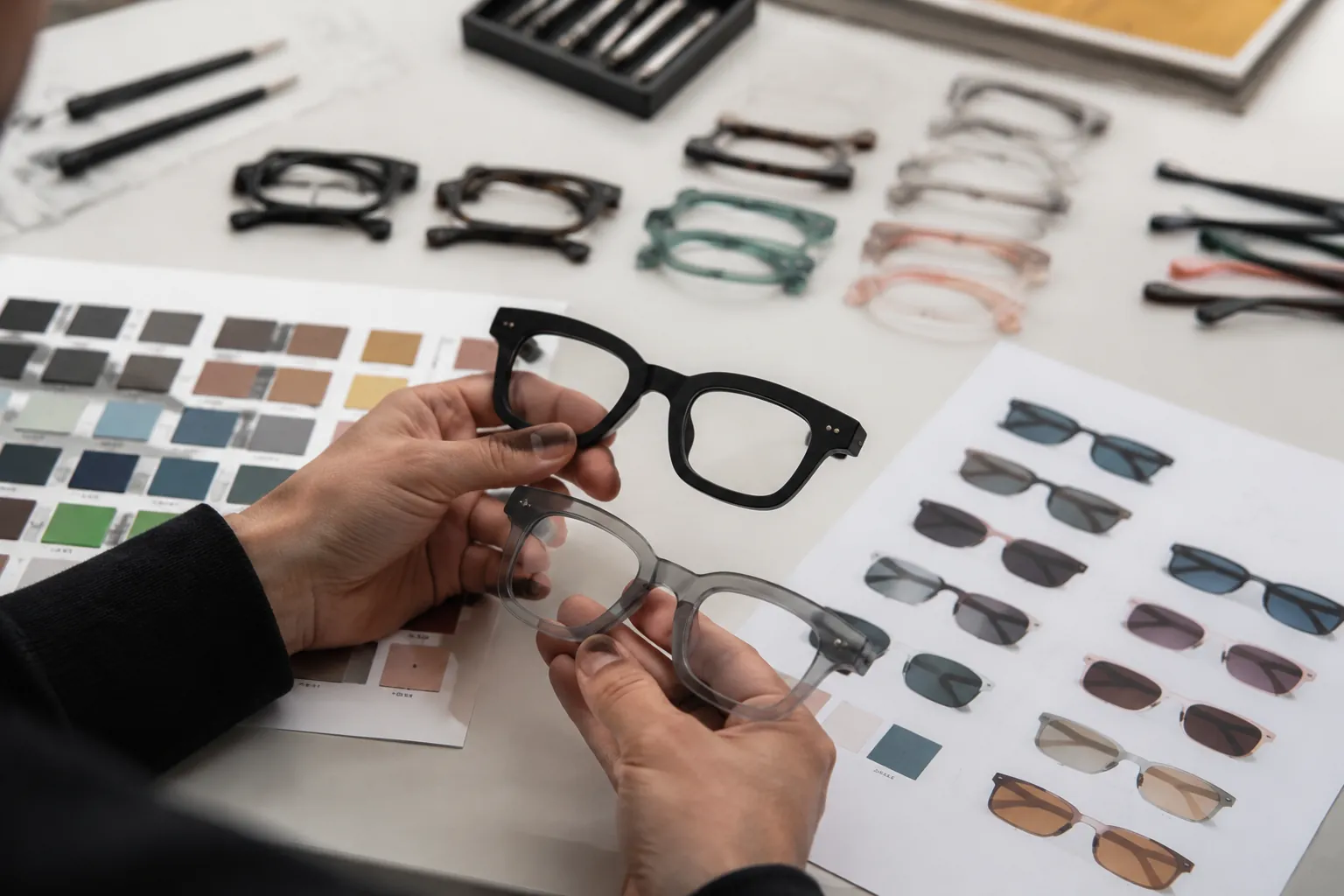
This guide is for brand owners, importers, and sourcing teams buying custom sunglasses in volume. The choice between molded-in color and a painted surface is not just about looks. It affects visible wear, reject risk, reorder consistency, production flow, and how much finish control is needed before shipment. This article compares both routes from a manufacturing and quality-control view so buyers can match the finish to the product brief, target market, and repeat-order needs.
What these two finish routes mean in production
Buyers often group both options under "colored frames." That is too broad. They are different production routes with different risks.
Color injection means the part is molded from resin that already contains colorant. The factory uses pre-colored resin or adds a color masterbatch to base resin before injection molding. The color runs through the part. There is no separate paint layer to chip off. This is common for injection-molded sunglass frames, depending on the material selected.
Painted finish means the frame is molded first and coated later. The coating system varies by substrate and target look, but the process usually includes cleaning, possible surface treatment or primer, color application, drying or curing, and sometimes a topcoat. Paint is used when molded color alone cannot deliver the required effect.
The finish route also affects later steps: pad printing, laser marking, logo application, assembly handling, and final inspection. A soft-touch coating, for example, may feel premium but can be harder to manage for print adhesion and rub resistance than a standard molded surface. So the finish decision changes more than appearance. It changes process control.
Appearance and design range: where paint helps and where molded color is safer
If the design brief calls for a standard solid, translucent, or crystal effect, color injection is often the simpler route. Once the material, color standard, and molding conditions are approved, repeatability is usually easier to manage than with a post-mold coating process.
Painted finishes are usually chosen when the brief calls for a surface effect, not just color. Common examples include:
- Soft-touch or rubberized feel
- Metallic or pearl appearance
- High-gloss lacquer effect
- Gradient sprays or two-tone fades
- Very specific opaque visual matching
The trade-off is simple. Paint can expose flaws in the molded part. Surface lines, gate marks, sink, polishing inconsistency, or sanding marks may become more obvious after coating because the film reflects light differently. With molded-in-color frames, minor molding variation is often less visible.
For transparent or translucent frames, molded-in color is usually the safer technical choice. Coating can reduce clarity, create edge buildup, or look uneven in corners and tight geometry. If the product depends on a clean see-through look, start with injection color first.
| Design Requirement | Color Injection | Painted Finish |
|---|---|---|
| Solid black or basic opaque color | Usually efficient and stable | Possible, but may add unnecessary process cost |
| Transparent or crystal effect | Usually the better choice | Higher risk of haze or uneven appearance |
| Metallic, pearl, or soft-touch feel | Limited, depending on resin and effect target | Usually the preferred route |
| Precise opaque visual matching | Can shift visually with wall thickness and texture | Usually easier to control visually |
Durability and failure points in real use
This is often the deciding factor. Do not judge by a fresh sample only. Judge by what happens after transport, store handling, and consumer use.
Color-injected frames usually have the edge on visible wear because the color runs through the part. The frame can still scratch or abrade, but there is no paint film to flake or chip at exposed edges. That matters in channels with heavy try-on, loose packing, or frequent restocking.
Painted frames can perform well if the coating system matches the substrate and is processed correctly. A stable sequence usually includes:
- Cleaning and dust removal
- Surface treatment or primer if needed for adhesion
- Controlled paint application
- Drying or curing to the specified condition
- Adhesion, rub, and appearance checks before packing
Where does coating failure show first? Usually at high-contact or sharp-edge areas: hinge corners, outer rim edges, temple tips, nose-contact points, and break lines where the film may be thinner. Chemical exposure matters too. Sunscreen, sweat, salt, and alcohol-based wipes can affect appearance or feel over time, depending on the coating system. Soft-touch coatings need extra caution. If the system is weak or under-cured, they can turn tacky or show rub wear fast.
If the product is mainly fashion eyewear with moderate use, paint may be fine and may be necessary for the look. If the frame will be handled hard or is expected to keep its appearance through repeated use, molded-in color is usually the lower-risk choice. Plain and simple.
MOQ, cost structure, and when each route makes sense
Finish choice changes more than the quoted unit price. It affects setup logic, reject exposure, and reorder economics.
Color injection is often more efficient when a program will repeat in one or a few core colorways. After color approval, the route is shorter because it avoids coating materials, spray labor, curing time, and many coating-related appearance rejects. The cost advantage becomes clearer on repeat orders.
Painting can make sense when a buyer wants several fashion effects, a premium surface look, or an opaque visual standard that molded plastic cannot hit reliably. It can also help during early development if the team is comparing multiple looks. But painted programs usually need more finish control, more sample approvals, and tighter reject planning.
When comparing quotes, do not ask only for the final FOB price. Ask for the cost split: molding, finishing, decoration, and reject or rework assumptions. A route that looks slightly cheaper on paper can end up costing more if saleable yield drops or if sorting becomes heavy.
| Commercial Factor | Color Injection | Painted Finish |
|---|---|---|
| MOQ logic | Usually stronger for core colorways expected to reorder | Useful when testing more effects or surface looks |
| Main cost driver | Material/color setup, molding efficiency, yield | Labor, coating materials, curing, sorting, rejects |
| Typical reject risk | Generally lower if molding is stable | Often higher due to dust, color variation, edge wear, or adhesion issues |
| Best volume range | Often better for repeat bulk programs | Can suit shorter fashion-led runs |
| Reorder economics | Usually more stable over multiple POs | Can vary more if visual matching is difficult |
The better question is not "Which finish is cheaper?" It is "Which finish gives the best cost per sellable pair at the quality level this market expects?"
Reorder consistency: color control, tolerances, and approvals
Many finish problems do not appear on the first approved sample. They show up on later reorders, after visual standards drift or process inputs change.
Color injection is usually easier to repeat if the supplier controls resin grade, color source, drying conditions, and molding parameters. That said, variation is still possible. Visual color can shift with wall thickness, surface texture, and material lot differences, especially on translucent parts.
Painted finishes add more variables. Paint batch, viscosity, thinner ratio, spray setup, environmental conditions, curing, and film thickness all affect the final look. Two parts may match under one light source and differ under another. Curved areas and edges can also read darker or lighter depending on film build.
To cut reorder risk, the approved sample record should lock down:
- Base material and molded surface texture
- Master color standard under agreed lighting conditions
- Matte, satin, or gloss target
- Allowed appearance variation for visible areas
- Critical viewing zones such as front rim and outer temples
- Whether edge lightening, spray shadow, or flow marks are acceptable
For bulk programs, buyers should also ask the supplier to keep an approved reference sample from the signed-off lot and compare later production against it before final packing. This matters most for painted frames. Visual drift is more common there.
Lead time and production flow: where delays usually happen
Finish choice affects the calendar because it changes both the number of steps and the number of points where rework may be needed.
Color injection is the more direct route. The usual flow is:
- Prepare and dry material
- Injection mold frame parts
- Carry out basic part finishing
- Assemble, decorate if needed, and inspect
- Pack and release for shipment
Painted frames add a full finishing stage after molding:
- Mold the base frame parts
- Clean and prepare the surface
- Apply primer if required by the substrate
- Apply color coat and any topcoat
- Dry or cure and allow stabilization
- Sort for appearance and adhesion issues
- Assemble, inspect, and pack
Every added step raises schedule risk. Common delay points include dust contamination, color mismatch, under-cure, handling scratches during transfer, and extra appearance sorting. That does not rule out painted programs. It just means planning must be more realistic, especially if several colorways or special effects are involved.
For time-sensitive launches, ask the supplier two direct questions: which finish steps sit on the critical path, and what rework rules apply if appearance defects are found after coating?
Material, decoration, and compliance checks to review together
Do not review finish choice in isolation. Check it together with substrate behavior, decoration sequence, and market compliance requirements.
Different materials react differently to coating and wear. Injection-molded sunglass materials vary in paint adhesion, flexibility, and surface energy. Areas that flex during opening and closing, especially near hinges and bend points, need closer review if a painted finish is proposed. Buyers should confirm not only the visual sample, but also the exact substrate used to make it.
Decoration order matters too. Pad printing over an under-cured coating can fail even if the frame color first looks acceptable. Laser marking on a painted part may intentionally expose the substrate for contrast, or it may reveal an unwanted base color if the stack-up was not planned correctly. Metal logos and inserts can also create local wear points that should be checked with the finish.
For regulated markets, buyers should confirm that the finished product meets the requirements relevant to the destination market and product claim. Depending on the market and program, documents commonly requested include CE EN ISO 12312-1, ANSI Z80.3, AS/NZS 1067, REACH, FDA registration, ISO 9001, and BSCI. Check relevance carefully. A certificate or report should apply to the actual product or production system being ordered, not just to another style or a general factory profile.
For painted frames, ask one more question: are the coating, topcoat, inks, and other finish materials aligned with the target market's compliance requirements? A frame can pass appearance inspection and still create trouble if its material file does not match the shipped version.
A practical selection rule for bulk orders
Need a simple rule? Start with end use first. Visual effect second.
Choose color injection if:
- You need better resistance to visible edge wear in normal handling
- Your target look is solid, crystal, translucent, or otherwise straightforward
- You expect repeat orders and want a simpler, more repeatable route
- You want fewer finishing steps and lower schedule risk
Choose painted finish if:
- Your design depends on metallic, pearl, rubberized, gradient, or lacquer effects
- You need a very specific opaque surface appearance
- Shelf impact and surface feel matter more than maximum wear tolerance
- You can support tighter approval control and more finish review
Before issuing a purchase order, ask for two things: a wear-evaluation sample and a retained color standard. Review both finish options under daylight and store lighting. Then inspect them again after basic rub handling and normal opening-and-closing use. Fresh samples can look excellent and still hide a weak finish route.
For many volume programs, the final decision is operational, not aesthetic. If the frame will be handled heavily, replenished often, and sold at a price point where field wear drives complaints, color injection is usually the safer business choice. If the product must stand out through a premium surface effect that molded color cannot deliver, paint may justify the added control work.
Have a custom sunglasses project in mind?
Send us your styles, target market and quantities and we will return a detailed quote with MOQ, lead time and a sample plan.
Get a QuoteWhy source this from Wenzhou with LumiShades
Wenzhou in Zhejiang Province is widely regarded as China’s eyewear manufacturing capital, producing a large share of the world’s sunglasses. That concentration matters to buyers: a deep local supply chain for acetate sheet, hinges, lens blanks, plating and packaging means shorter component lead times, easier color and material matching, and a workforce with decades of eyewear-specific skill. LumiShades has manufactured in this ecosystem since 2009, and our vertical integration — in-house injection molding, acetate cutting, CNC milling, lens tinting, decoration and quality control — means no part of your order is quietly subcontracted to a workshop you cannot audit.
For international buyers, that vertical control translates into accountability. When a single factory owns every step, defects are traced and fixed at source rather than bounced between vendors, and your specifications survive intact from first sample to bulk. For procurement review, buyers can request process records, approved samples, quality checkpoints and project-specific compliance files before placing a bulk order. Required testing and documentation are confirmed against the destination market and product specification rather than assumed from a generic certificate list. Explore our manufacturing capabilities and quality control process to see how this works in practice.
Frequently asked questions
Will painted frames always scratch more easily than color-injected frames? Not always, but painted frames usually show wear sooner because the color sits in a surface layer. A well-designed and properly cured coating can perform well enough for many fashion programs, but edge wear, chipping, and rub marks are more likely to become visible than on molded-in-color parts. Ask the supplier for adhesion and rub-test results, and inspect high-contact areas such as hinge corners, rim edges, and temple tips on the approval sample.
Which option is better for small test orders? It depends on what you are testing. If you are testing a special effect, multiple fashion looks, or a very specific opaque branded appearance, painted samples may be the practical route. If you are testing a core color that could become a repeat style, start with color injection so you are evaluating the same route you would likely use in scale production. In either case, ask whether the approved sample was made with production-intent materials and finish steps, not just a development shortcut.
Can a factory match a Pantone color exactly with injection-colored plastic? Exact Pantone equivalence is not always realistic for molded plastic because final appearance is affected by resin type, wall thickness, texture, and light transmission. Buyers should treat molded color as a visual matching process, not a guaranteed Pantone translation. If exact opaque visual matching is critical, a painted finish is often easier to control. The practical step is to approve a physical master sample under agreed lighting rather than relying only on a Pantone number.
Does finish choice affect bulk lead time? Yes. Color injection is usually faster and simpler because it avoids coating, curing, and coating-related sorting. Painted frames add extra stages and more chances for delay from dust, color variation, or rework. If the program includes multiple painted colorways or special effects, ask the supplier to identify the finish approval timeline and the latest date for color sign-off without pushing shipment.
What should I approve before mass production on a painted frame? Approve the exact substrate, molded surface texture, color standard, gloss or matte level, critical viewing zones, and a retained signed sample from the approved lot. Also ask for confirmation of the coating stack-up used in production, including any primer or topcoat, and request evidence of adhesion and rub checks on the final finish. If the style includes print, laser marking, or metal logos, review those on the same approval sample because decoration can affect coating performance.
Ready to start?
Explore our wayfarer sunglasses or request a quote — our sales team replies within 12 hours.
Request a Quote