Private Label Sunglasses Manufacturer RFQ Checklist for B2B Buyers
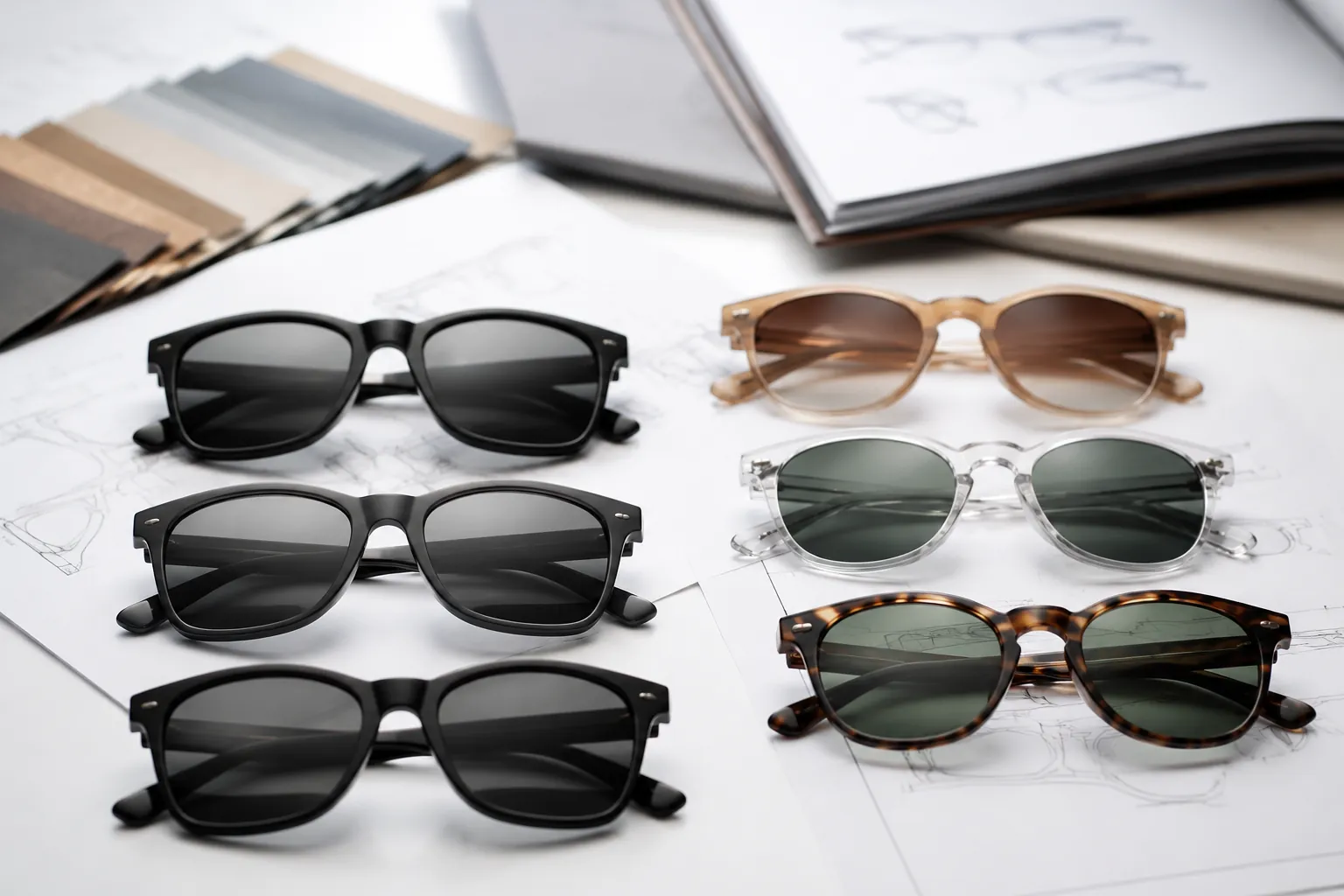
Private Label Sunglasses Manufacturer RFQ Checklist for B2B Buyers
A clear RFQ helps a private label sunglasses manufacturer quote the same scope as other suppliers. It should define the product route, technical requirements, approval process, quality expectations, documents, packaging, and commercial terms before pricing begins.
In this checklist, private label eyewear means eyewear made by a manufacturer and sold under the buyer's brand rather than the manufacturer's consumer label source. Private label sunglasses sourcing can begin with existing styles and buyer-controlled branding before moving into deeper customization when needed source.
Use the sections below to prepare a quote-ready RFQ and compare supplier responses on the same assumptions.
1. Define the Product Route
Tell the supplier exactly which route to quote. If you want both a stock-style branding option and a custom development option, request them as separate quotes.
| Route | Buyer intent | RFQ details to define | |---|---|---| | Existing frame with branding | Use an available supplier frame with buyer branding | Supplier model code, frame color, lens option, logo placement, packaging scope, order quantity | | Existing frame with lens or packaging changes | Use an available frame with specified lens or packaging changes | Lens version, packaging components, logo method, color references, sample requirements | | Semi-custom colorway | Keep the basic frame but request buyer-selected colors or finishes | Frame color reference, lens color, hardware finish, logo position, approval sample requirement | | Custom frame development | Request a buyer-specific shape, dimensions, or development process | Drawing or reference image, target measurements, material request, tooling scope, prototype and approval stages |
Existing styles with branding or packaging changes are described as a private label route, while deeper customization is treated as a separate development path source.
2. Provide a Quote-Ready Product Brief
Reference images are useful, but they are not enough for pricing. Add structured inputs the supplier can quote, sample, and confirm.
Include:
- Product category: sunglasses, sport sunglasses, fashion sunglasses, children's sunglasses, or another defined category.
- Target sales channel: boutique retail, ecommerce, resort, promotional, corporate, sports, or another defined channel.
- Destination country or market.
- Expected launch date or required delivery window.
- Quantity by style, frame color, lens version, and packaging version.
- Order type: sample request, first order, reorder, test order, or ongoing program.
One private label eyewear launch guide lists market research, brand identity, business planning, and manufacturer selection among early planning steps source. In an RFQ, those decisions should become practical requirements: product type, sales channel, target market, price expectations, packaging needs, and timing.
3. Frame Specifications
For an existing supplier frame, ask the supplier to identify the exact frame being quoted.
Request:
- Supplier model code.
- Frame material description.
- Available frame colors.
- Available size information.
- Current mold, tooling, or stock status, if relevant to the quote.
- Logo methods the frame surface can accept.
- Available changes to color, hinge, temple, nose pad, or hardware.
For a buyer-specified frame, provide or request:
- Lens width.
- Bridge width.
- Temple length.
- Lens height.
- Overall front width.
- Hinge-to-hinge width, if used by your team.
- Nose pad type.
- Hinge type.
- Hardware color or finish.
- Frame color reference.
- Finish type: gloss, matte, transparent, tortoise, crystal, gradient, marbled, or another specified finish.
For tortoise, transparent, crystal, marbled, or gradient effects, state whether a physical sample must be approved before bulk production.
4. Lens Specifications
Ask the supplier to quote the base lens and each requested lens alternative as separate line items.
Include:
- Lens material quoted.
- Lens color or tint reference.
- UV protection requirement.
- Visible light transmission target, if known.
- Polarized lens requirement: yes or no.
- Mirror coating requirement: yes or no.
- Gradient tint requirement: yes or no.
- Anti-reflective coating requirement: yes or no.
- Scratch-resistant coating requirement: yes or no.
- Lens edge color or visible edge requirement, if important.
- Inspection method for lens color, coating appearance, and visible defects.
For polarized lenses, ask how polarization is checked during sample approval and production inspection. For mirror or coated lenses, define acceptable and unacceptable cosmetic defects before production.
5. Branding Requirements
Private label sourcing includes buyer branding source. Instead of asking for a general private label quote, define the exact branding scope.
Specify:
- Logo placement: temple, lens, case, pouch, cloth, hangtag, box, insert, or another location.
- Logo size.
- Logo color.
- Artwork file format.
- Preferred application method, if known.
- Whether the supplier should recommend the application method.
- Whether a logo sample must be approved before production.
Ask the supplier to confirm limits for logo area, line thickness, color, surface position, and durability checks.
6. Packaging and Labeling Requirements
Quote packaging as separate components so the buyer can see what each price includes.
List each required component:
- Case.
- Pouch.
- Cleaning cloth.
- Polybag.
- Hangtag.
- Insert card.
- Warranty card, if used.
- Barcode label.
- SKU label.
- Inner box.
- Outer carton.
- Master carton.
For labels and carton marks, provide retailer, marketplace, distributor, or internal operations requirements when available. If labeling requirements are not final, ask the supplier to identify which details still need buyer approval.
7. Samples and Approval Stages
State which sample is needed and what the buyer will approve from it.
Include:
- Number of samples required.
- Sample frame color.
- Sample lens version.
- Logo method required on the sample.
- Packaging sample requirement.
- Whether the sample must use production materials.
- Sample approval deadline.
- Sample cost and shipping cost responsibility.
- Whether a pre-production sample is required after purchase order placement.
Separate appearance approval from production approval. A buyer may approve the general frame look while still requiring later approval of logo, packaging, labeling, lens, or color details.
8. Compliance, Documents, and Quality Control
Do not rely on a general compliance statement. Ask which documents are available for the exact frame, lens, and configuration being quoted, and ask what additional testing may be needed for the final sales market.
Provide:
- Destination countries or markets.
- Sales channel requirements, if known.
- Age category, if relevant.
- Retailer or marketplace document requirements, if any.
- Required test reports or declarations, if already known by the buyer.
Ask for:
- Available test reports and their scope.
- Whether available reports match the quoted frame and lens combination.
- Material information available for the quoted model.
- Proposed inspection standard or AQL plan.
- Cosmetic defect criteria.
- Measurement tolerances.
- Lens inspection method.
- Hinge and screw checks.
- Logo inspection method.
- Packaging inspection method.
- Final inspection timing before shipment.
9. Commercial Terms
Ask the supplier to state the assumptions behind the quote.
Include:
- MOQ by style, color, lens version, and packaging version.
- Unit price by configuration.
- Sample cost.
- Tooling or setup cost, if any.
- Packaging cost by component.
- Quote validity period.
- Production lead time.
- Packaging lead time.
- Payment terms.
- Trade terms or Incoterms.
- Shipment method assumptions.
- Items included in the quote.
- Items excluded from the quote.
- Price, MOQ, sample, and lead-time impact of changes after sample approval.
10. Supplier Comparison Checklist
Compare supplier responses against the same RFQ fields.
Check whether each quote uses the same:
- Product route.
- Frame model or frame specification.
- Frame material description.
- Lens material and lens functions.
- Logo method.
- Packaging components.
- Labeling scope.
- Sample requirements.
- Inspection expectations.
- Document and testing assumptions.
- Trade terms and shipping assumptions.
- MOQ structure.
Flag any quote that excludes packaging, testing, logo application, upgraded lenses, carton labeling, inspection, tooling, or sample costs.
RFQ Template for Private Label Sunglasses Buyers
| RFQ section | Buyer input | |---|---| | Project context | Brand type, sales channel, destination market, launch timing | | Product route | Existing frame, upgraded existing frame, semi-custom colorway, or custom development | | Quantity | Units by style, color, lens version, and packaging version | | Frame | Model code or reference, material, dimensions, colors, hinge, nose pad, finish | | Lens | Material, tint, UV requirement, polarization, mirror, gradient, coatings | | Branding | Logo placement, size, color, file format, method, approval requirement | | Packaging | Case, pouch, cloth, hangtag, insert, labels, boxes, cartons | | Labeling | Country, language, barcode, SKU, carton marks, retailer requirements | | Samples | Quantity, color, lens, logo, packaging, deadline, production-material requirement | | Documents | Available reports, required declarations, destination-market requirements | | Quality | AQL proposal, defect limits, tolerances, lens checks, logo checks, packaging checks | | Commercials | MOQ, unit price, sample cost, tooling, lead time, payment terms, trade terms | | Change control | Price, MOQ, sample, and timing impact after revisions |
Final Buyer Notes
A private label sunglasses RFQ does not need to request custom development unless the buyer's product plan requires it. It should define the requested route, product specification, branding, packaging, documents, inspection expectations, and approval process clearly enough for suppliers to quote the same scope.
Start with the route that fits the brand, channel, quantity, timeline, and budget. Then compare supplier responses by configuration, sample process, included services, quality controls, documents, and commercial terms.