Custom Sunglasses RFQ Checklist for B2B Buyers
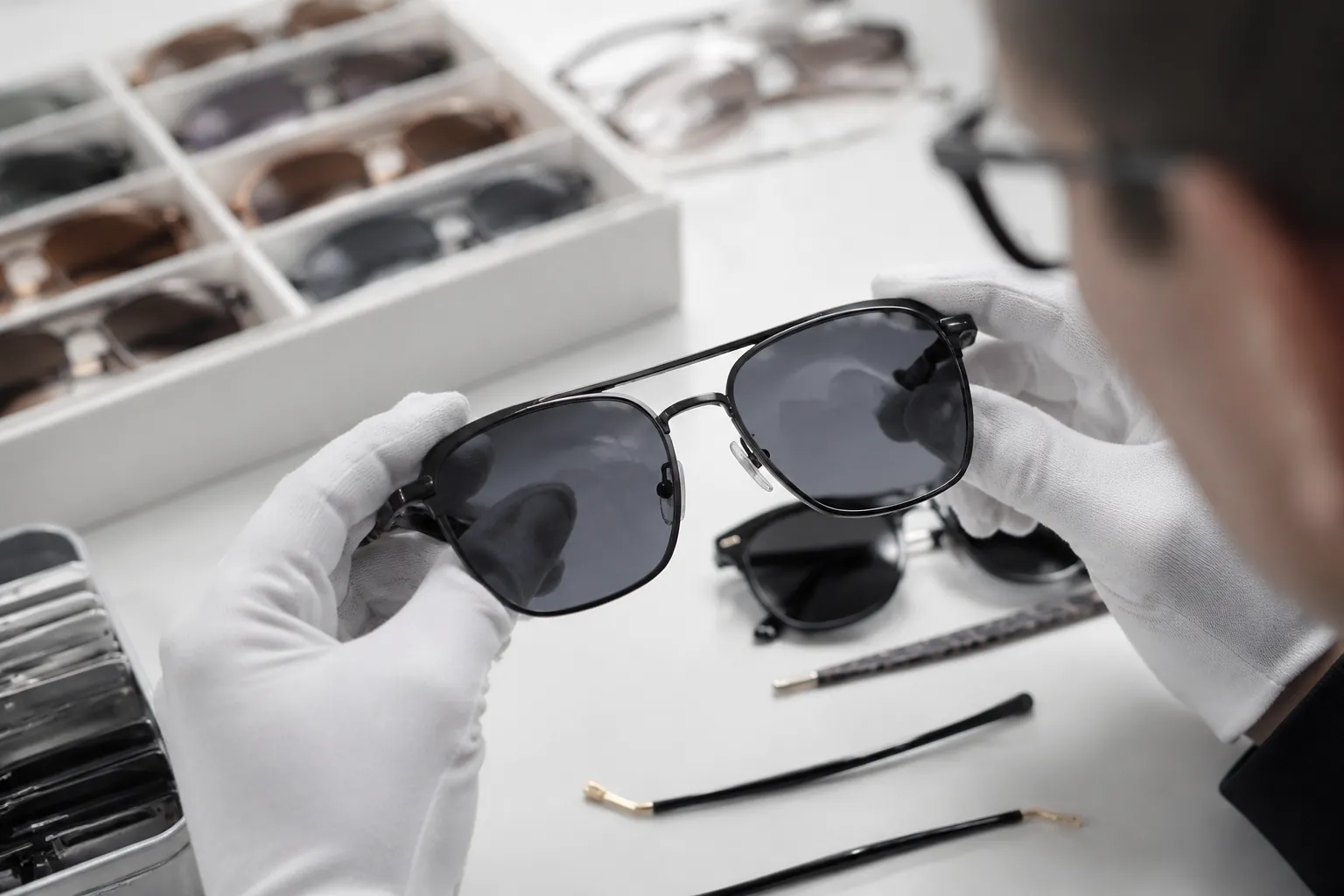
Custom Sunglasses RFQ Checklist for B2B Buyers
A custom sunglasses RFQ should make each supplier quote the same defined scope: product route, technical specifications, samples, quality checks, packaging, documents, schedule, and commercial terms. Keep confirmed buyer requirements separate from assumptions the supplier must verify.
Evidence boundary: The cited sources support RFQ questions about customization options, supplier communication, sample review, MOQ and tooling assumptions, quality-control approach, and packaging or labeling details. They do not prove that any named supplier can make a specific product, meet a market requirement, provide a specific document, or achieve a specific lead time. Treat every capability, document, and timing statement as something to request, verify, and record.
ReOptical describes custom sunglasses work as involving more than logo placement, including frame shape, color, material, lenses, packaging, and target-market considerations (ReOptical). Eyewearglobo's supplier guidance emphasizes communication, sample evidence, material and MOQ discussion, and realistic supplier commitments (Eyewearglobo). Glassesbros' private-label checklist includes pre-production confirmation areas such as product details, packaging, and labeling (Glassesbros). MJG Trading is included only as a cited B2B sunglasses and eyewear supplier page; it is not used here as evidence of custom-manufacturing, sampling, documentation, or production-approval capability unless a supplier confirms those points for the RFQ (MJG Trading).
The checklist below turns those source-supported sourcing topics into buyer-side RFQ questions. It does not assume that any supplier can meet every requirement.
1. Define the Custom Sunglasses RFQ Route
Ask the supplier to identify whether each quoted item is an existing frame, a modified frame, or a new development. This prevents a wholesale inventory quote from being compared directly with a custom-development quote.
| Project route | Use when | Ask the supplier to confirm | |---|---|---| | Existing frame with branding | The buyer can accept a listed frame style with selected branding and packaging | Available frame codes, colors, lenses, logo methods, packaging components, and whether tooling is excluded | | Modified existing frame | The buyer wants a listed style adjusted for finish, lens, hardware, branding, or packaging | Which changes are possible without tooling, which require sampling, and which affect MOQ, cost, or lead time | | New custom development | The buyer needs a new shape, material combination, or specification | Required drawings, tooling assumptions, sample rounds, approval steps, MOQ, and lead-time assumptions |
ReOptical recommends checking customization limits, sample availability before mass production, MOQ, and tooling lead time during manufacturer evaluation (ReOptical). In the RFQ, ask the supplier to state which requested details change sample cost, production MOQ, tooling, or lead time.
2. Build the Technical Specification
The RFQ should include a product specification table. If a detail is not final, list the preferred requirement and acceptable alternatives. Do not rely on photos alone for dimensions, lens requirements, packaging, or branding placement.
| Specification area | Include in RFQ | Ask the supplier to confirm | |---|---|---| | Frame | Requested material family, color reference, finish, lens width, bridge width, temple length, frame front width, lens height, target weight if needed, and hinge or hardware preference | Actual material, production color reference, measurement tolerance, and whether the frame is existing, modified, or newly developed | | Lens | Lens material if specified, UV protection requirement if applicable, tint color, tint density, solid or gradient tint, mirror finish, polarized or non-polarized requirement, and coating requests | Available lens options, whether sample lenses match production lenses, and which target-market documents are available | | Fit and dimensions | Reference sample measurements, wearer or size assumptions, and critical measurement points | Technical drawing or measurement sheet for the quoted product | | Branding | Vector artwork, placement, size, color, method preference, and whether branding is needed on frame, lens, packaging, or accessories | Recommended method for the selected material, proof format, and whether a physical sample can be supplied before bulk production | | Hardware and parts | Hinge type, screw color, rivets, nose pads, visible metal finish, and any spare-part assumptions | Whether component substitutions are possible and how substitutions will be approved | | Packaging | Pouch, case, cloth, sleeve, retail box, hangtag, barcode label, buyer-required label, polybag, carton marks, and master-carton assumptions | Photos or dielines if available, carton quantity, carton size, final labeling layout, and packaging items included in the quoted price | | Documentation | Specification sheet, available test documents if needed, material declarations if required, packing list format, commercial invoice needs, and shipping documents | Which documents are included, which require extra time or cost, and which cannot be provided for the quoted scope |
Glassesbros' private-label checklist includes pre-production confirmation areas such as product details, packaging, and labeling (Glassesbros). Use the same discipline in the RFQ: packaging and labeling should be defined as line items, not left as a general finishing note.
3. Separate Inventory Buying From Custom RFQs
A wholesale or B2B sunglasses supplier page may be useful for an inventory inquiry, but it does not by itself establish custom-production scope. MJG Trading is cited here only as an example of a B2B sunglasses and eyewear supplier page, not as proof of custom manufacturing, sampling, documentation, or production-approval capability (MJG Trading).
For any supplier found through a wholesale, catalog, or B2B page, ask production-specific questions before treating the quote as a custom sunglasses RFQ:
- Is the quoted frame an existing style, a modified style, or a new development?
- Which requested details are already available?
- Which details require new tooling, new sampling, or supplier review?
- What sample stage is offered before mass production?
- What are the MOQ assumptions for frame, lens, branding, and packaging?
- What documents can be provided for the target market?
- What specifications will be frozen before production begins?
4. Require Samples That Match the Production Plan
Eyewearglobo recommends asking suppliers for working samples rather than relying only on presentation samples (Eyewearglobo). For custom sunglasses, the RFQ should define what each sample stage is expected to prove.
| Sample stage | Purpose | Approval rule | |---|---|---| | Reference sample | Communicates desired shape, color direction, lens look, packaging style, or finish target | Use for discussion only unless the supplier confirms it matches production material and process | | Custom sample | Tests selected frame, lens, color, branding, and packaging direction | Record any substituted material, temporary component, unfinished detail, or open issue | | Pre-production sample | Confirms the final version before bulk production | Approve only after measurements, branding, lens, packaging, and visible finish match the agreed specification |
Keep an approval record with sample date, version number, material, color reference, lens reference, logo method, measurements, packaging components, open issues, and approval status. If a change is approved after the pre-production sample, update the version record and ask the supplier to confirm the production standard in writing.
5. Evaluate Suppliers Before Comparing Unit Price
ReOptical recommends comparing manufacturer capability, stability, communication, customization limits, sample process, MOQ, tooling lead time, and quality-control approach before mass production (ReOptical). Eyewearglobo presents supplier choice as a business decision that depends on communication, material discussion, realistic MOQ commitments, and follow-through (Eyewearglobo).
Use the RFQ stage to test how the supplier handles scope:
- Does the reply separate confirmed details from assumptions?
- Does the supplier identify customization limits instead of accepting every request without qualification?
- Does the supplier state what is included and excluded from the quote?
- Does the supplier explain sample timing before bulk production?
- Does the supplier answer documentation and inspection questions clearly?
- Does the supplier name a responsible contact for sampling, production, and issue handling?
A unit price is comparable only when the same product, packaging, documentation, sample process, and inspection assumptions are included.
6. Set Quality-Control Questions Before the Purchase Order
ReOptical advises buyers to ask how suppliers inspect raw materials, in-process products, and finished sunglasses (ReOptical). Convert that source-supported topic into RFQ questions.
Ask the supplier:
- Which incoming material or component checks are performed before production starts?
- Which first-piece or in-process checks are performed during production?
- Which final checks are performed before packing or shipment?
- How are frame color, lens fit, hinge action, screws, logo placement, surface finish, packaging components, and carton marks verified?
- What acceptance method is used: internal checklist, AQL plan, buyer-provided checklist, or another stated method?
- Which inspection photos, production photos, or inspection records can be shared?
- At what stage can a third-party inspection occur if the buyer requires one?
Define defect categories before bulk production. The buyer can classify defects by business risk, such as safety-related issue, wrong specification, visible cosmetic defect, wrong branding, or packaging and labeling error. The key control is written agreement on what will be accepted, rejected, repaired, or reworked.
7. Send a Complete RFQ Checklist
Use this checklist as the inquiry structure.
- Project route: existing frame with branding, modified existing frame, or new custom development.
- Order quantity: first order quantity, forecast quantity if available, and expected reorder pattern.
- Target market: country or region of sale and any known buyer-required labeling or documentation needs.
- Schedule: requested quote date, sample date, production completion date, and shipping deadline.
- Frame specification: material, color, finish, dimensions, hinge or hardware preference, and target weight if relevant.
- Lens specification: lens material if known, UV requirement if applicable, tint color, tint density, polarized or non-polarized requirement, mirror or gradient requirement, and coating requests.
- Branding: artwork files, placement, size, color, method preference, and branding needed on frame, lens, packaging, or accessories.
- Packaging: pouch, case, cloth, sleeve, retail box, hangtag, barcode, label, polybag, master carton, and carton mark requirements.
- Samples: number of samples, sample stage required, production-material requirement, sample cost, and approval process.
- Quality: inspection checklist, defect categories, tolerance requirements, third-party inspection plan if applicable, and required production or inspection records.
- Documentation: specification sheet, available test documents, material declarations if required, packing list format, commercial invoice needs, and shipping documents.
- Commercial terms: MOQ, sample cost, tooling cost if applicable, payment terms, Incoterms, production lead time, quote validity, and exclusions.
- Supplier questions: customization limits, tooling lead time, available capacity for the requested quantity, project contact, and escalation process.
Before sending, make vague terms measurable. Replace premium lens with the lens requirement. Replace nice packaging with a component list. Replace fast delivery with a date. Replace logo on side with artwork, dimensions, placement, and method.
8. Compare Supplier Responses on the Same Scope
Normalize every supplier response before comparing price.
| Comparison field | What to check | |---|---| | Product match | Does the quote match the requested frame, lens, branding, and packaging? | | Customization status | Which parts are existing, modified, or newly developed? | | Samples | What sample stage is included, what it costs, and what it proves? | | Documentation | Which documents are available, excluded, or conditional? | | Quality control | What inspection steps, acceptance method, and records are offered? | | Commercial terms | MOQ, tooling, payment terms, production lead time, Incoterms, and quote validity | | Unanswered items | Which RFQ questions were skipped or answered vaguely? |
The useful RFQ outcome is a confirmed technical scope, not only a price. A supplier response should identify what can be made, what must be sampled, what has limits, what is included, and what must be decided before production.
Final Takeaway
A custom sunglasses RFQ should define the product before asking suppliers for price. Specify the project route, frame, lens, branding, packaging, sample process, inspection expectations, documentation, schedule, and commercial terms. Then compare suppliers on the same scope.
This approach is designed to reduce unclear assumptions, support sample approval against a written standard, and identify supplier responses that communicate limits and requirements before production begins.